
Sign up to save your podcasts
Or

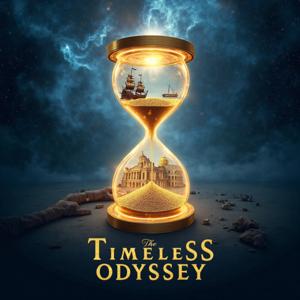


This episode shifts the focus from time travel to time awareness, asking what it truly means to live responsibly once we understand how fragile and interconnected the timeline is. Rather than exploring machines or paradoxes, it examines the moral weight of knowledge — how seeing potential futures creates responsibility rather than freedom.
The episode reflects on the burden of foresight: knowing a tragedy may come, knowing actions have consequences far beyond our sight, and realizing there is no neutral position once we understand cause and effect. Even without time travel, humanity already lives with this dilemma through climate change, inequality, and social collapse — problems we can foresee but often hesitate to address.
It suggests that the wisest response is not control, but stewardship. Time is not meant to be conquered or corrected, but inhabited with care, humility, and intention. Small, everyday choices — kindness, patience, listening — become quiet forms of time travel that shape unseen futures.
The episode concludes by reminding us that while the past is fixed and the future fragile, the present is alive. How we live now ripples forward, making responsibility in the present the most powerful way to honor time.
This episode explores the powerful idea that small actions can create enormous consequences over time. Drawing from chaos theory, the butterfly effect shows how seemingly insignificant moments—a missed train, a delayed conversation, a chance encounter—can ripple outward and reshape entire lives, communities, and even history itself.
Through the lens of time travel, the episode reveals why altering the past is so dangerous. There are no “minor” changes in a complex system; every adjustment sends unpredictable waves through the timeline. Many time travel stories turn tragic because travelers underestimate how deeply interconnected the world truly is.
Yet the butterfly effect is not only a warning—it is also a source of hope. Small acts of kindness, courage, or awareness can quietly transform futures just as powerfully as they can destroy them. The episode concludes by reminding us that we are all, in a sense, time travelers, shaping the future through everyday choices made in the present.
This episode reimagines the 1920s through an alternate timeline where a single altered decision prevents the full collapse of the global economy in 1929. Without the Great Depression, the decade’s energy evolves differently—optimism endures longer, extremism struggles to gain momentum, and the future remains open rather than locked into catastrophe.
Jazz, cinema, radio, and aviation flourish not as escapes from hardship but as expressions of confidence and connection. Social change accelerates, particularly for women and cultural movements, as stability allows reform to advance more steadily. Yet this alternate world is far from perfect. Inequality, colonial tension, and social conflict persist, reminding us that time rearranges problems rather than erasing them.
The episode reflects on the illusion of “extra time”—how avoiding disaster can breed complacency just as easily as crisis can inspire action. It concludes that history is shaped not only by tragedy, but by how societies respond when the future still feels flexible.
This episode journeys into the Viking Age, where time was understood not as a straight line, but as a cycle shaped by nature, fate, and legend. The Vikings lived by seasons and the sea, fully aware of life’s impermanence. Their worldview was rooted in Norse mythology, where the World Tree Yggdrasil connected all realms and the Norns wove destinies that even the gods could not escape.
Through sagas and oral tradition, Vikings sought to defeat time by being remembered. Glory and honor mattered more than longevity, because memory was immortality. Their daring voyages across unknown oceans, guided by stars and instinct, reflected a raw relationship with time — one defined by risk, courage, and the urgency of the present moment.
The episode also explores the looming prophecy of Ragnarök, the end of the world, which shaped Viking courage and acceptance of endings. Though the Viking Age eventually faded, its timeless philosophy endures in the stories we continue to tell — reminders that time may take lives, but it cannot erase a legacy lived boldly.
This episode transports listeners to the American frontier, where time moved with a unique rhythm shaped by dust roads, sunsets, and the relentless push toward the horizon. In the Wild West, people measured time not by clocks but by distance, seasons, and survival. The arrival of the railroad changed everything — forcing towns to abandon local solar time in favor of standardized time zones. The frontier shifted from a world ruled by nature to one synchronized by industry.
Through saloons, gold rush camps, telegraph lines, and lone riders beneath endless skies, the episode explores how the West compressed time into bursts of opportunity and danger. The Gold Rush accelerated lives into frantic cycles of hope and disappointment. Indigenous communities faced a devastating temporal disruption, as their seasonal, ceremonial understanding of time was violently replaced by rapid industrial expansion.
Ultimately, the Wild West becomes both a historical moment and a metaphor — a reminder that whenever new technologies accelerate society faster than culture can keep up, time becomes wild again.
This episode explores one of the most mysterious and mind-bending concepts in time travel: the predestination paradox, where attempts to change the future instead fulfill it. The episode begins with a simple example — receiving a warning from your future self that ultimately leads you to become the very person who sends that warning. Cause and effect merge into a perfect loop with no beginning.
We explore how ancient mythology, Einstein's relativity, and Novikov's self-consistency principle all hint that certain events may be inevitable. In such a universe, free will becomes blurred. A time traveler might try to prevent a tragedy, only to cause it. A mentor in the past might turn out to be the student's future self.
The episode highlights the emotional weight of these loops: many predestination stories involve love, loss, and sacrifice — like a parent who tries to save their child but becomes part of the tragedy they hoped to avoid. Yet paradoxes can also be tender, showing how our future selves guide and shape us in ways we don't understand.
Finally, the episode reflects on the loops we all live in: patterns inherited from family, repeated behaviors, and generational echoes. While we may not break the laws of cosmic predestination, we can break personal cycles by choosing awareness and intention.
In this episode, we explore the chilling idea of time as a battlefield—wars fought not with weapons, but with alterations to the past. A single change, like a missed meeting or a delayed train, can shift the course of history dramatically. These "retroactive strikes" reshape reality so subtly that only memory feels the scars.
The episode examines the three major models of temporal conflict: fixed timelines, where actions were always part of history; mutable timelines, where every intervention creates ripples that rewrite the future; and multiverse branches, where each change forms a new universe at the ethical cost of abandoning the others.
We encounter the tools of such wars—chronal recon, causality dampers, memory anchors, and ethical AI engines—and the human casualties: people who are "unmade" from existence and soldiers who suffer version fatigue, carrying conflicting memories from altered timelines. Custodians work to repair history after the fighting, stitching fractured narratives back into coherence.
Ultimately, the episode asks whether such wars should ever be fought. If changing the past prevents tragedy but erases millions of lives that followed, which reality deserves to survive? The episode concludes that the greatest victory might be a present so ethical and compassionate that history never needs correction.
This episode explores the emotional dimension of time travel — the timeless, mysterious force of love and how it can transcend eras, memories, and even the boundaries of physics. From myth to modern fiction, lovers separated by centuries appear again and again, revealing a universal longing: the desire for a connection that time cannot sever.
The episode delves into the psychology of love, showing how intense emotion can slow, compress, or distort time, making hours feel like seconds or causing memories to loop endlessly after heartbreak. It highlights iconic stories like Somewhere in Time, Outlander, and Interstellar, where love itself becomes the bridge across eras — a force that seems to defy gravity, relativity, and causality.
At the heart of the narrative is the paradox of loving across timelines: every act to reach one another risks altering the past, the future, or the very conditions that made the love possible. Yet, even without machines or wormholes, real-life love also bends time — through memory, emotion, and the way cherished moments linger long after they pass.
The episode concludes by framing love as humanity's most profound form of time travel — a heartbeat that echoes across years, shaping destiny even after lovers part.
In this episode, we turn inward to explore how the human mind itself may be the most profound time machine ever conceived. Ancient mystics spoke of transcending time through meditation and trance, while modern neuroscience now suggests that memory and imagination allow us to move backward and forward in time within our own consciousness.
Through recollection, the brain can reconstruct moments so vividly that the past feels alive again; through imagination, it can project visions of the future yet to come. Studies on meditation and altered brain states reveal that time perception can stretch or dissolve entirely, while emotional intensity — fear, love, grief — reshapes how time is experienced moment to moment.
The episode also reflects on memory as a living, shifting performance, not a fixed record, and on dreams as nightly journeys through time without boundaries. Ultimately, it suggests that consciousness and time may be inseparable — that to be aware is to weave the fabric of reality itself. The true frontier of time travel, it concludes, is not mechanical but mental: a voyage through the landscapes of memory, emotion, and imagination.
In this episode, we trace humanity's dream of mastering time — not through natural forces or cosmic tunnels, but through invention. Beginning with H.G. Wells's groundbreaking 1895 novel The Time Machine, the episode explores how fiction transformed time from an abstract concept into something mechanical and navigable. It then journeys through real-world theories, from Einstein's relativity to Gödel's time loops, Tipler's rotating cylinders, and Kip Thorne's wormhole models, all searching for the mechanism that might make time travel possible.
Yet the episode reveals that each attempt to engineer such a device leads to paradoxes and impossibilities. Physicists struggle with infinite energy demands, while storytellers use time machines to explore the emotional paradoxes of regret, love, and loss. From the DeLorean to Doctor Who's TARDIS, the time machine becomes a mirror of human longing — the desire to correct the past or glimpse the future.
In the end, the episode suggests that the only true time machine lies within us: memory and imagination. They let us revisit what was and dream of what could be, turning moments into stories and seconds into meaning.
From the publisher's feed