
Sign up to save your podcasts
Or

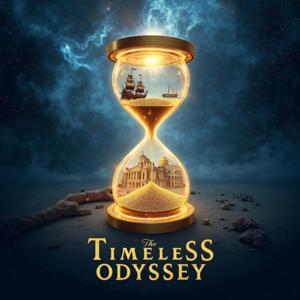


Life is often treated as something to master, solve, or finally understand. But human existence is always changing, and the person searching for answers changes with it. There may never be a permanent point of arrival.
The journey offers a different way of understanding life. Mistakes, delays, endings, and uncertainty do not have to mean failure. They can become part of the process through which identity, wisdom, and meaning are formed.
Modern life often values speed, efficiency, and achievement, but many of the most important things cannot be rushed. Friendship, grief, love, maturity, and understanding gain meaning precisely because they unfold through time.
Perhaps wisdom is not about mastering life, but remaining attentive while living it. We may never possess the whole road, yet we can still learn, remember what matters, and continue forward with humility.
Human life unfolds across decades, while the universe unfolds across billions of years. That immense difference in scale can make human existence seem small, but smallness does not mean meaninglessness.
Cosmic time reveals that nothing is truly permanent. Stars, planets, civilizations, and human lives all belong to processes of change. Yet this impermanence may be part of what gives life its urgency and value.
We are made from the same ancient cosmic history we observe. The elements in our bodies came from processes far older than humanity, making us not separate from the universe, but one temporary expression of it.
Our lives may be brief beneath the stars, but meaning does not require eternity. What matters is how consciously we use the small portion of time we have.
Humanity has entered an era in which our collective actions can alter planetary systems once believed to be beyond our control. The challenge is that environmental causes and consequences often unfold on very different timelines.
Planetary limits are therefore also ethical limits. Future generations cannot influence today's decisions, yet they may live with their consequences for decades or centuries. Every delay can reduce the number of choices available to them.
Sustainability is not simply about protecting nature. It is about preserving possibility. Stable ecosystems, a livable climate, and renewable resources give future societies more freedom to decide what kind of world they want to build.
The deeper test is whether civilization can match technological power with restraint and long-term responsibility. The question is not only how much the planet can endure, but how much future we are willing to leave behind.
Work has long organized human time, identity, routine, and social value. If automation and artificial intelligence reduce the need for human labor, the challenge will involve more than income—it will force society to rethink what gives structure and meaning to everyday life.
A future with less work could create more time for family, learning, creativity, care, and community. But unstructured time can also become empty or easily consumed by distraction. Freedom from work does not automatically create a meaningful life.
A post-work society would need to separate human worth from productivity. Activities that produce little economic output—caregiving, friendship, art, reflection, and service—may become more visibly important.
The deepest question is not whether machines can free our time, but whether humans will know what to do with that freedom. If necessity no longer organizes our days, purpose will have to take its place.
For most of history, survival gave human life a clear structure. As technology reduces some of those pressures, more people face a different challenge: deciding what their time is actually for.
Comfort and meaning are not the same. A life can be safe, efficient, and full of entertainment while still feeling directionless. When necessity retreats, freedom increases—but so does the responsibility to choose what deserves our attention.
In a future shaped by automation, work may become less central to identity. This could force societies to rethink purpose through relationships, creativity, learning, service, responsibility, and commitment rather than productivity alone.
Meaning may ultimately come from choosing what matters enough to give our limited time to. When survival is no longer the main goal, the deeper question becomes not simply how to continue living, but what we choose to continue for.
The post-human future asks what happens when technology begins changing not only the world around us, but human beings themselves. Genetic engineering, artificial intelligence, brain-computer interfaces, and life extension may eventually blur the boundary between tool and identity.
These possibilities could reduce suffering and expand human ability, but they also raise difficult questions about inequality, access, and choice. If enhancement becomes expensive or socially expected, differences between people could become biological as well as economic.
Longer lives, stronger memories, and more powerful minds could also transform institutions, relationships, and generational change. Humanity might gradually divide into different forms, forcing us to reconsider what qualities actually define a human being.
The deepest challenge is not whether we will gain the power to redesign ourselves, but whether our wisdom will grow alongside that power. The future may change what we are, but what matters most is what we choose to preserve.
Digital technology allows people to leave behind enormous archives of photographs, messages, recordings, and personal data. In the future, artificial systems may be able to use those traces to imitate someone’s voice, memories, habits, and personality with remarkable accuracy.
But memory is not the same as a living person. Human identity is constantly changing through new experiences, relationships, regrets, and choices. A digital reconstruction may preserve who someone was, yet it cannot automatically preserve who that person would have become.
Such technology could offer comfort to people experiencing grief, but it also raises difficult questions about consent, identity, ownership, and whether an interactive simulation truly continues a relationship or only imitates one.
Digital immortality may ultimately be better understood as a new form of legacy rather than literal survival. Memory can carry fragments of a person into the future, but replacing a life would require more than preserving the past—it would require somehow preserving the ability to keep becoming.
Machines can already measure time with extraordinary precision, but measurement is not the same as experience. Human beings feel time through memory, uncertainty, aging, anticipation, and the knowledge that life is finite.
An artificial mind might relate to time very differently. It could potentially be paused without aging, think at different speeds, preserve memories with unusual accuracy, or exist through copies and changing hardware. These possibilities challenge familiar ideas about continuity and identity.
If artificial systems ever develop a genuine sense of self, memory, expectation, and loss, time could become more than data for them. Their experience might still be radically different from ours, especially if they do not share human biological limits.
Ultimately, the question of machine time is also a question about consciousness. Time becomes meaningful not simply when it can be measured, but when the past belongs to someone, the future matters to someone, and something can be lost along the way.
Empires may collapse politically, but civilizations often survive through language, law, religion, technology, customs, infrastructure, and ideas. What disappears from the map can continue shaping human life for centuries.
Civilizations do not survive by remaining unchanged. Their traditions are absorbed, adapted, and reinterpreted by later societies. Roads, legal principles, stories, rituals, and even ordinary habits can preserve the influence of vanished worlds long after their rulers are forgotten.
What survives is not always what people intended to preserve. Palaces can become ruins while anonymous inventions, social practices, or ideas endure. Time does not necessarily remember power in the way power expects.
The deepest legacy of a civilization is therefore not permanence, but inheritance. Every society eventually becomes material for the future, leaving behind foundations, warnings, memories, and consequences for people it will never meet.
Collective memory is not the past itself, but the way societies choose to carry the past forward through monuments, holidays, museums, education, family stories, and public rituals. What is remembered—and what is forgotten—helps shape identity.
Because memory is selective, it is also tied to power. Debates over statues, textbooks, memorials, and national narratives are often really debates about whose experiences matter and who gets to define the meaning of history.
Societies need memory to understand how the present was formed, but memory can become dangerous when it turns into myth, denial, or inherited grievance. The challenge is to preserve truth without becoming trapped by the past.
One day, our own era will also become collective memory. What future generations understand about us will depend partly on what we preserve, what we admit, and what we choose not to hide.