
Sign up to save your podcasts
Or

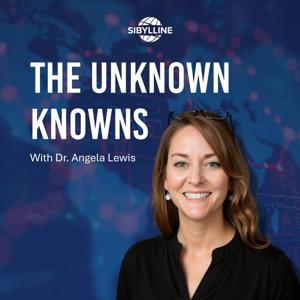


How much freedom should we give people whose job is to think independently? And when does autonomy become abandonment?
In this episode of The Unknown Knowns, Dr Angela Lewis explores the relationship between autonomy, motivation and effective leadership, particularly in intelligence environments where independent judgment is essential. Drawing on Self-Determination Theory and her own leadership experience, she challenges the assumption that autonomy means independence, examining how meaningful ownership, competence and connection work together to foster better judgment, engagement and professional development.
She also considers what this means for leaders managing intelligence professionals: how do we encourage independent thinking without sacrificing collaboration and accountability? When does oversight become micromanagement, and when does empowerment leave people without the support they need? From the dangers of excessive control to the risks of autonomy without adequate support, Angela explores how leaders can adapt the freedom they give their teams as competence develops, creating space for independent judgment without losing sight of organisational objectives.
Because effective leadership isn't about getting people to think exactly like you. It's about helping them become increasingly capable of thinking well without you.
This is the first episode in a three-part series exploring Self-Determination Theory and its implications for leadership and professional judgment.
Enjoying The Unknown Knowns? Subscribe here to never miss an episode. https://go.sibylline.com/podcast
What happens when we erase the parts of history that don't fit the stories we want to tell?
In this episode of The Unknown Knowns, Dr Angela Lewis explores how the preservation, distortion and deliberate erasure of history shape not only our understanding of the past, but also what we consider possible in the future. From the ancient Egyptian pharaoh Hatshepsut, whose legacy was deliberately obscured, to modern information environments, she examines how historical narratives influence perceptions of legitimacy, shape behaviour and determine which futures we consider possible.
She also considers what this means for intelligence professionals and the age of AI: how do we remain objective when evidence challenges the narratives we want to believe? And as AI increasingly relies on the information we choose to preserve, what happens when we lose not just facts, but the reasoning, context and dissent behind them? Because preserving history isn't simply about understanding the past. It's about protecting our ability to make informed decisions today and keeping possibilities open for tomorrow.
Enjoying The Unknown Knowns? Subscribe here to never miss an episode. https://go.sibylline.com/podcast
What makes some people look at an unfamiliar problem and think, I can figure this out?
In Part II of Figure-It-Out-Ology, Dr Angela Lewis explores the psychology behind our ability to navigate challenges we don’t yet know how to solve, from self-efficacy and resilient self-talk to productive struggle, identity and the experiences that teach us to trust our own ability to adapt.
She also considers what this means in the age of AI: when answers are increasingly easy to obtain, could removing too much friction also remove valuable opportunities to learn? And what can parents, teachers and leaders do to help others develop the confidence and capability to find their own way forward? Because sometimes the most valuable thing we gain from solving a difficult problem isn’t the answer, it’s the evidence that we can solve difficult problems.
Enjoying The Unknown Knowns? Subscribe here to never miss an episode. https://go.sibylline.com/podcast
What do you do when you don’t know the answer? We tend to think of expertise as having the answers. But what about knowing what to do when you don’t?
In this episode of The Unknown Knowns, Dr Angela Lewis explores what she calls “figure-it-out-ology”: the ability to recognise the limits of what you know and still find a way forward. From intelligence targeting to Hawaiian sea turtles, Angela examines how experts learn to see what others might miss, identify the gaps that actually matter, know where knowledge lives, and adapt when the usual playbook no longer fits. Because sometimes the most valuable skill isn’t knowing the answer – it’s knowing how to figure it out.
Enjoying The Unknown Knowns? Subscribe here to never miss an episode. https://go.sibylline.com/podcast
What is your best alternative if the deal in front of you falls through?
In this episode of The Unknown Knowns, Dr Angela Lewis explores BATNA, or Best Alternative to a Negotiated Agreement. This negotiation concept offers a useful framework for decision-making far beyond the negotiating table.
Using stories ranging from a heavily discounted necklace in a Pakistani souq to job offers, university choices and organisational decisions, Angela examines how anchoring, sunk costs, loss aversion and status quo bias can distort our judgement.
Join the Sibylline Media mailing list: https://mailchi.mp/sibylline.co.uk/podcastsignup
Instagram: https://www.instagram.com/sibyllineltd/?hl=en
LinkedIn: https://www.linkedin.com/company/sibylline-ltd/
YouTube: https://www.youtube.com/@sibyllineTV
Sibylline website: https://www.sibylline.co.uk
What happens when the system you're trying to understand keeps changing?
In this episode of The Unknown Knowns, Dr Angela Lewis explores complexity theory and the difference between complicated systems and complex adaptive systems. Using a childhood story about roller skates, a broken arm and a hospital waiting room, she explains how people, organisations, markets and adversaries adapt to one another and change the environments they operate in. Angela also explores feedback loops, emergence, tipping points and the Cynefin framework, including the value of “probe, sense, respond” when prediction is not enough. Complexity does not mean anything can happen; it means the system gets a vote.
Join the Sibylline Media mailing list: https://mailchi.mp/sibylline.co.uk/podcastsignup
Instagram: https://www.instagram.com/sibyllineltd/?hl=en
LinkedIn: https://www.linkedin.com/company/sibylline-ltd/
YouTube: https://www.youtube.com/@sibyllineTV
Sibylline website: https://www.sibylline.co.uk
#ComplexityTheory #IntelligenceAnalysis #DecisionMaking #Leadership #CriticalThinking #Intelligence #Tradecraft
What happens when the world changes but your mental model does not?
In this episode of The Unknown Knowns, Dr Angela Lewis explores Bayesian reasoning through the unlikely lens of the 2006 animated film Over the Hedge. When a group of woodland animals discovers that a giant hedge has appeared across their familiar environment, they are forced to confront a problem that intelligence professionals, leaders and decision makers face every day: how do you respond when new evidence challenges what you thought you knew?
Angela examines the difference between stubbornly clinging to an outdated assessment and overreacting to a single dramatic development. Bayesian thinking offers a middle ground, helping us update our beliefs in proportion to the evidence rather than abandoning the entire map every time something unexpected appears.
Join the Sibylline Media mailing list: https://mailchi.mp/sibylline.co.uk/podcastsignup
Follow Sibylline on Instagram: https://www.instagram.com/sibyllineltd/?hl=en
Follow Sibylline on LinkedIn: https://www.linkedin.com/company/sibylline-ltd/
Watch Sibylline on YouTube: https://www.youtube.com/@sibyllineTV
For more information: https://www.sibylline.co.uk
What makes analysis trustworthy? It is not simply the quality of the information or the confidence of the analyst. It is the quality of the thinking that connects evidence to judgement.
In this episode of The Unknown Knowns, Dr Angela Lewis explores the role of structured analytic techniques in making reasoning more transparent and easier to challenge. From questioning key assumptions and generating alternative explanations to identifying inconsistencies and testing competing hypotheses, structure can help analysts avoid becoming trapped by the first explanation that fits.
But structure has its own risks. Techniques can become performative, with organisations focusing on completing the process rather than genuinely challenging their thinking. The episode considers why the right question is not simply which technique to use but what could go wrong with our thinking and which approach is best suited to exposing that weakness.
Join the Sibylline Media mailing list:
https://mailchi.mp/sibylline.co.uk/podcastsignup
If you enjoyed this episode, let us know by liking, subscribing or leaving a review.
You can also contact us with any questions or feedback at [email protected]
Follow us on Instagram:
https://www.instagram.com/sibyllineltd/?hl=en
Follow us on LinkedIn:
https://www.linkedin.com/company/sibylline-ltd/
Follow us on YouTube:
https://www.youtube.com/@sibyllineTV
For more information, visit our website:
www.sibylline.co.uk
What can baseball teach us about intelligence analysis?
In this episode of The Unknown Knowns, Dr Angela Lewis turns to the world of baseball and the story of the Oakland Athletics to explore how data, strategy and human judgement interact when outcomes remain uncertain.
Using Moneyball as a starting point, Angela examines the difference between improving the probability of success and actually controlling the outcome. Data can reveal patterns, challenge assumptions and help us make better decisions, but it cannot eliminate uncertainty or account for everything that happens when humans enter the equation.
The same principle applies far beyond sport. Intelligence professionals, leaders and decision makers can use information to improve their decisions, but they still have to operate in environments where unexpected events, human behaviour and chance can change the outcome.
Join the Sibylline Media mailing list:
https://mailchi.mp/sibylline.co.uk/podcastsignup
If you enjoyed this episode, let us know by liking, subscribing or leaving a review.
You can also contact us with any questions or feedback at [email protected]
Follow us on Instagram:
https://www.instagram.com/sibyllineltd/?hl=en
Follow us on LinkedIn:
https://www.linkedin.com/company/sibylline-ltd/
Follow us on YouTube:
https://www.youtube.com/@sibyllineTV
For more information, visit our website:
www.sibylline.co.uk
In this episode, Dr Angela Lewis explores what happens when intelligence concepts leave the classroom and start showing up in everyday life. Angela explains why experts can recognise underlying patterns across very different situations, while others can struggle to apply a concept outside the context in which they learned it. The real challenge is not memorising concepts like confirmation bias, groupthink or bounded rationality. It is recognising them when they appear in unfamiliar places and developing better mental models using intelligence tradecraft as a broader way of navigating human judgement.
Join the Sibylline Media mailing list:
https://mailchi.mp/sibylline.co.uk/podcastsignup
Follow Sibylline on Instagram:
https://www.instagram.com/sibyllineltd/?hl=en
Follow Sibylline on LinkedIn:
https://www.linkedin.com/company/sibylline-ltd/
Watch Sibylline on YouTube:
https://www.youtube.com/@sibyllineTV
For more information:
www.sibylline.co.uk
#Intelligence #CriticalThinking #CognitiveBias #Judgment #DecisionMaking
From the publisher's feed