
Sign up to save your podcasts
Or

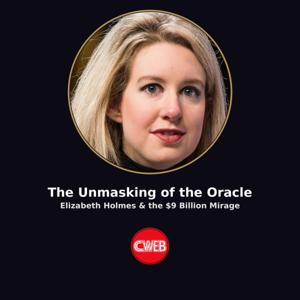


A disgraced founder, a surrealist comedian, a $9 billion illusion, and a documentary that has shattered box office records. Inside the mesmerizing, unsettling return of Elizabeth Holmes.
Welcome back to CWEB. Today we turn our attention to a story that feels less like a news item and more like a psychological thriller—a narrative about ambition, deception, and the terrifying power of belief. It is the story of Elizabeth Holmes, the founder of Theranos, a woman who convinced the world she had reinvented medicine, only to be exposed as the architect of one of the most spectacular frauds in Silicon Valley history.
But this is not merely a retrospective of a fallen empire. It is a story about a new film, You Can See Everything, a documentary that has achieved something remarkable: it has turned a convicted fraudster into a box office phenomenon. The film, directed by Lance Oppenheim the biggest opening weekend for a non-music documentary in over two decades, second only to Michael Moore’s Fahrenheit 9/11. It has stunned critics, who hail it as one of the best films of the year, and it has earned a near-perfect rating on Rotten Tomatoes.
It promised to democratize healthcare, to make diagnostics faster, cheaper, and less invasive. Investors, including some of the most illustrious names in American business and politics, poured hundreds of millions of dollars into the company. By 2014, Theranos was valued at nine billion dollars, and Holmes herself was worth an estimated four and a half billion dollars—the youngest self-made female billionaire in the world.
But the technology did not work. The company’s device could run only a handful of basic tests, sometimes inaccurately, and had to secretly rely on conventional analyzers. The company dissolved in 2018, and Holmes was convicted of conspiracy to defraud investors and wire fraud. She is currently serving an eleven-year federal prison sentence, scheduled for release in 2030.
So why, three years into her sentence, has she become the subject of a film that is captivating the public?
The answer lies in the film’s extraordinary premise. Holmes and her partner, the hotel heir Billy Evans, invited Nathan Fielder and Lance Oppenheim into their home thirty-four days before Holmes was to report to prison. They allowed him to film whatever he saw. The result is a three-hour documentary that offers an unprecedented, uncomfortable intimacy with a woman who, despite her conviction, maintains her innocence and insists she did nothing wrong.
Fielder, known for his deadpan, socially awkward personas in shows like Nathan for You and The Rehearsal, seems visibly shaken by the encounter. He attempts to learn the truth, to pierce the veil of Holmes’s carefully constructed narrative, but is never able to do so satisfactorily. As one critic noted, Holmes is so entangled with the avatars and projections she creates—a woman who maintains, despite her conviction, that she has never lied in her life—that the authentic self cannot be found. The film is not a re-litigation of the case. It is an attempt to see the person behind the myth.
Billy Evans, Holmes’s partner, has defended their decision to participate. Speaking on a podcast, he explained that they wanted people to see who she really is, to make up their own minds. He admitted that the documentary might be “the dumbest thing I have ever done,” and that Holmes “looks insane” in the trailer, but he insisted the intention was to offer a human portrait, not to re-open the case.......
Before you go, check out a deal from Paris Jewelry. Visit ParisJewelry.com for the cheapest prices on any jewellery plus free shipping, and take 20 per cent off with the code SAVE20 at checkout. That is ParisJewelry.com, code SAVE20.
You have been listening to CWEB. Subscribe on Spotify, Apple Podcasts, Amazon Music, YouTube, iHeartRadio, SiriusXM, or Pandora for more. You can also watch some of our CWEB reels on X, TikTok, and Facebook.
From the publisher's feed