The Urban Echo: The Sound of the City

The Urban Echo: The Sound of the City

By Inception Point AISociety & Culture
Download on the App Store

The Urban Echo: The Sound of the City episodes

  • "Soundtracking the City: Exploring the Acoustic Landscape of Urban Environments"
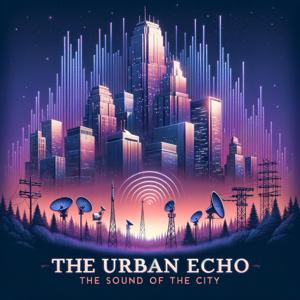
    In the bustling heart of metropolitan life, a unique narrative unfolds through the podcast "The Urban Echo: The Sound of the City." Hosted by seasoned urban experts and passionate storytellers, this groundbreaking series delves into the intricate soundscapes that define modern city environments.
    Each episode of "The Urban Echo" is a journey through immersive soundscapes and intimate interviews, showcasing the diversity, creativity, and complexity of urban experiences. The podcast goes beyond surface-level observations, uncovering real experiences that shape the urban landscape. From innovative urban planning and community development to personal stories of resilience and transformation, listeners are treated to compelling insights into how cities breathe, grow, and evolve.
    The focus on urban soundscapes is a critical aspect of the podcast. It addresses the challenges of sound pollution, a pervasive issue in cities where 90% of New Yorkers, for example, are exposed to sounds exceeding the EPA’s safe limit of 90 decibels[4]. This not only affects hearing health but also contributes to higher heart rates and blood pressure.
    The podcast explores various dimensions of urban sound. It discusses the characteristics of soundscapes worthy of preservation, such as vibrancy, representativeness, strength, and richness. These soundscapes are categorized into clusters like relaxing nature sounds, vibrant human activity sounds, and culture-related sounds, each driven by its unique sound marks[2].
    Through expert analysis and personal narratives, "The Urban Echo" highlights the importance of integrating sound into urban design. It features guests like John Roach, an educator and multi-disciplinary artist, and Thomas Sanchez Lengeling, a researcher at MIT's City Science and Opera Of The Future Labs, who challenge traditional interactions with urban soundscapes[4].
    The podcast also emphasizes the role of architecture and urban planning in shaping these soundscapes. Episodes with guests like Diana Erazo Garcia and Bill Buchen explore how architectural designs can impact urban sound environments and how subtle interventions in public spaces can transform the acoustic experience[4].
    By blending these diverse perspectives, "The Urban Echo" creates a rich, multidimensional exploration of contemporary urban life. It challenges preconceptions and illuminates the intricate dynamics of metropolitan communities, making it a must-listen for urban enthusiasts, professionals, researchers, and anyone curious about the complex, beautiful, and ever-changing landscape of city life. With new episodes released weekly, "The Urban Echo" continues to offer fresh perspectives and thought-provoking content that will transform how you see and experience urban environments.
    This content was created in partnership and with the help of Artificial Intelligence AI.
    4 min
  • Unlock the Secrets to Captivating Content: Strategies for Engaging Your Audience
    ### Crafting Engaging Content: Key Strategies to Capture Your Audience
    In a world overwhelmed by constant streams of information, writing engaging content is more crucial than ever. Here are some proven strategies to ensure your content resonates with your readers and keeps them hooked.
    ## Start with a Compelling Headline
    A great headline is the first step to grabbing your reader's attention. Make it specific, using action words and keeping it short and intriguing. For example, "Transform Your Life: 5 Simple Steps to Better Health" is more engaging than a vague title like "Health Tips."[1][4][5]
    ## Use Storytelling
    Storytelling is a powerful tool to connect with your audience emotionally. Begin your content with an anecdote or weave a narrative throughout to make complex ideas more relatable and memorable. For instance, a story about a person who achieved significant health improvements can make your content more engaging than a list of dry facts.[1][4][5]
    ## Keep it Conversational
    Write in a tone that feels like a conversation with your reader. Use short, simple sentences and avoid jargon. This approach helps build a stronger relationship with your audience and keeps them engaged. Visuals like infographics, graphs, and charts can also enhance the readability and impact of your content.[5]
    ## Structure Your Content
    Organize your ideas into a clear structure. Divide your content into manageable chunks, use subheadings, and signpost where your readers are in the journey. This helps maintain flow and keeps readers from getting lost.[3]
    ## Focus on Benefits
    Instead of listing features, explain how your content can benefit your readers. Use phrases like "save you time," "improve your health," or "transform your life" to highlight the value your content provides.[1][5]
    ## Use Emotional and Descriptive Language
    Emotions are powerful motivators. Use emotive language to paint a vivid picture that engages your readers emotionally. Describe what they can see, hear, smell, and taste to make your content more immersive.[1][5]
    ## Include Actionable Steps
    Provide actionable steps or solutions to the problems you discuss. This makes your content practical and valuable, encouraging readers to take action and return for more.[2][5]
    ## Use Power Words and Questions
    Incorporate power words like "secret," "proven," or "breakthrough" to create excitement and urgency. Address your readers directly by using "you" and asking questions to make the content feel personalized.[1][2]
    By implementing these strategies, you can create content that not only captures attention but also resonates deeply with your audience, driving engagement and loyalty. Remember, the key to successful content is to be original, relevant, and genuinely valuable to your readers.
    This content was created in partnership and with the help of Artificial Intelligence AI.

    4 min
  • "Transforming Urban Soundscapes: Designing More Livable Cities through Sound Research and Innovation"
    The Urban Echo: The Sound of the City is a compelling initiative that delves into the intricate relationship between sound, stress, and urban environments, aiming to create more livable and sustainable cities. Conceived by Oscar Schrag as part of his thesis project at the Parsons School of Design, Urban Echo employs a multidisciplinary approach, integrating urban planning, architecture, and product design to tackle the pervasive issue of sound pollution.
    In urban settings, sound pollution is a significant concern. For instance, in New York City, approximately 90% of residents are exposed to sounds exceeding the EPA's safe limit of 90 decibels, affecting around four million people. This issue is not isolated; it impacts about 72 million people across major urban areas in the United States. The NYPD receives over a million sound complaints annually, with a substantial portion related to residential, pedestrian, construction, and traffic noise. Prolonged exposure to such high decibel levels can degrade cochlear hair cells, leading to hearing loss, and also increase heart rate and blood pressure.
    Urban Echo addresses these challenges through various episodes that explore different facets of urban soundscapes. For example, the episode "Urban Sound & Art" features John Roach, an educator and multi-disciplinary artist from the Parsons School of Design, who discusses his work on urban interactions with sound. Another episode, "Urban Sound Research," involves Thomas Sanchez Lengeling from MIT's City Science and Opera Of The Future Labs, who uses creative coding and urban research to innovate sonic experiences in cities.
    The project also examines the impact of architecture on urban soundscapes. Diana Erazo Garcia, a master's student in architecture at Parsons, and Bill Buchen, an architect and musician, discuss how architectural designs can influence and improve urban sound environments. They highlight the importance of designing spaces that encourage play and community through sound, such as urban installations that use percussion.
    Acoustic scientists play a crucial role in this endeavor by measuring and analyzing sounds to determine their effects on health and wellbeing. They differentiate between beneficial and harmful sounds, noting that natural sounds like bird songs or running water can enhance the quality of urban environments. Architects and engineers can then use these findings to design buildings and public spaces that are both pleasant and healthy.
    In essence, The Urban Echo is a forward-thinking initiative that seeks to transform urban soundscapes into more harmonious and sustainable environments. By combining research, design, and community engagement, it aims to improve the quality of life and hearing health for urban residents, making cities more livable for the future.
    This content was created in partnership and with the help of Artificial Intelligence AI.
    4 min
  • Redefining Urban Soundscapes: The Innovative Journey of The Urban Echo
    In the bustling heart of urban landscapes, a unique project is underway to redefine how we perceive and interact with the sounds of the city. Introducing "The Urban Echo," an innovative initiative that delves into the complexities of sound pollution and urban sonic experiences.
    At its core, "The Urban Echo" is a multidisciplinary approach that combines urban planning, architecture, and product design to address the challenges posed by sound pollution in cities. This project recognizes that urban environments are not just visual or physical spaces, but also auditory ones, filled with a myriad of sounds that can either enrich or disrupt our daily lives[1][4].
    Thomas, a key figure behind "The Urban Echo," leverages his expertise in creative coding and urban research to challenge traditional notions of how we interact with sound in urban settings. His work spans a broad spectrum, from analyzing the impact of noise on urban dwellers to developing innovative solutions that can mitigate sound pollution. By using data and technology, Thomas aims to create more harmonious and livable cities[2].
    The project is not just about reducing noise; it's also about enhancing the sonic experience of urban life. "The Urban Echo" explores how urban design can be tailored to create more pleasant and sustainable soundscapes. This includes designing public spaces that absorb or redirect noise, using materials and technologies that minimize sound pollution, and even integrating sound art into urban planning to create a more vibrant and engaging environment[1][4].
    In essence, "The Urban Echo" is a call to action, urging us to reconsider the auditory dimension of our cities. By doing so, it opens up new possibilities for urban development that prioritize both the aesthetic and the functional aspects of sound. This initiative is a step towards creating cities that are not only visually appealing but also sonically enriching, making urban living a more enjoyable and sustainable experience for all.
    This content was created in partnership and with the help of Artificial Intelligence AI.
    3 min
  • The Rhythm of Resilience: Stories of Urban Survival
    Living in the city, I'm constantly immersed in what I've come to think of as the urban echo - that distinctive acoustic fingerprint that makes every metropolis uniquely alive with sound. It's a fascinating symphony that never truly stops, merely ebbs and flows like an acoustic tide marking the rhythm of urban life.
    In the early morning hours, the city's voice starts as a whisper. I hear the first subway trains rumbling beneath the streets, their distant thunder mixing with the whirr of street sweepers and the clatter of delivery trucks making their morning rounds. The sounds bounce off glass and steel facades, creating an acoustic canyon that amplifies and transforms these mechanical utterances into something almost musical.
    What really captures my attention is how the urban echo changes throughout the day. During rush hour, it becomes a crescendo of footsteps on concrete, thousands of conversations merging into a single murmur, and the persistent drone of traffic. Car horns create a peculiar urban percussion, their sounds reflecting off buildings and returning as ghostly afterthoughts seconds later.
    I've noticed that different neighborhoods have their own distinct acoustic signatures. In the financial district, sounds are sharp and bright, bouncing off reflective surfaces and creating what acousticians call flutter echoes. Meanwhile, in older residential areas, brick and stone absorb more sound, creating a warmer, more muted atmosphere. The contrast is particularly striking during rainfall - modern glass towers create a metallic pitter-patter, while historic districts seem to soften the sound into a gentle background hush.
    Street musicians add another fascinating layer to this urban composition. Their music doesn't just float through the air - it interacts with the architecture, finding unexpected resonances in subway stations and urban plazas. I've heard saxophone notes lingering in station tunnels long after the musician has stopped playing, and guitar chords seemingly amplified by the natural acoustics of building entrances.
    Perhaps most intriguing is how the urban echo reveals the hidden life of the city. Late at night, when traffic dies down, you can hear sounds that are usually masked: the distant clatter of elevated trains, the hum of air conditioning units, and even the subtle creaking of buildings as they cool down. These sounds travel further in the still air, bouncing off surfaces and creating a nocturnal soundscape that's entirely different from the daytime cacophony.
    The seasonal changes in the urban echo are equally fascinating. Summer brings the whirr of countless air conditioners and the chatter of outdoor diners, while winter muffles the city under snow, creating an almost eerie quiet punctuated by the crunch of footsteps and the scrape of snow shovels. Spring and fall have their own distinctive sounds - the return of birdsong and the rustle of fallen leaves respectively.
    Technology has added new dimensions to the urban e
    This content was created in partnership and with the help of Artificial Intelligence AI.

    5 min

About The Urban Echo: The Sound of the City

From the publisher's feed

Dive into the vibrant heartbeat of urban life with "The Urban Echo: The Sound of the City," a groundbreaking podcast that captures the raw, authentic stories pulsing through metropolitan landscapes. Each episode is a sonic journey that explores the intricate tapestry of city living, revealing the hidden narratives, challenges, and triumphs of urban dwellers from around the globe.
