
Sign up to save your podcasts
Or

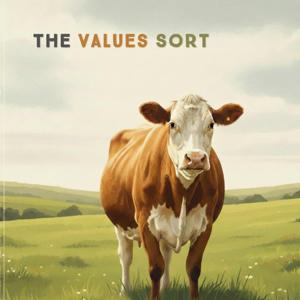


You may recall that I grew up in church. Perhaps you did, too.
This card is funny because people have one of three responses, and maybe it’s actually this way for all fifty-seven cards. But I’m reflecting on the triad of choices now.
It’s either a shoe-in, no contest, a definite value, OR it’s an easy card to toss in the “no” pile on the first round, OR, it is deeply wrestled with; compared and analyzed alongside other cards like a spiritual life or meaning in life.
It all sort of depends on where you came from and where you’re going.
I am, you may have guessed, moving away from organized religion in my life. Except…
I’ve started going to church. About six weeks ago as of this writing I was sitting with my friend around a nice backyard fire. We were sharing a whiskey and a moment together and I was becoming animatedly enraged, (as I do), with various church leaders from our shared past, their abuses and untended wounds. He listened quietly, gave me space to feel and be myself as friends do, and then suggested I try a church he’s been attending with his wife for a while.
It’s a very different kind of church than I’ve ever attended before, and I’m not going to make this essay a comparative side-by-side, nor am I going to give you a list of reasons why I’m still in church at all. We are all on our own paths.
In this series I’ve admitted to being disillusioned with the church of my youth. I’ve tried to be fairly diplomatic about it, but if you’re paying attention it’s there.
In this series I’ve admitted to stealing in my youth, I’ve admitted to my own capacity for violence and malice and dishonesty. Now here’s another admission.
I am still on what I weirdly call a “Jesus flavored path”.
No matter how much I grow weary of the church, all her rules, all her dominions, all her hate-dressed-as-love, I do not seem to grow weary of the words of Jesus. And I do not tire of wanting to be more like him. I think.
I grew up learning a certain set of facts regarding Jesus, regarding his place in the larger story of the Bible, regarding our appropriate responses to those facts.
Do you remember POGs? It was a fad in the 1990s. A game played by stacking cardboard disks, (the name was taken from the name of a Hawaiian beverage, Passionfruit-Orange-Guava, and the acronym POG printed on the cardboard bottle lids).
You’d stack up your POGs face down and then use a heavier disk, a Slammer to, (as the name would suggest), slam the pile. The player would “win” any POGs that flipped face up.
In my personal experience, I rarely ever played the game, instead I collected POGs. I had a binder with special plastic pages in it that was made specifically for displaying and protecting the little disks. I did have a SLAMMER though; a huge, heavy piece of acrylic plastic affixed to a metal disk that said the following, (this is why I’m telling the POG story):
The Bible says it—I believe it—That settles it.
I grew up believing in the Bible as a set of literal facts collected for my benefit. I grew up telling myself, (and almost believing it), that the very word Bible, stood for Basic Instructions Before Leaving Earth.
In reality the word “Bible” obviously comes from the Greek biblia (βιβλία), meaning “The Books”, itself stemming from biblos (βύβλος) which means papyrus and refers also to the Phoenician port city of Byblos where it was commonly traded. But you already knew that.
But in my little-guy brain, that’s exactly what the Bible was—specific instructions for living. If it wasn’t in there, it didn’t exist; it spoke, if you read hard enough, to every potential eventuality this life could throw our way.
This is how I grew up. This is what I believed. I memorized various passages of scripture and performatively recited them to Mrs. Kennedy in order to win the 10¢ goldfish she’d bring in as prizes once each year for the good little boys and girls who’d done their memorization.
I won my fish. I named him Clyde. He lived for many years and only died in the house fire I mentioned in the Privacy essay. He was six inches long living in a 20 gallon aquarium at the time. It was too small a habitat. I believe he’d still be alive today if not for that ill fated end, teaching us lessons about growth.
And over time my beliefs have changed; I have already admitted that I no longer believe in a place of ECT, a real acronym used to shorten Eternal Conscious Torment, the specific kind of hell we believed in. The cracks began to form in that doctrine many years ago and they continued until one day I just… didn’t believe that way. I couldn’t. I couldn’t make myself see what some people see in the texts and I couldn’t unsee or unlearn some of the things I’d seen and learned that countered that narrative.
And as I mentioned in the Spiritual Life essay, without hell, without consciousness in torment, evermore, evermore, what were we even left with?
For me, I’m left with invitation. One of Jesus’ most often used words was come. He was invitational in nature, that guy. He was always speaking with authority the religious leaders didn’t feel like he did, (or should) have to forgive, to invite to repair.
And those are things we can do, too! I cannot, (as I have already stated many times), speak to the afterlife. I do not know.
But I can invite you into love, into kindness. I can look for the fruits of the spirit of God in my life, the Love, Joy, Peace in my life and I can foster and foment those things in my life. I can share good news with you—the good news is that we have this life. We have now, today, together. We can be heaven or hell for one another—indeed we will be heaven or hell for one another. We may have no other way.
A few years ago I started tuning my ear to Rainn Wilson. Hopefully you at least know of Wilson and his character from The Office, Dwight Schrute. He’s hilarious and a treasure.
He was born and raised into the Baha’i faith. I am compelled by his messaging and his stories, and I’ve thought, privately to myself and apparently publicly on the internet, that if I had it to do again I might dig a little deeper into the Baha’i.
A few years ago I received my introduction to Buddhism. It was simple and a little silly, but it was mine. I was wandering Powell’s Books and picked up, almost at random, James Norbury’s The Journey: Big Panda and Tiny Dragon.
In it two friends embark on a beautiful journey out of and into. They leave a comfortable home they’d made together taking only Tiny Dragon’s teapot as luggage.
They face various beautifully illustrated trials and finally lose even the teapot before finding a new place, a new life, a new home, and yes, a new teapot. In the end all is different but all is well. So, I feel it going for me.
Perhaps in another life I’d have pursued Buddhism. Perhaps I’ve had made a terrible monk somewhere.
Am I devout? The question here is am I devout? Do I hold to a religious faith? And the answer, which still, after all this time, after all these words, is hard for me to write, is no. Not to the faith I know—not to the faith I knew. I have left the way I knew.
I can no longer hold to a religious tradition. That word ‘hold’—as in grasp tightly, clutch, refuse to let go—that’s carrying a lot of weight here. Because I’ve let go. Not of Jesus, not of love, not of invitation. But of the structure that said there was only one way to understand any of it.
But am I devoted? Yes, I think so. Devoted to continuing to sojourn on, continuing to identify those fruits in my life, continuing to discipline myself in the way(s) of love.
A word used to describe people in my situation has been Deconstruction. As in, we’re de-constructing our faith. But I don’t like that term very much and I don’t actually feel like it applies to me or maybe to very many people at all.
I do know folks who want to just tear it all down and walk out of the rubble—I’ve met them, I’ve known them, and I’ve even felt like one of them.
But I see now that, (as I mentioned in a previous essay) that I am simply evolving and growing. I am going from one thing into another, quite naturally, quite natively. Like a caterpillar I am entering my pupae state; closing into myself for a quiet liquid metamorphosis into something different.
If I had to guess I’d guess I’ll never become a Buddhist or a practitioner of the Baha’i faith. If I had to guess I’ll keep walking this Jesus flavored path all the days of my life growing less sure and not more sure that I know what I’m reading or what he was saying. I’d guess I’ll die the way I was born; unsure.
I am in a time of flux. I am in a time of transition. I am in a time of metamorphosis.
When we were all younger my wife and I started a coffee shop called Chrysalis Coffeehouse. Do you know what a chrysalis is? Maybe you do, but if not you should because it’s beautiful.
Before about 2012, if you would have asked me how a caterpillar became a butterfly I’d have said something about going into a cocoon and maybe one leg grows up into a longer bone, (insects have bones, right?), and then maybe the wing sort of webs down from that, and presto-chango, it’s a butterfly or something!
That is not how it works, friends. Moths form cocoons, silk structures into which they envelop themselves and out from which they emerge.
A chrysalis by contrast is fully the insect itself. The hard outer shell is a part of the critter, and on the inside, far from growing into something it actually changes into something new. Metamorphosis. The whole of the animal liquefies into something magical, reforms, reconstitutes and regrows into a different animal altogether. It’s a beautiful, and I’ll say it again, magical exercise in nature’s way.
So it goes, we decided, with coffee. We were a metamorphosis point in the life cycle of a coffee bean, taking a hard, barely edible, waxy green coffee bean and, through the application of heat and pressure, transforming it into something palatable and even more than that, pleasurable.
At that time we also saw ourselves in that imagery. I can look back now and see that we’ve pretty much always been at the beginning of some new change, some new way. It is the blessing and the curse of being us. I look around and see that not everyone is so lucky to live this way.
As we did business it became increasingly clear that not everyone knew what a chrysalis was, and certainly not everyone knew the beauty of how they worked, and the name presented more challenges than we’d intended. Eventually we changed again, rebranding and becoming something different.
So, I feel, it is going in our lives today. I can feel the winds of change. They have ebbed and flowed in our lives often enough that I’m no longer particularly afraid of them, though I know they almost always bring pain along with new life. I am turning to liquid. Again.
I will not discuss all of these things now; I have revealed some of them already. My children are growing. My business is changing. Things never stay the same for long, and they will continue on that trajectory I think.
The most important thing I do now, the most important thing to me, is this values exercise. It never gets old and I could do it every day. In the beginning I did the exercise with everyone—I was ravenous. You could not be on my doorstep for long before I’d ask you to “do a fun values sort with me.” I have my electrician’s values. I have my old babysitter’s values. I have my friend’s son’s girlfriend’s values and I have my former life coach’s values. It is what I would like to be doing with the rest of my life.
It’s not the cards, though, you know that by now. It’s my love for people and my belief that we do have this life! We are more than we know, more than we think we are. It’s about coming up under the people around me and giving them something, anything that gives them hope or a little more of a vision for their own futures. For their children’s futures. As I write this it feels self aggrandizing. Oh, that I could be a benefit to others! Who am I that I think I could?
But I’m here, I have these cards, I have these ideas, and I’m not losing heart or interest. I’m continually discovering meaning in life.
As part of this pursuit, I have begun developing my Values Tree which I will describe again here, briefly for your reference.
Our Lived Experiences happen to us. Around us. Without our command or request. They’re the sun rays and raindrops falling on our faces and we cannot control them. We cannot even predict them much of the time.
Our responses to those experiences inform our Values which in turn inform our Beliefs, which I believe are really just crystalized, (or calcified) values.
Our beliefs and values inform our Vision, the “what success looks like”, and Mission, the “how we’re going to do it” of our lives. For me, these things are fluid. More fluid than I’m altogether comfortable with. But here we are.
Our mission informs our Goals, the things we’re trying to see made real, our goals inform our Tasks, and our tasks inform our Time Management.
So you see, there’s a line of continuity between our lived experiences and our time management, (the things we do with our hands and think with our minds and say with our mouths.
For me, for the purpose of these essays, I see meaning in life in relation to our Vision and Mission. What are we going to do.
I grew up with a vision for the next life. Everything was viewed and filtered by the coming age. And now I don’t know! I literally, honestly, just don’t know what to think about the future. I don’t know what to think about next week, let alone the split second after my final breath. And as I’ve said numerous times in the course of this project, we know only this life for sure. We know we have our next breath, our next minute, our next day. What will we do with them? What does success look like for us?
For me, it looks like continuing to dig deeper here. Continuing to try to identify what’s making this work in my head. It’s something about people. It’s something about you. It’s something about us, and about making tomorrow brighter. We’re the only ones who can. It’s something about helping people know themselves better. This writing project is specifically to help me get to know myself better. I hope people read these, I’m gratified that some people seem to be. I’ve gotten some positive feedback which feels nice. I want people’s kindnesses. I love them.
But ultimately this is an exploration of my own thoughts surrounding these cards and the ideas they stir up. And ultimately success looks like you being more mindful of your own values in life. Which is nearly impossible to measure. Classic Nicholas. Setting unattainable goals informed by an immeasurable mission in life.
In my last essay, A spiritual life, I identified that many times people struggle with a binary choice. Is it this one or is it more that one? Is it capability that’s driving my choices, driving my thoughts and behaviors, or is it ambition?
So this one goes for me. I sat and looked at mature love and true friendship together for a long while. Which one is it? If I’m not able to walk in mature love, how can I be a deep, true friend? But.. Isn’t true friendship the highest form of love? Ultimately, as I revealed, True Friendship won the day in my sort.
But I often tell people, you know, this thing we’re doing, (the values card sort), isn’t a game. It’s not a game because you can neither win it nor lose it.
I suppose you could lose the exercise sort of if you failed to take it even a little bit seriously. If you were only sorting the cards for my sake or to get me off your case. But assuming you think a little and choose five cards honestly, then it’s been a success and you’re a winner. So forget what I said before… You can both win or lose this thing. But it’s not really a game.
I have also established that the big secret, as I’ve found anyway, to this sorting exercise is that they’re all important! They’re all valuable. I say to people, “as a marginally well adjusted human adult, you probably have a value for all 57 of these concepts, there are no negative values listed; there’s no punching babies card.”
I tell people that if, in two weeks time, you’re driving down the road or sitting in your chair and a value card you didn’t end up choosing pops into your mind, and if you let it linger there, if you let a concept like social recognition or wealth or preservation of my public image pops into your mind, why, then it’s been a double success because it means you’re beginning the process of thinking of your values more holistically! Everyone’s a winner here.
I have spent a lot of time driving down the road thinking about mature love. When I think of deep, emotional, spiritual intimacy I do think of my wife. There is simply nobody else whose relationship I can compare ours to. I revealed in True Friendship that I am utterly surrounded by friends and more than that, surrounded by friendship. I cannot escape it, I could not if I wanted to. If I ran away they would follow me. If I hid around corners or under beds they would find me. Friendship follows me.
But there is no friend I have like her. We have been married for twenty years! Which is not forty! But it’s not five! We have weathered many storms. Big ones like her cancer and my somewhat rocky mental health over the years. We have been there for one another, and when we’ve found ourselves not there for one another, we have mindfully redirected our attention back toward our chosen togetherness.
This is not the right choice for every couple, not the right choice for every situation. But it’s been the right thing for us and while we have many years and many trials and many successes waiting for us up around the bend, I am more committed than ever, I am more resolute and more in love.
I am resolute in my steadfast love for her, yes. But in that love I have discovered a resolution to a kind of steadfast love for myself that wasn’t familiar to me at the beginning. I am realizing and learning that almost always, the thing I can do for her is to mind myself. To care for the life I have to live and to be the best version of myself.
You know, at the beginning I was sold a belief system that was self-sacrificial. Which sounds excellent! It sounds loving on some levels. And certainly, in this life, there are times when we’re able to be self sacrificial and “take one for the team”. But very often, much more often, that resulted in a patriarchal sort of martyrdom that was at least intellectually dishonest. If I am always the one sacrificing for you, then I am the hero and you are the burden.
By not caring for my own self, by not putting on my own oxygen mask, by not observing and spending adequate energy addressing the log in my own eye, I was free to condescendingly and paternalistically “make room” for the speck in hers, in a show of false magnanimity.
And it all came so naturally to us, you know? Until it just didn’t.
I still want to be self sacrificial. I would still spend mine to conserve hers. But now it comes with a realization that she feels the same. Would do the same. Has done the same. Is still doing the same.
Today we’re both looking out for each other in this life. We’re both minding ourselves, walking into growth opportunities and developing postures of learning, awareness, curiosity. For ourselves, for each other.
The love we shared in our youth said “I am here for you”. The more matured love, (though not as mature is it shall be!), that we share today says “We are here together”. It is a subtle difference, perhaps. But one I wouldn’t trade for anything.
**Fair warning, this one gets a little churchy. Buckle up, but keep reading.**
I’ll tell you an interesting thing to observe about this values exercise I do with people.
People often find themselves struggling with a binary. A duo of cards that, for them, represent something so similar so as to be nearly indistinguishable. Or at least inseparable.
How can you have one without the other? How can you choose between these two?
They’re not always the same for everyone, but this card, a spiritual life is one such card. I am delighted to watch people struggle through this exercise-within-an-exercise because that’s how real muscle is formed, right? Tearing of muscle fibers, pain, exhaustion, and finally the growth–the building back of something stronger.
A spiritual life is often, (not nearly always), compared with a card coming down the line, Devoutness: holding to religious faith and belief. That’ll be a weird one to write. One at a time, Nick, one at a time.
I like the descriptor for this card; emphasis on spiritual, not material matters.
My dad used to express that some folks were “so heavenly minded they were no earthly good”. I can see what he’s talking about. I can see what he was saying. Or, at least, I can see what I’d be saying if I were to repeat the phrase, (which I may do).
I have had a long and winding religious road. But as I reflect, I feel like my spiritual life has been a fairly straight line.
I learned early that Christ was the true vine, and we were the branches. And that the one the Lord loves, he prunes. He clips little bits off of us that aren’t helpful or aren’t producing fruit in order that we may grow as an organism, and recognize our connection to the oneness of himself.
I learned that the fruits of the spirit of the living God are as follows: Love, Joy, Peace, Patience, Kindness, Goodness, Gentleness, Faithfulness and Self Control. I further learned that against these things there is no law.
Nine things to look for in my life. Nine things by which to measure my need for pruning, my need to be a part of the long, slow, laborious work of loving the other people I have access to.
I do not worship the way I once did. It all looks and seems so different now. There was a time when Devoutness would be a tippy-top value choice of mine. That would have been a choice made out of obligation, or, more probably, fear.
When I was young I can remember asking Jesus to come into my heart regularly. Weekly. Monthly. I can remember moments alone, in my room or in my woods, dissecting my foul humanity, laying every ill deed out on a stone table to be sacrificed and done away with in order to make room for a holiness that seemed completely out of reach in the best of times and something completely undeserved in the worst.
So many of my young patterns were, I see now, based on a fear that God would smite me. Would strike me down. He was looking for an opportunity to give me what I deserved, and I kept providing them. And I just don’t think that now. My spirituality has—dare I say the word?—evolved.
So much of how I practice my beliefs, so much of how I see my values intersecting with others has changed. And yet… And yet it still feels familiar. What did I ever believe? What did I ever know? What did I ever even hope for in my younger days laden with ecclesiastical burden? How much really has changed?
One thing has changed, and it’s substantial for me, anyway. This is the big reveal: I do not believe in hell. I do not believe in it conceptually in the heart of God—whatever cosmic oneness awaits us, (I hope) after our time here is complete. And what’s more I do not even believe it to be a concept fairly borne out of scripture.
The idea is anathema to what I’ve come to think about God, and as further evidence in my mind, it’s directly on brand for what I’ve come to believe about men. And it’s always men. You will note that women are rarely mentioned in the Bible and none are, (at least credited with being), responsible for its written contents. I believe it to be a tradition of men, heavily influenced by the second-century church and beyond that, by literature—fables and fictions written in the most generous of assumptions to delight or, in the worst, (and sadly more likely) case, to deceive and control.
That may sound heretical to some. To others, it may sound obvious. But for me, letting go of hell changed everything. Without the threat of eternal conscious torment, my faith stopped being about avoiding damnation and started being about pursuing love. It became about allowing love to slowly grow and activate and unlock itself in my life.
The fruits of the spirit aren’t a checklist to escape hell—they’re just... the whole point. Love, joy, peace, patience, kindness. Against these things there is no law. Not because they save you from fire, but because they are salvation. They are what it means to be fully human, fully alive.
I think I knew the fruit. I think I was born to spot the fruit in others, to draw it out and gather it up and put it by for a time when it’s needed. I think I was born into a knowledge of Love, Joy, Peace, Patience, Kindness, Goodness, Gentleness, Faithfulness and Self Control. I think I’ve known it since I was young, and I think I know it now and I wonder if I’ve known it as part of a cosmic oneness since before the dawning of time. “Hidden in the heart of God”, we’d have said.
In many of these essays I have shared some specific truth or nugget or anecdote from my life. I fought with my brother. I blew my hand up in a binge of freedom. I stole, I repaired, I learned, I grew somehow.
And so it goes with my spiritual life, so why am I having trouble deciding on or even coming up with an anecdote to make this land? Perhaps it’s that it feels so very raw, so very alive to me just now. It feels so very going, and in-the-process. I am not done being worked out. I reflect on another song from my deep childhood.
He’s still working on me; to make me what I ought to be. It took Him just a week to make the moon and the stars, the sun and the Earth and Jupiter and Mars. How loving and patient he must be; he’s still working on me.
Now, I’m not claiming that tune quite the way I did the last one. The one about the “river of life” flowing out of me.
Still, I do feel that I’m a work in progress, and nowhere is that progression more evident than in my religious beliefs.
I did say, though, that something feels familiar. I see that the familiarity is myself. My inner life, my inner hunger for truth and more than that, love, which in the Bible is called “The greatest”. The greatest of these is love. In fact, it says that God is love. What do you make of that statement? Perhaps I’m interpreting it incorrectly, but I do continue to believe very deeply in Love.
I have shed many shackles. I have done away with some childish things. I have come to grips with some realities of a world which does not often value life or love over profit and gain. And I am still shedding. I am still gaining understanding. May it be so for all the days that I live.
In 1998 a movie came out that I love. It was called Waking Ned Devine. Maybe you’ve seen it, too? It’s a beautiful film, literally and substantively. It follows the inhabitants of Tulaigh Mhór, (Tullymore), a small Irish village. I won’t give everything away. The community, small and tightly knit, commits to an attempt at community-wide Lottery fraud, (as you do), when Ned wins a substantial sum in the lotto and dies of shock.
When the Lotto man comes to town to interview Ned, a second man, Michael O’Sullivan, is reluctantly installed in Ned’s place, and the whole community pretends along—the goal being to split the massive lotto winnings among the whole of the village.
On the day of Ned’s funeral, the whole village turned out. But unfortunately, the Lotto Man showed up at the exact same time. So, in a panic, Jackie O’Shea pivots. He delivers the eulogy not for the dead man, but for the man sitting right in front of him.
Michael O’Sullivan was my great friend. But I don’t ever remember telling him that. The words that are spoken at a funeral are spoken too late for the man who is dead. What a wonderful thing it would be to visit your own funeral. To sit at the front and hear what was said, maybe say a few things yourself. Michael and I grew old together. But at times, when we laughed, we grew young. If he was here now, if he could hear what I say, I’d congratulate him on being a great man, and thank him for being a friend.
And of course, you will recall it was Ned who was the dead man, and Michael was himself sitting in the front row, hearing his friend’s words for him.
It’s a little quirky, but it’s a beautiful moment of friendship in cinema. It’s really a fabulously beautiful film. The hills and dales, the wee village of Tulaigh Mhór, and even Michael O’Sullivan, careening naked down the byways on a motorcycle.
For a year and a half I’ve been doing this exercise with people and often I’ve said, (including, I believe, at least once in this series), that True Friendship is my very favorite card in the deck. I have made it a little joke, (not joking), that I’m allowed to pick favorites, you’re allowed to pick favorites, and this one is my favorite.
If you’re keeping track, that completes my five. Protection of the Environment, Wisdom, Helpfulness, A World at Peace, and now, True Friendship.
I have already admitted that I value all fifty-seven ideas in degrees. I have learned to value values. And I think I’ve identified to you that there is no love card. No kindness card in the deck. You will not see an essay, at least not with a photograph of a card, on generosity or vulnerability. Because these cards aren’t in the deck. (Stay tuned for some bonus episodes).
These five cards still seem right to me, and I’ll hang my hat on them. I could spend my life discipling at the feet of these five things and never reach the end of my study.
I have another deck! It’s the Animal Kingdom deck. It’s the same words, the same phrases, same numbers and value categories. But there’s an animal on each one, along with a fact about that critter that exemplifies that value.
And very apropos to the situation, the animal for True Friendship is the domestic cow. Isn’t that nice? I love cows. My dad milked cows and raised cows and now my brother owns many cows. I do realize there’s a bit of a sticking point between cows and my value for Protection of the Environment, but regardless, I feel better when there are cows nearby.
The card says “Cows love to spend time with their best friends. Being near their best friend lowers a cow’s stress level.” I love that. I love that it’s true.
I am blessed with extraordinarily good friendships. It’s a struggle for me not to make this post a list of named names. Give a series of shoutouts to people whose love and affection for me has been a salve against a wearying world. Of course I will not do that. Probably.
I have known friendship all the days of my life. I am a good friend. I have been a good friend. I can be a good friend. I have the capacity for good friendship. I suppose I have not always been a good friend in every circumstance, but if we get what we give, I have strong evidence of my willingness to give. It’s the only real explanation for the blessed, miraculous place I find myself in now, in my forties, well supported and surrounded on all sides by friends new and old.
I have already told you that I have performed two marriage ceremonies. I have been called upon for three more, my name given out by the county clerk as a possible officiant. I have politely declined; this thing I do I reserve for friends.
My wife is my closest friend. We share finances and foodstuffs and plans for the future until our very old age. We even share sweatshirts.
My brother—whose nose I bloodied on the side of a freeway in the middle of the night—is perhaps my oldest friend, though I regret not realizing it sooner.
I am still close with the friend who stood as best man in my wedding. I am friends now with his kids. He is a treasure to me.
My friend, the beautiful musician, allows me to know him deeply, an honor he reserves and guards. I will apparently allow myself to be known by most anybody who shows even the slightest interest. It’s no great trick to know me. But for him to let me into his heart is a deep honor indeed.
I have so many friends, and of such varying quality and character that it’s now totally impossible for me to name a best friend. I would be lost without any of them. One day, (indeed it’s already started happening), we will all begin dying and I do not know how I will bear it. I do not know if I can bear it. A piece of me may well continue to die with each of them until at last I go on to the next thing which I am almost unmanageably unsure of but in which I hope we are all together.
There is, apparently, a great dearth of friendship, especially here in America, and especially among men. I have read about this, and I have thought a lot about it and why it could possibly be so. I have many thoughts, and many of them are either loosely or tightly bound to machismo. Bound to self, many men seem incapable of defining for themselves true masculinity, which is actually just a piece of true humanity.
And so they take up their time with manly pursuits that do not yield good fruits in their lives. I’ve seen it a million times. You’ve seen it a million times. We endlessly pursue a sense of worth at the expense of honesty and truth-with-self. Capability and obligation very often trump vulnerability and kindness. Value is ascribed to an ability to be a rock; an island.
I am again the subject of an embarrassment of riches. I cannot contain them all; my storehouse overflows and I will spend my life being grateful for the love I experience. I still want to make this a greatest hits list of my friends.
My friend who I’ve loved since youth group and who sang in my wedding.
My friend the thoughtful, well-read intellectual who nevertheless saw fit to make me godfather to his child. His wife who I’ve known for much less time but who still somehow seems to know me as if we were children together. She speaks my language. She knows me. We are deep friends, too, in our own right.
My friend from whom I stole $250 and who has loved me as a father would do for more than twenty five years. His wife who loves me as one of her very own and has since those early days. Their children whose affection I treasure. The $250 thing is an interesting story to tell but our love is built on a hundred trips to Seattle to pick up bags of green coffee in a Peugeot wagon, a thousand small construction projects done together, a million uneventful events of life.
True Friendship is my favorite because in it I find contained a multitude of the values-of-life. True friendship with my spouse, with my kids, with my family, with my friends. True friendship with my dogs and with the sheep of the field, with the natural world. Perhaps even true friendship with the God of my childhood?
Each of these essays has been beautiful to write down, to let my fingers linger over the keys awhile and decide what I will say and what I won’t. And often I have changed my mind about a value once or twice or three times just in the course of writing it.
I started this one with the idea that true friendship was my favorite and I expected to be convinced otherwise. But in the end, it remains my favorite, and perhaps is more firmly rooted as such.
Ahh, responsibility. That’s in the eye of the beholder I suppose. I think people think I’m quite responsible. I could be wrong.
You know those graphs, negative correlations? I bet the longer people have known me, the less they think I’m a super responsible guy.
That sounds defeatist. Negative self talk. But maybe that’s just true for everybody. The better you’re known in the context of a community, the more the community knows your secrets. The more they know your downsides, the ways you are, in fact, irresponsible sometimes. Because we all are on some level. Irresponsible. We all neglect to make the best choices in some circumstances, and we’re often remembered and known more for our negative traits than our positive ones. Isn’t that sad and unfair?
We move out of our parents’ house and live on a steady diet of off-brand lucky charms and cheap beer.
We buy a bicycle, (two bicycles), and allow the rubber tires to deteriorate before the little rubber injection molding (“vent spews”) wear off.
We run our dad’s pretty nice 1985 GMC Jimmy all the way out of oil and burn that engine RIGHT up.
I can speak to all of these choices with the authority of experience.
Still, I grew up with a high value for responsibility. I grew up believing responsibility to be a thing worth working hard for and attaining. Which I suppose would be a responsible way to approach responsibility.
I have spoken at length about my creativity and my value for capability. Those things are parts and pieces of responsibility I think.
I reflect on lambing season. For a time when I was growing up we had sheep. Sometimes many sheep. In the spring, lambing season would begin. In the winter, actually. The ground still saturated and difficult, sheep would begin bringing about new life in about February. And it was my job to bring them all into the barn, because it was still awfully cold and early in the year for them to be out in the field alone. I have been told this is no longer common practice?
But our practice was this; my siblings and I would go out to the field and scan for sheep standing firm over a newborn lamb. While the rest of the flock would meander and scatter away from us, the new mother would stand vigilantly by her offspring. Our goal was to tenderly retrieve the lamb and hold it low so that the mother could keep contact with it. Too high, too fast and she’d be liable to get feisty. And a feisty ewe is no small threat to a 70 pound boy.
Slowly and deliberately we’d draw the mother ewe into the barn baited by her own lamb until she was safe in a lambing pen; a small enclosure of about five feet square.
We’d then use a pair of scissors to snip the umbilical cord and dip the remaining bit in a special splash-less cup of iodine. Finally we’d reunite mother and child and put a heat lamp on one side of the pen in order to give the lamb it’s best possible chance at thriving.
Later our technique changed slightly. We’d take a three wheeler out to the field, grab the lamb and hang it off the back and book it into the barn as quick as we could get the mother to follow. I am a little ashamed of this, thinking back. I don’t know that anyone knew the better of it at the time. But looking back, I think there was an invitation to tenderness and care that the three-wheeler obfuscated. We still had a our moments in the barn, clipping a clean edge off the umbilical cord and treating it to prevent infection. There were moments of feeding and bedding and warming that were kindnesses I suppose. But the whole matter was treated as a chore rather than an honor and I regret that now. To have animals in our care should be an honor. It can be. It should be.
Responsibility can probably be overshadowed or over-informed by obligation. A sense that some things just must be done, like it or not, by hook or by crook, come hell or high water. And that can be a dangerous thing. We stay in friendships that are toxic and untenable. We carry on working for a boss who is cruel or abusive. We endlessly stick by a partner who is no partner at all. Obligation speaks of our present age to me. It’s almost a virtue signal to be heavily obligated today and in this society. How much better would it be to take responsibility for ourselves in order to better care for others?
I think now of responsibility alongside the word “stewardship”. And I think of the things I have in my life to steward. Chiefly my children. Have I stewarded them well? Perhaps. In part, at least.
My oldest child is taking their first breaths of the free air of adulthood and that is a bitter pill to swallow for me. Not because they are in any particular sense irresponsible, but because they bear the same haste of youth that I did, and because it is a demarcation of time passing; I can no longer be responsible for them the way I have been in the past. The piper has come to call, and I am receiving my rewards and consequences. Gone are the days of my making responsible choices on their behalf and all that is left to do is to be responsible for myself. For the choices I made during their short period of childhood. To own my mistakes and revel in our shared victories over the last eighteen years or so.
I think of the land. I think of the land I grew up on, and the land I live on now. I think of this land I love, this broad and good land where I am most at home. Responsibility and stewardship again raise their tall flags in my heart as I think and wonder how I might best be a steward of this land.
I get angry thinking about the choices of men who care for extractive profit and gain over the land we are meant to love together. I cannot do this alone. I cannot care for this place all on my own, saving it and improving it for my children’s children’s children. And sometimes I feel very alone in these concerns. I know I am not; there are many who are concerned like I am about the future of our copse, our county, our valley, our whole world.
But, it seems, not enough of us, as the hastening trudge toward a much more desolate, much emptier future goes on. Irresponsible, that’s what it is! To think of today alone. To think of self alone. Me and my family alone.
Obligatory behavior can hardly be called responsible, and as I write this I am reflecting on the fact that while they’re often confused one for the other, they’re really polar opposites. Responsibility takes care of it. Obligation gets it out of the way.
The responsible thing to do may be to root out obligatory narratives in our lives opting instead for, as I said, care. Care for ourselves, care for our loved ones. Care for the good soil beneath our feet.
Did you know my brother has ten species of forage on his land? It is his land in a daily and a legal sense, but it is our land by tradition. It’s the land where I made my memories and retrieved lambs and wept over fallen trees. My brother is intentional and directive about his stewardship of the land and that’s an inspiration to me. We are never together for very long before he’s talking about soil health and I love that so much about him. Tomorrow is slightly better because of his choices and values.
I want to look at all of my modern choices with an eye on those lambs. How good it is to go out on a brisk morning, boots and coat, and walk quietly in the dew or the rain, to avoid the deepest pools of water in the fields where I’ve made my home, to search quietly for the small, the innocent and the needy ones. To mindfully draw them into a warmer, drier place. It may not be altogether natural, but it is a kind of kindness. To think ahead. To frugally prepare.
And that brings me to those modern choices. So much of my adult life has been obligatory and I’ll tell you the truth–I don’t know how much more of it I can take. I have been so guilty of dressing obligation up in the fancy clothes of responsibility. I have admitted that I did not enter my industry as most do–from a place of passion and commitment. But it feels too frightening to make a change sometimes. What would I do? What else could I ever do, I wonder.
These essays themselves–they are not obligatory for me, perhaps the opposite. They’re bringing me life, it’s fun to explore these values that have become so important in my life.
But that sentiment, that whole statement was all about me and my needs. I reflect on some of my confessions and admissions in recent essays. Are they honoring to the people around me? Is it responsible to speak so candidly into an internet so devoid of care?
I hope so. I hope I am holding these stories low to the ground. I hope I am walking slowly. I hope I am bringing them into the barn, and not just booking it on the three-wheeler.
Loyalty is important, right? The card says faithful to my friends, group.
I am deeply faithful to my friends. Particularly in recent years, as mortality has become so very real to us, a lot of priorities and things I thought were important have fallen away. But not so with friendships. The opposite! I’m loyal and faithful and defensive and ready to do battle. Building on recent essays, it’s often a deep sense of loyalty that informs even my feelings of violence toward perceived violators.
I have the capacity for peacefulness. But I can be vicious. My tongue is generally tied down pretty well, but as I reflect, there’s little that animates me more than a friend in need. And I think I’m leaning into that as I age. It’s always been this way, I come by my love for my friends honestly. But I think I’m learning to want it. And I’m learning to tame it.
My violence and my judgement can be, (is not always), loyalty off the chain. Out of alignment with my values more broadly.
Because remember, our lived experiences often just happen to us. We can no more control their happenings than the sun or the rain which falls on the just and the unjust alike.
Our lived experiences affect and shape our values, which inform our vision and mission, which inform our goals, tasks and time management. Again we can see that pivot point between our experiences and values, and our behaviors and actions and thoughts. This time it’s the mission. It’s the “what we do to get there”. If I’m living my life in tasks and time management, I’m liable to be reactive and my sense of loyalty will be informed by that reactivity.
If my sense of loyalty is unchained, unharnessed, unattended, I am like a mob boss. Exerting power and dominance for The Family. My sense of loyalty will bowl anyone over, I’ll bring down the whole theater to protect my own.
But there’s a kinder way. By observation of my values, consistently, internally, reiterating their supreme importance in my life, I calm myself and I see my actions and behaviors in real time, or even ahead of time, allowing my values and beliefs to inform them.
When my value for loyalty is brought into tow, when I am observational master of it, I can render it as love for my friends, my family, my people. It’s ultimately all about the people around us.
When my value for loyalty is observed and honored, I am able to honor the people around me with my clearest self and be a benefit to them rather than a liability.
I have two stories involving the same friend which I will share now. This friend has been a good friend for many years now. We are about the same age and we are very different kinds of guys. Where I am loud, he is quiet. Where I am reactionary and action-focused he is contemplative and thoughtful. These are the friends I attract in my life. These are traits that are weirdly common among those closest to me.
The first story. I’ll skip many details to protect the innocent. And also the guilty.
I was once a part of a group, (along with this friend of mine), and we were once planning a grand new venture. Lots of moving pieces. I was not a particularly welcome member of the group for reasons I won’t go into here and now. But as we’ve established, my friend was the opposite kind of guy; he was the right kind of guy for the group. He was welcome, I was not, but we both had a lot of skin in the game.
The short end of the long story is that there ended up being a deeply inappropriate show of machismo and a gross power imbalance involving all the male members of the group. I’d gotten on the wrong side of the wrong “leader” and he was going to let me know about it. I had stepped over a leadership-line. I’d had the wrong idea and it couldn’t be allowed to pass unchallenged.
And this young man friend of mine, (we were both so young then), was the only one–The ONLY one–to stand with me. He didn’t even “take my side” on the issue at hand. I was ugly-crying in front of most of the men I’d come to adore and admire, (plus a number of their pubescent sons who’d been invited for the dressing-down); my world was beginning to shatter. I was learning how unwelcome I was and my heart was breaking. The cracks begin to show.
And my friend sat at the table next to me and held my hand. I got angry. I got defensive. I was young and I understand now that I was being inappropriately attacked by older men who were meant to have loved me and looked out for me. And they weren’t–they didn’t. And there wasn’t a damned thing my friend could do about it except hold my hand. I was positively writhing in my seat. I know I didn’t respond well. I often didn’t in those days.
That’s it. That’s the story. A friend loyally held my hand in a time of pain and humiliation. He showed loyalty to me by being there for me, even when it may have cost him something socially. It was love and loyalty as a shelter.
Next story. Same friend. A year or two later. You may recall my “kitchen floor moment”. It was in that era of my life. Early coffee career. We had a couple of kids by then, little tiny things. Couldn’t do anything for themselves. Couldn’t feed themselves. Couldn’t wipe their own butts or play by themselves. Really a profoundly needy time in their lives.
I planned a getaway for my wife and me. I found this cute cabin up on the McKenzie River. I thought it was perfect! We were right on the river, Friday night, Saturday and Sunday! We didn’t have to be back until Sunday evening. It was, as I mentioned, a very stressful time in our lives and we needed the getaway. But my wife is a deeply responsible person and was very conscious of the burden watching kids for a whole weekend could be.
This friend of mine had gotten married, (I stood in their wedding), and they’d offered to watch our kids while we were away. But there was a miscommunication and they were under the impression that we’d be home more like noon on Sunday. It’s a long story but the end of it is that there was a conflict, as sometimes happen, even between friends. Our beautiful wives had brief words and my wife was devastated. She hadn’t intended to take advantage, and my friend’s wife, (also now my friend, for the record), had felt taken advantage of. And as young men do, my friend came to his wife’s defense and aide, and went on the warpath. Just a little bit.
My unchained sense of loyalty kicked in. Like a mob boss with an axe to grind, I held my wife for a moment or two and then joined him in battle, blades drawn, ready to vanquish.
I will not tell you the things I said to my friend who had held my hand under the table. In truth I probably can’t remember most of them. But I remember the feelings I had. I am ashamed.
It is possible, probable, that my friends, newlyweds, childless, used to their time being their own, could have benefited from a broader, gentler conversation about how their words had affected my wife.
But we didn’t make space for that. We attacked. Like a dogs with a bone we attacked and we very nearly killed our friendship entirely. We certainly wounded it deeply.
We are friends today–good friends who love each other with a deep love that would hold hands under the table again. But I think we did not speak for a year. Or two. And it was another year, or two, before we started becoming friendly, and a few years more before it felt like there was some water under the bridge.
That’s the second story. My untamed sense of loyalty for my wife very nearly killed a wonderful friendship that we enjoy today. This was loyalty as a weapon. My untamed desire to protect my wife nearly cost me a friendship and did nothing to actually protect the ones I love.
The card says: Faithful to my friends. I am learning that sometimes, being faithful means holding their hand when they are hurting. And sometimes, being faithful means holding my own tongue when I am hurting.
I value forgiveness. I need forgiveness. I feel a weight in my chest when I do not forgive. I feel a weight now. I have wrongs to forgive. I know I do.
Recently I started dreaming again after a long time of not. One of the first dreams I had, I think, was ultimately about forgiveness. I’ll skip some details, but essentially I was in a dilapidated old theater. Ceiling tiles were water stained, and it was musty and grimy. But the place was packed. It contained many of the people I’ve ever known. Almost all of my life was represented there. And a guy with a microphone was sort of communicating from the front—he was in charge and had been for a long time.
At some point in the dream I got hold of the microphone and started ripping into some specific people that I felt had done corporate wrong. Big, chunky, life altering wrongs that affected the lives of the people in the room and beyond. I was angry, and it was a righteous anger. It was a justified anger, or so I felt. I named names, I told stories, I brought receipts.
The more I talked the more the chosen few leaders in the room got nervous and fidgety. I pulled no punches. I spared no detail. I was looking for justice and as I looked around the audience and saw faces of people who had been hurt along the way, I was going to get it.
People who weren’t as strong as me, or who weren’t as loud as me or who didn’t know all the stories like I did. People who hadn’t been paying close attention. People who were cut out of community because of other people’s choices. People who’d just drifted off one day. They should all be avenged.
And as I kept talking, I kept attacking, the ceiling tiles began to fall in on me, and the musty curtains started to fall down in great heaps on the floor, I could hear the “whoomp” as they landed, and I could see the musty dust cloud over my people.
And some of the people escaped the building as it collapsed but many people stayed behind and began to choose sides. And I perceived I was on the side of the maligned, the victim, the small, the weaker. But some were on the side of the strong, the powerful, the appointed.
And my rage grew stronger and stronger until the walls themselves were falling in and crashing down on people. And the wind outside blew so that the roof was carried away in great big chunks. I could see the clouds swirling like a hurricane and finally it was so inhospitable that everyone dispersed and fled and found shelter.
And I was carried away to a place of peace, gathered up by some precious friends who live far away, out of the bedlam and the fracas of my past, but who know me deeply and love me unendingly in spite of that fracas.
And I looked around and that man with the microphone was there with me. But I was unmoved by him, and I was focused on my friends who brought me lovingly out of my rage and into a place of kindness. And together we built a new, good thing that built up and sustained the people around us instead of extracting and taking. And the man with the microphone went his own way. And I wasn’t angry anymore.
What do you make of that dream? I have been thinking about it for a few days now. And I think it might be about forgiveness.
The truth is, I think I know who the man with the microphone is, and I can imagine I know who the people in the audience are, and I believe I know what the dilapidated theater represents. They’re all aspects of my past that I have strong feelings about and I’ve been wrestling and working hard on these feelings for years now.
If you are strong, I will hold you to a high standard and I’m not sure if that’s fair or not. If you attack the weak or even if you simply do not extend yourself out to protect them, my anger will rise within me and I’ll become an adversary to you. I’m not sure if that’s an altogether positive personality trait—was I created to be the arbiter? Am I the judge?
This sounds good, perhaps, to some on the first pass. But it all hinges and relies on my own personal judgment, and I can be judgmental. If I’m not careful in my judgment I get wise in my own eyes, as I’ve previously condemned in others.
In my last essay I was in need of a pardon. I stole money. I told lies. And in my dream I’m the pardoner. The bringer of a great reckoning for the weak and the defender of the mistreated.
That’s the tension maybe; I can’t be both in the same moment. I have to choose, and it has to be intentional. Because I may default to one if I don’t systematically encourage the other in my life.
The card says willing to pardon others. That word, pardon. It’s kind of loaded. What’s it mean to pardon someone else? I suppose, in order for there to be a pardoning, there must have been a wounding or a wrong-done in the first place. In my dream, there was a sort of a pardon for the man with the microphone at the end of the dream. I would like to be a person who is able to pardon others. I would like to think that I may be pardoned.
But justice! The righting of wrongs! It’s all so important! The world is filled with genuine wrongs, how can we not be a part of righting them? It’s easy to live in a retributive posture, ready to butter the wrongdoers’ scalps and swallow them whole. Somehow we must do both. It’s one thing to forgive the accident prone, the nonsensical. It’s another to forgive the wrong-doer. But if we cannot, I think we will be eaten alive from the inside out. Unforgiveness, even of the unforgivable, will rot in our bones.
Perhaps forgiveness is about a different posture; one that says “It’s not okay, but you can be pardoned”. One that says “you have no power over me, go in peace”.
*
Honesty. It’s such a lonely word. Everyone is so untrue. So says Billy Joel. So say I.
Do you suppose that’s right? Everyone is so untrue?
I have been untrue. I have betrayed those I love the most. I have told small fibs and I have told damned dirty lies. Most of all I have massaged the truth for various reasons. I have told people what I thought they wanted to hear, and I have withheld information from people because it seemed expedient to me at the time.
We have already established that we live but once that we know for sure. Anyone speaking with certainty is manufacturing and selling certainty. So why would we spend our precious time on dishonesty? On telling someone the Earth is flat or that the sun don’t shine? Why do we spend our time creating intricate webs of deceit of which we must try to keep track and for which we will eventually, almost always, at least in the best case, be held to account?
It’s difficult to talk about honesty in personal terms for a couple of reasons. First, it’s humiliating to tell the world, (or at least several readers) about some of my more debased activities. I have admitted to being foolish, being a thief, being violent. Must I now admit to being a liar as well?
I suppose I must. And I will. But I also do not want to implicate others in doing so, and that’s the thing about dishonesty, it touches others. It is told in the context of a great arc of humanity and it’s always one thing leading to another. Lies beget lies.
Once upon a time, years ago, I smoked cigarettes. I knew it was bad for me, I knew they caused cancer, and I knew that it was not something my wife would approve of or a behavior she would appreciate. So I tried to hide it. Which I see now is foolishness on the highest order. Especially if you knew my wife. She’s a super taster, she tastes things in coffee and other foods that I can’t. And part of that is her olfactory system. And another aspect of that is that if I fart on a Tuesday she’ll still be suffering the following Saturday.
I was 0% able to hide my shameful secret from her and yet I tried. I guess I didn’t want her to be disappointed in me. I’ve heard that excuse before, I’ve used that excuse before.
The adult thing to have done would have been to square up and take responsibility for my actions. “Yes, I smoke cigarettes. Wise or not, it’s the course of action that I’m choosing.”
And then, also as an adult, I would have the opportunity to square up with my consequences. She may in fact be disappointed in me. She may in fact find my decision unsatisfactory. But how much sweeter, how much healthier would it have been for us to have been on the same page all the while.
As it was I lied to her by omission often, and then sometimes I lied to her outright. She is my closest friend. I remain ashamed.
There is a certain life force that comes from putting a thing in your hand and looking hard at it and deciding if it’s something worth prioritizing. Smoking cigarettes. Starting a family. Learning a language or practicing an instrument. What you do is, you hold out your hand and you imagine the thing. A guitar pick. A cigarette. A lifetime of child rearing.
You look at it and say to yourself, “I’m not going to prioritize this thing”, and you pick it up and set it aside. Literally or metaphorically. And then you sit there with your empty hand and you decide if it belongs in a prioritized place in your life. Or not.
I’ve mentioned my friend and mentor. The guy I stole $250 from. In addition to my theft, I lied to him! He asked if I had taken $250 from his account. Point blank. And I only confessed when he said that he was going to go down to the bank and review the camera footage. I think he was prepared to believe me. I don’t think he was calling my bluff. But I had not considered that ATMs have cameras built in. It was not some magnanimous strength of character that forced me to come clean. It was the threat of an even deeper shame.
We remain very close to this day, and we periodically laugh about that incident.
What allows us to laugh is not that the incident was inconsequential or otherwise unimportant. It’s the growth that we’ve both experienced in the intervening years. I believe he would share his PIN number with me today.
And, here’s the other thing I believe, we are all implicated. We’re all guilty. We’re both dirty baby, that’s just the way it goes.
Are you not guilty? I’m not asking if you’re a habitual, filthy, narcissistic psychopathic liar, bent on consistent deception for your own exclusive gain. I’m asking if you always tell the truth. And the answer is almost certainly no.
The truth is very often inconvenient, and sometimes it even hurts people. Sometimes the truth is painful to open our eyes and look directly at. Sometimes we’re unable to square up and look at it ourselves and so we tell a lie to avoid the discomfort. And sometimes we can see down the road a piece. We can see how the truth will hurt the one(s) we love and so we fabricate an alternate reality that we think they may be more comfortable with. This is foolishness. But it’s what we do.
Every lie I’ve ever told has eaten a piece of my soul. It’s eaten away at my fabric, and the fabric of our souls is like bone density; very difficult to re-grow. And the closer the lie is to our own core, our own most-cherished loved ones, the uglier it is to retell.
I think also of the lies we tell ourselves. What a waste of time! What a powerful waste of our one precious life. The fibs, the half-truths, the dishonest reframing of our past.
It comes down, often, to the difficulty we have in facing our own bad choices, our own bad intentions, our own internal lazinesses. And so we reframe these things and blame others.
Memory is a funny thing, and not one I can pretend to understand. But I’ve read a few things, I’ve listened to a few podcasts and I’ve experienced enough to know that our memories aren’t always accurate. They don’t always tell an honest story of our past.
We tell ourselves a story about an incident with another person, (it’s almost always involving another person), and we tell it again, and again, we retell it to ourselves and maybe we repeat the poorly or dishonestly remembered memory to others, and pretty soon it’s our truth. We cannot even distinguish the lie anymore. It simply is as a part of our history.
How sad that we’re able to lie to ourselves and rob ourselves of the good lessons life is attempting to teach us. Every bad choice is an object lesson waiting to happen. I think of the stories I’ve told about my business, about my occupation and how I found myself here. I keep the high points honest–it’s too complicated to lie about the high points. But all of the in-the-middle bits have sometimes been up for interpretation. The way I share the story, the bits of the story I choose to tell and omit. And how can I be wholly honest with the Chamber of Commerce Greeters on a Friday morning anyway, I ask you? I can’t tell them all the details. So which ones do I prioritize? My memory gets foggy after twenty-ish years in this business and I spin a yarn.
There are also lies of omission. The things we don’t say. We don’t tell. And I guess it’s a sort of a gradient for each person. How honest are you? How honest do you want to be?
As I get older I desire greater honesty. The honest truth is that I come from a long line of people who struggle with honesty. I won’t name names–that would be unkind and inappropriate for this venue.
But I’m the one now–I’m the middle aged man, soaring high through the prime of his life. I’m the one with kids in my home learning how to be in the world. I’m the one who at least some people are affected by.
When I was young I could lie to my parents and maybe they’d know my deceit and maybe they wouldn’t. Sometimes it had a negative effect on them, but often it was a buzzing gnat in their lives; an annoyance more than an attack.
When I’m very old, what will the point of lying be, anyway? Nobody will be there listening and clinging to my words in the way they do now. I won’t have children in my space, I won’t have employees or an employer. And everyone will assume, (potentially correctly), that I am simply addled.
So, this is my time for modeling good behaviors. And for me, Honesty isn’t about never lying. I am human. I will slip and fall and bust open my own lip. Honesty means modeling the walk-back.
Can I do it gracefully? Can I return to the scene of the crime? When I snap at my wife, or massage the truth, or tell an outright falsehood... do I have what it takes to stop the car, turn around, and say, “I was wrong. That was a lie. Here is the truth.”
I’ve learned that dishonesty is nestled down deep in the hearts of humans. It is in us all. The question is not whether we have it. The question is whether we have the courage to correct it. To look our loved ones in the eye, admit the fault, and pursue goodness.
When I was young there was this book that came out, The Five Love Languages. It was a decidedly Christian book, but the concept made its way into broader culture. Perhaps you’ve heard of the book or the idea. It doesn’t matter.
The five love languages concept was introduced to me early, and it’s stuck in my brains. They’re Physical Touch, Words of Affirmation, Acts of Service, Receiving Gifts and Quality Time.
Acts of service rates very high for me, and it’s number one for my number one. My wife’s primary love language is me cleaning the kitchen. She also loves cleaning the kitchen herself. Tidying up is a thing for us. It’s a kindness I know I can show her to get the place tidied up before bed. “Nothing nicer than waking up to a clean kitchen”, says she.
That’s not exactly helpfulness though, is it?
I have a pet peeve–it’s when dads say they’ll “babysit” their own kids. I want to smack them. I want to shake them by the shoulders and tell them to get a hold of themselves. Grow up. You don’t babysit your own children, you’re just with them. I don’t even like babysitting my friends kids. I like to just be with them.
That’s also not exactly helpfulness.
I am a worker. I get things done in my life. I feed the chickens, and I collect eggs. I figure out why my tractor won’t start. I am slowly preparing a 1987 Cushman Truckster for its next life. I use tools and I don’t cut my fingers off.
These things are also not quite helpfulness.
It’s one of my top five values. So why am I having such a hard time writing about it? Why can’t I think of any examples of me being helpful in my life?
Maybe I value it because I feel like I need it in my life. My wife is a great help to me. Too much, in truth, sometimes. She overextends herself in order to help me stay on top of life. I mentioned in a recent post that my brains are sometimes like a cat holding firecrackers. Just bedlam. And that woman holds me down.
You know in truth, I think that’s probably it. Especially right now. In this season. Because there’s a lot going on in my life right now. And I sort of feel like I’m drowning if I’m honest. I need help. I need all the help I can get.
I wish I could be a greater help to the people around me but right now it feels like I need to take. I need to withdraw. I need to call in favors. And that’s uncomfortable for me. I want to be the one doing favors. I want to change your oil for you. I want to fix your computer. I want to write these essays and feel like they’re moving someone’s needle a little bit. Helping. I want to do the values exercise with everyone I meet. And I want it to be helpful. But really, the writing of them is primarily a help to me. A cry for help.
I am familiar with helping. I think of small things I do or have done to benefit the people around me. I make jam. I wake up at 6am and make spritz cookies with someone I love. I run errands and pick up supplies and I use AI to research how to fix my wife’s turn signal switch.
I have done this card sorting exercise with a lot of people now. And I think it’s been genuinely helpful in some people’s lives. It’s precipitated new patterns of thought for them and new conversational avenues for us together. Usually when I do the exercise with someone I snap a photo of them with their selections and text it to them. And then I stare at the beautiful photo of my beautiful friend and their beautiful choices and I almost always am filled with love for them and kind words. I hope they’re kind. They’re meant to be kind. They’re usually just observations. But sometimes that can be a kindness I think. To just sit with someone and report what you see. Repeat what you hear. Tell of what you observe.
And right now, just now, in this time of life I’m feeling deeply unhelpful. I’m feeling slow and exhausted and empty. All my wells have run dry. I feel like I have no best to bring to the table, and that makes me feel inadequate.
There may be an unhealthy aspect of helpfulness for me, too. If I’m not careful I’m helping in order to secure the love and approval of my community. That’s certainly been the case in the past. I know that. I have spent a lot of time feeling like I’m not a valued member of my community and it’s a feeling that rots in the pit of my stomach. It’s awful and I wouldn’t wish it on anyone.
And I guess, to me, maybe that’s what helpfulness is? It’s about inclusion on some level? When we help one another along we show one another that we’re loved. Loved enough to sacrifice for.
When I think of sacrificial help, I think of Buduburam Camp. Buduburam is a displaced people’s camp about 25 miles from Accra, the capital city of Ghana, a country in west Africa. Initially established in the early 1990’s as a response to the influx of refugees fleeing Liberia’s ghastly civil war.
I was there once. I will not share all of the details of how I arrived there now, but I was there unexpectedly, and for a short time I felt very alone indeed. I was far from home, in an unfamiliar place with unfamiliar people and unfamiliar food and a completely different system of accessing toilets than I’d ever experienced before.
I met a man who made room on his bench for me. Look, it was a refugee camp. I could describe it in great detail here but that risks making a show of someone else’s circumstances, and that feels gross. But it was unfamiliar. And it was hotter than the hinges of Hades. I asked how hot it was at one point and all they would tell me is “very”.
This man with room on his bench also had room at his table, he fed me and showed me the way around. But he had no room in his home. He lived in humble quarters with his family, and so the only place for me to sleep was nearby with an eighteen year old boy, (his wife’s brother), who I will never forget. He had seen things with his own eyes I will not describe here. War is hell. War is hell. War is HELL.
He slept in a weird little concrete shack exactly the size of a twin mattress. His belongings fit neatly on a shelf hung on one wall, and mine fit neatly in a backpack hung on a hook. During the day he walked alongside me and at night we slept together on the twin mattress, me gasping for oxygen in the humid atmosphere, him hugging me.
At first it was weird—annoying even. Give me some space, man! Give me some air!
I came to realize after a while that he was comforting me. Far from taking, he was giving everything. He gave up half his small bed. And he hugged me because I was far from home and he knew I was afraid. He hugged me at night because at night I cried. I may never have encountered a heart of helpfulness like his before or maybe since. Who was I that he should comfort me?
He had nothing. His parents, killed in front of him. His journey to safety, arduous and treacherous and long. His eventual safety, a refugee camp where there was no money or space or opportunity. In the long run he was blinded by an accident and later on he was killed because someone thought his life was cheap. This is the story of the boy who loved me without a good reason.
I am wondering if that experience has affected me more than I realized at the time. Because when I strip away the tractors and the kitchen tidying and the competence... that is what remains. Working for the welfare of others. Making room on the mattress. Holding someone while they cry.
That is Helpfulness.
From the publisher's feed