
Sign up to save your podcasts
Or



This is a video episode. The narration points to maps and charts on screen; if your app plays audio only, watch it on YouTube.
When disaster strikes, our instinct is to stockpile and wall ourselves in. The archaeological record says that has never worked. This seven-minute overview to The Wealth of Humanity traces the oldest survival strategy we have, sharing, from the Ice Age to the present.
Together we prosper; apart we fail.
How this episode was made: This is an AI-generated video overview (Google NotebookLM) with synthetic narration. The closing credits use an AI clone of the author's voice, over music generated with ElevenLabs. One sentence in which the narration said researchers in Pakistan are mapping out how to apply Ostrom's rules was removed, because no source supports it. The MicroCity model and the Regenerative Wealth Reserve discussed here are proposals set out in the book, not programs now operating.
Working toward a regenerative future in your community, organization or country? The Lydian Foundation welcomes conversations about alignment and project development: lydianfoundation.org
—
📖 Read The Wealth of Humanity free: https://BookHip.com/CVZXWCZ
🌐 About the book: wealthofhumanity.ca
🎧 Episodes, notes and transcripts: podcasts.nationsoflight.com
📚 All of Mark's books: nationsoflight.com
Follow the podcast wherever you listen to hear each new discussion as it's released.
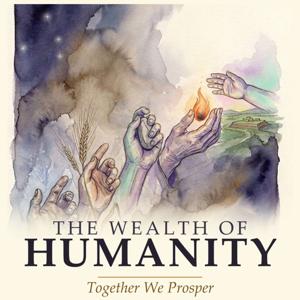
Mark Steven Hewitt introduces his forthcoming book, The Wealth of Humanity: Together We Prosper, and the audio discussions and summaries of it in this podcast.
Long before money, the people who lived along the Indus survived the ice ages with stone, fire, knowledge and each other. The book follows that inheritance from the first villages at Mehrgarh and the cities of the Indus, through Adam Smith and the five kinds of wealth that money alone cannot measure, to how the people of a place might plan, build and keep what they build.
Together we prosper; apart we fail.
How this episode was made: The narration uses an AI clone of the author's voice (ElevenLabs). The MicroCity model and the Regenerative Wealth Reserve discussed here are proposals set out in the book, not programs now operating.
—
📖 Read The Wealth of Humanity free: https://BookHip.com/CVZXWCZ
🌐 About the book: wealthofhumanity.ca
🎧 Episodes, notes and transcripts: podcasts.nationsoflight.com
📚 All of Mark's books: nationsoflight.com
Follow the podcast wherever you listen to hear each new discussion as it's released.
An audio discussion and summary of The Wealth of Humanity: Together We Prosper.
How did people survive the Ice Age with no metal, no writing and no farming? Not as lone hunters, but through networks of sharing. This episode follows that blueprint from the Kalahari to the Indus Valley, and asks what it means for how we measure wealth and plan communities today.
In this episode
If you share the fire, we all make it to spring.
How this episode was made: This is an AI-generated audio discussion (Google NotebookLM) of the book's manuscript: the two hosts are synthetic voices. The introduction and closing use an AI clone of the author's voice (ElevenLabs). Three passages in which the hosts said the Country Baseline Series is already being carried out in Pakistan were removed, because that is not the case: the series is a set of research baselines. The MicroCity model and the Regenerative Wealth Reserve discussed here are proposals set out in the book, not programs now operating.
—
📖 Read The Wealth of Humanity free: https://BookHip.com/CVZXWCZ
🌐 About the book: wealthofhumanity.ca
🎧 Episodes, notes and transcripts: podcasts.nationsoflight.com
📚 All of Mark's books: nationsoflight.com
Follow the podcast wherever you listen to hear each new discussion as it's released.
From the publisher's feed