
Sign up to save your podcasts
Or



Most of us were taught one of two things about anger: swallow it whole, or let it rip. Neither is working out great for us. In this episode it’s just the two of us, talking about where we first learned what anger looks like, what’s usually hiding underneath it, and what to do when it shows up uninvited.
Patti opens up about her own long, complicated relationship with anger, and Jan puts her therapist hat on to help make sense of it all.
We get into:
There are no bad emotions, just information. If you’ve ever been told your anger was too much, or never got to have any at all, come sit with us for a bit. Then tell us what your anger has been trying to say.
Jan’s book, Gifts From a Challenging Childhood, and her free downloadable forms are available at https://mountainstreampublishingcompany.com/download
Find resources mentioned in this episode here.
Learn more about this podcast here.
Submit your 90-second lesson/experience here.
Apply to be a guest here.
Stay updated on new episodes here.
*Information shared on this podcast is not medical advice. If you have a concern about your physical or mental health, please seek support from a proessional.
If your first question is "What's a death doula?", you're in good company. Not a lot of people have heard of an end-of-life doula!
But this week, we’re talking to one!
This week, Christa Ovenell joins us to talk about what doulas actually do (spoiler: it's way more than sitting at the bedside), and why the most common call a funeral home gets is "What do I do now?"
In this episode:
Knowing if you want to be buried or cremated is a great start, but it's one decision out of many. The best time to think about the rest is now, while you're calm and curious and nowhere near a funeral home office. Grab Christa's free resources we discuss in the epsiode and below and start the conversation with your people.
About Christa Ovenell:
Christa Ovenell is a licensed funeral director and embalmer, an end-of-life doula, and founder of Death’s Apprentice Education & Planning. As a CBC radio columnist and longtime death educator, she believes that death is part of life, so it’s time we started treating it that way.
Christa’s Links & Resources:
Christa's Website
IG @deathsapprentice.ca
What to Do with the Ashes
Questions a Funeral Director Asks
What Does a Doula Do?
Not Another Checklist
Find resources mentioned in this episode here.
Learn more about this podcast here.
Submit your 90-second lesson/experience here.
Apply to be a guest here.
Stay updated on new episodes here.
*Information shared on this podcast is not medical advice. If you have a concern about your physical or mental health, please seek support from a proessional.
When did you first realize you were getting older? For Patti, it was the doctor saying "it's time for a colonoscopy" at 45. For Jan, it was turning 70 and discovering that 70 is definitely not the new 60.
In this episode, we talk about aging from two very different spots on the timeline. We talk about how your calendar fills up with doctor appointments, how your skin turns into tissue paper, and how you start watching the people you love get older and wondering what that means for you. We also talk about grief. Not the kind that comes when you lose someone, but the kind that shows up when you find an old photo of yourself dancing and realize you're a long way from that now.
If you're in the thick of it, you're not whiny and you're not alone. Feel the sad parts, share the good parts, and call the people you love. We'll be right here figuring it out with you.
Find resources mentioned in this episode here.
Learn more about this podcast here.
Submit your 90-second lesson/experience here.
Apply to be a guest here.
Stay updated on new episodes here.
*Information shared on this podcast is not medical advice. If you have a concern about your physical or mental health, please seek support from a proessional.
A few episodes back, we told you about our own experiences with psychedelics, and we promised we'd bring in someone who actually does this work professionally. Meet Alissa Aune, a licensed marriage and family therapist with more than two decades of experience in developmental and relational trauma, and the founder of Embodied Journeys Collective.
Alissa walks us through what medicine-assisted psychotherapy really means in Minnesota right now, which is ketamine and cannabis. She explains what happens in a two-hour ketamine session, why the flower matters and gummies don't, and why the therapeutic dose of cannabis is roughly three times what she'd use recreationally without ever feeling high.
We dive into:
If this is something you've been circling for a while, we hope this gives you enough real information to ask better questions. Start with your state's regulations, ask your own therapist what they know, and don't be shy about vetting whoever you choose. And if you've got a story about your own experience with any of this, we'd love to hear it.
About Alissa Aune:
Alissa is a licensed marriage and family therapist with more than two decades of experience. She specializes in developmental and relational trauma, helping adults understand how early life experiences continue to shape the way they relate to themselves, others, and the world. Her work is grounded in the belief that our bodies hold our stories, and that lasting healing happens when we engage the whole person - mind, body, and spirit.
Her work integrates the Healing Our Core Issues model, somatic approaches, attachment theory, EMDR, and medicine-assisted psychotherapy. Beyond individual therapy, she is passionate about creating spaces where healing can happen in community. Through Embodied Journeys Collective, her hope is to bring together therapists, educators, bodyworkers, and wellness practitioners who share a common vision: to create a safe, trauma-informed environment where people can explore healing in many different ways. Rather than believing there's one path to healing, they believe that each person's journey is unique, and that healing often happens when people feel deeply seen, supported, and connected.
It is a privilege for her to walk alongside people as they rediscover their resilience, reclaim their personal power, and come home to themselves.
Alissa’s Links:
https://www.findingyourunity.com
https://www.embodiedjourneyscollective.com
Find resources mentioned in this episode here.
Learn more about this podcast here.
Submit your 90-second lesson/experience here.
Apply to be a guest here.
Stay updated on new episodes here.
*Information shared on this podcast is not medical advice. If you have a concern about your physical or mental health, please seek support from a proessional.
We're talking about UTIs today, and yes, we know that doesn't sound thrilling. But after Jan’s years of struggle with them and Patti’s close relatives experiencing big impacts from them, we knew this was important information to share.
Here's what we get into:
If you've ever brushed off a UTI, watched a parent go through something confusing that turned out to be one, or have never even had one, this episode is worth a listen.
Find resources mentioned in this episode here.
Learn more about this podcast here.
Submit your 90-second lesson/experience here.
Apply to be a guest here.
Stay updated on new episodes here.
*Information shared on this podcast is not medical advice. If you have a concern about your physical or mental health, please seek support from a proessional.
We’ve discussed many taboo topics on this podcast, but we’ve overlooked a big one until now. Money! That’s why we brought in financial empowerment coach Briana Williams to help us get honest about it.
Briana's own money story starts with $110,000 in debt and she walks us through exactly how she climbed out of it, what she'd do differently, and why she thinks most of us were never taught any of this in the first place. We get into the shame that creeps in around money, why budgeting doesn't have to mean saying no to everything you love, and the surprisingly simple way to start investing even if you think it's not for you.
Here's a taste of what's inside:
If you've ever felt behind on money, or too embarrassed to even bring it up, this conversation is for you. It's never too late to start, and you don't have to figure it out alone.
About Briana:
Briana Williams helps women rewrite their relationship with money so they can create deeper relationships, more purposeful work, and a bigger, wilder, and more abundant life.
Through practical financial strategy and intuitive coaching, she guides women toward aligned spending, intentional wealth-building, and the clarity to make empowered decisions in every area of their lives.
Briana's Website: https://wildsoulwork.com
Find resources mentioned in this episode here.
Learn more about this podcast here.
Submit your 90-second lesson/experience here.
Apply to be a guest here.
Stay updated on new episodes here.
*Information shared on this podcast is not medical advice. If you have a concern about your physical or mental health, please seek support from a proessional.
We're talking relationships today, and Jan's bringing the wisdom she's collected from 30 years as a couples therapist (plus 36 years of her own marriage).
Jan shares bits of the toast she's given at both of her sons' rehearsal dinners: her four hard-won truths about what actually makes relationships work. Then we dig into Pia Mellody's three golden rules of interdependence, the ones Jan says could make her rich if she had a quarter for every time she needed to explain them to a couple.
We get into:
If you've ever caught yourself waiting for someone to just know what you need, or you're tired of carrying resentment instead of saying what's actually true, this episode is for you. Whether you're solid in your relationship or in the thick of a rough patch, these are the practices that hold up either way.
Find resources mentioned in this episode here.
Learn more about this podcast here.
Submit your 90-second lesson/experience here.
Apply to be a guest here.
Stay updated on new episodes here.
*Information shared on this podcast is not medical advice. If you have a concern about your physical or mental health, please seek support from a proessional.
This week we're talking with Jodi Brown, a life strategist who's spent decades living outside the path most of us were handed: get married, have kids, build a nest egg, retire comfortably. Jodi chose her own path that she’s loved. And now she spends her time helping women figure out what a full, connected life looks like when it doesn't follow that script, whether by choice or because divorce or widowhood rewrote the plan.
We were so excited to talk to Jodi because more women, including Patti, feel very similarly to Jodi and are seeking their own lives outside the paths we were sold.
A few things we get into:
This isn't a checklist for how to do it right. It's a real conversation about building a life that actually fits, on your own terms.
About Jodi:
Jodi Brown is a life strategist who helps women figure out what actually works next when the life they’ve built no longer fits.
After decades of real-life experience navigating major transitions, including rebuilding her life as a homeowner in New Orleans in the aftermath of Hurricane Katrina, Jodi brings a deeply practical, lived perspective to the work she does today.
She shares her process in real time through social media, where she’s built a rapidly growing audience of women looking for clear, grounded ways to move forward. Her work focuses on helping women think through their options, understand trade-offs, and make decisions that support the life they actually want, not just the one they’ve been told to build.
While housing, including tiny homes and shared living, is part of that conversation, Jodi’s work goes far beyond it. She’s part of a growing movement of women reimagining how they want to live, age, and support each other in community.
Jodi’s Website
Follow Jodi: @iamjodibrown everywhere. Instagram, Facebook, TikTok, YouTube.
Find resources mentioned in this episode here.
Learn more about this podcast here.
Submit your 90-second lesson/experience here.
Apply to be a guest here.
Stay updated on new episodes here.
*Information shared on this podcast is not medical advice. If you have a concern about your physical or mental health, please seek support from a proessional.
In this episode, we go a new direction that some people may feel uncomfortable with, but we feel is an important conversation. We talk about drugs. Specifically, psychedelics, and what they've meant for mental health, including our own.
We share our personal stories, dig into some research, and have the kind of conversation we probably should have had with someone years ago. This isn't a "just say no" episode, and it's not a "do whatever you want" episode either. It's a real, honest look at what these substances are, what they can do, and why intention matters more than most people realize.
Here's what we get into:
We are not here to tell you what to do. We are here to have the conversation nobody had with us, so you can make informed, intentional choices for yourself.
Find resources mentioned in this episode here.
Learn more about this podcast here.
Submit your 90-second lesson/experience here.
Apply to be a guest here.
Stay updated on new episodes here.
*Information shared on this podcast is not medical advice. If you have a concern about your physical or mental health, please seek support from a proessional.
We've all had a dental horror story or two, and after sharing ours in a recent episode, we figured it was time to bring in an actual expert. This week we're joined by Dr. Zakary Yermolenko, a general dentist, Army Reserve major, and owner of Vernon Valley Dentistry in New Jersey, who somehow also finds time to coach his five-year-old's soccer team.
Dr. Zak has a lot to say about what we're getting wrong, what we're finally getting right, and why "I don't have any pain" is not the green light we think it is. He also drops a few things we genuinely had never heard before, which, honestly, is exactly why we're here.
Here's some of what we cover:
Dr. Zak's whole approach is built around prevention, communication, and actually listening to his patients. He doesn't want to do more work than necessary; he wants you to not need it. That philosophy came through in everything he said, and we think it's a really refreshing way to think about dental care and honestly, about healthcare in general.
If you've been putting off going to the dentist or feel like nobody ever really explained any of this to you, this episode is going to feel very overdue.
About Dr. Zakary Yermolenko
Dr. Zakary Yermolenko is a general dentist and owner of a family practice known as Vernon Valley Dentistry. He is a Major in the US Army Reserve, where he serves as a general dentist as well. He is married with two children, and the family has two dogs, two cats, and ten chickens. He enjoys watching, playing, and coaching soccer.
Dr. Zak's Website
Find resources mentioned in this episode here.
Learn more about this podcast here.
Submit your 90-second lesson/experience here.
Apply to be a guest here.
Stay updated on new episodes here.
*Information shared on this podcast is not medical advice. If you have a concern about your physical or mental health, please seek support from a proessional.
From the publisher's feed
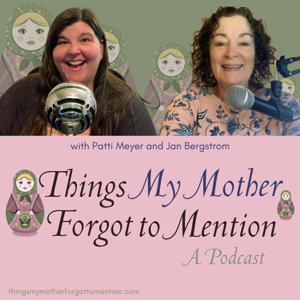
Things My Mother Forgot to Mention is the podcast for every woman who’s ever said, “Wait—why didn’t anyone mention this to me?” Join Jan and Patti—two outspoken, curious, outrageous women—as they…