
Sign up to save your podcasts
Or

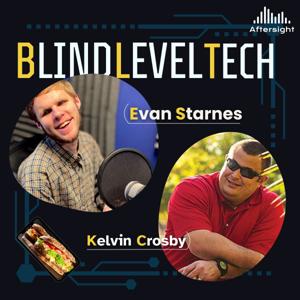

In this episode of Blind Level Tech, Evan Starnes takes on a topic that can be surprisingly personal and surprisingly complicated: switching ecosystems. Rather than arguing that iPhone or Android is universally better, Evan walks listeners through what actually changes when you move from one platform to the other, especially as a blind screen reader user.
Drawing from his own recent experience of moving his eSIM from an iPhone to a new Google Pixel, Evan breaks down the practical side of switching, from initial setup and data transfer to battery life expectations and the reality of what does and does not carry over. He talks about the parts of the process that are more accessible than many people might expect, but also points out the frustrations, like message transfer issues and the extra little setup hurdles that can still make switching feel bigger than it should.
A major focus of the episode is accessibility. Evan compares VoiceOver and TalkBack, highlighting how much TalkBack has matured over the years. He discusses multi-finger gestures, customizable commands, Gemini-powered image descriptions and summaries, braille support, the TalkBack menu, and the way Android navigation differs from iOS. He also points out a few things he misses from iPhone, like direct touch in certain apps, Apple’s wider voice selection, and some of the little usability touches in iOS that make scrolling and media interaction feel smoother.
On the Android side, Evan talks about the strengths that still make Google’s platform appealing, especially for blind users who value flexibility. He highlights the usefulness of fingerprint unlock, the universal back button, home screen and launcher customization, app-specific notification sounds, and the broader ability to tailor the device to your own habits. On the Apple side, he acknowledges that iOS still has major advantages, especially when it comes to ecosystem integration with devices like the Apple Watch, iPad, AirPods, and Mac.
Overall, this episode is a thoughtful, real-world look at what switching phone ecosystems actually feels like when accessibility is part of the equation. It is not about declaring a winner. It is about helping listeners understand the tradeoffs, the surprises, and the things worth knowing before making the jump themselves.
Creators & Guests
 View all episodes
 By Aftersight

4.7
1515 ratings
In this episode of Blind Level Tech, Evan Starnes takes on a topic that can be surprisingly personal and surprisingly complicated: switching ecosystems. Rather than arguing that iPhone or Android is universally better, Evan walks listeners through what actually changes when you move from one platform to the other, especially as a blind screen reader user.
Drawing from his own recent experience of moving his eSIM from an iPhone to a new Google Pixel, Evan breaks down the practical side of switching, from initial setup and data transfer to battery life expectations and the reality of what does and does not carry over. He talks about the parts of the process that are more accessible than many people might expect, but also points out the frustrations, like message transfer issues and the extra little setup hurdles that can still make switching feel bigger than it should.
A major focus of the episode is accessibility. Evan compares VoiceOver and TalkBack, highlighting how much TalkBack has matured over the years. He discusses multi-finger gestures, customizable commands, Gemini-powered image descriptions and summaries, braille support, the TalkBack menu, and the way Android navigation differs from iOS. He also points out a few things he misses from iPhone, like direct touch in certain apps, Apple’s wider voice selection, and some of the little usability touches in iOS that make scrolling and media interaction feel smoother.
On the Android side, Evan talks about the strengths that still make Google’s platform appealing, especially for blind users who value flexibility. He highlights the usefulness of fingerprint unlock, the universal back button, home screen and launcher customization, app-specific notification sounds, and the broader ability to tailor the device to your own habits. On the Apple side, he acknowledges that iOS still has major advantages, especially when it comes to ecosystem integration with devices like the Apple Watch, iPad, AirPods, and Mac.
Overall, this episode is a thoughtful, real-world look at what switching phone ecosystems actually feels like when accessibility is part of the equation. It is not about declaring a winner. It is about helping listeners understand the tradeoffs, the surprises, and the things worth knowing before making the jump themselves.
Creators & Guests
1 Listeners

2 Listeners
3 Listeners
1 Listeners
1 Listeners
3 Listeners

1 Listeners

1 Listeners

1 Listeners
1 Listeners

15 Listeners
1 Listeners

1 Listeners
0 Listeners
5 Listeners

0 Listeners
0 Listeners
0 Listeners

0 Listeners