
Sign up to save your podcasts
Or

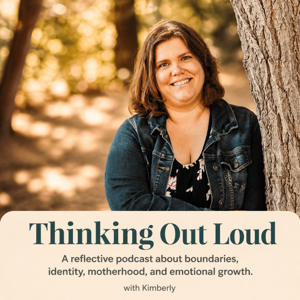


EP51: The Meaning of Self Expression
Welcome back to Thinking Out Loud! I’m Kimberly, and in this episode, we’re exploring a nuanced question: What is self-expression?
Self-expression can sometimes blur the lines between sharing one's story and infringing on someone else's privacy. Join me as I delve into the complexities of expressing ourselves without taking over another person's narrative.
In this episode, we’ll discuss:
We’ll also touch on real issues like postpartum psychosis, the social media landscape, and how compassion can coexist with inquiry.
This podcast is for reflection and conversation, not professional advice. Take what resonates, leave the rest, and remember self-expression isn't simply having a voice. It's choosing how you use it.
Subscribe & Follow
Thinking Out Loud
www.facebook.com/thinkingoutloud.kimberly/
Blog
hi.itsmekimberly | Substack
For questions, collaborations, or guest inquiries:
📧 [email protected]
EP50: Understanding Capacity
Welcome back to Thinking Out Loud! I’m Kimberly, and in this episode, we’re diving into the essential question: What does it mean to have capacity?
We often discuss capacity in simplistic terms, but it’s nuanced. Sometimes it refers to physical energy, while other times, it’s emotional or mental resilience. As we explore this concept, I’ll introduce three metaphors—spoons, cake, and cauldrons—to illustrate how capacity is not just about how much we can do, but also about recognizing what we can responsibly give without depleting ourselves.
Key Topics Covered:
I’ll also discuss how to navigate the boundaries of our capacity. It’s perfectly okay to say no and prioritize self-care without guilt. We’ll reflect on how respecting our own limits and the limits of others is a vital part of fostering healthy relationships.
This podcast is for reflection and conversation, not professional advice. Take what resonates, leave the rest, and remember your capacity is yours.
Subscribe & Follow
Thinking Out Loud
www.facebook.com/thinkingoutloud.kimberly/
Blog
hi.itsmekimberly | Substack
For questions, collaborations, or guest inquiries:
📧 [email protected]
EP49: Why Can I Get Over the Past?
Welcome back to Thinking Out Loud! I'm Kimberly, and in this episode, we’re tackling a deeply relatable question: How do I get over it?
We often envision healing as a straightforward hurdle to jump over, but the reality is far more complex. What if moving on isn’t just about clearing obstacles but understanding what we’re really grieving? Sometimes we put time limits on our healing, but that can lead to feelings of inadequacy and confusion.
Join me as I explore the nuances of processing grief versus disappointment, and the importance of recognizing that everyone's experience is different. From lost friendships to changes in life plans, the things we grieve are as varied as the individuals we are.
Join me as I don't offer concrete solutions rather create space for reflection and honest conversation. Together, we’ll learn that it’s okay to show up while still hurting and that living fully doesn’t require us to leave our grief behind.
This podcast is for reflection and conversation, not professional advice. Take what resonates, leave the rest, and remember sometimes healing is learning how to build the capacity to carry what happened.
Subscribe & Follow
Thinking Out Loud
www.facebook.com/thinkingoutloud.kimberly/
Blog
hi.itsmekimberly | Substack
For questions, collaborations, or guest inquiries:
📧 [email protected]
EP48: Healing Isn't a Race
Welcome back to Thinking Out Loud! I’m Kimberly, and today we’re addressing a fundamental question: Why do we rush healing?
In a world that often places a premium on speed and productivity, healing can feel like just another checkbox on our to-do list. We want to feel better now, to create something meaningful now, and to prove to ourselves that our choices were worth it.
In this episode, I’ll explore:
Join me as we create a space for honesty, vulnerability, and slow, intentional growth. Let’s get to thinking out loud!
This podcast is for reflection and conversation, not professional advice. Take what resonates, leave the rest, and remember not every coping strategy is a weed we need to pull out.
Subscribe & Follow
Thinking Out Loud
www.facebook.com/thinkingoutloud.kimberly/
Blog
hi.itsmekimberly | Substack
For questions, collaborations, or guest inquiries:
📧 [email protected]
EP47: The Performance of Healing
Welcome back to Thinking Out Loud! I’m Kimberly, and today we’re diving deep into a crucial question: Why does healing sometimes feel performative?
Healing is often framed as a journey toward self-awareness and growth, what happens when the act of healing becomes a performance? In our quest for validation, we may find ourselves more focused on appearing healed than actually doing the inner work. When we share our hurt, it can feel like we’re met with comparisons or judgments instead of understanding.
In this episode, we’ll explore:
This conversation is an invitation to reflect, not only on your experiences but on what healing looks like for you—beyond the surface. Healing doesn’t require us to turn our pain into beautiful stories or to constantly prove we’re “better.”
Join me as we navigate the complexities of healing, allowing space for discomfort, uncertainty, and authenticity.
This podcast is for reflection and conversation, not professional advice. Take what resonates, leave the rest, and remember you don't have to perform for your healing to be real.
Subscribe & Follow
Thinking Out Loud
www.facebook.com/thinkingoutloud.kimberly/
Blog
hi.itsmekimberly | Substack
For questions, collaborations, or guest inquiries:
📧 [email protected]
EP46: When Does Influence Become Indoctrination?
Welcome back to Thinking Out Loud! I’m Kimberly, and today we’re diving into a topic that often stirs up strong emotions: When does influence or a deeply held belief cross the line into indoctrination?
We often picture indoctrination as a black-and-white scenario involving cults or strict regimes, but what if it manifests more subtly in our daily lives? What if indoctrination is wrapped in the guise of advice, tradition, or even love? When someone tells you, “This is just how things are” or “Good people believe this,” it might not feel like control, but it raises important questions.
In this episode, we’ll explore:
Join me as we move beyond binary thinking, unpack the nuances of thought and influence, and encourage a space where asking questions is celebrated. Let’s get to thinking out loud!
This podcast is for reflection and conversation, not professional advice. Take what resonates, leave the rest, and remember influence isn't the same thing as indoctrination.
Subscribe & Follow
Thinking Out Loud
www.facebook.com/thinkingoutloud.kimberly/
Blog
hi.itsmekimberly | Substack
For questions, collaborations, or guest inquiries:
📧 [email protected]
EP45: Estrangement
Welcome back to Thinking Out Loud! Hi, it's me, Kimberly.
In this thought-provoking episode, I’m delving into a complex and often misunderstood topic: Why might someone choose estrangement? When we hear that someone has chosen to cut contact with a family member, it’s easy to jump to conclusions and label one party as the villain. What if we’re asking the wrong questions?
Instead of assessing who’s right or wrong, let’s explore what happened in the relationship that led to this decision. Estrangement is rarely an impulsive act; it often stems from years of unresolved conflict, autonomy violations, and emotional neglect. As I share personal insights and broader observations, we’ll discuss:
Together, we’ll reflect on the narrative around estrangement, asking what might lead someone to seek distance and how love can coexist with the need for boundaries. This conversation encourages curiosity and self-reflection rather than blame or shame.
Join me as we explore the gray areas of family dynamics, promoting a deeper understanding of estrangement and the complexities that come with it.
This podcast is for reflection and conversation, not professional advice. Take what resonates, leave the rest, and remember there is no 5-step program on when it's okay to choose estrangement.
Subscribe & Follow
Thinking Out Loud
www.facebook.com/thinkingoutloud.kimberly/
Blog
hi.itsmekimberly | Substack
For questions, collaborations, or guest inquiries:
📧 [email protected]
EP44: Unmasking Narcissism: A Journey into Accountability
In this compelling episode of "Thinking Out Loud," Kimberly takes a deep dive into the complex questions surrounding narcissism and personal accountability. Addressing the common concern, "Am I the narcissist?" Kimberly bluntly prompts a more profound exploration of our behaviors and relationships.
Kimberly invites listeners to reflect on their use of power in relationships. Are you genuinely interested in understanding your actions or seeking validation to ease your conscience? Through relatable anecdotes, she examines how we often minimize our own impact and how power dynamics shape our interactions with others.
Key themes include:
Join Kimberly as she offers frameworks for reflection, pushing listeners to engage in self-discovery and growth. Whether you relate to being on the receiving end of harmful behaviors or recognize patterns in your own actions, this episode is a call to examine our relationships with both ourselves and others. Tune in and take the first step towards understanding and change.
This podcast is for reflection and conversation, not professional advice. Take what resonates, leave the rest, and remember you don't have to be the villain to be accountable.
Subscribe & Follow
Thinking Out Loud
www.facebook.com/thinkingoutloud.kimberly/
Blog
hi.itsmekimberly | Substack
For questions, collaborations, or guest inquiries:
📧 [email protected]
EP43: The Complexity of Survival and Manipulation
In this thought-provoking episode, Kimberly tackles the intricate relationship between survival behaviors and emotional manipulation. She prompts listeners to consider when survival instincts, driven by fear and trauma, cross the line into controlling others' perceptions of reality.
Kimberly explores the confusion that arises when harm is intertwined with care, highlighting how individuals can both love and deeply hurt those closest to them. She emphasizes that understanding someone's survival responses does not excuse the damage that may result from their actions.
Through personal anecdotes and reflective inquiry, Kimberly encourages listeners to examine their own behaviors and the impact they have on others. She raises essential questions about accountability, urging us to consider whether we protect ourselves at the expense of someone else's truth.
Join Kimberly in this nuanced conversation that challenges us to reflect on our survival behaviors, recognize our boundaries, and cultivate empathy without sacrificing our own realities. Discover how understanding can coexist with accountability, paving the way for healthier, more honest relationships.
This podcast is for reflection and conversation, not professional advice. Take what resonates, leave the rest, and remember you can both be redeemable while taking accountability.
Subscribe & Follow
Thinking Out Loud
www.facebook.com/thinkingoutloud.kimberly/
Blog
hi.itsmekimberly | Substack
For questions, collaborations, or guest inquiries:
📧 [email protected]
EP42: Abuse Beyond Lables
In this thought-provoking episode, Kimberly challenges the obsession with diagnosing narcissism and shifts the focus towards a more essential conversation: defining abuse. She reflects on how the term "narcissism" has offered clarity for many, revealing confusing and manipulative dynamics in their lives. However, Kimberly argues that understanding narcissism is just the beginning; it's crucial to delve deeper into conversations about emotional, psychological, and behavioral patterns of control and power.
This episode invites listeners to consider vital questions around accountability and the true nature of harm. Kimberly emphasizes:
Join Kimberly as she navigates the complex layers of abuse, power, and the responsibility we all have in using our influence for good.
This podcast is for reflection and conversation, not professional advice. Take what resonates, leave the rest, and remember abuse doesn't need a label to be real.
Subscribe & Follow
Thinking Out Loud
www.facebook.com/thinkingoutloud.kimberly/
Blog
hi.itsmekimberly | Substack
For questions, collaborations, or guest inquiries:
📧 [email protected]
From the publisher's feed
Hi. It's me, Kimberly.
I'm a rambler by nature. I ask a lot of questions, chase nuance, and rarely believe life fits neatly into "good" and "evil." I'm more…
Here, we explore culture through a philosophical lens, using everyday life as the commentary—sometimes through movies, music, and pop culture, and other times through psychology, family systems, motherhood, relationships, budgeting, or whatever else has me thinking that week. Life doesn't happen in neat categories, so neither does this channel.
We do try to have fun, though. Life can be heavy, and I believe it's important to leave room for laughter while still making space for pain, grief, and those moments where all you can honestly say is, "Well...that sucks."
I'm a mom untangling my own experiences while trying to build a healthier life for my family. Along the way, I've learned that we are more than our diagnoses, politics, upbringing, beliefs, or the labels placed on us by ourselves or others. We're also more than the prejudices we've inherited or the stories we've been taught about who we're supposed to become. Those things influence us; they don't have to define us. Every one of us has the ability to grow into someone more intentional.
This is a space for curiosity, accountability, and growth. Everyone is welcome here if they're willing to engage with respect and a genuine desire to understand. We can challenge ideas without dehumanizing people. We can disagree without contempt. We can hold harmful behaviors accountable without forgetting the humanity of the person behind them.
I believe grace and accountability can exist together. I believe people can grow, learn, and change. At the same time, I take abuse, manipulation, and dehumanization seriously. Curiosity should never come at the expense of someone's dignity or safety.
I believe in transparency, consent, personal responsibility, and leading your own life. I don't want followers who simply adopt my opinions. I'd rather ask better questions that help all of us think more critically, live more intentionally, and become people we're proud to be.
I don't have all the answers.
I'm simply thinking out loud.
Maybe together, we'll ask better questions.
At the end of the day, I don't want to tell you what to think.
I want to give you something worth thinking about.
If you'd like to dive deeper into these ideas, visit my blog, where I share new reflections and questions almost every day.
hi.itsmekimberly | Substack