
Sign up to save your podcasts
Or

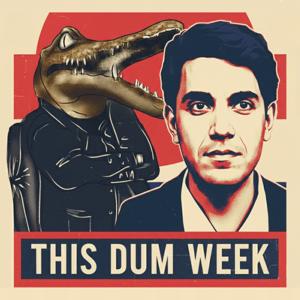


This episode moves from to tech power politics (Altman vs Musk, NASA vs SpaceX), then into executive oversight and AI censorship, closing on intellectual property, open-source tools, and epistemic clarity. It’s a dense, fast-moving three hours where each news story is treated as a case study in incentives and institutional failure rather than headline fodder.
OpenAI’s for-profit turn: They trace how OpenAI’s shift to a capped-profit model was justified by “we need more compute.” Marinos explains that Google and Meta were already profit-driven, so Altman’s pivot isn’t unique—just branded as moral necessity.
Elon Musk vs Sam Altman: A recap of Elon’s appearance on Joe Rogan and the follow-up on X, where Musk accuses Altman of “stealing a nonprofit.” They detail Musk’s claim about a refund email fiasco: Altman said a reservation was never refunded, but Elon produced receipts showing it was fixed within 24 hours.
Starship and Artemis: Coverage turns to NASA’s concern that Starship delays may push the Artemis III moon landing “months or years” back. Quoting NASA sources, they discuss the south-pole landing site and the agency’s frustration with SpaceX’s pace.
Mission redesign talk: They read from SpaceX’s response promising a “simplified mission architecture” to meet NASA’s new requirements and “improve crew safety.” The hosts debate whether “simplified” means “less ambitious” or “more realistic.”
Executive authority & ambiguity: The hour closes on a politics-law crossover: if an executive’s authorization is unclear, does ambiguity void everything? A CNN article is cited as context for how confusion over delegation can make all actions challengeable.
White House probe: Segment opens with a House GOP report claiming the White House failed to document Biden’s approval for certain actions. Three top aides invoked the Fifth Amendment instead of testifying. Hosts weigh whether silence signals exposure or discipline.
Peace Prize and war: They note, half-laughing, that the recent Nobel Peace Prize winner publicly backed a U.S. attack on Venezuela, calling it the latest example of award institutions betraying their titles.
Presidential gaffes and “norms-respecting” answers: A clip is referenced where a president fumbles a foreign-policy question; they contrast it with “norms-respecting” answers from earlier eras, asking whether candor now looks like malfunction.
AI content policy: They revisit Vision AI filters—software that’s been able to spot nudity for a decade—but still dodges nuance and context. The topic widens to how models encode censorship under the guise of brand safety.
Tech growth numbers: They read from earnings reports: Amazon sales up 13 percent year-over-year in June. Marinos frames this as evidence that AI automation and cloud infrastructure are becoming “the biggest technology inflection since the Internet.”
Mental-health aside: A surreal moment ends the hour—Gator notes how “about half of people have thought about suicide” statistically; they unpack why reporting such numbers out of context magnifies hopelessness instead of helping prevention.
Copyright and perversion: They open with a rant about someone “withholding demand because he’s a pervert,” pivoting into a serious copyright discussion: how control over intellectual property gets psychologized as moral defense rather than economic structure.
The line of protection: Deep dive into what is actually protected by copyright and how courts keep expanding interpretation. Gator says he sympathizes with critics who see the framework as overbroad and abused by rights holders.
Etcher vs dd: Alex talks about Etcher, the Electron-based app for flashing SD cards, boasting it beat the old Unix tool dd. They riff on Electron’s bloat vs ease-of-use and how JavaScript crept into sysadmin territory.
Security and China: They pose the question “what would make you betray your secrets to China?” as a thought experiment on loyalty, data sovereignty, and how state rhetoric drifts into corporate policy.
Listeners may find the prompt Alex mentions at the end of the podcast here https://x.com/alexandrosM/status/1985106159116964068
A messy apology tour kicks off a deep dive into how past posts, symbols, and endorsements collide with modern media incentives. The guys trace the timeline of a political flare-up (including old Reddit comments, a high-profile endorsement, and the “I just found out” defense), then widen the lens: when “safety standards” become market moats, what the Fourth Amendment means in a cloud world, how protests and financial rails intersect, and why open standards keep getting “embraced and extended.” They close with outage fragility, Ubuntu’s Rust shift, Bose’s cloud-feature shutdown for legacy gear, and the principle that helpers should never sit in your main loop.
Set-up & prior week callback: The show opens by picking up a controversy from last week. The subject (referred to throughout as Platner) is under fire for old Reddit posts (including racially charged comments and remarks about assault victims) that resurfaced and are now being stitched into a current narrative.
“I just found out” defense: They reconstruct the timeline where Platner claims to have only recently learned about certain details and acted once informed. The hosts test this against earlier statements and the cadence of events.
Apology content vs. context: The apology includes regret over extremist symbolism and aggressive rhetoric in past posts. The guys distinguish sincere contrition from narrative triage, asking whether the apology addresses (a) facts, (b) harm, and (c) proposed remedies—or simply tries to reset the news cycle.
Symbol-policing & mirrors: They riff on how symbol detection online has grown hyper-literal (including mirror-image and rotation gags), and why context collapse makes genuine signal indistinguishable from overzealous hunting.
Media incentives & amplification: Why stories like this stick: endorsement conflict, charge of hypocrisy, and quotable past posts give editors a perfect frame. The show stresses how these ingredients ensure virality independent of truth gradients.
Competition vs. “protection”: The guys argue that policies billed as user or safety protections can harden into compliance moats that keep up-and-comers at bay, paradoxically weakening real competitive pressure on incumbents.
Fourth Amendment in the cloud era: A concrete discussion of “papers and effects” when your artifacts live on servers you don’t control. Device searches, sync defaults, and the blurry line between the personal and the hosted are laid out in practical terms.
Protests and post-protest messaging: After rallies against a named figure conclude, the subject responds.
Frozen funds & process: They cover a case where a non-trivial amount of money was frozen, using it to illustrate the power of financial rails as informal enforcement—and why due process gets murky when the bank switch is the penalty.
OpenAI vs. the King Estate: A newsy beat: OpenAI newsroom communications met by a response from the King Estate. The hosts use it to unpack consent around cultural icons, remix vs. commercialization, and the rising complexity of rights clearance for model outputs.
Embrace–extend–entrench: A pattern primer: start with open standards, then add proprietary “extras” that make your skew the practical standard. It’s savvy product strategy that erodes interoperability over time.
Big web hiccup: The show walks through a wide outage that impacted many sites, using it to map the dependency lattice (CDNs, auth, DNS, package registries) and why a short disruption can cascade into real business damage.
Ubuntu’s Rust shift: Ubuntu moving core utilities toward Rust prompts a technical debate: memory-safety gains vs. the ecosystem churn when OSS scripts and ops muscle memory meet subtle behavior changes.
Bose sunsets cloud features: Bose is called out for ending cloud streaming support on older hardware—an example of how “connected” products age poorly when features hinge on services the manufacturer can later withdraw.
“Helpers” outside the main loop: A crisp engineering principle lands the plane: assistants and guardrails are great, but never in the middle of your primary execution path. Supervisors yes; bottlenecks no. This ties back to outages, deprecations, and policy switches blocking core workflows.
Anti-fragility & voluntary buy-in: They nod to practical policy design (a Lakewood example) where voluntary, consent-based programs earn legitimacy and resilience better than top-down compulsion.
A fast-moving, three-hour ride through undercover “sting” cases and entrapment, George Santos’ ever-growing fabulism, spyware and state surveillance (hello, Pegasus/NSO), 2024–25 election machinery fights (Dominion, audits, paper trails), foreign-policy whiplash (Ukraine/Israel), and a grab-bag of culture-war oddities—stitched together with the show’s trademark skepticism about institutions, prosecutors, and media narratives.
Undercover stings & entrapment: The show opens with a deep dive into a case where an undercover officer allegedly nudged a target by asking him to “bring condoms.” The hosts walk through what is and isn’t entrapment: government inducement vs. predisposition, what counts as “mere opportunity,” and why prosecutors often frame ambiguous chats as intent.
What evidence actually proves intent: Chat logs, meeting location, and whether a target suggests sexual activity vs. simply responding to suggestive prompts. The crew stresses that “no condoms found” at arrest weakens—but doesn’t kill—the state’s theory, and they harp on how much juries infer from incomplete transcripts.
Institutional skepticism: Recurrent theme that charging decisions get wrapped in press-friendly narratives (“protect the children,” “public safety”) even when the underlying facts are messy or thin.
George Santos segment (set-up): Primer on why Santos keeps surfacing—fabrications across biography, finance, and resume—used as a segue to how public tolerance for obvious lying has shifted.
Governor Pritzker/Illinois aside: Quick detour into Illinois/Chicago as a symbol of machine politics and how statehouse incentives shape who gets prosecuted and who does not.
George Santos, catalogued: A fuller rundown of Santos’ lies and why some stuck: identity backstories, work history, money stories, and how a scandal can paradoxically grow a media persona. The show frames him as a “case study in consequence slippage.”
Pegasus/NSO explainer: What Pegasus is (mobile spyware), who buys it (states, often via cut-outs), and why it’s scary (zero-click exploits, persistence, cross-platform capability). The crew pairs the tech overview with the civil-liberties costs of commercialized government surveillance.
CIA/FBI & oversight: Broader reflection on how “lawful” tools migrate from high-value counter-intel targets to domestic political contexts, and how classification + vendor secrecy blunt oversight.
Media incentives: Why sensational spy stories get attention while the slow-burn governance risk—procurement, oversight, and legal carve-outs—gets less daylight.
Bridge to elections: If phones are permeable and comms are surveilled, what does that imply for whistleblowers, journalists, and election workers? The show uses this to tee up Hour 3’s election-systems segment.
Dominion, machines, and audits: The hosts revisit how voting systems are tested, what independent audits actually look like, why paper ballots + risk-limiting audits matter, and how chain-of-custody beats conspiracy. They’re critical of both “just trust the machine” and “everything’s rigged” absolutism.
Design-level fixes: Open-source components, voter-verifiable paper backups, transparent audit procedures, and routine logic & accuracy (L&A) testing—pitched as boring but vital.
The geopolitics layer (Ukraine/Israel): Short but pointed updates anchor the show’s argument that foreign-policy shocks and information ops bleed into domestic political trust, including elections discourse.
Coda on institutions: Whether it’s prosecutors in stings, vendors in elections, or agencies wielding spyware, the show returns to its thesis: trust should be earned procedurally—via transparent rules, reproducible audits, and adversarial testing—rather than demanded rhetorically.
The show opens with Gator urging listeners to help This Dum Week beat Chelsea Clinton’s new foundation-funded podcast, “That Can’t Be True,” in Spotify ratings — a tongue-in-cheek promo that sets the tone for another politically surreal episode.
From there, the hosts jump straight into a Discord identity-verification breach, where 1.5 terabytes of user ID photos and selfies were stolen through Zendesk’s appeal system. The discussion widens into a debate over the explosion of outsourced KYC services, data-retention “appeals loopholes,” and how regulatory compliance creates sprawling new attack surfaces.
Next, they tackle the Hunter Biden Romania land deal, explaining how Hunter and James Biden partnered with Romanian and Chinese developers on property near the U.S. Embassy in Bucharest — while simultaneously serving as legal counsel for a defendant in a related corruption case. The segment becomes a case study in conflict-of-interest diplomacy and “nepotistic arbitrage,” showing how foreign policy, law, and profit blur together when presidential relatives are involved.
That rolls into the ongoing government shutdown, which the hosts describe as “the criminalization of governance itself.” They cover Axios reports on mass federal layoffs ordered by Trump, NPR’s interviews with furloughed FDA scientists, and the collapse of multiple agencies that had already been weakened by prior cutbacks. The conversation turns existential — arguing that shutdowns have evolved from negotiating tactics into tools of selective dismantling.
Midway through, breaking headlines: RFK Jr., now Health Secretary, fires more than 1,000 CDC employees in what’s dubbed the “Friday Night Massacre.” The pair dive into what this means for American health policy — the death of the CDC’s data credibility, the end of institutional self-correction, and how political vengeance masquerades as reform.
This transitions naturally into a segment on the MMWR (Morbidity and Mortality Weekly Report) — revealing that it isn’t actually peer-reviewed but rather vetted for message consistency with CDC leadership. Gator and Alex use it to illustrate how public-health publications have devolved into policy propaganda vehicles, not scientific journals.
From there, they pivot into the bizarre resurfacing of RFK Jr.’s Tylenol–autism–circumcision theory, contrasting sensational claims with real pediatric guidance and exploring why spurious “biochemical causality” theories gain traction. That opens a broader philosophical detour into how modern science sustains broken tools like p-values purely for bureaucratic convenience. The hosts walk through examples of randomness, null hypotheses, and “double-headed coin” fallacies — showing how academia mistakes probability thresholds for truth itself.
The closing portion of the episode becomes almost philosophical, dissecting the culture of institutional inertia:
Why broken systems persist even when everyone agrees they’re broken.
How researchers and policymakers chase statistical approval (“P < 0.05”) rather than real understanding.
And how every scandal — from Discord leaks to data falsification — ultimately stems from the same systemic laziness.
By the end, the episode feels like both a comedy and a eulogy: the collapse of trust, competence, and rigor across politics, science, and media, all presented through This Dumb Week’s irreverent lens.
Chelsea Clinton’s “That Can’t Be True” Podcast
Mocked as foundation-funded PR; call for listeners to boost This Dumb Week ratings
Discord / Zendesk ID-Verification Data Breach
1.5 TB of government-ID selfies leaked
Discussion of third-party KYC outsourcing and data-retention loopholes
Hunter & James Biden Romania Land Deal
Dual roles as business partners and legal counsel for a Romanian developer under investigation
Chinese state-linked company involvement; conflicts of interest
Government Shutdown & Federal Layoffs
Trump administration uses shutdown to target unfriendly agencies
NPR human-interest pieces on furloughed FDA microbiologists
“Criminalization of governance” theme — governing as illicit activity
RFK Jr. Fires 1,000 CDC Employees (“Friday Night Massacre”)
Mass dismissal of scientists and public-health officials
Debate on institutional collapse, revenge politics, and long-term data fallout
CDC / MMWR Publication Practices
Revealed as message-clearinghouse, not true peer review
Discussion of propaganda disguised as science and the erosion of publication integrity
RFK Jr. & the Tylenol–Autism–Circumcision Theory
Breakdown of circumcision timing vs. acetaminophen use
Pediatric experts debunk causality; hosts analyze media amplification of pseudoscience
Statistical Manipulation & P-Value Culture
Deep dive on null hypotheses, randomness, and false certainty
How academia’s dependence on arbitrary cutoffs (p < 0.05) rewards meaningless results
Comparison of Bayesian vs. frequentist frameworks and institutional inertia
Institutional Inertia & Systemic Laziness
Why broken systems persist (“the brokenness is the feature”)
Cultural critique of science, politics, and bureaucracy as self-sustaining dysfunction
This week on This Dum Week, Gator and Alex take a global tour through culture, politics, technology, and outright absurdity — from cousin-marriage controversies in Britain to fake statues of Trump and Epstein, from abortion pill approvals to AI-driven network sabotage.
The episode opens with the hosts breaking down the NHS’s genomics blog controversy: a post asking whether the UK government should ban first-cousin marriage. The debate reignited moral panic and culture-war takes, but Gator and Alex dig into the anthropology — the genetic trade-offs, historical justifications, and why cousin marriage has persisted in many cultures. The conversation unexpectedly turns into a nuanced discussion on maternal line mixing, fertility, and mutation rates, illustrating how cultural traditions often encode forgotten evolutionary advantages.
From there, the show takes a hard turn into political satire and chaos, starting with the mysterious Trump–Epstein “Best Friends Forever” statue that appeared (and was quickly removed) in D.C. Gator reads the absurdly straight-faced government response while Alex riffs on Trump’s obsession with putting his name on everything — joking that it’s only natural his face might soon be hidden in the flag itself.
Next up: the government shutdown and the FDA quietly approving a generic abortion pill, a story the hosts frame as a bureaucratic sleight of hand amid partisan brinkmanship. This sparks a broader critique of federal mission creep — the FDA regulating behavior instead of labeling, and agencies stretching beyond their mandates. The pair tie it back to recent news about the Bureau of Labor Statistics firing and manipulated jobs data, linking it to a longer pattern of opaque government “management by narrative.”
Midway through, the discussion shifts to immigration policy, specifically HHS and DHS’s new voluntary deportation stipend: $2,500 offered to unaccompanied migrant teens who choose to return home. The hosts highlight how the incentive blurs humanitarian and political lines — questioning whether it’s compassionate, cynical, or both.
The second half of the episode tilts darker, beginning with the unraveling of a Virginia Attorney General race after leaked texts showed candidate Jay Jones joking that a Republican rival “should get two bullets to the head.” They dissect the line between trolling and threat, noting how politicians use outrage as fuel — escalating rhetoric for emotional effect even when they don’t mean it literally.
From there, the tone lightens briefly with a detour into “Catch Me If You Can” fakery, where Alex reveals that Frank Abagnale’s famous autobiography was itself a fabrication — a con artist faking being a fake, which Gator dubs “retroactive truth through meta-fraud.”
The episode’s final stretch turns toward national security and technology paranoia. The hosts unpack an ABC News story about secret data centers discovered in U.S. cities, equipped to send 30 million anonymous text messages per minute, capable of blackout-level network disruption or even emergency system jamming. Gator and Alex riff on the media’s techno-hysteria — the “warehouse of knives equals insurrection” logic — but also note the real surveillance and cyberwarfare implications hiding beneath the hype.
By the end, the pair have taken listeners from British genetics and marriage laws to federal shutdowns, abortion pills, immigration stipends, violent campaign scandals, fake autobiographies, and AI-era sabotage — an eclectic mix united by their running theme: how institutions, governments, and the media turn real complexity into dumb, digestible drama.
After the data-center / mass-text-message scandal, Gator and Alex turn to the week’s closing story — a bleakly funny discussion of AI, labor, and creative extinction.
They react to a leak showing that several entertainment conglomerates have begun testing “synthetic actors” and “AI radio hosts” on internal streams and satellite networks. The project’s code name, Perpetual Talent, involves cloning the voices of fired on-air personalities and re-deploying them as 24-hour “compliant” versions that never age, strike, or demand contracts.
UK Cousin Marriage Controversy
NHS Genomics Education Program blog sparks outrage by suggesting restrictions on first-cousin marriage
Discussion of genetic risk, fertility, and mutation rates
Anthropological and evolutionary logic of “cross-cousin” marriages and the clash between cultural norms and Western moral framing
Trump–Epstein “Best Friends Forever” Statue Hoax
Satirical statue depicting Trump and Epstein holding hands mysteriously installed on the National Mall
Removed within 24 hours after online backlash
Commentary on monument trolling, Trump’s obsession with image, and the rise of “anti-idols” in political art
Government Shutdown & FDA Abortion-Pill Approval
FDA quietly authorizes a generic version of mifepristone amid the shutdown
Agencies acting beyond mandate and using crisis windows to implement controversial policy
Broader reflection on bureaucratic mission creep and regulatory moral theater
Bureau of Labor Statistics Data Manipulation
Termination of a statistician over irregularities in jobs data
Debate on how “narrative economics” replaced genuine reporting
The illusion of certainty in official statistics during a data blackout
HHS & DHS Self-Deportation Stipend Program
New pilot program offering $2,500 to unaccompanied minors who choose voluntary return to home countries
Hosts debate whether this is compassionate pragmatism or cynical political accounting
Jay Jones “Two Bullets” Scandal
Virginia Attorney General candidate’s leaked texts joking that a rival “should get two bullets to the head”
Fallout across party lines, with media debates over whether it was a “threat or a troll”
Reflection on how political outrage has become performative theater
“Catch Me If You Can” Meta-Hoax
Frank Abagnale’s autobiography exposed as largely fabricated
Discussion on cultural obsession with scammers and “fakers who fake their own faking”
Secret Data-Center / SMS Flood Scandal
ABC News report on warehouses allegedly capable of sending 30 million anonymous text messages per minute
Fears of network collapse, emergency system interference, and election disruption
Hosts differentiate between genuine cyberwar capabilities and media hysteria
AI “Perpetual Talent” Leak
Leaked entertainment-industry pilot replacing real broadcasters with AI voice clones of fired on-air hosts
Discussion on authenticity, automation, and “truth simulation” in media
Parallels drawn between artificial hosts, fake monuments, fake scandals, and the erosion of reality
This week’s This Dum Week delivers one of the most sprawling episodes yet, as Gator and Alex navigate a chaotic blend of scam culture, censorship battles, Russiagate retrospectives, courtroom drama, health controversies, and AI dystopias.
The show opens on a satirical note with Tai Lopez, the “here in my garage” Lamborghini influencer, whose empire of rented cars and bookshelves has finally attracted SEC scrutiny. From there, they pivot to Jimmy Kimmel’s sudden suspension and reinstatement, unpacking how affiliate power struggles between Sinclair and Nexstar expose the fragility of late-night TV and the blurry boundary between government “guidance” and censorship.
That thread expands into YouTube moderation and Biden-era jawboning, where government pressure to downrank or remove non-violative content raises thorny First Amendment questions. This leads into a legal deep dive on journalism and leaks — from James Risen’s subpoena battles to the Branzburg precedent — before segueing into the central political narrative of the week: the indictment of James Comey.
The middle section reconstructs the Comey/Russiagate story: how Comey leaked memos through confidants like Benjamin Wittes and Dan Richman, how Wittes’s “tiny cannon booms” signaled scoops to media insiders, and how theatrical anecdotes (like Comey blending into curtains) became symbolic moments in a manufactured “movie” about Trump’s downfall. The hosts revisit Michael Flynn’s prosecution, the Steele dossier, and years of selective leaking that fueled partisan warfare — now reframed in light of Comey’s indictment.
The second half shifts dramatically into courtroom drama, with coverage of Ryan Ruth’s conviction for attempting to assassinate Trump at his golf club. The scene spirals when Ruth stabs himself in the neck with a pen as the jury departs, witnessed live in court. This segues into a philosophical discussion about forgiveness and morality, contrasting Charlie Kirk’s widow forgiving his assassin with abortion debates and questions of human compassion.
From there, the conversation turns to public health trust: government advisories on Tylenol use in pregnancy spark déjà vu from Covid, where definitions of “unvaccinated” were manipulated to shape statistics. The hosts explore how broken metrics eroded trust and unpack the concept of numbers needed to treat, contrasting clear-cut medicines with interventions reliant on fragile statistical signals.
The episode closes with a double-shot of AI dystopias. First, a Meta AI scandal, where leaked documents showed internal approval for chatbots to engage in romantic roleplay with children and even describe child attractiveness — standards later walked back after Reuters inquiries. Finally, a proposal to use AI to monitor every police bodycam, squad car, and drone feed in real time prompts a chilling discussion about permanent surveillance, algorithmic oversight, and the erosion of human discretion in policing.
The result is a dense, absurd, and unsettling tour through the week’s dummest (and darkest) stories — from Tai Lopez’s rented Lamborghini to Meta’s AI flirting with children — tied together by recurring themes of narrative control, institutional failure, and the collapse of trust in authority.
Tai Lopez & Scam Culture – influencer empire faces SEC scrutiny
Jimmy Kimmel Suspension – affiliate power struggles, free speech, ratings decline
YouTube & Government Jawboning – Biden admin’s unconstitutional pressure on platforms
Leaks & Journalism Law – James Risen, Branzburg v. Hayes, source protection vs. national security
James Comey Indictment & Russiagate – Wittes, Richman, “tiny cannon booms,” Flynn case, Steele dossier
Ryan Ruth Trial – Trump assassination attempt, courtroom pen-stabbing chaos
Forgiveness & Morality – Kirk’s widow forgiving assassin vs. abortion debates
Public Health & Data Trust – Tylenol warnings, Covid-era statistical manipulation, loss of credibility
Medical Risk Analysis – “numbers needed to treat” and fragile intervention data
Meta AI Scandal – chatbots allowed to flirt with children, internal ethics failures
AI & Policing Surveillance – proposals to automate oversight of officers via constant monitoring
With the breaking news of James Comey’s indictment, we revisit a February 9, 2025 episode of This Dum Week, where Gator and Alex reviewed the tangled history of Russiagate, strategic leaking, and the political chaos of Trump’s first months in office. The conversation traces how Comey, Benjamin Wittes, and others helped seed media narratives through leaked memos and “tiny cannon booms,” shaping public perception of Trump as compromised even when investigations said otherwise.
The hosts reconstruct the Michael Flynn saga, from late 2016 calls with Ambassador Kislyak, to the Logan Act theories floated in the press, to Flynn’s eventual guilty plea — despite FBI agents initially saying they didn’t think he lied. Along the way, they analyze how selective leaks, legal maneuvers, and partisan spin built a perception of collusion and corruption that defined the early Trump presidency.
They also revisit infamous episodes like the Steele dossier “pee tape” briefing, Trump’s repeated pleas for Comey to clear him publicly, and the broader media frenzy that elevated minor stories into existential crises. The indictment of Comey serves as a capstone to this retrospective, raising questions about accountability, propaganda, and how institutions bend under political pressure.
Benjamin Wittes & the “Boom” Phenomenon
Wittes’ Twitter canon and how he acted as Comey’s narrative amplifier
Elite networks consuming leaks as daily talking points
Michael Flynn Case
Calls with Kislyak and accusations of Logan Act violations
FBI notes showing agents didn’t believe Flynn intentionally lied
How the DOJ pursued charges anyway amid media pressure
Leaks & Russiagate Narratives
Comey’s memos documenting Trump’s “loyalty” request
The Steele dossier and the infamous “pee tape”
Trump’s frustration that the FBI wouldn’t state he wasn’t under investigation
Media & Propaganda
How selective leaks and legal theories were weaponized
The gap between internal assessments and public perception
Propagandist framing vs. lawyerly analysis in shaping public opinion
This episode of This Dum Week blends pop culture weirdness, political fallout, legal drama, and deep dives into free speech and radicalization. Gator and Alex open with a lighter segment on rising musician D4VD, whose missing Tesla was discovered with a body in the trunk — eerily echoing his own lyrics. But the humor quickly gives way to heavier material as the hosts revisit the aftermath of Charlie Kirk’s assassination, exploring false confessions, sloppy reporting, and conspiracy churn.
A Utah man with a history of hoax threats falsely claimed responsibility, later facing child pornography charges; Reuters misquoted a Carnegie scholar, fueling claims of a cover-up; and online rumor mills tied Kirk’s death into every ideological corner. The conversation turns to Candace Owens, who insists her role in derailing a Trump–Macron peace plan for Ukraine indirectly shaped this political moment, and to Brigitte Macron’s defamation lawsuit against Owens over rumors about her identity.
The second half shifts to media battles and free speech: ABC affiliates dropped Jimmy Kimmel amid FCC pressure, echoing CBS’s earlier axing of Colbert. While Nexstar denied government influence, Commissioner Carr’s veiled threats raised constitutional alarms over “jawboning.” The hosts debate whether canceling Kimmel was self-defeating, turning him into a martyr rather than letting him fade.
From there, they dive into the mechanics of broadcast spectrum and licensing, unpacking how FCC authority, spectrum auctions, and digital transitions resemble taxi medallions — once granted, licenses are rarely revoked, making political interference especially fraught.
The episode closes with a discussion of radicalization and ideology. On the left, they revisit the ICE facility attacker who became a martyr in radical circles, linking anti-capitalist, anti-colonial, and radical gender politics as overlapping currents. On the right, conspiracies blaming Israel or shadow groups for Kirk’s assassination show how extremist narratives proliferate across ideological lines.
Music & True Crime Coincidence
D4VD’s Tesla/body story mirroring his lyrics
Charlie Kirk Assassination Fallout
Hoax confessions and arrests
Reuters misquote fueling cover-up claims
Ongoing conspiracy churn
Candace Owens & Macron
Claim she disrupted a Trump–Macron Ukraine peace deal
Her reflections on Kirk and her role in the moment
Brigitte Macron Lawsuit
Defamation and false light claims
Rumors about her identity challenged in court
Media & Free Speech Battles
FCC pressure, Nexstar’s suspension of Jimmy Kimmel Live
Comparisons to Colbert’s earlier cancellation
Free speech vs. unconstitutional “jawboning”
Broadcast Spectrum & Licensing
How licenses function like taxi medallions
Digital transitions, spectrum auctions, and political influence risks
Radicalization & Extremist Narratives
Leftist martyrdom around the ICE facility attacker
Overlap of anti-capitalist, anti-colonial, and radical gender ideologies
Right-wing conspiracies about Israel and Kirk’s assassination
This week’s episode of This Dum Week is split into two very different halves. The first half plays like a mini-documentary: a chronological walk through America’s political and cultural flashpoints from 2017 to today, charting how campus free-speech battles, meme wars, violent protests, Proud Boys clashes, antifa counter-mobilizations, and escalating online radicalization built the atmosphere that culminated in the assassination of Charlie Kirk. The hosts recount the aftermath of his death — from shockwaves inside Turning Point USA to the polarized reactions across media and political spheres — grounding the retrospective in key moments that shaped the current climate.
Mini-Documentary: 2017–2025 Retrospective
Berkeley riots and the Milo Yiannopoulos speech cancellation
Meme wars and Trump’s embrace of online culture (CNN wrestling meme saga)
Brett Kavanaugh protests and confrontations of senators
Mob intimidation at Tucker Carlson’s home
Rise of Turning Point USA, free speech battles, and culture war expansion
Proud Boys activity, antifa counter-mobilization, and OSINT mapping projects
Minneapolis precinct fire and Seattle’s CHAZ experiment as symbols of protest escalation
How these events built toward the assassination of Charlie Kirk
Immediate aftermath: reaction inside Turning Point USA, media coverage, and public discourse
Human Life & Dehumanization
Philosophical debates about dehumanizing language across ideological groups.
Critiques of people minimizing violence (“it’s just a milkshake” / “just a punch”).
The unsettling normalization of violent rhetoric in everyday communities.
Cancel Culture & Employment Consequences
Teachers and professionals applauding Kirk’s murder and the implications for public institutions.
Case studies:
Office Depot employees refusing to print Charlie Kirk posters → legitimate grounds for firing.
Buffalo Wild Wings server targeted online → overreach of mob justice.
Distinction between justified firings vs. internet mob cancellations.
Spectrum of Cancel Culture
Differentiating past tweets vs. current actions (17 years ago vs. 17 hours ago).
CNN threatening to dox the “HanA**Solo” meme creator — described as extortionate behavior.
Broader discussion of how elite institutions wield cancellation power vs. organic “bottom-up” cancellations.
Violence & Free Speech
Comparison to the “it’s okay to punch a Nazi” argument.
Legal limits on speech under Brandenburg v. Ohio (imminent incitement to lawless action).
How the line between speech and violence gets blurred in practice.
Elite vs. Popular Cancellation
Distinction between grassroots public canceling vs. coordinated suppression by elite institutions (“cabal” cancellation).
Role of corporations, media, and influential figures in selectively enforcing cancel culture.
Public services and platforms (e.g., schools, classrooms, businesses) and when it’s appropriate to enforce neutrality.
In this episode, Gator and Alex return with another “severely dumb” week, covering everything from political scandals to global security debates, and high-profile legal sagas. The hosts mix satire with serious analysis, taking listeners through stories that reveal the absurdity of power, media, and culture.
The show opens with updates on their podcast availability across major platforms, before diving into Biden’s final weeks in office, including controversies over pardons, auto-pen signatures, and allegations of chaos inside his administration. From there, they explore defense spending, America’s global military posture, and the endless cycle of drug enforcement and supply.
Other highlights include sharp takes on government corruption narratives, renewed attention to Epstein’s network, and questions about media transparency in covering his associates. The conversation blends humor, skepticism, and political critique, painting a broad picture of a week defined by both tragic revelations and bizarre distractions.
Biden’s Final Weeks
Controversies over pardons and Hunter Biden clemency
Auto-pen signatures, authenticity of approvals, and health concerns
Trump citing Biden’s pardons to justify his own
Defense, Drugs & Corruption
Department of Defense vs. “Department of War” framing
Endless cycle of drug wars (federal gov can’t keep drugs out of prisons)
Militarization of police vs. potential military deployment domestically
Ezra Klein’s framing of authoritarian corruption and selective prosecutions
Epstein & Networks of Power
Court filings on Epstein’s associates, employees, and possible co-conspirators
Allegations of witness tampering and payments to silence testimony
Media reluctance to interview or expose Epstein-linked figures
Eric Weinstein and other scientists’ ties to Epstein
RFK Jr. & Health Policy
RFK Jr. as HHS head: food recalls and vaccine debates
Public perception of FDA and food safety under his leadership
His controversial history with vaccine skepticism
Elon Musk & Technology Power
Speculation about Musk-owned “memory devices” and data ownership
Concerns about corporate control of employee data
AI & Culture
Traces of AI Dystopia segment
Taco Bell’s AI drive-thru fails (18,000 waters order)
ChatGPT verbosity, email chains, and AI-generated social decorum
Pentagon’s push for AI-driven defense systems, nuclear launch authority questions, and “auto-pen nukes” jokes
AI bots and the “dead internet theory” — online life increasingly run by bots and slop
Sam Altman and OpenAI: half-trillion valuation for “slop machines”
From the publisher's feed
Weekly live broadcast every Sunday on X (formerly Twitter). Hosts Dr RollerGator and Alexandros Marinos discuss the latest news in politics, pop culture, tech, AI, and all that is dum with the…