
Sign up to save your podcasts
Or

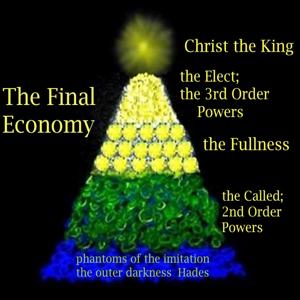

I occasionally get comments from people that the Gnosticism I’m sharing with you here at Gnostic Insights is different than the Gnosticism they’re accustomed to or the Gnosticism they see elsewhere on the internet. And that is very true, and that is why the Substack is called the Gnostic Reformation.
This Gnosticism that I’m sharing with you—yes, it comes out of my own personal gnosis. It is a compilation of both Valentinian Gnosticism, primarily from the Tripartite Tractate of the Nag Hammadi, but also I’ve combined it with my own Theory of Everything called A Simple Explanation of Absolutely Everything, the blog which has been up there at Blogspot for over 15 years by now. It is a true Theory of Everything that lets you examine any philosophical model or any social model or scientific model.
It’s a way of examining model structures and how they fit together, particularly our universe and particularly psychology, sociology, and theology. So when I ran across the Nag Hammadi and began to study it many years later, I was able to interpret it through this lens of A Simple Explanation that I had already developed. For example, the Simple Golden Rule comes directly out of my model, and that is a reformulation of what all religions around the world talk about as an ethical model of behavior.
And it’s this: It begins with the concept of units of consciousness—and I use the term units of consciousness because this applies not only to human beings, but to plants and animals and bacteria, cells in your body; in a way, it applies to the atoms and molecules and the elements as well–and in the Simple Explanation, I used to give them consciousness. But since coming to my gnosis, I believe that what the physical parts—the elemental parts—of our universe actually are, is the imitation of the way things go together in the Fullness. And it’s an imitation because it’s down here in this so-called material world. It’s the Demiurge’s best effort to reconstruct Paradise.
So now I don’t think that the molecules and atoms and subatomic particles are actually conscious the way I used to. The consciousness resides in the Demiurge, and the Demiurge is controlling them because the Demiurge is the god of this universe, and he can control down to the smallest subatomic particle, all of the elemental parts of our universe. But when it comes up to the living parts of our universe, that is where the life, consciousness, love, wisdom, all of that comes in through the Father, through the Son, through the Aeons, through Logos, into our otherwise fallen and amnesiac universe.
So the actual consciousness of the Aeons, and upstream from that, of course, the Son and the Father, that is where the consciousness comes into the living things in our universe. That’s what makes the difference between the hard and rocky places and the wet and meaty places, because there’s definitely a difference.
Anyway, I was talking about the Simple Golden Rule, and that is where units of consciousness, so that could be anything from a cell in your body all the way up through all creatures, although, not the viruses—the viruses are not alive, they are molecular machines controlled by the Demiurge—but up through the bacteria, which are different than viruses, bacteria are little living creatures—on up through all the plants and the animals, and then into us. Those are the units of consciousness.
I am a unit of consciousness. You are a unit of consciousness. We say units because consciousness actually is the ground state of our matrix. Consciousness is the mind of God, and we are units of that. So my Simple Golden Rule has always said, even before I came to the gnosis, the Simple Golden Rule says,
Units of consciousness reach out to others like themselves at their own level of complexity. So cells reach out to other cells, people reach out to other people, etc. Units of consciousness reach out to others and hold hands to join together to build the next level up. They join on a project. So like your family, let’s say, the people in your family hold hands with one another and level up to the family structure. Each thing that is at the same level reaches up to the next level to build something together that none of them could do on their own.
So if we take the cells in your body, your skin cells reach out to other skin cells and level up to the organ called skin. The other organs reach out in the same way. The heart cells reach out to other heart cells, make the heart. Lung cells reach out to other lung cells, make lungs, etc. And all of the organs reach out to each other to create an organism.
Everything builds up in the same way at the molecular level. The Demiurge’s copy of this process is subatomic particles reaching out to other subatomic particles to make particles. Particles reach out to make atoms. Atoms reach out to make molecules. Molecules reach out to make elements. Elements reach out to make minerals. Minerals become the rocks and stones and the hard rocky places that we see. But it is not conscious, and that’s the difference, other than the nature of the consciousness of the Demiurge that controls it.
Whereas each of the living parts of our universe, from the cells on up, is conscious, does have thoughts, is a direct part of the consciousness of God.
That is different. You don’t see that in the Nag Hammadi. That’s because I have brought that part of it in from the Simple Explanation.
I admit that my reading of the Nag Hammadi is filtered through my personal interpretive system, but that’s what we’re all called to do. You have your own personal interpretive systems, or it’s fine with me if you adapt mine. But you have to come to this understanding, this gnosis yourself. The bottom line of the gnosis, by the way, is this. It all boils down to one sentence:
We come from above and we will return to above.
That is the nugget of Gnosticism. All of the rest of it is explanations that people have offered of the system of how it goes together. How is it that we come from above? How is it that we return to above? And how do we interact with the above space, that is the pleroma of the Fullness of God, when we’re down here trapped in this material world?
That was the query that actually kicked off most of my own personal gnosis, even before I read any of the Gnostic books. I used to wonder, as I played with my dogs down by the river and I stood barefoot in the mud of the river, how does the consciousness of God flow through me and the mud surrounding the river make up my body and how do they connect? That’s the beginning of the Simple Explanation.
So I’ve been doing some research in this time off I’ve had and I can answer exactly now in a philosophical way how it is that this Gnosticism that I am sharing with you differs from what people who consider themselves to be Gnostic teachers generally teach.
Most Gnostics, by the way, are thinking of themselves as what are called Sethians. They believe that they are offspring from the prototypical human Seth and there’s a lot of mythology built around that system. The Nag Hammadi books are mostly Sethian. That’s why you have so much mythology in there. That’s why you have the names of angels and the counting of positions. You have the laying out of the hierarchy and all of these elect systems within it and how they have to be.
But keep in mind, the people that wrote those books are really no different than I am or than you are. They’re people writing their interpretations of the system of how God can inhabit matter and where we are in that process and do we belong here or do we belong somewhere else. And if we belong somewhere else, how do we get out of here? That’s where such words as the trap come from—that this material world is a trap. Some Sethians go so far as to believe that the way teachers have shared with us to escape the trap is itself a trap. Have you heard this? “Don’t go into the light. The tunnel and the light, they’re just the trap.”
That is someone’s interpretation of the system. That’s all that it is. You need to commune in silence with the Father yourself to discover what is true and what is not true. You can’t believe teachers, even Gnostic teachers, especially out there on the internet, who claim to have the truth and want to share it with you as if they were prophets. They are not prophets any more than I am a prophet. Everyone filters truth and reality through their own lens of discrimination. And your background, including your past lives and the memes that you bring forward into this life, all influence what you interpret of what you see going on around you, the words you use, the structures you use to make it make sense.
What I am sharing with you here goes beyond the ancient Valentinian systems that we find in the Nag Hammadi. This Gnosticism that I’m sharing, this Simple Gnosticism, or Reformed Gnosticism that I’m teaching, fits into the space between Sethian and Valentinian systems. It’s a bridge cosmology. Neither tradition fully says this, but both hint at it. And what I’ve done is tease out the structural possibility that the ancient systems didn’t quite say out loud. And by the way, this is where my Simple Explanation model helped me do that.
And here is the Simple model: What we call the Son is the primal emanation that is the direct image of the Father. The Christ is a later composite restorative agent formed through the cooperation of the Aeons, the Son, and the Logos. So, the Son and Christ are not exactly the same character as taught in Christianity. They are not interchangeable names. The Christ came after the Son. The Son is the direct emanation of the Father, and we use those gendered terms simply because that is the traditional way to say them. We could instead call the Father the ground state of consciousness, or the Great I Am, and its emanation, instead of calling it the Son, we could simply call it the First Emanation. The Son stays plugged into the Father. It doesn’t branch off and float downstream like a spore. It is not that. It stays plugged into the Father at all times.
So, the Son and the Father are co-existent in their knowledge, and their wisdom, and their love. But the Son, or the offspring, is a monad, whereas the Father is infinite and illimitable, uncontainable. That’s why we say it’s the ground state. It’s a force, a power. It’s not a person. Oh, that might upset the Christians there. But the Father only relates to the Son. The Son is the first person, and in Valentinian Gnosticism, the Son is often called, then, the Father, our Father. Our Father, who art in heaven, is actually the Son, because He is our Father, and we all emanate out of the Son directly. This is not an insult to the Great Father, the Great I Am. The Son was emanated for this purpose. So, it is a fulfillment of the Son’s role to say He is our Father of consciousness and love. He is the one we can relate to, whereas the Father is so illimitable, is so infinite and magnificent and great, we cannot wrap our heads around it. The Son represents everything that the Father is.
Now, in Sethian Gnosticism, they call that first emanation Barbelo. Rather than the Son, they call it Barbelo. That’s its name. What they call the Son is the second emanation out of Barbelo. So, the Barbelo is the female figure, the mother, the womb, and the Son comes from Barbelo. The Son, in Sethianism, is also called Autogenes, genes, like our genetics. It’s the same root word. And then the Christ, in Sethianism, is a further emanation who brings restoration and reveals truth to us. That is Sethianism.
Now, as I said, in Valentinian Gnosticism, the Son, also known as Nous, is the first emanation from the Father. And the Christ is a later figure who descends to heal the pleroma after Logos’s fall and deficiency. Most Valentinians and Valentinian books say that the Aeon who fell from the pleroma and created our material existence is called Sophia, and it’s a female figure. I don’t like that because it’s a mythological upstream version of Adam and Eve. Let’s blame the woman. Let’s say females are inferior. We don’t need to go there because it turns out that one of the most mysterious books, as they say, in the Nag Hammadi, names the Fallen Aeon Logos. And Logos is not a female, and Logos doesn’t have a child named Yaldabaoth.
When Logos falls out of the pleroma of the Fullness of God, he cracks open. He breaks. He is rent in two. And a shadow version of him spills out all over, like guts on the ground. That is not a child. That is a shadow of Logos. And we call that shadow, you got it, the Demiurge. And in the Tripartite Tractate, Logos looked around at the results of the Fall with horror. Horror! And he tried to get it all back together, like grabbing his guts and sticking them back in his abdomen kind of thing. He couldn’t do it. He couldn’t grab it all together.
And it spread out and would not listen to him. And it was disruptive and a disturbance and chaotic. So he abandoned the results of the Fall down below and hightailed it back up to the pleroma, to his “brothers”—the other Aeons in the pleroma—that we also call the Fullness of God.
But Logos has never been fully cut off from the shadow down here, from what we call the Demiurge. And it is the knowledge that came from Logos that informed the Demiurge how to put the chaos in order. The Demiurge was left down here as part of the chaos, but it got itself together. It reconnected its mind with the mind of Logos, but it didn’t realize that. The Demiurge is called the amnesiac god, the god who does not remember, is because the Demiurge doesn’t remember that it came from the Father and that it will return to the Father. The Demiurge does not realize that it is part of Logos.
And I have identified that part as the ego of Logos. The Tripartite Tractate says that the best part of Logos returned to the Self, his big S Self, which, in the case of Logos, was a fractal amalgamation of all of the other Aeons of the Fullness of God. What the Demiurge is, is the presenting face, the presenting part of Logos. He doesn’t remember Logos. He doesn’t know his true Self. He doesn’t remember the Father, or the Son, or the pleroma, or the Aeons.
He doesn’t remember any of that. He woke up down here amidst chaos, separated from the Fullness of God, and surrounded by chaotic quantum foam, is my interpretation of this. And with the way that Logos knows how to order things, the Demiurge set about ordering the chaos of the Fall. And he was able to build it up through the particles, the atoms, the molecules, the elements, the minerals, up to the mud. But he couldn’t get any life into it. He couldn’t get his little mud figures to come to life.
He had the pattern, he had the blueprint, but he didn’t contain the life. And consciousness is life. Consciousness is love. The nature of the Father above, the nature of the pleroma, is love, consciousness, and life. And it’s all good. It’s all good.
We’re going to pick this up next week, because I’m on a roll now. We’ll probably be following this train of thought for the next two, three weeks. So welcome to the Gnostic Reformation, where we’re going to infuse Gnosticism with love, consciousness, and life.
God bless us all, and onward and upward.
Buy now at amazon.com
 View all episodes
 By Cyd Charise Ropp
I occasionally get comments from people that the Gnosticism I’m sharing with you here at Gnostic Insights is different than the Gnosticism they’re accustomed to or the Gnosticism they see elsewhere on the internet. And that is very true, and that is why the Substack is called the Gnostic Reformation.
This Gnosticism that I’m sharing with you—yes, it comes out of my own personal gnosis. It is a compilation of both Valentinian Gnosticism, primarily from the Tripartite Tractate of the Nag Hammadi, but also I’ve combined it with my own Theory of Everything called A Simple Explanation of Absolutely Everything, the blog which has been up there at Blogspot for over 15 years by now. It is a true Theory of Everything that lets you examine any philosophical model or any social model or scientific model.
It’s a way of examining model structures and how they fit together, particularly our universe and particularly psychology, sociology, and theology. So when I ran across the Nag Hammadi and began to study it many years later, I was able to interpret it through this lens of A Simple Explanation that I had already developed. For example, the Simple Golden Rule comes directly out of my model, and that is a reformulation of what all religions around the world talk about as an ethical model of behavior.
And it’s this: It begins with the concept of units of consciousness—and I use the term units of consciousness because this applies not only to human beings, but to plants and animals and bacteria, cells in your body; in a way, it applies to the atoms and molecules and the elements as well–and in the Simple Explanation, I used to give them consciousness. But since coming to my gnosis, I believe that what the physical parts—the elemental parts—of our universe actually are, is the imitation of the way things go together in the Fullness. And it’s an imitation because it’s down here in this so-called material world. It’s the Demiurge’s best effort to reconstruct Paradise.
So now I don’t think that the molecules and atoms and subatomic particles are actually conscious the way I used to. The consciousness resides in the Demiurge, and the Demiurge is controlling them because the Demiurge is the god of this universe, and he can control down to the smallest subatomic particle, all of the elemental parts of our universe. But when it comes up to the living parts of our universe, that is where the life, consciousness, love, wisdom, all of that comes in through the Father, through the Son, through the Aeons, through Logos, into our otherwise fallen and amnesiac universe.
So the actual consciousness of the Aeons, and upstream from that, of course, the Son and the Father, that is where the consciousness comes into the living things in our universe. That’s what makes the difference between the hard and rocky places and the wet and meaty places, because there’s definitely a difference.
Anyway, I was talking about the Simple Golden Rule, and that is where units of consciousness, so that could be anything from a cell in your body all the way up through all creatures, although, not the viruses—the viruses are not alive, they are molecular machines controlled by the Demiurge—but up through the bacteria, which are different than viruses, bacteria are little living creatures—on up through all the plants and the animals, and then into us. Those are the units of consciousness.
I am a unit of consciousness. You are a unit of consciousness. We say units because consciousness actually is the ground state of our matrix. Consciousness is the mind of God, and we are units of that. So my Simple Golden Rule has always said, even before I came to the gnosis, the Simple Golden Rule says,
Units of consciousness reach out to others like themselves at their own level of complexity. So cells reach out to other cells, people reach out to other people, etc. Units of consciousness reach out to others and hold hands to join together to build the next level up. They join on a project. So like your family, let’s say, the people in your family hold hands with one another and level up to the family structure. Each thing that is at the same level reaches up to the next level to build something together that none of them could do on their own.
So if we take the cells in your body, your skin cells reach out to other skin cells and level up to the organ called skin. The other organs reach out in the same way. The heart cells reach out to other heart cells, make the heart. Lung cells reach out to other lung cells, make lungs, etc. And all of the organs reach out to each other to create an organism.
Everything builds up in the same way at the molecular level. The Demiurge’s copy of this process is subatomic particles reaching out to other subatomic particles to make particles. Particles reach out to make atoms. Atoms reach out to make molecules. Molecules reach out to make elements. Elements reach out to make minerals. Minerals become the rocks and stones and the hard rocky places that we see. But it is not conscious, and that’s the difference, other than the nature of the consciousness of the Demiurge that controls it.
Whereas each of the living parts of our universe, from the cells on up, is conscious, does have thoughts, is a direct part of the consciousness of God.
That is different. You don’t see that in the Nag Hammadi. That’s because I have brought that part of it in from the Simple Explanation.
I admit that my reading of the Nag Hammadi is filtered through my personal interpretive system, but that’s what we’re all called to do. You have your own personal interpretive systems, or it’s fine with me if you adapt mine. But you have to come to this understanding, this gnosis yourself. The bottom line of the gnosis, by the way, is this. It all boils down to one sentence:
We come from above and we will return to above.
That is the nugget of Gnosticism. All of the rest of it is explanations that people have offered of the system of how it goes together. How is it that we come from above? How is it that we return to above? And how do we interact with the above space, that is the pleroma of the Fullness of God, when we’re down here trapped in this material world?
That was the query that actually kicked off most of my own personal gnosis, even before I read any of the Gnostic books. I used to wonder, as I played with my dogs down by the river and I stood barefoot in the mud of the river, how does the consciousness of God flow through me and the mud surrounding the river make up my body and how do they connect? That’s the beginning of the Simple Explanation.
So I’ve been doing some research in this time off I’ve had and I can answer exactly now in a philosophical way how it is that this Gnosticism that I am sharing with you differs from what people who consider themselves to be Gnostic teachers generally teach.
Most Gnostics, by the way, are thinking of themselves as what are called Sethians. They believe that they are offspring from the prototypical human Seth and there’s a lot of mythology built around that system. The Nag Hammadi books are mostly Sethian. That’s why you have so much mythology in there. That’s why you have the names of angels and the counting of positions. You have the laying out of the hierarchy and all of these elect systems within it and how they have to be.
But keep in mind, the people that wrote those books are really no different than I am or than you are. They’re people writing their interpretations of the system of how God can inhabit matter and where we are in that process and do we belong here or do we belong somewhere else. And if we belong somewhere else, how do we get out of here? That’s where such words as the trap come from—that this material world is a trap. Some Sethians go so far as to believe that the way teachers have shared with us to escape the trap is itself a trap. Have you heard this? “Don’t go into the light. The tunnel and the light, they’re just the trap.”
That is someone’s interpretation of the system. That’s all that it is. You need to commune in silence with the Father yourself to discover what is true and what is not true. You can’t believe teachers, even Gnostic teachers, especially out there on the internet, who claim to have the truth and want to share it with you as if they were prophets. They are not prophets any more than I am a prophet. Everyone filters truth and reality through their own lens of discrimination. And your background, including your past lives and the memes that you bring forward into this life, all influence what you interpret of what you see going on around you, the words you use, the structures you use to make it make sense.
What I am sharing with you here goes beyond the ancient Valentinian systems that we find in the Nag Hammadi. This Gnosticism that I’m sharing, this Simple Gnosticism, or Reformed Gnosticism that I’m teaching, fits into the space between Sethian and Valentinian systems. It’s a bridge cosmology. Neither tradition fully says this, but both hint at it. And what I’ve done is tease out the structural possibility that the ancient systems didn’t quite say out loud. And by the way, this is where my Simple Explanation model helped me do that.
And here is the Simple model: What we call the Son is the primal emanation that is the direct image of the Father. The Christ is a later composite restorative agent formed through the cooperation of the Aeons, the Son, and the Logos. So, the Son and Christ are not exactly the same character as taught in Christianity. They are not interchangeable names. The Christ came after the Son. The Son is the direct emanation of the Father, and we use those gendered terms simply because that is the traditional way to say them. We could instead call the Father the ground state of consciousness, or the Great I Am, and its emanation, instead of calling it the Son, we could simply call it the First Emanation. The Son stays plugged into the Father. It doesn’t branch off and float downstream like a spore. It is not that. It stays plugged into the Father at all times.
So, the Son and the Father are co-existent in their knowledge, and their wisdom, and their love. But the Son, or the offspring, is a monad, whereas the Father is infinite and illimitable, uncontainable. That’s why we say it’s the ground state. It’s a force, a power. It’s not a person. Oh, that might upset the Christians there. But the Father only relates to the Son. The Son is the first person, and in Valentinian Gnosticism, the Son is often called, then, the Father, our Father. Our Father, who art in heaven, is actually the Son, because He is our Father, and we all emanate out of the Son directly. This is not an insult to the Great Father, the Great I Am. The Son was emanated for this purpose. So, it is a fulfillment of the Son’s role to say He is our Father of consciousness and love. He is the one we can relate to, whereas the Father is so illimitable, is so infinite and magnificent and great, we cannot wrap our heads around it. The Son represents everything that the Father is.
Now, in Sethian Gnosticism, they call that first emanation Barbelo. Rather than the Son, they call it Barbelo. That’s its name. What they call the Son is the second emanation out of Barbelo. So, the Barbelo is the female figure, the mother, the womb, and the Son comes from Barbelo. The Son, in Sethianism, is also called Autogenes, genes, like our genetics. It’s the same root word. And then the Christ, in Sethianism, is a further emanation who brings restoration and reveals truth to us. That is Sethianism.
Now, as I said, in Valentinian Gnosticism, the Son, also known as Nous, is the first emanation from the Father. And the Christ is a later figure who descends to heal the pleroma after Logos’s fall and deficiency. Most Valentinians and Valentinian books say that the Aeon who fell from the pleroma and created our material existence is called Sophia, and it’s a female figure. I don’t like that because it’s a mythological upstream version of Adam and Eve. Let’s blame the woman. Let’s say females are inferior. We don’t need to go there because it turns out that one of the most mysterious books, as they say, in the Nag Hammadi, names the Fallen Aeon Logos. And Logos is not a female, and Logos doesn’t have a child named Yaldabaoth.
When Logos falls out of the pleroma of the Fullness of God, he cracks open. He breaks. He is rent in two. And a shadow version of him spills out all over, like guts on the ground. That is not a child. That is a shadow of Logos. And we call that shadow, you got it, the Demiurge. And in the Tripartite Tractate, Logos looked around at the results of the Fall with horror. Horror! And he tried to get it all back together, like grabbing his guts and sticking them back in his abdomen kind of thing. He couldn’t do it. He couldn’t grab it all together.
And it spread out and would not listen to him. And it was disruptive and a disturbance and chaotic. So he abandoned the results of the Fall down below and hightailed it back up to the pleroma, to his “brothers”—the other Aeons in the pleroma—that we also call the Fullness of God.
But Logos has never been fully cut off from the shadow down here, from what we call the Demiurge. And it is the knowledge that came from Logos that informed the Demiurge how to put the chaos in order. The Demiurge was left down here as part of the chaos, but it got itself together. It reconnected its mind with the mind of Logos, but it didn’t realize that. The Demiurge is called the amnesiac god, the god who does not remember, is because the Demiurge doesn’t remember that it came from the Father and that it will return to the Father. The Demiurge does not realize that it is part of Logos.
And I have identified that part as the ego of Logos. The Tripartite Tractate says that the best part of Logos returned to the Self, his big S Self, which, in the case of Logos, was a fractal amalgamation of all of the other Aeons of the Fullness of God. What the Demiurge is, is the presenting face, the presenting part of Logos. He doesn’t remember Logos. He doesn’t know his true Self. He doesn’t remember the Father, or the Son, or the pleroma, or the Aeons.
He doesn’t remember any of that. He woke up down here amidst chaos, separated from the Fullness of God, and surrounded by chaotic quantum foam, is my interpretation of this. And with the way that Logos knows how to order things, the Demiurge set about ordering the chaos of the Fall. And he was able to build it up through the particles, the atoms, the molecules, the elements, the minerals, up to the mud. But he couldn’t get any life into it. He couldn’t get his little mud figures to come to life.
He had the pattern, he had the blueprint, but he didn’t contain the life. And consciousness is life. Consciousness is love. The nature of the Father above, the nature of the pleroma, is love, consciousness, and life. And it’s all good. It’s all good.
We’re going to pick this up next week, because I’m on a roll now. We’ll probably be following this train of thought for the next two, three weeks. So welcome to the Gnostic Reformation, where we’re going to infuse Gnosticism with love, consciousness, and life.
God bless us all, and onward and upward.
Buy now at amazon.com