
Sign up to save your podcasts
Or

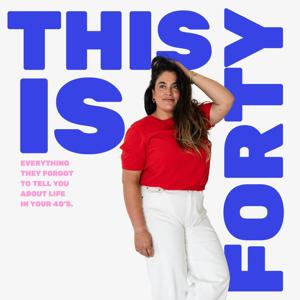


This week I'm joined by Claire Hester, a qualified nutritionist and behaviour transformation coach with almost 20 years' experience, to talk about what we should actually be eating in our 40s.
We cover why so many of us are not eating enough, how much protein and fibre we really need, and what happens to our gut and our bones as oestrogen drops. We also get into emotional eating, afternoon energy slumps and why food should never be seen as a "treat". It's a practical, judgement-free chat, and I came away with plenty to think about (especially the iron and fibre bits!).
Key Takeaways
Episode Highlights
About the Guest
Claire Hester is an MSc-qualified Nutritionist and Behaviour Transformation Coach who specialises in helping women improve their energy, navigate food challenges and build a healthier relationship with food.
Through Claire Hester Nutrition, she helps women understand how nutrition and behaviour change can support them through different stages of life, including perimenopause and menopause. Her approach combines evidence-based nutrition with practical strategies to manage cravings, emotional eating and energy dips, helping women feel more confident in their bodies without restrictive diets or the pressure to be perfect.
Claire is passionate about empowering women to nourish themselves, challenge the all-or-nothing mindset around food and feel their best at every stage of life.
End Credits
This episode was written and recorded by me and produced by Lucy Lucraft (lucylucraft.co.uk). If you enjoyed this episode, please leave a 5* rating and review!
Welcome back to This is 40 for our very first "GP consults" deep dive! This week, I chat with GP Dr. Caz to unpack a massive and often confusing topic: medical and surgical menopause.
Whether you are navigating premature ovarian failure, managing menopause induced by treatments for breast cancer or endometriosis, or simply want to understand how modern HRT actually works, this episode breaks it all down. Tune in to learn how to advocate for your health, protect your body against long-term risks, and get the medical support you deserve.
Key Takeaways
Different triggers, similar abruptness: Medical menopause is usually induced by hormone-blocking treatments, while surgical menopause occurs when the ovaries are removed. Both cause a sudden, severe onset of menopause symptoms because the body doesn't get the gradual transition typical of perimenopause.
HRT has evolved: Modern transdermal HRT (delivered through the skin via gels, sprays, or patches) is much safer than older oral tablets. It carries significantly lower risks for blood clots and strokes.
Early menopause requires proactive care: Losing estrogen prematurely significantly increases the risk of osteoporosis and cardiovascular disease. Taking HRT during this "window of opportunity" is highly beneficial for long-term heart and bone protection.
Always get a post-discharge plan: Before leaving gynecology or oncology, make sure you have a clear plan regarding whether you can or cannot take HRT, and what specific alternatives are available to treat your symptoms.
Episode Highlights
01:20: The definitions and key differences between medical and surgical menopause.
03:15: Understanding the average age of menopause and how family history and ethnicity play a role.
08:00: Unpacking HRT: Why modern, transdermal options are much safer than older oral tablets.
10:30: The increased cardiovascular and bone density risks associated with going through early menopause.
14:15: Exploring herbal options, non-HRT medications, and targeted vaginal estrogen for symptom relief.
22:30: Navigating the emotional impact of early menopause on fertility and mental health.
27:00: How to advocate for yourself and ensure you get a solid follow-up care plan from your doctor.
About the Guest
Dr. Caz is a General Practitioner providing expert guidance on women's health, menopause care, and navigating the healthcare system.
Website:
Social Media:
Mentioned in the episode
Women's Health Concern Website
End credits
This episode was written and recorded by me and produced by Lucy Lucraft (lucylucraft.co.uk) If you enjoyed this episode please leave a 5* rating and review!
This week I'm joined by Naomi Gale, a pelvic health educator, former teacher and author of two books. Naomi specialises in nervous system-led holistic pelvic care, and we cover a lot of ground, from why we should all be using the proper anatomical words to what vaginal steaming actually involves.
We talk about the pressure women are under to say yes when our bodies are saying no, why your symptoms might be feedback rather than a problem to fix, and how Naomi's first book ended up shadow-banned on Amazon. I loved this conversation, and I hope you leave it feeling a little more connected to your body.
Naomi Gale is an author and guide whose work lives at the intersection of women's bodies, folklore, and the gendered stories that have kept women estranged from themselves. She works with undermothered women, holding them as they return to safety in their bodies, and particularly in their pelvis where creativity, grief, instinct, motherhood and identity converge. Her work draws on nervous system science, body-based practices, myth, and the long tradition of what culture has done to women's inner lives. Through writing, speaking and education she creates pathways back to embodiment that are both practical and deeply personal– translating complex ideas into grounded language and narrative that makes women say: this is me.
This episode was written and recorded by me and produced by Lucy Lucraft (lucylucraft.co.uk). If you enjoyed this episode, please leave a 5* rating and review!
This week I'm joined by my friend Jen Bianchi, a dentist with nearly 20 years' experience, to talk about something we hardly ever hear in the perimenopause and menopause conversation: our teeth. Jen explains why the mouth is the gateway to the rest of the body, what bleeding gums can tell us, and why getting the basics right beats any miracle product.
We also dig into dry mouth, the sneaky sugars hiding in squash and herbal teas, burning mouth syndrome, and what we do (and don't) know about HRT and gum health. It's an honest chat about science, stress and why we so often put ourselves last on the list.
Dr Jen Bianchi isa a dental surgeon, partner and practice principal at The South Street Dental Practice in Elgin, Moray. Having spent her career workign in general dental practice in Moray, Jen has a particular interest in holistic, family-focused dentistry- looking beyond just teeth and gums to consider the health, wellbeing and individual circumstances of the person behind the smile.
This episode was written and recorded by me and produced by Lucy Lucraft (lucylucraft.co.uk). If you enjoyed this episode, please leave a 5* rating and review!
Perimenopause crept up on me, and I genuinely didn't know it was a thing until I was in the middle of it. So for this episode I've invited my friend Dr Caroline McKenzie Hill, known to me as Caz, to give us the GP's view.
We keep things broad today. We cover when perimenopause can start, how to tell it apart from burnout, the symptoms nobody warns you about, where HRT fits in, and how to prepare for a GP appointment so you feel properly heard.
Please send in your questions too, as Caz will be back to answer them!
Key Takeaways
Episode Highlights
About the Guest
Dr Caroline McKenzie Hill is an NHS GP in Wiltshire with a diploma in family planning and sexual health and further training in perimenopause and menopause.
Please note: this episode is for information only and isn't medical advice. If you're worried about your symptoms, speak to your GP.
End Credits
This episode was written and recorded by me and produced by Lucy Lucraft (lucylucraft.co.uk). If you enjoyed this episode, please leave a 5* rating and review!
This week I'm joined by Nikki, a much-loved old family friend, who has just turned 50. She's a former primary school teacher and senior leader who now supports women to show up in their lives in a connected, embodied and powerful way.
Nikki shares how her forties turned into a deep invitation to come back to herself. We talk about learning to hold firm, warm boundaries, and about perimenopause as a paradigm shift rather than something to fear. We also get into why women still have to advocate so hard for themselves, and how the simplest acts of connection can be the most powerful. Nikki finishes by guiding us through a short somatic practice you can try at home.
Nikki is a coach and facilitator who supports women to feel more like themselves and step into their own leadership.
This episode was written and recorded by me and produced by Lucy Lucraft (lucylucraft.co.uk). If you enjoyed this episode, please leave a 5* rating and review!
Everyone online is telling us to lift weights, but nobody seems to explain why. In this episode I'm joined by my friend Aoife, a personal trainer and group fitness instructor who specialises in strength training through perimenopause and menopause. I worked with Aoife before I'd ever picked up a weight, and her passion for helping women feel strong is completely infectious.
We talk about what's happening with our hormones, why keeping our lean muscle mass matters so much, and how to fit strength work into a busy life without the guilt. We also get into bone density, jumping, pelvic floor health and the "I'll get bulky" myth. If you've ever felt unheard when you've said "something doesn't feel right", this one is for you.
KEY TAKEAWAYS
- Lifting weights isn't a trend. Maintaining lean muscle mass supports our strength, posture and independence, and helps us to live well for longer.
EPISODE HIGHLIGHTS
- 02:00: Why we should be lifting weights, and why perimenopause can begin as early as 35
ABOUT THE GUEST
Aoife is a personal trainer and group fitness instructor who specialises in strength training for women in perimenopause and menopause.
MENTIONED IN THE EPISODE
- Leah Burn, the physiotherapist whose course on pelvic floor and lifting Aoife recommends:https://www.instagram.com/leahbryansphysio?stkn=NTF5cHZibWUzcnF0
- Lifting weights, jumping and pelvic floor checks: see Aoife's links above for more
This episode was written and recorded by me and produced by Lucy Lucraft (lucylucraft.co.uk). If you enjoyed this episode, please leave a 5* rating and review!
She supports people to reconnect with bodies, their power and pleasure through movement, breath, awareness & nervous-system education. to support emotional resilience, reduce stress and to support more fulfilling relationships, deeper intimacy and more pleasure & aliveness.
She holds 1:1 sessions, workshops and group sessions, online and in-person in Moray to support emotional resilience, reduce stress and to support more fulfilling relationships, deeper intimacy and more pleasure, joy & aliveness. She also guides embodied movement classes inspired by Scotland’s beautiful and wild nature.