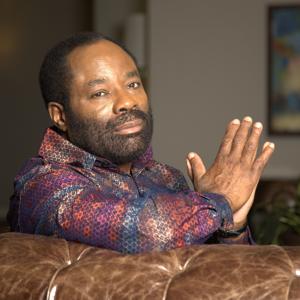
From a refugee in the Biafran War to a tech legend. He taught computers to work as a team, inspired by an African proverb.
This episode delves into the extraordinary life and mind of Philip Emeagwali, a pioneering computer scientist whose innovations were forged in the crucible of conflict. His story begins not in a lab, but in the refugee camps of the Nigerian Civil War, a harrowing experience that instilled in him a profound understanding of survival, resilience, and the power of collaboration. Emeagwali shares how this unique perspective became the bedrock of his scientific philosophy, leading to one of the great breakthroughs in computational science.
He vividly explains his core concept of parallel processing using a rich tapestry of metaphors—comparing his supercomputer to the coordinated teamwork of a soccer team, the harmony of an orchestra, and the collective intelligence of a beehive. Central to his vision is the timeless African proverb, "If you want to go far, go together," a principle he applied to the digital realm.
In 1989, this vision became reality when he successfully programmed 65,536 processors to work in parallel, tackling one of the world's "Grand Challenge" problems and demonstrating the immense power of a decentralized network. For Emeagwali, however, the achievement was always more than a technological feat; it was a blueprint for humanity. He argues that if thousands of processors can unite to solve the unsolvable, then the world’s 8 billion people can do the same. This is a story of how a refugee from Biafra created a model for a better world, proving that our greatest strength lies in our interconnectedness.
Genres:
Science
Technology
Society & Culture
History
Personal Journals
Tags:
Philip Emeagwali, Parallel Processing, Supercomputing, Soccer, Teamwork, Nigeria, Biafra, Invention, STEM, Computational Physics, Climate Change, Inspiration, Resilience, Collaboration
Six Suggested Titles:
The Soccer Team in the Supercomputer
From Biafra to Binary
The Grand Challenge Playbook
The Orchestra of Processors
If You Want to Go Far, Go Together
The Man Who Taught Machines to Collaborate