
Sign up to save your podcasts
Or

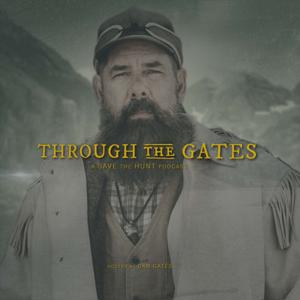


What does it really mean to be a hunter? Is it about filling a tag, harvesting a trophy, or everything that happens along the way?
On this episode of Through the Gates, Dan Gates sits down with Jordan Budd, a Nebraska-based hunter, guide, filmmaker, and outdoor storyteller known for her work with MeatEater and Rockslide. Raised on her family's third-generation cattle ranch in northwest Nebraska, Jordan developed a passion for hunting, archery, and filming at an early age. Today, she has built a career around guiding hunters, pursuing big game across the West, producing outdoor films, and helping tell the story of hunting and conservation. Dan and Jordan explore the changing culture of hunting, the pressure to harvest, and the influence of social media and outdoor television on hunters' expectations. Jordan shares why some of her most meaningful hunting experiences have had nothing to do with whether she filled a tag, and why showing the realities of an unsuccessful hunt can be just as important as documenting a successful one. The conversation also takes a deeper look at the challenges facing today's hunters, including declining hunting opportunities, increasing difficulty drawing tags, wildlife habitat conservation, and the role of science-based wildlife management. Jordan discusses her family's ranching legacy, changes in Nebraska's mule deer and whitetail populations, the impacts of Epizootic Hemorrhagic Disease (EHD), and the growing presence of elk. Dan and Jordan also discuss the importance of hunting ambassadors, women's growing influence in the outdoor industry, predator management, grizzly bears, wolves, and the need for hunters to stay engaged in wildlife policy and conservation issues. From high-country archery mule deer to the realities of guiding, filmmaking, motherhood, and maintaining a family ranch, Jordan offers a candid perspective on what it takes to build a life in the outdoors—and why protecting hunting opportunities matters for future generations.
In this episode:
STREAM TO SHOW -
https://www.youtube.com/playlist?list=PLVjalEoOauqM3xLSHrq3FO680x-XriQcD
Like, comment, and share to help spread the conversation.
#ThroughTheGates #JordanBudd #MeatEater #Hunting #WildlifeConservation #SaveTheHunt
SUPPORT THE RIGHT TO HUNT AND FISH IN COLORADO
Sign the Initiative 302 petition: savecoheritage.org
Donate to CRWM: savethehuntcolorado.com/support-us
Learn more: savethehuntcolorado.com
Follow CRWM on Facebook: facebook.com/savethehuntcolorado
Follow CRWM on Instagram: instagram.com/c.r.w.m
What happens when wildlife management becomes a political fight?
In this special Through the Gates x The Mountainside Podcast collaboration, Dan Gates and Bobby Marshall sit down for a wide-ranging conversation about Colorado wildlife, hunting, fishing, conservation, CPW, ballot-box biology, and the emerging fight over Colorado’s constitutional right to hunt and fish.
This conversation goes far beyond hunting.
Dan and Bobby break down why wildlife management affects hunters, anglers, hikers, mountain bikers, photographers, ranchers, outdoor businesses, and anyone who enjoys Colorado’s public lands and wildlife.
A major focus of the conversation is the proposed constitutional right to hunt and fish in Colorado and the argument that complex wildlife-management decisions should remain grounded in science, data, professional wildlife management, and adaptive management.
They discuss:
• What Colorado’s constitutional right to hunt and fish actually says
• What the proposed amendment does — and does not — do
• The concept of “ballot box biology”
• Why CPW and professional wildlife managers play such an important role
• Colorado’s experience with Proposition 127 and wolf reintroduction
• Mountain lions, bobcats, lynx, bears, wolves and beavers
• The debate over trapping and wildlife-management tools
• How hunting and fishing contribute to conservation funding
• Pittman-Robertson and Dingell-Johnson funding
• Why wildlife doesn’t recognize state boundaries
• Colorado’s rapidly growing human population and increasing recreation pressure
• The changing relationship between wildlife and outdoor recreation
• Why non-hunters have a stake in wildlife management
• How people outside Colorado can support Colorado’s wildlife-conservation efforts
• How to talk to someone who doesn't hunt or fish about wildlife conservation
• And why Dan believes wildlife management should remain adaptable as conditions change
The conversation also gets into something that often gets overlooked: Colorado’s wildlife belongs to everyone.
Whether you hunt, fish, hike, camp, photograph wildlife, ride a mountain bike, own a ranch, or simply enjoy seeing elk, deer, bears, mountain lions and other wildlife in Colorado, the decisions being made today can affect how those resources are managed for generations.
This is a conversation about wildlife first — and the people, policies, science and funding mechanisms that determine how Colorado manages it.
SUPPORT THE RIGHT TO HUNT AND FISH IN COLORADO
Fund the Campaign: WildlifeDeserveBetter.com
Donate to CRWM: savethehuntcolorado.com/support-us
Learn more: savethehuntcolorado.com
Follow CRWM on Facebook: facebook.com/savethehuntcolorado
Follow CRWM on Instagram: instagram.com/c.r.w.m
What does Colorado’s Constitutional Right to Hunt and Fish actually mean—and why should it matter to people who don’t hunt or fish?
That is one of the central questions explored in this special episode of Through the Gates, featuring internationally recognized conservationist Shane Mahoney, President and CEO of Conservation Visions and founder of the Wild Harvest Initiative.
This conversation is especially relevant for Coloradans who love the outdoors but may never have hunted or fished. If you hike, camp, mountain bike, kayak, photograph wildlife, watch elk and moose, enjoy Colorado’s public lands, or simply care about healthy wildlife populations, this episode explores the connection between those experiences and the system of wildlife conservation that exists today.
Mahoney and Dan Gates take a deep look at the North American Model of Wildlife Conservation and how regulated hunting and fishing fit into a larger system designed to maintain abundant wildlife populations and provide public benefits.
The discussion covers:
• Why wildlife is considered a public-trust resource
• How North American wildlife populations recovered from historic declines
• Why wildlife abundance benefits hunters AND non-hunters
• The connection between hunting, fishing and sustainable sources of food
• How hunting and fishing contribute to wildlife management and conservation funding
• Why science-based wildlife management matters
• What “sustainable use” actually means
• The history behind the North American Model of Wildlife Conservation
• The role of regulation in preventing overharvest
• The importance of wild foods and the Wild Harvest Initiative
• How conservation can serve people who never hunt or fish
• The debate surrounding fur-bearing wildlife and commercial use
• Why wildlife management has to account for changing populations, habitat and human communities
• What the proposed constitutional protection does—and does not—say about wildlife management
• Why understanding the issue matters before Colorado voters make their decision
One of the most important themes of the conversation is that wildlife conservation is not exclusively about hunting.
Mahoney argues that the recovery of elk, deer, pronghorn, waterfowl, bears and other wildlife has created opportunities for everyone—from hunters and anglers to hikers, photographers, birders, climbers, campers and other outdoor enthusiasts. As he explains, abundant wildlife adds another dimension to the Colorado outdoor experience regardless of whether someone ever harvests an animal.
The episode also examines an important question for anyone thinking about food and sustainability: How does harvesting from the wild fit into the modern food system?
Mahoney discusses the millions of people around the world who continue to rely directly on wild resources for food and livelihoods, and why he believes sustainable, regulated harvest should be considered alongside other approaches to food production and conservation.
And ultimately, the conversation returns to Colorado.
The Constitutional Right to Hunt and Fish is discussed not simply as a question for hunters and anglers, but as a question about wildlife management, science, public trust, outdoor recreation, food, conservation funding and how Colorado manages its wildlife for future generations.
If you're a Colorado voter who doesn't hunt or fish, this episode is an opportunity to hear the history, philosophy and arguments surrounding Amendment 83 directly and consider how those ideas relate to the wildlife and outdoor experiences you value.
Listen before you vote. Learn what the issue actually says. Consider the different perspectives. Then make your own informed decision.
The fight to protect hunting, fishing, trapping, and science-based wildlife management doesn't stop at the U.S. border.
In this episode of Through the Gates, Dan Gates sits down with Mark Hall, Executive Director of Wild Origins Canada, in Squamish, British Columbia, for a wide-ranging conversation about the future of hunting and conservation across North America.
The conversation explores the growing battles over hunting and wildlife management in Canada, the similarities between Canadian and American conservation fights, and why hunters may need to stop playing defense and start thinking strategically about the next 5-20 years.
Mark explains the mission of Wild Origins Canada and the importance of telling the story of how hunting benefits wildlife, communities, families, and conservation. Dan and Mark also discuss the power of documentaries, podcasts, social media, and influential voices in reaching the non-hunting public with a message grounded in wildlife management and sustainable use.
The conversation gets into some of the most contentious issues facing hunters and conservationists today, including grizzly bear hunting, wolf management, mountain lions, beavers, trapping, Indigenous rights, land access, public opinion, wildlife science, hunting tourism, conservation funding, and the North American Model of Wildlife Conservation.
They also examine why hunters in Canada and the United States may need to start thinking and acting as one North American conservation community.
Instead of waiting for the next ballot initiative, lawsuit, campaign, hunting ban, or attack on wildlife management, Mark and Dan discuss building a proactive strategy—developing the messaging, research, relationships, funding, and media infrastructure needed to reach the non-hunting public before the next fight begins.
Topics include:
• Wild Origins Canada and the mission to tell the truth about hunting
• The importance of changing the hunting narrative
• Grizzly bear hunting in British Columbia
• Colorado's Proposition 127 and lessons for Canada
• How wildlife issues cross international borders
• Attacks on the North American Model of Wildlife Conservation
• Wildlife science, peer review, and competing research
• Public opinion polling and social science
• Cougar and wolf management
• Trapping and predator management
• The growing debate over beaver management
• Indigenous rights and wildlife management in Canada
• Hunting tourism and its economic importance
• Conservation funding and philanthropic influence
• Why hunters need to support conservation organizations
• The role of Joe Rogan, Steve Rinella, Cameron Hanes, Charles Whitwam and other influential voices
• Building a proactive North American conservation strategy
• Why hunters need to stop fighting as isolated groups
• The need for a “meeting of the minds”
SUPPORT THE RIGHT TO HUNT AND FISH IN COLORADO
Sign the Initiative 302 petition: savecoheritage.org
Donate to CRWM: savethehuntcolorado.com/support-us
Learn more: savethehuntcolorado.com
Follow CRWM on Facebook: facebook.com/savethehuntcolorado
Follow CRWM on Instagram: instagram.com/c.r.w.m
Colorado's fight over hunting, wildlife management and the future of conservation continues—and this episode of Through the Gates takes that conversation from the Colorado Parks and Wildlife Commission all the way to the Eastern Cape of South Africa.
Dan Gates breaks down the latest Colorado Parks and Wildlife Commission meeting, including concerns over public comment, commission procedure, stakeholder representation, science-based wildlife management and the push to make major decisions before a new administration takes office.
The conversation then shifts to Frontier Safaris in South Africa, where Dan sits down with Barry Birchell to discuss nearly four decades of wildlife conservation, hunting, habitat management and the economics that make wildlife worth conserving.
Barry explains how his family built Frontier Safaris from a single ranch in 1987 into a massive operation spanning tens of thousands of acres, and why hunting has played such an important role in keeping that land in wildlife production rather than returning it to traditional cattle, sheep and goat ranching.
The discussion covers the relationship between hunting and conservation, photographic safaris, predator management, wildlife populations, sustainable harvest, genetics, local employment, meat utilization and the economic realities of managing wildlife in Africa.
Barry also explains the philosophy behind the phrase "if it pays, it stays" and why he believes hunters have played a critical role in the remarkable growth of wildlife populations in South Africa.
Back in Colorado, the episode returns to the fight over the constitutional right to hunt and fish, including Amendment 83 and the growing debate over who should make wildlife management decisions: politicians and activists, or professional wildlife managers and scientists.
If you care about hunting, fishing, public lands, wildlife conservation, the North American Model of Wildlife Conservation, Colorado Parks and Wildlife, or the future of our outdoor heritage, this is an episode you won't want to miss.
Watch. Listen. Educate yourself. Then make up your own mind.
SUPPORT THE RIGHT TO HUNT AND FISH IN COLORADO
Sign the Initiative 302 petition: savecoheritage.org
Donate to CRWM: savethehuntcolorado.com/support-us
Learn more: savethehuntcolorado.com
Follow CRWM on Facebook: facebook.com/savethehuntcolorado
Follow CRWM on Instagram: instagram.com/c.r.w.m
What happens when a ballot initiative goes far beyond hunting and fishing?
In this episode of Through the Gates, Dan Gates sits down with Charles Whitwam of Howl for Wildlife for a wide-ranging conversation about the growing national fight over hunting, fishing, agriculture, wildlife management, and the future of conservation.
The conversation begins with the history of the partnership between Howl for Wildlife, Colorado Wildlife Conservation Project, Coloradans for Responsible Wildlife Management, and other conservation organizations before diving into some of the biggest issues facing hunters and wildlife advocates today.
A major focus is Oregon IP 28, an initiative discussed in the episode as potentially affecting hunting, fishing, animal breeding, ranching, farming, livestock production, and locally sourced food. Charles explains why he believes IP 28 represents more than a single ballot measure—and why the larger issue is the growing disconnect between people who participate in these activities and people who have never experienced them firsthand.
The discussion also covers Charles' upcoming documentary on IP 28, the people and communities he plans to interview in Oregon, and the importance of telling the human stories behind hunting, farming, fishing, ranching, and food production.
From there, Dan and Charles turn their attention to Colorado Initiative 302 and the proposed constitutional right to hunt and fish, discussing what the language actually says, the role of science-based wildlife management, and how supporters believe the measure could provide a constitutional framework while preserving the state's ability to regulate hunting and fishing.
They also discuss:
One of the central themes of the conversation is that the future of hunting and wildlife management won't be determined solely by hunters. It will also depend on whether people who don't hunt understand how wildlife is managed, where their food comes from, and why science-based conservation exists in the first place. Charles specifically discusses conversations with people who have little or no connection to hunting and how those conversations can change perceptions.
The episode closes with a discussion about leadership, cooperation among conservation organizations, and the idea that protecting hunting and fishing rights is becoming a broader movement across the American West.
SUPPORT THE RIGHT TO HUNT AND FISH IN COLORADO
Sign the Initiative 302 petition: savecoheritage.org
Donate to CRWM: savethehuntcolorado.com/support-us
Learn more: savethehuntcolorado.com
Follow CRWM on Facebook: facebook.com/savethehuntcolorado
Follow CRWM on Instagram: instagram.com/c.r.w.m
Women are becoming one of the most important voices in hunting, conservation, and the outdoors — and in this episode of Through the Gates, we explore why.
Dan Gates sits down with Renée Thornton, founder and chair of the Wild Sheep Foundation's Women Hunt program, and Rachel Ahtila, professional guide and longtime Women Hunt advocate, for an in-depth conversation about getting more women into hunting, breaking down barriers, mentorship, conservation education, and the role women can play in defending the North American Model of Wildlife Conservation.
The conversation goes far beyond simply getting women into the field.
Renée and Rachel explain how Women Hunt evolved from an idea into a growing program providing skills training, mentorship, hunting opportunities, community, conservation education, and support for women at every stage of their hunting journey.
They also discuss the challenges women still encounter entering a traditionally male-dominated hunting community, the importance of representation, the evolution of women's hunting gear, the power of social media, and why the hunting community needs to reach beyond its traditional echo chamber.
The episode also explores how hunting can become a gateway to conservation, food sovereignty, outdoor education, family traditions, and advocacy — and why women may be uniquely positioned to communicate those ideas to people who don't traditionally identify as hunters.
Then, in the second half of the episode, Dan talks with Dana Dykema, host of the Women Hunt IGNITE Podcast, about her own journey from having virtually no connection to hunting to becoming a hunter, conservation advocate, podcast host, and voice for the hunting community.
Dana shares her experience at the Women Hunt Field to Fork program, learning to shoot, harvesting her first animal, navigating hunting as a mother of four, exploring fishing and other outdoor pursuits, and discovering the larger conservation community.
They also discuss why sharing the real story of hunting — where food comes from, how hunting funds conservation, and why sustainable use matters — may be one of the most important challenges facing hunters today.
In This EpisodeSign the Initiative 302 petition
Donate to CRWM
Learn more
Facebook facebook.com/savethehuntcolorado
Instagram: instagram.com/c.r.w.m
Ryan Callaghan—known to millions through MeatEater and now President & CEO of Backcountry Hunters & Anglers—joins Daniel Gates for one of the most important conservation conversations of the year.
From his beginnings as a Montana hunting guide and First Lite employee to helping build MeatEater and now leading one of North America's largest conservation organizations, Ryan explains why protecting hunting, fishing, public lands, and the North American Model of Wildlife Conservation requires more than buying a hunting license—it requires action.
Together, Ryan and Dan discuss:
• Ryan's journey from guide to conservation leader
• Behind-the-scenes stories from the early days of MeatEater
• Why coalition building is the future of conservation
• Public lands, access, and the biggest threats facing hunters today
• Oregon's IP 28 and what it could mean nationwide
• Colorado's Constitutional Right to Hunt & Fish initiative
• How hunters, anglers, ranchers, agriculture, recreation groups, and public land users can work together instead of being divided
• Why advocacy matters just as much as time spent in the field
If you care about hunting, fishing, conservation, wildlife management, public lands, or the future of the outdoors, this is an episode you don't want to miss.
SUPPORT THE RIGHT TO HUNT AND FISH IN COLORADO
Sign the Initiative 302 petition: savecoheritage.org
Donate to CRWM: savethehuntcolorado.com/support-us
Learn more: savethehuntcolorado.com
Follow CRWM on Facebook: facebook.com/savethehuntcolorado
Follow CRWM on Instagram: instagram.com/c.r.w.m
00:00 Introduction & Mission to Save the Hunt
00:43 Meet Ryan Callaghan
01:32 Ryan's Background & Growing Up in Montana
04:00 Building First Lite & Early Conservation Work
07:00 Joining MeatEater & Leading Backcountry Hunters & Anglers
09:20 New Fatherhood & Life Updates
10:35 How Ryan Ended Up at MeatEater
18:30 From Outdoor Jobs to Conservation Leadership
23:45 Why Hunting Advocacy Matters
25:45 Coalition Building Over Division
28:10 Lessons from Ranching Communities
32:40 Why Hunters Must Stop Fighting Each Other
33:20 Public Lands & Responsible Recreation
37:15 Politics vs. Policy
40:05 Supporting Businesses that Support Hunting
41:40 Conservation, Agriculture & Finding Common Ground
45:30 Responsible Resource Development
50:45 Oregon IP 28 Explained
57:30 Colorado's Right to Hunt & Fish Movement
1:03:30 Why Join Backcountry Hunters & Anglers?
1:06:20 Building Stronger Conservation Coalitions
1:12:20 Volunteerism & Stewardship
1:15:40 Reaching Non-Hunters Through Conservation
1:17:45 Why Wildlife Management Shouldn't Be Decided by Emotion
1:20:00 Final Thoughts & Call to Action
Ryan Callaghan, Dan Gates, MeatEater Podcast, Backcountry Hunters and Anglers, Daniel Gates, Through the Gates Podcast, public lands, hunting rights, right to hunt and fish, North American Model of Wildlife Conservation, conservation, wildlife management, Colorado hunting, Oregon IP 28, hunting advocacy, fishing rights, public land access, hunters united, wildlife conservation, hunting podcast, outdoor podcast, science-based wildlife management.
What does it take to build one of the most recognizable brands in hunting while becoming one of the strongest voices for wildlife conservation?
In this episode of Through the Gates, Dan Gates sits down with legendary hunter, entrepreneur, conservationist, and Primos Hunting founder Will Primos for one of the most personal and insightful interviews he's ever given.
Will shares the incredible story behind building Primos Hunting from a garage startup into one of the biggest names in the outdoor industry. He discusses the evolution of game calls, hunting videos, elk calling, turkey hunting, business leadership, and how timing, innovation, and authenticity changed hunting forever.
More importantly, Will explains why science-based wildlife management, the North American Model of Wildlife Conservation, and educating the non-hunting public are more important today than ever before.
In this episode:• The incredible story behind founding Primos Hunting
• Building a hunting company from a garage
• How VHS tapes revolutionized hunting education
• Why authenticity built one of hunting's biggest brands
• The evolution of turkey, deer and elk calling
• Product innovation inside Primos
• Entrepreneurship lessons from growing a national company
• The importance of habitat conservation
• Why science—not emotion—must guide wildlife management
• Educating non-hunters about conservation
If you believe in conserving wildlife through science-based management, responsible hunting, and protecting the North American Model of Wildlife Conservation, be sure to subscribe and join us for future episodes.
SUPPORT THE RIGHT TO HUNT AND FISH IN COLORADO
Sign the Initiative 302 petition: savecoheritage.org
Donate to CRWM: savethehuntcolorado.com/support-us
Learn more: savethehuntcolorado.com
Follow CRWM on Facebook: facebook.com/savethehuntcolorado
Follow CRWM on Instagram: instagram.com/c.r.w.m
CHAPTERS00:00 Introduction
00:44 Meet Will Primos
01:39 Growing up and early influences
06:57 Starting Primos Hunting in a garage
09:58 Audio cassettes that changed hunting
11:42 The birth of hunting videos
17:06 Timing, innovation & entrepreneurship
18:02 Conservation begins with education
20:31 Building the Primos brand
22:00 Expanding beyond turkey calls
27:58 Product innovation & Trigger Stick
37:50 Conservation becomes the mission
42:58 Teaching the next generation
48:59 Ballot box biology & public education
53:24 Challenges facing hunting today
56:10 Why everyone impacts wildlife habitat
1:00:51 Future hunting plans & favorite adventures
1:05:03 Final thoughts from Will Primos
1:06:03 Colorado Outfitters Association
1:06:50 Mintern Anglers
1:07:07 Rustic Living
1:08:09 Outro
KeywordsWill Primos, Primos Hunting, hunting podcast, Dan Gates, elk hunting, turkey hunting, deer hunting, wildlife conservation, North American Model of Wildlife Conservation, science-based wildlife management, conservation podcast, elk calling, turkey calls, hunting industry, Rocky Mountain Elk Foundation, Ducks Unlimited, National Wild Turkey Federation, Colorado hunting, hunting heritage, wildlife management, public lands
***This episode was recorded with GoHunt in late May. While much of conversation is relevant and educational, some edits were made to remove content out of date. ***
Colorado is at a crossroads.
For the first time, Colorado has the opportunity to become the 25th state to protect the constitutional right to hunt and fish, creating another layer of defense for science-based wildlife management and the North American Model of Wildlife Conservation.
In this episode of Through the Gates, Sean Ender sits down with Dan Gates, President of Coloradans for Responsible Wildlife Management (CRWM), to break down what this proposed constitutional amendment actually does, why it's needed, and what sportsmen and women—both inside and outside Colorado—need to understand.
The conversation goes far beyond a ballot measure.
Dan explains how Colorado became ground zero for wildlife policy battles, why anti-hunting organizations continue returning after every defeat, how the Colorado Parks & Wildlife Commission influences the future of hunting, and why educating the public may be the most important conservation effort of our generation.
Whether you're a hunter, angler, conservationist, landowner, or simply care about science-based wildlife management, this conversation explains what's happening in Colorado—and why it could influence wildlife policy across the country.
If you value responsible hunting, fishing, public lands, and the future of conservation, be sure to like the video, subscribe to the channel, and share this episode with someone who needs to hear it.
From the publisher's feed
Informing the Public on the Benefits of Hunting and Fishing along with the importance of the North American Model of Wildlife Conservation and Responsible Science Based Wildlife Management
2,414 Listeners
2,924 Listeners
38,068 Listeners

572 Listeners

657 Listeners
1,541 Listeners
1,651 Listeners
1,188 Listeners
9,622 Listeners
420 Listeners
255 Listeners
6,760 Listeners
7,435 Listeners
449 Listeners
144 Listeners