
Sign up to save your podcasts
Or

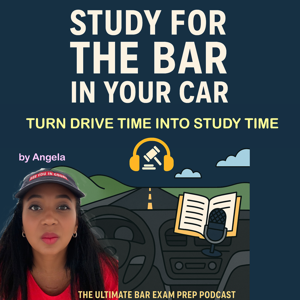

Tune into "Study for the Bar in Your Car" for an essential Torts deep dive with Episode 3, where AI hosts Claude and Ma, powered by Angela's meticulous notes, explore the nuances of False Imprisonment. This episode focuses on safeguarding your fundamental freedom of movement.
False Imprisonment occurs when a defendant intentionally confines a victim to a bounded area, and the victim is either aware of the confinement or suffers harm because of it. Intent is crucial, requiring a volitional act and the purpose to confine, or knowing with substantial certainty that confinement will result from the action. Motive is irrelevant to proving intent. The concept of transferred intent fully applies, meaning intent to falsely imprison one person transfers if another is confined. However, it does not apply if the initial act was lawful.
Confinement methods extend beyond physical barriers. They include direct physical force (even against immediate family or property if it restricts movement), direct or implied threats of force, confiscation of essential items like crutches, invalid use of legal authority (false arrest), or a breach of a duty to release. In rare cases, severe public humiliation can constitute confinement if escape would cause extreme disgrace, but mere moral pressure or persuasion is insufficient. Deception or coercion can also lead to confinement.
A "bounded area" means movement is restricted in all directions, with no reasonable means of escape. An escape route is not reasonable if it involves unreasonable risk of physical harm, serious property damage, or severe humiliation. The duration of confinement can be any appreciable length of time, even seconds.
For damages, victims can receive nominal damages even without physical injury. Punitive damages may be available for malicious or outrageous conduct, and emotional distress (e.g., fear, anxiety, humiliation) caused by the confinement is compensable.
Key defenses include valid consent (express or implied, but invalidated by fraud, lack of capacity, or exceeding the scope of agreement). The "shopkeeper's privilege" allows merchants to reasonably detain suspected shoplifters based on reasonable belief, manner, and time. Lawful arrest by an officer or citizen with proper authority is a complete defense. Parental discipline allows reasonable confinement of children. Necessity, either public (to avert major public harm) or private (to protect oneself or others from serious harm), can also be a defense, though private necessity may require compensation for property damage. Self-defense and defense of others allow reasonable, proportional force. Crucially, contributory negligence is not a defense to intentional torts like false imprisonment. Assumption of risk can apply if the victim knowingly and voluntarily encountered a known risk of confinement.
Mastering these definitions and their application to facts is vital for bar exam success. Tune in to "Study for the Bar in Your Car" to deepen your understanding and prepare for your exams. Listen now and subscribe!
 View all episodes
 By Angela Rutledge, LLM, LLB
5
55 ratings
Tune into "Study for the Bar in Your Car" for an essential Torts deep dive with Episode 3, where AI hosts Claude and Ma, powered by Angela's meticulous notes, explore the nuances of False Imprisonment. This episode focuses on safeguarding your fundamental freedom of movement.
False Imprisonment occurs when a defendant intentionally confines a victim to a bounded area, and the victim is either aware of the confinement or suffers harm because of it. Intent is crucial, requiring a volitional act and the purpose to confine, or knowing with substantial certainty that confinement will result from the action. Motive is irrelevant to proving intent. The concept of transferred intent fully applies, meaning intent to falsely imprison one person transfers if another is confined. However, it does not apply if the initial act was lawful.
Confinement methods extend beyond physical barriers. They include direct physical force (even against immediate family or property if it restricts movement), direct or implied threats of force, confiscation of essential items like crutches, invalid use of legal authority (false arrest), or a breach of a duty to release. In rare cases, severe public humiliation can constitute confinement if escape would cause extreme disgrace, but mere moral pressure or persuasion is insufficient. Deception or coercion can also lead to confinement.
A "bounded area" means movement is restricted in all directions, with no reasonable means of escape. An escape route is not reasonable if it involves unreasonable risk of physical harm, serious property damage, or severe humiliation. The duration of confinement can be any appreciable length of time, even seconds.
For damages, victims can receive nominal damages even without physical injury. Punitive damages may be available for malicious or outrageous conduct, and emotional distress (e.g., fear, anxiety, humiliation) caused by the confinement is compensable.
Key defenses include valid consent (express or implied, but invalidated by fraud, lack of capacity, or exceeding the scope of agreement). The "shopkeeper's privilege" allows merchants to reasonably detain suspected shoplifters based on reasonable belief, manner, and time. Lawful arrest by an officer or citizen with proper authority is a complete defense. Parental discipline allows reasonable confinement of children. Necessity, either public (to avert major public harm) or private (to protect oneself or others from serious harm), can also be a defense, though private necessity may require compensation for property damage. Self-defense and defense of others allow reasonable, proportional force. Crucially, contributory negligence is not a defense to intentional torts like false imprisonment. Assumption of risk can apply if the victim knowingly and voluntarily encountered a known risk of confinement.
Mastering these definitions and their application to facts is vital for bar exam success. Tune in to "Study for the Bar in Your Car" to deepen your understanding and prepare for your exams. Listen now and subscribe!

512 Listeners

193 Listeners

60 Listeners

15,411 Listeners
78 Listeners
20 Listeners

9 Listeners

6 Listeners