
Sign up to save your podcasts
Or

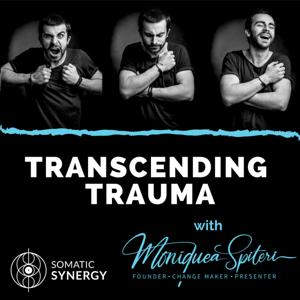


What If You Don’t Need to Be More Regulated?
When nervous-system healing becomes another form of self-control...
What if our obsession with nervous-system regulation is actually becoming another form of hypervigilance?
Welcome to a new chapter of Transcending Trauma®. Following the educational journey of Season 2, Moniquea Spiteri is shaking things up with a new series of Hot Topics — conversations that challenge some of the ideas we've come to accept about trauma, healing and the nervous system.
In this first episode, Moniquea asks whether our constant pursuit of regulation is making us less tolerant of the normal discomfort that comes with being human.
When did healing start to mean being calm all the time? And have we turned nervous-system awareness into yet another way of monitoring and trying to fix ourselves?
Drawing on her experience as a somatic psychotherapist, Moniquea explores the difference between regulation and capacity, how hypervigilance can disguise itself as self-improvement, and why discomfort doesn't always mean we're unsafe.
She also looks at the role of relationships, co-regulation and hyper-independence — and why a healthy nervous system isn't one that never gets activated, but one that has the flexibility to move, respond and recover.
Perhaps healing isn't about feeling less. Perhaps it's about developing the capacity to experience more of life without losing ourselves in the process.
If this episode gets you thinking, join the conversation. Share your thoughts, leave a review or send it to someone who might see nervous-system regulation a little differently.
Coming next: Are We Overusing the Word Trauma?
Discover more about Moniquea's work, somatic psychotherapy and Transcending Trauma® at www.moniqueaspiteri.com
Transcending Trauma® — Where science, story and soul unite.
See omnystudio.com/listener for privacy information.
Dissociation is often described as disconnection, but it is also an intelligent survival response.
It can occur when an experience feels too overwhelming, threatening or inescapable for the nervous system to process in the moment. The body remains present, but some part of our awareness moves away. For many people, this does not look dramatic. It may appear as emotional numbness, memory gaps, feeling unreal, losing time, living on autopilot or functioning well while feeling strangely absent from your own life.
In this episode of Transcending Trauma, Moniquea explores the protective intelligence of dissociation and the many ways it can shape our relationship with the body, memory, identity, attachment and connection.
You’ll learn about:
• Functional dissociation and why it can be difficult to recognise
• Depersonalisation and derealisation
• The relationship between dissociation, freeze and hidden activation
• How attachment wounds can contribute to relational disconnection
• Why healing cannot be achieved by forcing someone back into their body
• Gentle ways to build orientation, safety and present-moment connection
This episode also marks a new chapter for Transcending Trauma. Following the completion of the previous podcast series, the conversation is opening into individual topic discussions, education and future guest conversations exploring trauma, nervous system healing and embodied transformation.
Dissociation is not evidence that you are broken. It may be evidence of how intelligently your system helped you survive when remaining fully present was simply too much.
See omnystudio.com/listener for privacy information.
What happens when connection no longer requires self-abandonment?
In this powerful closing episode of the attachment and people-pleasing series, Moniquea Spiteri explores what it truly means to move from survival-based relating into secure connection.
Many of us learned to stay connected through adapting, over-functioning, rescuing, anticipating the needs of others, or becoming who we believed we needed to be in order to belong. While these patterns may have once helped us survive, they often come at a cost—the loss of self.
In this episode, Moniquea weaves together somatic healing, attachment theory, nervous system regulation, relational trauma, embodiment, and boundary work to explore what secure relating actually feels like in the body.
You'll discover:
• Why calm and healthy relationships can initially feel unfamiliar or unsafe
• The difference between chemistry and familiarity
• How people pleasing and over-functioning create the illusion of intimacy
• Why the nervous system can mistake intensity for connection
• How attachment wounds shape adult relationships
• What happens when relationships finally have room for the authentic self
• How to stay connected without losing yourself in the process
• The path toward mutuality, honesty, and secure connection
Through reflective teachings and guided somatic practices, this episode invites you to explore a new possibility: relationships where connection no longer costs you yourself.
Whether you're healing attachment wounds, navigating boundaries, recovering from people pleasing, or learning to trust yourself in relationship, this episode offers a compassionate and embodied roadmap toward secure relating.
Topics explored in this episode:
Attachment Theory, Secure Attachment, People Pleasing, Fawn Response, Relational Trauma, Somatic Experiencing, Nervous System Regulation, Polyvagal Theory, Boundaries, Emotional Burnout, Self-Abandonment, Embodiment, Trauma Recovery, Relational Healing, Secure Relationships, Authentic Connection, Personal Growth, Emotional Resilience, Healing Trauma.
If this episode resonates with you, please subscribe, share it with someone who may benefit, and leave a review.
And stay tuned as Transcending Trauma begins opening back into more conversations with practitioners, experts, survivors, and thought leaders exploring trauma, healing, embodiment, mental health, and human transformation.
See omnystudio.com/listener for privacy information.
What if boundaries are not walls… but a return to yourself?
In this episode of Transcending Trauma, Moniquea Spiteri explores boundaries through the lens of trauma healing, nervous system regulation, attachment, somatic awareness, and relational repair.
Many people struggle with boundaries not because they lack strength, but because their nervous system learned that staying connected meant staying agreeable, easy, or emotionally available.
This episode explores why boundaries can feel so difficult to hold, how trauma and attachment patterns interrupt our sense of self, and why boundaries are not primarily about controlling others, but about remaining connected to ourselves.
Through three guided somatic practices, you’ll learn how to feel the edge of self in the body, recognise the moment you override your own truth, and begin staying connected to yourself while remaining in relationship.
In this episode we explore
• boundaries as a felt sense in the body • why boundaries feel unsafe or activating • the nervous system and fear of disconnection • people pleasing, over adaptation, and self abandonment • staying grounded in truth without shutting down • self loyalty, mutuality, and authentic connection
A powerful episode for anyone ready to stop abandoning themselves in relationships and begin reclaiming boundaries as an act of self return.
See omnystudio.com/listener for privacy information.
Why does saying no feel so hard?
In this episode of Transcending Trauma, Moniquea Spiteri explores the people pleaser pattern through the lens of trauma healing, nervous system regulation, attachment, parts work, and somatic awareness.
Many people experience people pleasing as kindness, over giving, or simply being the one who keeps everything together. But beneath the behaviour is often a deeply intelligent survival adaptation rooted in the fawn response, fear of disconnection, and the belief that love must be earned through usefulness.
This episode explores how people pleasing slowly becomes identity, how guilt and resentment keep the cycle repeating, and why boundaries are not the opposite of love, but the pathway back to authentic connection.
Through three guided somatic practices, you’ll learn how to recognise the over giving cycle in real time, stay present through the guilt wave without rescuing, and begin reclaiming boundaries without losing your warmth, heart, or capacity for love.
In this episode we explore
• people pleasing and the loss of self • guilt, resentment, and fear of being selfish • the younger protective part and the good child pattern • over functioning, role identity, and self abandonment • how to stay warm, open, and clear in boundaries • rebuilding self loyalty and authentic connection
A powerful episode for anyone ready to stop abandoning themselves in the name of connection and begin reconnecting with their truth, capacity, and sense of self.
See omnystudio.com/listener for privacy information.
In this episode of Transcending Trauma, Moniquea Spiteri explores the fawn response, a powerful and often misunderstood trauma response where the nervous system learns to prioritise harmony, approval, and connection in order to stay safe.
Often experienced as people pleasing, conflict avoidance, or constantly managing the emotional needs of others, the fawn response is not a personality flaw. It is an intelligent nervous system adaptation that can develop in environments where maintaining connection felt essential for safety.
Drawing on trauma psychology, Polyvagal theory, somatic experiencing principles, parts work, and body‑based awareness, this episode explores why people pleasing becomes automatic in the nervous system and how we can begin reconnecting with our own voice while staying in relationship.
You’ll also be guided through three gentle somatic practices to help you recognise the fawn response in your body, reconnect with your internal signals of yes and no, and begin responding from a more grounded and authentic place.
Topics explored in this episode include
• The fawn response and how it develops in trauma • People pleasing and the nervous system • Polyvagal theory and the social engagement system • Guilt, approval seeking, and fear of disappointing others • Parts work and why younger protective parts can take over in relationships • How to reclaim your voice without losing connection
This episode includes three guided somatic practices designed to help you slow down, notice your body’s signals, and begin creating new relational experiences for your nervous system.
If this episode resonates with you, consider sharing it with someone who may benefit from the conversation, and follow the podcast so these teachings can reach more people interested in trauma healing, nervous system regulation, somatic therapy, and relational healing.
See omnystudio.com/listener for privacy information.
What does secure attachment actually look like in real life?
In this episode of Transcending Trauma, Moniquea explores how relational safety is built not through perfection, but through regulation, repair, and emotional maturity.
Drawing on nervous system science, attachment theory, and relational awareness, this conversation explores how secure attachment shows up in everyday interactions. From navigating conflict to learning the art of repair, Moniquea explores how two nervous systems can move through tension without losing connection.
Through three guided somatic practices, you will learn how to recognise safety in the body, stay present during moments of disagreement, and practise repair in ways that strengthen relationships over time.
Secure attachment is not about never being triggered. It is about learning how to return.
Because the real foundation of secure relationships is not perfection. It is the willingness to reconnect, again and again.
In the next episode we explore how emotional maturity continues to shape the way secure attachment becomes visible in everyday life.
See omnystudio.com/listener for privacy information.
From Reaction to Regulation
Why do we react before we can think?
In this episode of Transcending Trauma, Moniquea explores what really happens in the body when we get triggered and how to build the capacity to regulate in real time.
Drawing on Polyvagal Theory, Somatic Experiencing, parts work, body psychotherapy, and relational teachings from Terry Real, this conversation explores why the nervous system moves faster than the thinking brain and how the past can become superimposed onto the present in moments of activation.
Through reflection and three guided somatic practices, you will learn how to recognise your personal trigger patterns, interrupt reactive survival responses, and return to presence in the heat of the moment.
Regulation is not about becoming unshakeable.
It is about becoming recoverable.
Because when you learn to regulate your nervous system, you do not just calm your body. You reshape your relationships.
In the next episode we explore Secure Attachment in Action and what emotional security actually looks like in everyday life.
See omnystudio.com/listener for privacy information.
In this episode of Transcending Trauma, we explore what it really means to reclaim agency over your life, not through mindset alone, but through embodied choice.
Trauma shapes the stories we live inside of. It influences our attachment patterns, our nervous system responses, and the internal narratives that quietly guide our relationships. But the story that helped you survive is not necessarily the story that will help you thrive.
Drawing on Polyvagal Theory, Somatic Experiencing®, parts work, body psychotherapy, and relational teachings from Terry Real, Moniquea unpacks how the past can become superimposed onto the present, and how we begin to interrupt that pattern.
This episode includes three guided somatic practices to help you:
• Recognise the old narrative running beneath your reactions
• Disrupt automatic survival scripts
• Strengthen embodied agency in real-time relationships
Embodied agency is not about control or perfection. It is the steady, grounded capacity to pause, regulate, and choose from your wise adult self instead of protective reactivity.
Because healing isn’t about rewriting history — it’s about living differently now.
See omnystudio.com/listener for privacy information.
The Power of Integration
In this episode of Transcending Trauma, we explore what it really means to integrate healing — not just as an inner process, but as a lived, embodied reality. We look at how regulation, relational repair, and conscious choice shape a new way of being in the world. Drawing on Somatic Experiencing®, Parts Work, and attachment theory, Moniquea guides you through three practices to support real-life integration. Because transformation doesn’t end with insight — it deepens as we live the new story.
Includes:
• 3 guided somatic practices
• Teachings on attachment, nervous system repair, and relational healing
• Reflections for living your integration day-to-day
Make space for this one — and let it become a gentle companion on your path.
See omnystudio.com/listener for privacy information.
From the publisher's feed
"Where healing meets humanity."
Welcome to Transcending Trauma, a space where science, story, and soul converge. Hosted by Somatic Psychotherapist and change-maker Moniquea Spiteri, this podcast explores the human journey through trauma, transformation, and embodied awakening.
Each episode invites you into meaningful conversations with leading experts, healers, and visionaries who are redefining what it means to heal, from the nervous system up. With warmth, depth, and authenticity, Moniquea guides listeners through the complexities of trauma recovery, the wisdom of the body, and the pathways to reclaiming vitality, connection, and purpose.
Whether you’re a practitioner, a healing soul, or someone reclaiming your vitality after adversity, Transcending Trauma ® offers grounded insights, somatic practices, and heartfelt stories that remind us: Transformation is not just possible, it’s how we transcend the patterns of survival, awaken the wisdom of the body, and remember the truth of who we are.
New Season Theme:The Return - stories of resilience, reinvention, and radical embodiment. To connect with Moniquea, visit her Facebook page - https://www.facebook.com/somaticsynergy and connect with Moniquea via her other platforms via Link Tree https://linktr.ee/Moniquea_Spiteri
To connect with Moniquea, visit her Facebook page here https://www.facebook.com/somaticsynergy
Many thanks to The Kondoors for the use of their amazing single, Mr Rain, for our show's theme song in Season 1. To find out more about The Kondoors visit - https://www.thekondoors.com/ or to purchase Mr Rain click this link - https://orcd.co/byqrerj
#TranscendingTrauma #Trauma #MoniqueaSpiteri #TheKondoors

7 Listeners

3 Listeners

34 Listeners
6 Listeners

0 Listeners

2 Listeners

3 Listeners

3 Listeners

0 Listeners