
Sign up to save your podcasts
Or

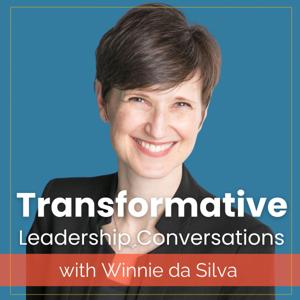


Are you prepared to commit to leading the long game of organizational change? In this episode of Transformative Leadership Conversations, Winnie da Silva is joined by Anthony Cheong, Executive Director and Global Head of HR Operations for Boston Consulting Group, to discuss what it takes to lead change. From emotional intelligence to stakeholder engagement, driving transformation takes curiosity, resilience, and a compelling narrative to rally around.
Resources
Anthony Cheong on LinkedIn
Winnie da Silva on LinkedIn
What does it take for leaders to successfully navigate large-scale, complex change? In this episode, Winnie da Silva explores the concept of change through the lens of systems thinking, and shares the stages leaders go through during periods of great transition. She discusses the essential ingredients of leadership and provides insights from industry experts on embracing transformative change.
Resources
Winnie da Silva on LinkedIn
In this episode, you'll learn key strategies for effective talent acquisition from organizational psychologist Tom Skiba, VP of Talent Strategy at Redesign Health. Discover how to set a high bar for hiring, challenge candidates with job-relevant tasks, and create a vision for roles that inspire trust and success in your team.
Resources
Tom Skiba on LinkedIn | Redesign Health
Winnie da Silva on LinkedIn
Powerful insights often occur when you least expect them. But what does it take to become a successful leader, especially in high-growth companies? In this episode of Transformative Leadership Conversations, host Winnie Da Silva delves into this question with Larry Kutscher, Chairman of the Board at A Place for Mom. Through their conversation, Larry shares valuable insights and advice based on his extensive experience in leadership roles, shedding light on the importance of talent, culture, and effective leadership skills in driving organizational success.
Resources
Larry Kutscher on LinkedIn
Winnie da Silva on LinkedIn
What happens when companies begin to take their talent for granted? In this episode of Transformative Leadership Conversations, Winnie da Silva delves into the critical topic of talent and its impact on organizational success. From the cautionary tale of Boeing's neglect of talent leading to catastrophic consequences, to the rise of transactional talent in today's fast-paced economy, she explores the importance of selecting and nurturing the right people. How can leaders strike a balance between transactional and integrative approaches to talent management in a world of increasing complexity and speed?
Resources
Winnie da Silva on LinkedIn
Powerful insights often arise when exploring the intersection of imposter syndrome and organizational dynamics. In this episode of Transformative Leadership Conversations, host Winnie Da Silva dives deep into imposter syndrome with Carolyn Herfurth, co-founder of the Imposter Syndrome Institute. They discuss the origins of imposter syndrome, its impact on individuals and organizations, and practical strategies to overcome it.
Carolyn Herfurth, with a background in corporate sales and entrepreneurship, brings over 20 years of experience in advising entrepreneurs for strategic growth. As the co-founder of the Imposter Syndrome Institute, Carolyn works tirelessly to help both people and organizations identify imposter syndrome and understand the sources of it. She provides practical tools for self-awareness, and guides others to overcome self-doubt in their professional and personal lives.
Episode Highlights:
Introduction to Imposter Syndrome: Imposter syndrome is a common belief shared by many individuals that they are not as talented or capable as others perceive them to be, despite evidence of their success.
Background of Imposter Syndrome Institute: The Imposter Syndrome Institute was co-founded by Carolyn Herfurth and Dr. Valerie Young to address the impact of imposter syndrome on individuals and organizations.
Types of Imposter Syndrome: There are five types of imposter syndrome identified by Dr. Valerie Young, including perfectionists, experts, natural geniuses, soloists, and superhumans.
Gender and Imposter Syndrome: Imposter syndrome affects both men and women, with men also experiencing acute feelings of inadequacy and self-doubt.
Corporate Impact of Imposter Syndrome: Imposter syndrome can impact productivity, innovation, turnover, and overall organizational success, making it crucial for leaders to address.
Tools for Addressing Imposter Syndrome: Normalizing imposter syndrome, understanding its sources, and reframing negative thoughts are practical tools individuals can use to combat imposter feelings.
Connection to Psychological Safety: Imposter syndrome can be a barrier to psychological safety in organizations, highlighting the need for individual and organizational interventions.
Educational Interventions: Providing education on imposter syndrome during onboarding and partnering with experts in psychological safety and competency models can help organizations address imposter syndrome effectively.
Resources
Carolyn Herfurth on LinkedIn | Website
Winnie da Silva on LinkedIn
While imposter syndrome affects a wide variety of people, it can hit some groups harder than others. In this episode of Transformative Leadership Conversations, you'll gain insights into how imposter syndrome can impact your career journey, especially as a woman and an immigrant. Learn practical strategies, like journaling and understanding your sphere of control, to overcome imposter syndrome and step into your power authentically.
Dea Katel Fisher, the global head of internal communications and employee experience at Squarespace, brings over 20 years of experience in communications, change management, and people and culture leadership. With a background in journalism and a passion for building impactful cultures, Dea has led internal communications functions at major companies like Spotify and Pernod Ricard. Her expertise lies in fostering inclusive cultures, navigating change, and empowering individuals to embrace authenticity and self-awareness in their leadership journey.
Episode Highlights:
Resources
Dea Katel Fischer on LinkedIn
Winnie da Silva on LinkedIn
Winniedasilva.com
In this podcast episode, Winnie shares exactly how imposter syndrome can prevent you from enjoying your accomplishments, promotions, and accolades. She’ll help you identify and overcome imposter syndrome so you can feel like you truly earned and deserve your success.
Episode Highlights:
Resources
Winnie da Silva on LinkedIn
Get the whole season and the companion guide at Winniedasilva.com
Powerful insights often occur when you least expect them. On Transformative Leadership Conversations, they're at the heart of every episode.
I’m your host, Winnie da Silva, and I’m driven by a passion to share the stories and strategies that shape effective leaders, teams, and organizations.
Since launching this podcast in December of 2020, we've delved deep into the individual stories of leaders, uncovering what makes their leadership stand out and the challenges they've overcome. In Season 4, Peter Axelson and I explored team effectiveness with the Team Development Masterclass, offering methodologies, tools, and exercises to enhance your ability to build effective teams.
This year, 2024, marks a fresh chapter. And I’m really excited about this new direction. Each month, we'll explore a different leadership theme from three angles: my reflections, a leader's journey, and an expert's viewpoint. What I love about this new approach is that you get a multifaceted and diverse experience from these three perspectives offering a prism of insights and strategies for each topic we explore together. And just like always – each episode will equip you with the inspiration, strategies, and tools to refine your own leadership and help you lead effective teams and thriving organizations.
Based on your feedback and my work with clients, I’ve picked themes relevant to you. They include topics like…
...and there will be so much more. I’m so happy that you’ll be joining us and throughout this new year I want to invite you to join our community by sharing your thoughts, questions, and experiences. You can do that in so many ways! Subscribe and leave a comment on your podcast platform of choice, send me an email at [email protected], listen to the podcast and leave a comment on my website at www.winniedasilva.com, or find me on LinkedIn. Whether you’re engaging with us online, suggesting topics, or joining the conversation on social media, your voice is a vital part of this podcast.
You are always welcome to take a seat at the table where every conversation has the potential for transformative change.
Stay tuned for our first episode of 2024, where we'll dive into Imposter Syndrome, setting the stage for a year of transformative conversations.
“Leaders need to be sure that they're providing the right behavioral examples of what's needed to support the effectiveness of this team. And this is tricky because you're not always clear about what those things are.” - Peter Axelson
In this podcast episode, Winnie and Peter, wrap up their Team Development Masterclass by discussing nine universal best practices that apply across the Team Development Methodology, which was explored in the previous 10 episodes.
Episode Highlights:
Role Modeling
Leaders must serve as role models, setting examples for their teams. Asking for feedback regularly can help gauge whether they are providing the right examples.
Investing in Relationships
Sound interpersonal relationships are fundamental for collaboration and team effectiveness. They encourage making time to intentionally deepen work relationships.
Changing Mindsets and Behaviors
Increasing team effectiveness requires individuals to change their behavior. Behavioral change typically starts with a shift in mindset, which can be achieved by examining internal narratives.
Emphasizing the Process
Effective processes are differentiators in team performance. They emphasize the importance of paying attention to "how" work is done, as team expertise and intelligence are fixed at the start.
Grappling with Big Questions
It’s important to grapple with significant questions, such as defining team culture - “What do we want to be?” Addressing such questions can be time-consuming but fruitful in the long run.
Creating Room for Experimentation
Team development often involves establishing new processes to build effective teams. Teams should be open to experimentation, assessing results, and customizing processes that work best for them.
Making the Implicit Explicit
It’s critical to uncover and address assumptions that can lead to costly consequences. By making the implicit explicit, teams can avoid misunderstandings, missed deadlines, and damaged relationships.
Asking for Feedback
Winnie and Peter underscore the importance of asking for feedback, especially from fellow team members regarding collaboration. They emphasize that this is a vital habit to develop.
Pause and Reflect
Peter and Winnie advocate regularly slowing down and considering how the team is functioning. These continuous improvement practices are the "secret sauce" for increasing effectiveness over time.
Resources
Winnie da Silva on LinkedIn
Get the whole season and the companion guide at Winniedasilva.com
From the publisher's feed