
Sign up to save your podcasts
Or

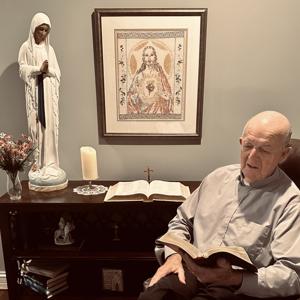


Today, August 14, as our Church celebrates the Memorial of Saint Maximillian Kolbe, priest and martyr, we are invited to read and reflect on a passage from the second letter of the apostle Paul of the Corinthians (4:7 – – 5:8) entitled "The power of Christ is made manifest in our suffering". Our treasure, which follows, is from a sermon by Saint Augustine, bishop.
Saint Maximilian Kolbe (1894–1941) was a Polish Conventual Franciscan priest, missionary, publisher, and passionate promoter of devotion to the Blessed Virgin Mary, especially through the Militia of the Immaculata, which he founded to lead people to Christ through Mary. Arrested by the Nazis during World War II, he was imprisoned at Auschwitz, where in 1941 he voluntarily offered to take the place of another prisoner, Franciszek Gajowniczek, a husband and father who had been condemned to die by starvation; after surviving nearly two weeks in the starvation bunker while encouraging the other prisoners in prayer, Kolbe was killed by lethal injection. He is best known for giving his life for another prisoner, his profound Marian spirituality, and his witness that Christian love can remain free, courageous, and victorious even amid extraordinary hatred and evil.
Saint Augustine is perhaps the most significant Christian thinker after St. Paul. The legacy of Saint Augustine of Hippo is immense, shaping both Catholic theology and Western thought as a whole. He is best known for his profound writings—especially Confessions and City of God—which explore the human heart's restless search for God, the reality of sin and grace, and the meaning of history. Saint Augustine is a preeminent Catholic Doctor of the Church. He died in 430.
The Letters of Paul the Apostle to the Corinthians were written around A.D. 53–57 to the Christian community Paul had founded in Corinth, a prosperous and culturally diverse Greek city where the young Church was struggling with divisions, sexual immorality, disputes, misunderstandings about worship and spiritual gifts, and challenges to Paul's authority. Their primary teaching is that Christ must transform every dimension of Christian life. Together, the letters teach that belonging to Christ is not merely a matter of belief; through the Holy Spirit, Christians are called to become a new creation whose faith is visible in unity, holiness, sacrificial love, generosity, and care for one another.
Our "treasure" today entitled "The Death of the Martyrs Is Precious, bought at the Cost of Christ's Death," by Saint Augustine, teaches that the courage and holiness of the martyrs do not originate simply in their own strength but in the saving grace won for them by Jesus Christ through His Passion and death. The martyrs give their lives for Christ because Christ first gave His life for them; their sacrifice does not add to or replace His unique sacrifice but becomes a participation in it, as they return in faithful love the life they have received from Him. Their deaths are therefore "precious" before God because they bear witness to the transforming power of Christ's redemption and their confident hope in eternal life. Augustine's essential message is that Christ's sacrifice makes our own self-offering possible: having been redeemed by His Blood, Christians are called—whether through martyrdom or the daily sacrifices of discipleship—to give themselves back to God in faithful, courageous, and self-giving love.
The central teaching of the first reading from Corinthians is that our human weakness and suffering can become the very places where the life and power of Jesus Christ are most clearly revealed. Paul describes Christians as fragile "earthen vessels" carrying the priceless treasure of God's grace, reminding us that the power comes from God rather than ourselves; though afflicted, persecuted, and even facing death, we need not despair because the risen Christ is at work within us, transforming suffering into a participation in His death and Resurrection. Our earthly bodies and present trials are temporary, while God is preparing us for an eternal dwelling and everlasting glory. Paul therefore calls Christians to walk by faith and not by sight, trusting that suffering faithfully united with Christ is never meaningless: it can reveal His strength in our weakness, deepen our union with Him, and prepare us for the fullness of life with God.
Today, August 13, as our Church celebrates the memorial of Pontian, pope and martyr, and Hippolytus, priest and martyr, we are invited to first read and reflect on the letter of the apostle Paul to the Romans (8:18-39) entitled "Nothing is able to separate us from the love of God which comes to us through Jesus Christ." Our treasure is from a letter by Saint Cyprian, bishop and martyr.
Saints Pontian and Hippolytus of Rome were third-century Christian leaders whose story is especially remembered as a powerful witness to reconciliation and unity in Christ. Pontian was pope from about A.D. 230–235, while Hippolytus, an influential priest and theologian, had opposed several popes and became associated with a schismatic group, traditionally leading to his description as the first "antipope." During the persecution of Emperor Maximinus Thrax, both men were arrested and exiled to the harsh mines of Sardinia, where Hippolytus was reconciled with Pontian and the Church, healing the division between them; both subsequently died from the brutal conditions of exile and are honored as martyrs. They are best known, therefore, not simply for martyrdom but for demonstrating that humility, forgiveness, reconciliation, and the unity of the Church are more important than winning disputes or defending personal positions.
Saint Cyprian of Carthage was a bishop, theologian, and martyr of the early Church who lived in North Africa during the third century. His writings helped shape Catholic teaching on the role of bishops, the reconciliation of repentant sinners, and the importance of prayer, especially through his reflections on the Lord's Prayer. Saint Cyprian ultimately gave his life for the faith and is remembered as one of the great Church Fathers whose teachings continue to strengthen the Church's understanding of unity, leadership, mercy, and discipleship.
The central teaching of the Letter to the Romans by Saint Paul is that salvation comes as a gift of God's grace through faith in Jesus Christ, not by human works of the Law, and that this saving grace is offered to all people—Jew and Gentile alike. Paul explains that all humanity needs redemption because of sin, but through Christ's death and resurrection we are justified, reconciled to God, and given new life in the Holy Spirit. The letter also shows how this new life in Christ transforms believers into a community marked by faith, hope, and love lived out in practical holiness.
The central teaching of our "treasure" today entitled "Invincible Faith," from a letter by Saint Cyprian is that faith rooted firmly in Christ cannot ultimately be conquered by persecution, suffering, imprisonment, or even death. Saint Cyprian praises Christians who remained steadfast under severe trials, showing that their strength came not merely from human courage but from God's grace working within them. Their suffering became a witness to Christ, and what their persecutors intended as defeat became instead a path to eternal victory. The reading therefore teaches Christians to face trials with courage, perseverance, and confidence in God, knowing that remain faithful to Christ in suffering, suffering does not destroy faith but can purify it, strengthen it and provide a powerful testimony to the Gospel.
Our first reading from Romans teaches that Christians can endure suffering with confident hope because God is faithfully working toward our ultimate salvation and nothing can separate those who remain in Christ from His love. Saint Paul acknowledges that both humanity and all creation suffer and "groan" while awaiting redemption but assures us that the Holy Spirit helps us in our weakness, intercedes for us, and that God can bring good even from our trials according to His saving purpose. Because God has given His own Son for us, neither suffering, persecution, hardship, death, spiritual powers, nor anything else in creation can overcome His saving love. The passage therefore calls us to persevere through suffering without losing hope, trusting that present trials are temporary, God remains with us within them, and our final destiny in Christ is resurrection, glory, and eternal communion with Him.
Today, August 12, as our Church celebrates the Memorial of Saint Jane Frances de Chantel, we are first invited to read and reflect on a passage from the letter of the apostle Paul to the Ephesians (4: 1-24), entitled "Grace has been given to each one for the building up of the body of Christ". Our treasure, which follows, is from a homily on the Gospels by Saint Gregory the Great, pope.
Saint Jane Frances de Chantal (1572–1641) was a French wife, mother, widow, religious foundress, and close spiritual friend of Francis de Sales who, after the tragic death of her husband, devoted herself increasingly to prayer, charity, and service to God. Her principal contribution to Catholic spirituality was her witness that holiness is found not primarily in extraordinary practices but in faithfully accepting God's will and performing ordinary duties with extraordinary love. She is best known for founding the Visitation Order, her friendship with Francis de Sales, and her spirituality of gentleness, humility, abandonment to divine Providence, and loving God faithfully amid suffering and everyday life.
Saint Gregory's primary contribution to the teachings of the Catholic Church is his profound integration of sound doctrine with practical pastoral leadership, especially in shaping how the Church teaches, governs, and cares for souls. He emphasized that true Christian leadership is rooted in humility and service.
Saint Gregory the Great's "On the Gospels" is a collection of forty sermons that explore the four Gospels in which Gregory emphasizes the importance of Scripture in prayer, daily life, and Christian teaching, aiming to guide individuals toward a deeper understanding of God's presence in the world.
The central teaching of Letter to the Ephesians is that in Jesus Christ God has united all people into one new humanity—the Church. Paul explains that salvation is a gift of grace, not something we earn, and that through Christ both Jews and Gentiles are brought together as one body.
Our "treasure" today, from Saint Gregory the Great, entitled "In the World, Yet Not of It", teaches that Christians are called to live faithfully within the world without allowing its possessions, pleasures, honors, and ambitions to possess their hearts. Saint Gregory does not teach that material things are evil or that Christians must abandon ordinary responsibilities; rather, we should use temporal goods without becoming attached to them, keeping our deepest desire fixed on God and eternal life. Because everything earthly passes away, the disciple must cultivate interior detachment, humility, charity, and readiness to surrender whatever interferes with following Christ. His essential message is that Christian freedom comes not necessarily from having nothing, but from allowing nothing except God to become the treasure and master of the heart.
The first reading from Ephesians teaches that every Christian has received individual gifts from Christ, not primarily for personal benefit, but to strengthen the unity, holiness, and mission of His Church. Paul the Apostle calls believers to live with humility, gentleness, patience, and love, preserving the unity created by the Holy Spirit— "one body and one Spirit…one Lord, one faith, one baptism"—while recognizing that Christ gives different ministries and graces so that His people may serve one another and the whole Body may mature in Him. This requires putting away the "old self," corrupted by sinful desires, and becoming renewed in mind and heart by "putting on the new self" created in God's likeness. The essential message is that Christ transforms each of us not in isolation but as members of one Body, giving each person gifts that are meant to be offered for the good of others until together we grow into the fullness of Christ.
On Tuesday of the Nineteenth Week in Ordinary Time our Church invites us to first read and reflect on a scripture passage from the book of the prophet Micah (3:1-12) entitled" Jerusalem will be destroyed because of its leaders' sins". Our treasure, which follows, is from a treatise On the Incarnation of the Lord by Theodoret of Cyr, bishop.
Theodoret of Cyrrhus (c. 393–c. 458) was bishop of Cyrrhus in Syria, a prolific biblical commentator, theologian, historian, and pastor of the fifth-century Church. He is especially important for his extensive commentaries on Scripture, his Ecclesiastical History, and his defense of the Church's teaching that Jesus Christ is truly God and truly man. He is best known for combining careful biblical scholarship with theology that strongly defended the full humanity of Christ without denying His divinity, helping prepare the way for the Council of Chalcedon's definitive teaching that Christ is one divine Person in two natures, divine and human.
On the Incarnation of the Lord by Theodoret of Cyr was written about 431 attributed to Christ an integral human consciousness with a distinct psychological ego.
The Book of Micah contains the preaching of Micah, who ministered in Judah during the eighth century B.C., roughly 740–700 B.C., addressing primarily the people and leaders of Judah and Jerusalem while also speaking about Israel. Its central message is beautifully summarized in Micah 6:8: "to do justice, to love goodness, and to walk humbly with your God." It is included in the Bible because it reveals that authentic faith requires both faithfulness to God and justice toward our neighbor, while pointing forward to God's saving mercy and the coming Messiah.
The central teaching of our "treasure" today entitled "By His Wounds We Are Healed," by Theodoret of Cyrrhus, is that Christ willingly took upon Himself the suffering and death caused by human sin so that humanity might be healed, reconciled to God, and restored to eternal life. Though completely innocent, Jesus bore our sins in His own humanity, fulfilling Isaiah's prophecy that "by his wounds we were healed." Because Christ is truly God and truly man, His death conquers our death, and His Resurrection opens the way to new life. Theodoret therefore presents the Cross not as Christ's defeat but as the supreme expression of God's saving love: the sinless One accepts our wounds, suffering, and death so that, united to Him, we may receive His forgiveness, healing, and everlasting life.
Our first reading from the book of the prophet Micah teaches that God holds those entrusted with leadership especially accountable for how they use their authority, particularly in their treatment of the poor and vulnerable. Through Micah, God condemns rulers who exploit the people, judges who accept bribes, priests who teach for payment, and prophets who shape their message according to personal gain, while falsely if God will protect them simply because they are His chosen people. Micah courageously contrasts their corruption with his own calling to proclaim God's truth regardless of the consequences. The passage warns that religious privilege and outward worship cannot substitute for justice, integrity, and obedience to God; when leaders use power for themselves rather than for those, they are called to serve, both they and the community suffer the consequences.
Today, August 10, as our church celebrates the Feast of Lawrence, Deacon and Martyr we are invited to first read and reflect on a scripture passage from the Acts of the Apostles (6: 1-6; 8: 1b, 4-8) entitled "The seven deacons are chosen by the apostles". Our treasure, which follows, is from a sermon by Saint Augustine, bishop.
Lawrence of Rome (d. A.D. 258) was one of the seven deacons of Rome who served under Sixtus II and was entrusted especially with administering the Church's material goods and caring for the poor. During the persecution of Emperor Valerian, Pope Sixtus II was executed, and Lawrence was martyred four days later after refusing to surrender the Church's wealth to Roman authorities. According to ancient tradition, when ordered to produce the Church's treasures, Lawrence gathered the poor, sick, widows, and other needy people and declared, in effect, "These are the treasures of the Church." His greatest contribution is therefore the enduring witness of his life: the Church's true wealth is not money or possessions but Christ Himself and the people whom Christ especially identifies with—the poor and suffering. Saint Lawrence is best known for his courageous martyrdom, traditionally believed to have occurred by being burned on a gridiron, his joyful fidelity to Christ in the face of death, and his extraordinary service to the poor. As one of the Church's most celebrated early martyrs and deacons, he remains a powerful model of the diaconal vocation: service at the altar must become service to Christ in the poor.
Saint Augustine is perhaps the most significant Christian thinker after St. Paul. His legacy of is immense, shaping both Catholic theology and Western thought as a whole. He is best known for his profound writings—especially Confessions and City of God—which explore the human heart's restless search for God, the reality of sin and grace, and the meaning of history. In short, his legacy is that of a master teacher who showed that the journey to God is both deeply personal and firmly grounded in truth. Saint Augustine is a preeminent Catholic Doctor of the Church. He died in 430.
The central teaching of our "treasure" today from a sermon by Saint Augustine, honoring Lawrence of Rome, entitled "He Ministered the Sacred Blood of Christ,", is that Saint Lawrence fulfilled his ministry as a deacon by giving his own life in imitation of the Christ whose Precious Blood he ministered at the altar. Augustine presents Lawrence as a model of complete Christian discipleship: having served Christ sacramentally in the Eucharist, he also served Him in the poor and finally followed Him through suffering and martyrdom. His witness teaches that receiving and ministering the Eucharist must lead to becoming like the Christ we receive—self-giving, charitable, courageous, and willing to sacrifice ourselves for others. Lawrence therefore demonstrates the deepest meaning of Christian service: what we celebrate at the altar must be lived in our lives, until our own self-giving becomes united with Christ's perfect sacrifice of love.
Our first reading, from the teaching of the Acts of the Apostles, teaches that the Church, guided by the Holy Spirit, calls and commissions particular servants so that both the proclamation of God's Word and the charitable care of His people, especially those in need, may flourish together. When Greek-speaking widows were being neglected in the daily distribution, the Apostles chose seven men "filled with the Spirit and wisdom," prayed over them, and laid hands upon them, establishing a pattern of ordained service traditionally associated with the diaconate. The later ministry of Philip the Evangelist shows that this service extends beyond material assistance to evangelization: he preached Christ, performed signs, and brought great joy to Samaria. The passage therefore teaches that Christian service and evangelization belong together—those called to serve the needs of others must themselves be filled with the Holy Spirit, rooted in prayer, and prepared to proclaim Christ in both word and deed.
On the Nineteenth Sunday in Ordinary Time our Church invites us to first read and reflect on a scripture passage from the book of the prophet Hosea (11:1-11) entitled" God is always merciful". Our treasure, which follows, is a dialogue On Divine Providence by Saint Catherine of Sienna, virgin.
Saint Catherine of Siena (1347–1380) was an Italian Dominican tertiary, mystic, spiritual writer, and courageous servant of the Church who, despite having little formal education, became one of Christianity's most influential spiritual teachers. Her greatest contributions to Catholic spirituality are found in her letters and especially The Dialogue of Divine Providence, which emphasize God's infinite love and mercy, the transforming power of Christ's Precious Blood, prayer and discernment, growth in virtue, love of neighbor, and complete surrender to God's providence. She is best known for her extraordinary mystical union with Christ, fearless defense of the Church, compassionate service to the suffering, and insistence that genuine love of God must become concrete love of neighbor. Canonized in 1461, she was declared a Doctor of the Church in 1970, one of the first women to receive that title, because the depth and enduring value of her spiritual teaching continue to guide the entire Church toward holiness and intimate union with God.
On Divine Providence is the great spiritual work of Catherine of Siena, dictated around 1377–1378 as the fruit of her intense prayer and mystical experiences. Its principal teaching is that God's loving providence continually seeks to draw humanity into union with Himself through Jesus Christ, whom Catherine beautifully describes as the "Bridge" connecting sinful humanity with the Father. On Divine Providence is a powerful testimony that God is always acting in love for our salvation, and holiness consists in trusting Him completely and allowing His love to transform how we live and love others.
The central teaching of "The Bonds of Love," by Catherine of Siena, our "treasure" today, is that love of God and love of neighbor are inseparable: we demonstrate our love for God by loving and serving the people He places before us. Because we cannot benefit God, who needs nothing from us, God asks us to return the love we have received from Him by giving it freely to our neighbor—through compassion, forgiveness, patience, generosity, and concrete service, especially toward those in need. Catherine teaches that God intentionally binds His children together through love so that each person's gifts may serve the needs of others; therefore, Christian holiness is never merely private or individual but grows through relationships of mutual dependence and charity. We receive everything from God's love, and we return that love to Him by becoming instruments of His love for one another.
The primary teaching of our first reading from Hosea is that God's faithful love for His people is stronger than their sin and unfaithfulness. Through Hosea, God describes Israel tenderly as a beloved child whom He called, taught to walk, carried, healed, and drew with "bands of love," yet Israel repeatedly turned away from Him. Although justice demands consequences for their sin, God reveals that His heart is moved with compassion and He will not abandon or utterly destroy His people: His desire is ultimately to restore, heal, and bring them home. The passage beautifully reveals that divine mercy does not ignore sin but reaches beyond judgment toward reconciliation, teaching us that however far we wander, God continues to seek our conversion and invites us to return confidently to the loving Father who never ceases to desire our salvation.
Today, August 8, as our church celebrates the Memorial of Dominic, Priest, our Church invites us to first read and reflect on a passage from the first letter of Peter (5:1-11) entitled "The duties of pastors and the laity". Our treasure, which follows, is from various writings on the history of the Order of Preachers.
Saint Dominic (1170–1221) was a Spanish priest and founder of the Order of Preachers, established to proclaim the Gospel through a life combining prayer, study, poverty, community, and preaching. Saint Dominic is best known for founding the Dominicans, his intense devotion to prayer and preaching, his zeal for the salvation of souls, and the longstanding Dominican association with devotion to the Rosary. His enduring message is that truth must first be encountered in prayer and study, then proclaimed with clarity, charity, humility, and the witness of a holy life.
The Order of Preachers, commonly called the Dominicans, is a Catholic religious order founded by Dominic. Their life rests on four closely connected pillars: prayer, study, community, and preaching. Their basic approach to preaching can be summarized as truth contemplated, understood, lived, and then proclaimed with charity. For Saint Dominic, the credibility of the preacher's life was inseparable from his words; consequently, poverty, humility, prayer, and compassion were essential to effective preaching. Perhaps the most distinctive Dominican insight is that preaching begins before the preacher speaks. The preacher first allows God's truth to challenge and transform him; only then can he authentically offer that truth to others.
Our "treasure" today from "He Spoke with God or About God," drawn from early writings on the Order of Preachers, teaches that the extraordinary effectiveness of Dominic as a preacher flowed from his intimate life of prayer: he first spoke with God and then spoke to others about God. Saint Dominic spent long periods in prayer, especially at night, allowing the love and truth of Christ to penetrate his own heart before proclaiming the Gospel to others; consequently, his preaching joined sound doctrine with humility, compassion, and an intense concern for the salvation of souls. The reading teaches that authentic Christian witness must flow from contemplation—we cannot effectively give Christ to others unless we are first being transformed by our own encounter with Him—so prayer and apostolic action are not competing activities but two movements of the same life: receiving God's love and truth in prayer and then carrying what we have received into the lives of others.
The primary teaching of our first reading from the first book of Peter is that the entire Christian community is called to humble, faithful service under the care of God. Peter the Apostle instructs pastors to shepherd God's people willingly and generously, not for personal gain or power, but by becoming examples of holiness and self-giving love; at the same time, he calls all the faithful to humility, obedience, vigilance against the devil, perseverance in suffering, and complete trust in God's providence— "Cast all your worries upon him because he cares for you." The passage teaches that Christian authority is fundamentally service rather than domination, while Christian discipleship requires humility and steadfast faith, confident that after our temporary trials, the "God of all grace" will Himself restore, strengthen, and establish those who remain faithful to Christ.
Today, August 7, as our Church celebrates the Memorial of Sixtus 11, Pope and Martyr, and Companions our Church invites us to first read and reflect on a passage from the first letter of Peter (2:1-17), entitled "We are built as living stones". Our treasure, which follows is from a letter by Saint Cyprian, bishop and martyr.
Sixtus II was Pope for less than a year when the persecution of Christians under the Roman Emperor Valerian intensified in A.D. 258. Despite an imperial decree forbidding Christian worship, Pope Sixtus II was celebrating the Eucharist in the Catacombs of Saint Callixtus when he was arrested along with several of his deacons. Refusing to abandon Christ or his flock, he and six companions were immediately executed, and a few days later his deacon Lawrence of Rome also suffered martyrdom. Their witness is notable because it demonstrates the unwavering fidelity of the early Church's shepherds, who continued to celebrate the sacraments and care for God's people even at the cost of their lives. Catholics today are called to learn from their example that faithfulness to Christ, the Eucharist, and the Church must take precedence over personal safety or worldly approval, and that true Christian courage is found in trusting God and remaining steadfast in the face of suffering or persecution.
Saint Cyprian of Carthage was a bishop, theologian, and martyr of the early Church who lived in North Africa during the third century. He is best known for his teaching on the unity of the Church, emphasizing that Christians must remain united with their bishops and with the one Church founded by Christ. Saint Cyprian ultimately gave his life for the faith and is remembered as one of the great Church Fathers whose teachings continue to strengthen the Church's understanding of unity, leadership, mercy, and discipleship.
The central teaching of the First Letter of Saint Peter is that Christians, as "sojourners and exiles" in the world, are called to live in steadfast hope, holiness, and faithful endurance amid suffering by keeping their eyes fixed on the saving work of Jesus Christ.
Today's readings, taken together, teach that Christians are called to become a holy people whose lives are built upon Jesus Christ and whose fidelity is proven through perseverance, even in suffering. In his letter, our "treasure" today, Saint Cyprian reminds believers that those who suffer or die for Christ are not defeated but crowned with eternal victory. The trials of this life are opportunities to witness to the Gospel with courage and hope, trusting that Christ has already conquered sin and death. Together, these readings proclaim that the Christian life is one of continual growth into Christ, steadfast fidelity under every trial, and confident hope that those who remain faithful to the end will share forever in His glory.
In our first reading Peter describes Christ as the living cornerstone and believers as living stones being built into a spiritual house. Because they have received God's mercy, Christians are to reject sin, grow through God's word, live honorable lives, and offer the spiritual sacrifices of faith, obedience, and love. Their lives should visibly reflect Christ so that others may come to glorify God.
Today, August 6, as our Church celebrates the Feast of the Transfiguration, we are invited to first read and reflect on a passage from the second letter of the apostle Paul to the Corinthians (3:7 – 4:6), entitled "Christ is the splendor of the new covenant ". Our treasure, which follows, is from a sermon on the transfiguration of the Lord by Anastasius of Sinai, bishop.
The Feast of the Transfiguration of the Lord commemorates the moment when Jesus took Peter, James, and John up a high mountain, where His appearance was transformed before them. The Church celebrates this event because it is one of the clearest revelations of Jesus' divine identity before His Passion, confirming that He is truly the eternal Son of God, the fulfillment of the Law and the Prophets, and the Savior sent to redeem the world. Its most important teaching for Christians is that the purpose of the Christian life is to be transformed into the likeness of Christ. The same Lord whose glory was revealed on Mount Tabor desires to transform us by His grace, especially through prayer, the Eucharist, and faithful obedience to His word.
Saint Anastasius of Sinai, was an early eighth century Greek writer, priest and abbot of Saint Catherine's Monastery on Mount Sinai. His writings concern questions and answers about issues of Christian dogma, ritual, and lifestyle (catechism); sermons; and exegesis.
Second Corinthians reveals Paul's pastoral heart as he defends his apostolic ministry, encourages perseverance in suffering, and calls for reconciliation and generosity.
These two readings, taken together, reveal that Jesus Christ is the radiant glory of God, who transforms all who behold Him with faith. In our first reading from second Corinthians, Saint Paul teaches that the New Covenant surpasses the old because, through Christ, the veil is removed and believers can behold the Lord's glory with unveiled faces. As we do so, the Holy Spirit gradually transforms us into Christ's likeness, and the light of God's glory shines in our hearts through the face of Jesus Christ.
In Saint Anastasius of Sinai's sermon entitled "It Is Good for Us to Be Here," our treasure today, he explains that the Transfiguration revealed Christ's divine glory to strengthen the Apostles before His Passion and to give them a glimpse of the glory awaiting all who remain faithful to Him. The Father's command, "Listen to Him," teaches that discipleship begins by hearing and obeying Christ. Together, these readings proclaim that the Christian life is a journey of transformation: by contemplating Christ in faith, listening to His word, and following Him through both the Cross and the Resurrection, we are gradually changed into His image and prepared to share forever in His eternal glory.
Today, August 5, as our Church celebrates the Dedication of Saint Mary Major, we are invited to first read and reflect on a passage from the letter of the apostle Paul to the Galatians (3:22---4:7) entitled "Through faith we are the sons and heirs of God. Our treasure, which follows, is from a homily delivered at the council of Ephesus by Saint Cyril of Alexandria, bishop.
The Memorial of the Dedication of the Basilica of Saint Mary Major commemorates the dedication of the oldest church in the West built in honor of the Blessed Virgin Mary. The basilica holds a unique place in the Church's history because it became the principal Marian church of Rome soon after the Council of Ephesus, which solemnly proclaimed Mary as Theotokos ("Mother of God"). The basilica stands as a lasting witness to the Church's faith in the Incarnation—that the child born of Mary is truly God made man—and has been a center of Marian devotion and pilgrimage for over 1,500 years. The title "Major" distinguishes it from the many other churches dedicated to Mary.
Cyril of Alexandria (c. 376–444) was the Patriarch of Alexandria in Egypt and one of the greatest theologians of the early Church. He lived during a time of intense debate about the identity of Jesus Christ and devoted his ministry to defending the truth that Jesus is one divine Person who is fully God and fully man. Because of the depth and lasting influence of his teaching, he was declared a Doctor of the Church.
Cyril is best known for defending both the unity of Christ's person and Mary's title as Mother of God. He also wrote influential commentaries on Scripture, especially the Gospels, emphasizing that the Word of God became flesh to save humanity and unite us with God. His writings highlight the importance of the Incarnation and the Eucharist, teaching that through Christ we are brought into communion with God's own life.
St. Paul's Letter to the Galatians teaches that justification comes through faith in Jesus Christ, not through works of the Mosaic Law, and that to return to the Law as a means of salvation is to fall back into spiritual slavery.
Taken together, these two readings proclaim that through Jesus Christ we become adopted children of God, and Mary has a unique role in making this gift of divine sonship possible. In our first reading from Galatians, Saint Paul teaches that through faith and Baptism we are no longer slaves but sons and daughters of God, heirs to His promises, able to call Him "Abba, Father" through the gift of the Holy Spirit. Our dignity and inheritance come entirely from God's grace through Christ.
In our "treasure" today, from his homily at the Council of Ephesus, Cyril of Alexandria praises Mary as the Mother of God (Theotokos) because the child she bore is truly the eternal Son of God made flesh. By her faithful "yes" to God's plan, Mary became the instrument through which the Son entered the world to redeem humanity and make us God's adopted children. Together, these readings teach that our adoption into God's family is accomplished through Christ's Incarnation and redemption, and that honoring Mary as the Mother of God safeguards the truth about who Christ is and the immeasurable gift of becoming sons and daughters of the Father through Him.
From the publisher's feed