
Sign up to save your podcasts
Or

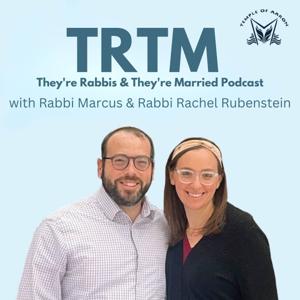


After years of dedicated service to Temple of Aaron, Executive Director Ken Agranoff is preparing to retire, and a new chapter is about to begin. In this special episode, Rabbis Marcus and Rachel Rubenstein sit down with both Ken and incoming Director of Operations Amber Brumbaugh for a conversation about leadership, community, and the work that happens behind the scenes to keep a synagogue thriving.
Ken reflects on his years of service, the challenges and accomplishments that shaped his tenure, and some of the memorable moments along the way. Amber shares her background, her vision for the future, and what excites her most as she steps into this new role. Together, they discuss continuity, change, and the importance of strong communal leadership.
Join us for a heartfelt conversation about gratitude, transition, and the future of Temple of Aaron.
In this episode of we take a deep dive into one of the most misunderstood ideas in Judaism: halachic obligation.
What does it actually mean to be commanded? Is a mitzvah just a “good deed,” or is it something much deeper? And how does obligation shape a meaningful Jewish life?
We explore the concept of chiyuv or obligation in halachah, unpacking different categories like d’Oraita, d’Rabbanan, and minhag, and asking how each one carries weight in our lives. Along the way, we reflect on the emotional and spiritual experience of being obligated: Does it feel restrictive, or can it actually be empowering?
We also share personal reflections on moments when obligation became real for us, not just as rabbis, but as human beings trying to live a life of purpose, discipline, and connection to God.
Whether you’re deeply observant, exploring Jewish practice, or just curious about how Jewish law works, this episode will challenge you to rethink what it means to be obligated and why it might be one of the most meaningful ideas in all of Judaism.
In a special episode, our rabbis Rubenstein discuss the ongoing federal immigration enforcent operation in the Twin Cities. The rabbis discuss and toil to understand what the Torah is asking from us at this moment.
How should a Jew, according to the Torah, relate to the secular governemnt in which one lives in? How trusting should Jews be of the government and how much attention should we pay to it? The Rabbis Rubenstein learn, teach and discuss texts that discuss these essential questions for the modern Jew. They also speak about a very exciting event coming up at Temple of Aaron on Nov. 15th, 2025 on Shabbat morning when local St. Paul elected leaders will be visiting and meeting the community.
Can you pray for someone who’s sick on Shabbat? In this episode of They’re Rabbis and They’re Married, Rabbis Rachel and Marcus talk through a Talmudic debate on Shabbat 12b that asks exactly that question. Together, they explore why the rabbis might have hesitated about mixing words of healing with a day meant for rest and joy, and how this tension shows up in our own lives when we bring pain and worry into sacred time. What does it mean to pray for others on Shabbat, and how do we balance the holiness of the day with the reality of human need?
In this episode of They’re Rabbis and They’re Married, Rabbis Rachel and Marcus dive deep into one of the Talmud’s most surprising and romantic discussions— the closing passage of Tractate Taanit — to uncover the origins and deeper meanings of Tu B’Av, the 15th of Av. What makes this day, alongside Yom Kippur, one of the two greatest days in the Jewish calendar? Why were the daughters of Jerusalem dancing in white in the vineyards — and what does that have to do with matchmaking, war, unity, and redemption?
Join us as we explore love, loss, and the surprising halachic history behind this lesser-known holiday that just might be Judaism’s most radical celebration of relationship, renewal, and hope.
As modern Jews, especially outside of Israel, the destruction of the Temple can feel like a distant and abstract loss. So why do we still fast, cry, and read Lamentations thousands of years later? In this episode, Rabbis Rachel and Marcus Rubenstein explore the spiritual value of mourning the Beit HaMikdash today. What does this grief open in our souls? How can remembering the brokenness of Jerusalem help us reconnect—with God, with people, with our own inner wholeness? Drawing from rabbinic texts, Chassidic thought, and their own experiences as clergy and partners, they uncover the enduring relevance of Tisha B’Av and the Three Weeks in a post-Temple, post-modern world.
In this bold and timely episode, our Rabbis Rubenstein take on one of the most serious and inflammatory accusations facing the Jewish state today: the charge that Israel is committing genocide in Gaza.
From the headlines to the hashtags, this claim has gained traction around the world — but what’s really behind it? The Rabbis cut through the misinformation and double standards to present a clear, Jewish defense of Israel. Grounded in facts, Jewish ethics, and historical context, they explore how these accusations distort both international law and Jewish values.
What does Judaism actually say about war, self-defense, and the sanctity of life — including the lives of one’s own people? How should Jews respond to the moral confusion and outright hostility surrounding this issue?
This episode is a passionate and principled response to a dangerous lie, and a reminder that defending Israel is not just a political act — it's a spiritual and moral responsibility.
In this episode of They’re Rabbis and They’re Married, our Rabbis continue their mini-series on 10 foundational Jewish practices. They explore why showing up to synagogue isn’t just a weekend habit—it’s a cornerstone of Jewish spiritual life. From the ancient Temple to your neighborhood shul, we trace how communal prayer, sacred space, and presence in a minyan have shaped Jewish identity across generations.
We talk about the emotional resistance people often feel, what makes a shul feel like home (or not), and how even imperfect prayer spaces still carry divine potential. Whether you're a daily davener, a High Holiday drop-in, or somewhere in between, this conversation invites you to rethink what it means to “belong” in Jewish community.
In this special episode, Rabbi Marcus and Rachel Rubenstein kick off a brand-new mini-series exploring 10 foundational practices for living out your Judaism. First up: Prayer.
What does it mean to really pray — not just recite words, but connect? The Rubensteins dive into the heart of tefillah, sharing personal stories, spiritual insights, and practical guidance for building a meaningful prayer life, whether you're a daily davener or just beginning to explore the siddur.
From ancient texts to modern struggles with focus, from the structure of the Amidah to finding your own voice in conversation with the Divine — this episode sets the tone for a transformative journey into embodied Jewish living.
Tune in and take the first step with us.
From the publisher's feed