
Sign up to save your podcasts
Or

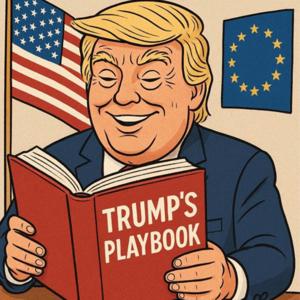


I open by stating that President Trump expressed frustration about not receiving the Nobel Peace Prize and about the International Criminal Court sanctions. We explain that he posted on Truth Social claiming he had settled multiple wars and therefore deserved several Nobel Prizes. We then discuss the ICC sanctions and jurisdictional disputes, and the United States’ refusal to accept ICC authority over American personnel. I describe our review of Trump’s petitions to the Supreme Court seeking review of dismissals in suits against Hillary Clinton and against CNN. We summarize the E. Jean Carroll verdicts against him and his continued appeals. Finally, we note the recent search of Representative Omar’s residence, the questions about probable cause and timing, and that these matters remain active and consequential. We open with strong concern about the public reaction of our president to the Nobel process and the parallel confrontation with the International Criminal Court. I describe the anger he expressed on his platform and the claim that he deserves multiple prizes for settling conflicts. We then turn to the ICC and the awarding of the prize to a jurist with a long record on war crimes and genocide work. We explain why that award, and the court's finding about Gaza, provoked sanctions and why the administration sees the court as hostile to its interests. We examine the legal and moral logic behind the ICC's reach and our refusal to join. I summarize the debate about whether the ICC can assert jurisdiction over nationals of states that are not members and why the United States calls for its own prosecutions. We reflect on the damage to US standing when sanctions target judges and prosecutors, and we note how this step departs from prior US practice toward global institutions. We trace the string of lawsuits that consume our subject and press the Supreme Court. I narrate his suits against political opponents and media outlets, the dismissal of the case tied to a dossier and the appeal in the 11th Circuit, and the defamation action against a major news organization. I explain the high proof standard for public figure defamation claims and why those suits have failed in lower courts. We also outline the civil claims by E. Jean Carroll, the judgments she obtained, and the complex immunity arguments now advanced to the high court. I state plainly that the petitions to the Supreme Court face long odds. We close this thread by noting how these legal fights create a steady stream of work for the judiciary and raise fundamental questions about presidential conduct and accountability. We address the domestic political fallout from his social media use and from law enforcement actions against a congresswoman. I report on how his posts on his platform shape markets and opinion, and I relate the allegations that paid subscribers received early access to his statements. We touch on the Venezuela discussion and how praise and claims about foreign leaders feed a larger narrative about influence and control. We then describe the search of Representative Omar's home and the surrounding controversy. I explain the factual thread about citizenship paperwork, the judge's warrant review, and why the timing has deep political resonance. We conclude by warning that these developments feed polarized debate, and we commit to following both the legal process and the political reaction with care.
Takeaways:
Companies mentioned in this episode:
I report that the principal outcome was a large Democratic victory in the midterm elections, the most significant shift I have observed in my lifetime. We attribute this change chiefly to concerns about affordability, including high gasoline and grocery prices, and to a reversal of Latino support away from Donald Trump. We note that high turnout among minorities and other voters was decisive. I explain that Democrats now control both the House and the Senate with healthy majorities, enabling them to set the legislative agenda and to launch investigative committees. We caution that President Trump retains the power to veto legislation and to issue executive orders, and that overriding a veto requires two-thirds majorities and some Republican defections. I conclude that the coming period will test whether Congress focuses on addressing affordability and passing laws that can withstand vetoes and judicial scrutiny, or whether it pursues politically risky investigations. I describe a watershed moment for American democracy and the rule of law, one that we interpret as the most significant midterm shift many of us have witnessed within our lifetimes. I articulate how prevailing institutional resilience manifested through robust turnout, with minorities mobilizing and electoral mechanisms functioning at a high standard. I analyze the political calculus that precipitated the change, comparing the diminution of one figure's popular standing to historical precedents such as Nixon, and I situate that decline within a broader context of governance missteps and public disaffection. I emphasize affordability as the proximate catalyst of voter behavior — daily experiences at the gasoline pump and at the grocery store crystallized an economic anxiety that Democratic messaging successfully harnessed. I also explicate the reversal among Latino voters, arguing that immigration enforcement practices and perceived cruelty by federal agencies produced a palpable backlash that reconstituted previous electoral alignments. Throughout, I maintain that these elements combined to yield an outcome that, while celebratory for defenders of democratic norms, will now confront the practical realities of translating electoral mandates into durable policy outcomes and legal permanence.
Takeaways:
We open by stating that the Treasury’s Office of Foreign Assets Control issued General License 135 authorizing the sale, delivery, and importation of Russian diesel into the United States until April 7, 2027, and this raises a grave legal question about whether the executive branch may permit what Congress has prohibited. I examined the document and found it surprisingly brief, comprised of only two short paragraphs and a single signature, with no explicit legal reasoning provided. We explain that the authorization appears politically timed ahead of the midterm elections and that opponents argue it will materially benefit Russia and President Putin. We assess that the license may not withstand judicial scrutiny because the relevant sanctions statute contains strict certification requirements regarding Russian withdrawal, threats to NATO, and Ukrainian sovereignty. We also address the botched execution attempt of Christina Pike, the Eighth Amendment and due process concerns it raises, and our view that these developments are unlikely to substantially change midterm outcomes. We will continue to follow these legal and political issues and address further implications in subsequent episodes.
We scrutinize General License 135 and its legal implications with measured urgency. I describe the license as a terse two-paragraph authorization that purports to permit the sale, delivery and importation of Russian diesel into the United States through April 7, 2027. I explain that the Office of Foreign Assets Control implemented the measure under Treasury authority, and I question whether an executive agency may effectively permit conduct that Congress has legislatively restricted. We raise the statutory framework established by the bipartisan sanctions statute associated with Senator Lindsey Graham, and I identify the enumerated conditions that the President must certify to invoke exceptions: Russian withdrawal from occupied territory on terms acceptable to Ukraine, absence of an immediate threat to NATO members, and recognition of Ukraine’s sovereign right to choose its government. I emphasize that the license lacks substantive reasoning and procedural explanation, and I forecast that the measure will face legal challenge because it appears to rely on a national security exception that is difficult to justify given the facts on the ground. We conclude that the authorization reads as a political instrument more than as a legally robust exercise of delegated authority. We pivot to domestic political effects and to the distinct human and constitutional questions raised by recent capital punishment developments. I recount our discussion of the highly publicized botched execution attempt and of Christina Pike’s legal situation, noting that we described the episode as chaotic and potentially constitutionally problematic under the Eighth Amendment’s prohibition of cruel and unusual punishment. I explain that we examined procedural failures, medical warnings about vascular access, and the subsequent preservation orders by a Tennessee judge, and we assess the realistic avenues for clemency or moratorium. Concurrently, I address how these matters intersect with electoral politics: I argue that although the administration’s controversial actions and rhetoric on executions and other high-profile orders provoke moral and legal outrage, we do not see conclusive evidence that they will decisively shift national voter behavior ahead of the midterms. We conclude by urging reliance on institutional checks, transparent legal process and measured public scrutiny as the remedies most likely to restore constitutional balance and public confidence.
Takeaways:
Companies mentioned in this episode:
I believe that economic conditions—above all inflation and rising fuel costs driven in part by the Iran war—will decide the forthcoming midterm elections. I recount my recent return to Pennsylvania and describe local campaign dynamics in Lancaster, where enthusiasm for voting in the midterms is unusually high. We explain the structure of the contests at stake, from all 435 House seats to a third of the Senate and multiple governorships, and why turnout and independent voters matter. I assess that a Democratic pickup of the House is plausible and that winning the Senate is more difficult but not impossible. We also examine the legal battles over voter data and voting rights, which I characterize as lawfare and which have produced injunctions and intense court scrutiny. I conclude that economic grievances will be the dominant driver of voter behavior and that independents are likely to tip several competitive races. I traveled back to Lancaster, Pennsylvania, and I report on what I saw and felt during the final weeks before the midterms. I describe the local atmosphere, the autumn rituals, and the rhythms of daily life that frame political feeling. I note that campaigning in Lancaster felt difficult because the local Democratic organization is disordered and the county is a strong Republican stronghold. I also relate small moments of normal life, such as attending high school football games and watching overlapping sports seasons, to show how civic life and leisure coexist as voters prepare to decide. I convey a clear sense of heightened energy around voting that is unusual for midterms. I say that mail‑in and early voting are already active in many places and that turnout will hinge on whether disaffected independents and mobilized Democrats actually cast ballots. I end with a cautious forecast: local impression suggests Democrats can retake the House and possibly contend for the Senate, but success depends on turnout and the broader economic mood.
Takeaways:
We explore the next steps toward autonomous sailing and emphasize that the principal aim is to convert present technological capabilities into safe, efficient, and commercially viable operations. I speak with Fokke van der Veen and Jochen Nonhebel about what is possible today and what ships might look like by 2035. We identify drivers such as rising transport demand, a shortage of skilled seafarers, the need for greater safety, and the pursuit of lower operating costs. We outline the staged path from autopilot and decision support to supervised decision making and full autonomy, and we stress that vessels must operate within a smart, connected ecosystem to realise true benefits. We address regulatory hurdles, the need for secure data sharing and goal‑based rules, and we highlight demonstrators like the autonomous Interceptor as working proofs of concept. We urge suppliers to test systems in the field and to align on digital interfaces so that we can advance safely and at scale. We explore the next steps toward autonomous sailing and emphasize that the principal aim is to convert present technological capabilities into safe, efficient, and commercially viable operations. I speak with Fokke van der Veen and Jochen Nonhebel about what is possible today and what ships might look like by 2035. We identify drivers such as rising transport demand, a shortage of skilled seafarers, the need for greater safety, and the pursuit of lower operating costs. We outline the staged path from autopilot and decision support to supervised decision making and full autonomy, and we stress that vessels must operate within a smart, connected ecosystem to realise true benefits. We address regulatory hurdles, the need for secure data sharing and goal‑based rules, and we highlight demonstrators like the autonomous Interceptor as working proofs of concept. We urge suppliers to test systems in the field and to align on digital interfaces so that we can advance safely and at scale.
I moderated a focused dialogue on the strategic rationale and long term drivers for autonomous sailing. I set the scene by introducing Fokke van der Veen and Jochen Nonhebel and by framing the central question of why autonomy matters. We identify three core drivers: the rising demand for transport capacity, the declining availability and skill level of maritime professionals, and the imperative to improve safety and operational efficiency. I describe the staged pathway to autonomy that Jochen outlined: from long established autopilot systems to decision support, to supervised decision making, and ultimately to full autonomy where vessels can complete missions without human intervention. We stress that autonomy is a means, not an end, and that the mission concept—ferries transporting people, survey vessels mapping seabeds—must remain central. I conclude by emphasizing the need for balance between human expertise and technological augmentation, and the importance of industry alignment on a shared vision for vessels in 2035. I recount our examination of practical challenges, regulatory barriers, and the ecosystem needed for scaled autonomous operations. I listened as Fokke articulated that autonomy must solve real problems and deliver a viable business case. We discussed the dependence of smart vessels on ambient data and third party inputs, such as traffic management, pilots, and port authorities. I note the serious security risks we addressed, including spoofing and jamming, and the consequent need for robust redundancy and secure communication. We detailed regulatory gaps: most rules assume people aboard, so questions about responsibility and remote operator qualification remain unresolved. I emphasize that the Netherlands permits experimental trials, but full commercial implementation will require a shift toward goal-based regulation. We advocate for multi‑stakeholder collaboration among industry, government, and knowledge institutes to avoid lagging regulation and to accelerate safe, scalable adoption. I summarize our survey of current technologies and concrete demonstrations that illustrate progress toward autonomous sailing. I describe Damen’s autonomous Interceptor and the C Falcon platforms that were presented at the festival. We relate operational tests such as NATO interoperability exercises in Portugal, successful mine and submarine hunting trials, and the use of modular autonomy layers and resilient connectivity by partners. I press the imperative voiced by Jochen to take solutions into the field rather than confine them to design rooms. We call on suppliers to be proactive, to engage in field trials, and to align digital interfaces so systems can interoperate. I end with a clear operational challenge: we must prove safety through testing, validate economic benefit for operators, and coordinate standards and interfaces so that autonomous vessels can be integrated responsibly and effectively into maritime operations. I moderated a focused dialogue on the strategic rationale and long term drivers for autonomous sailing. I set the scene by introducing Fokke van der Veen and Jochen Nonhebel and by framing the central question of why autonomy matters. We identify three core drivers: the rising demand for transport capacity, the declining availability and skill level of maritime professionals, and the imperative to improve safety and operational efficiency. I describe the staged pathway to autonomy that Jochen outlined: from long established autopilot systems to decision support, to supervised decision making, and ultimately to full autonomy where vessels can complete missions without human intervention. We stress that autonomy is a means, not an end, and that the mission concept—ferries transporting people, survey vessels mapping seabeds—must remain central. I conclude by emphasizing the need for balance between human expertise and technological augmentation, and the importance of industry alignment on a shared vision for vessels in 2035. I recount our examination of practical challenges, regulatory barriers, and the ecosystem needed for scaled autonomous operations. I listened as Fokke articulated that autonomy must solve real problems and deliver a viable business case. We discussed the dependence of smart vessels on ambient data and third party inputs, such as traffic management, pilots, and port authorities. I note the serious security risks we addressed, including spoofing and jamming, and the consequent need for robust redundancy and secure communication. We detailed regulatory gaps: most rules assume people aboard, so questions about responsibility and remote operator qualification remain unresolved. I emphasize that the Netherlands permits experimental trials, but full commercial implementation will require a shift toward goal-based regulation. We advocate for multi‑stakeholder collaboration among industry, government, and knowledge institutes to avoid lagging regulation and to accelerate safe, scalable adoption. I summarize our survey of current technologies and concrete demonstrations that illustrate progress toward autonomous sailing. I describe Damen’s autonomous Interceptor and the C Falcon platforms that were presented at the festival. We relate operational tests such as NATO interoperability exercises in Portugal, successful mine and submarine hunting trials, and the use of modular autonomy layers and resilient connectivity by partners. I press the imperative voiced by Jochen to take solutions into the field rather than confine them to design rooms. We call on suppliers to be proactive, to engage in field trials, and to align digital interfaces so systems can interoperate. I end with a clear operational challenge: we must prove safety through testing, validate economic benefit for operators, and coordinate standards and interfaces so that autonomous vessels can be integrated responsibly and effectively into maritime operations.
Takeaways:
Companies mentioned in this episode:
We identify the central issue as government transparency in the Epstein files, specifically the Justice Department's failure to comply with the Epstein Transparency Act and its extensive redaction of documents. We recount Katie Fann's lawsuit alleging informational harm and challenging the Justice Department to produce unredacted materials. We describe how Todd Blanche released heavily redacted pages while withholding key items such as names of alleged co‑conspirators, FBI interview notes, and indictment memoranda. We report that Judge Sullivan has expressed skepticism, ordered an in camera review, and demanded justification for the redactions. We argue that the court may need to appoint an independent special master to review the full records and to restore transparency and accountability. I recount the litigation over the Epstein materials as an account of institutional opacity and judicial insistence on accountability. I describe how the Department of Justice, under the supervision of Todd Blanche, furnished voluminous but heavily redacted documents after Congress enacted the Transparency Act. I emphasize that the redactions extend beyond protected victim names to include alleged perpetrators, co-conspirators, and material that prima facie appears exculpatory or incriminating. I note that Katie Fong, invoking her role as a journalist, pursued a Freedom of Information request that was denied and thereafter initiated suit seeking disclosure and redress for informational harm. The district judge, exercising skepticism of prosecutorial representations, found standing for Fong and compelled more fulsome review, ordering in camera inspection of selected documents and pressing the DOJ to justify its redactions. I outline the procedural posture and the legal tension that arises from the eroding presumption of regularity traditionally afforded to government submissions. I relate how the judge’s mistrust stems from prior episodes in which courts have found governmental misstatements or incomplete disclosures. I observe that the judge has demanded logs and specific justifications for each redaction, and that failure to respond has produced judicial ire, prospective contempt threats, and the real possibility that a special master will be appointed to examine unredacted materials. I conclude by underscoring the potential consequences: an independent review could reveal names and connections that have heretofore remained concealed, thereby affecting accountability, ongoing inquiries, and public confidence in prosecutorial candor.
Companies mentioned in this episode:
The principal focus of this discussion centers on the question of who exercises control over the United States, specifically in relation to the recent confirmation of Todd Blanche as Attorney General. Blanche, previously an attorney for Donald Trump during his criminal proceedings, has now transitioned into a role that raises questions about his independence and fitness for office. The conversation delves into the implications of his past associations and the ethical considerations surrounding his appointment. We explore the contentious nature of his actions during congressional hearings, particularly regarding a controversial slush fund and immunity deal that have sparked significant debate. As we unravel these complex dynamics, we aim to illuminate the broader ramifications of Blanche's tenure at the Department of Justice and the enduring influence of political patronage within the American legal framework. The discussion elucidates the pivotal question of who wields authority in America, with a specific focus on the implications of Todd Blanche's ascension to the role of Attorney General of the United States. This episode delves into the complexities surrounding Blanche's prior connections to Donald Trump, particularly his representation of Trump in various legal matters, and the subsequent concerns regarding his independence and fitness for office. A significant portion of the dialogue examines the recent congressional hearings which scrutinized Blanche's past actions, particularly his involvement in controversial decisions made under the Trump administration, including the infamous IRS deal that has raised ethical questions. As the episode progresses, the speakers dissect the nuances of political loyalty and the potential conflicts of interest arising from Blanche's previous role as Trump's personal attorney, ultimately questioning the integrity of the justice system under his leadership. Through a meticulous analysis of Blanche's career trajectory and the alarming precedents it sets for the Department of Justice, the episode paints a sobering picture of the intersection between politics and legal ethics in contemporary America. In this episode, a detailed exegesis of Todd Blanche's transition from Trump's personal attorney to Attorney General serves as a backdrop for a broader examination of power dynamics within American governance. The speakers engage in a profound dialogue regarding Blanche's controversial history, particularly his actions during his tenure as a prosecutor and the ethical quandaries posed by his prior allegiance to Trump. The examination of the congressional hearings brings to light significant concerns over Blanche's independence and his capacity to uphold the rule of law impartially. The conversation navigates through the intricate landscape of legal ethics, highlighting specific instances where Blanche's decisions have raised eyebrows, notably the slush fund associated with January 6th insurrectionists and the implications for taxpayer money. As the episode unfolds, the speakers articulate their alarm over the potential erosion of judicial integrity under the guise of political expediency. Ultimately, this episode compels listeners to reflect on the unsettling convergence of law and politics, urging a critical reassessment of what it means to ensure justice in an era marked by profound political divisions.
Takeaways:
Links referenced in this episode:
Companies mentioned in this episode:
The discussion elucidates the pivotal question of who wields authority in America, with a specific focus on the implications of Todd Blanche's ascension to the role of Attorney General of the United States. This episode delves into the complexities surrounding Blanche's prior connections to Donald Trump, particularly his representation of Trump in various legal matters, and the subsequent concerns regarding his independence and fitness for office. A significant portion of the dialogue examines the recent congressional hearings which scrutinized Blanche's past actions, particularly his involvement in controversial decisions made under the Trump administration, including the infamous IRS deal that has raised ethical questions. As the episode progresses, the speakers dissect the nuances of political loyalty and the potential conflicts of interest arising from Blanche's previous role as Trump's personal attorney, ultimately questioning the integrity of the justice system under his leadership. Through a meticulous analysis of Blanche's career trajectory and the alarming precedents it sets for the Department of Justice, the episode paints a sobering picture of the intersection between politics and legal ethics in contemporary America.
Takeaways:
Links referenced in this episode:
Companies mentioned in this episode:
The salient point of this episode revolves around the inquiry into the mechanisms of power within the United States, particularly focusing on the question, "Who controls America?" We delve into the ramifications of recent legal precedents, notably the Slaughter case, which examined the extent of presidential authority over independent agencies, specifically the Federal Trade Commission. The discussion elucidates the implications of the Supreme Court's ruling, which supports a more expansive interpretation of executive power, thereby potentially altering the balance of authority among the branches of government. Furthermore, we consider the ongoing discourse regarding the composition and ethical standards of the Supreme Court, especially in light of proposals to reform its structure. Through this analysis, we aim to shed light on the intricate interplay between law and governance in contemporary America. The discourse surrounding the intricate dynamics of power within the United States government emerges as a focal point in this compelling podcast episode. By revisiting the pivotal question of who exerts control over America, the speakers delve into the ramifications of recent judicial decisions, specifically the Slaughter case and the Cook case. The episode meticulously examines the implications of the Supreme Court's rulings on the Federal Trade Commission, particularly regarding the authority of President Trump to unilaterally dismiss Democratic commissioners. This inquiry into the administrative state's structure reveals the delicate balance of power intended by the framers of the Constitution, raising critical questions about executive overreach and the preservation of bipartisan governance within independent regulatory agencies. Through a rigorous analysis of the Slaughter case, the speakers illuminate the tensions between the executive and legislative branches, elucidating the foundational principles of accountability and oversight that underpin the American political system. Moreover, the discussion transitions seamlessly into a broader examination of the Supreme Court as an institution, particularly in light of recent proposals aimed at its reform. The speakers articulate concerns regarding the ideological composition of the Court and the perceived erosion of its legitimacy among the public. With a palpable urgency, they contemplate the potential for legislative action to address the increasing polarization of the judiciary, invoking historical precedents and contemporary political realities. In doing so, they underscore the necessity for a nuanced understanding of the role of the judiciary in American democracy and the implications of its decisions on the governance of the nation. The episode serves as a clarion call for vigilance and engagement in the democratic process, as the speakers advocate for reforms that uphold the integrity of the judicial system and ensure its responsiveness to the needs of the citizenry.
Takeaways:
Companies mentioned in this episode:
This podcast episode delves into the intricate and multifaceted issues surrounding voting rights, with a particular emphasis on mail-in voting and its implications in contemporary electoral processes. We engage in a thorough discussion of notable legal cases, such as the Watson case, which scrutinizes the timing and acceptance of mail-in ballots, and the Calais case, which addresses the complexities of gerrymandering within the framework of the Voting Rights Act. Through our discourse, we elucidate the precarious balance of power that exists between state regulations and federal oversight, particularly in light of recent legal challenges that seek to redefine the parameters of voter eligibility and representation. Furthermore, we reflect on the broader implications of these cases on minority voting rights and the potential for systemic discrimination, as well as the political motivations that may underlie ongoing efforts to modify voting regulations. As we navigate these pressing topics, we remain committed to providing our listeners with insightful analysis and updates on the evolving landscape of voting rights in the United States. The discourse presented within this podcast episode encapsulates a thorough exploration of voting rights, with particular emphasis on mail-in voting and its evolving significance in the American electoral landscape. The discussion is initiated within the context of historical voting trends, elucidating the controversial sentiments espoused by former President Donald Trump regarding mail-in ballots, which he has derided as a mechanism for electoral fraud despite having employed it himself. This paradox is examined in relation to the events of the 2020 election, where the counting of mail-in ballots shifted the electoral outcome, a phenomenon that has led to fervent debates about the legitimacy and procedural integrity of mail-in voting. The episode also highlights the expansion of mail-in voting during the COVID-19 pandemic, which has spurred various states, both red and blue, to adopt more inclusive voting practices, thus altering the demographic composition of voter participation and potentially influencing future elections. In addition to discussing the practicalities of mail-in voting, the conversation delves into specific legal cases that have emerged surrounding voting rights, particularly the Watson case. This case addresses the contentious issue of grace periods for mail-in ballots, a legal technicality that has implications for the validity of votes received past the official election date. The hosts dissect the intricate legal arguments presented by the Republican National Committee, who assert that ballots arriving after Election Day should not be counted, thereby raising critical questions about access to voting and the equitable treatment of all voters. This legal landscape is further complicated by the Supreme Court's rulings, which have underscored the necessity for a balance between safeguarding electoral integrity and ensuring that every citizen's vote is counted, thereby fostering a more inclusive democratic process. The episode culminates in a discourse regarding the broader implications of these voting rights discussions, particularly in light of the ongoing political maneuvering by various factions to shape the electoral landscape to their advantage. The hosts articulate concerns about the potential diminishment of minority voting rights, particularly within the context of gerrymandering and its effects on representation. They posit that the erosion of protections established by the Voting Rights Act could significantly undermine the political voice of marginalized groups, thus necessitating vigilant scrutiny of legislative developments as the nation approaches future elections. This episode serves as both an informative exploration of the current voting rights discourse and a cautionary note regarding the fragility of democratic principles in the face of partisan interests.
Takeaways:
Companies mentioned in this episode:
The salient point of this podcast episode revolves around the intricate and ongoing debate regarding the limits of presidential power in the United States, particularly as it pertains to the Trump administration's actions and the implications for voting rights and citizenship. As we reconvene after an extended hiatus, we reflect upon the multitude of events that have transpired during the summer, which have significantly shaped the political landscape. Central to our discussion is the question of who possesses the authority to curtail presidential overreach and the role of the courts in safeguarding democratic principles. We delve into various topics including the recent Supreme Court cases, the implications of the 14th Amendment concerning birthright citizenship, and the controversial executive orders initiated by Trump that seek to redefine these rights. By examining these issues, we aim to elucidate the broader themes of governmental power and the essential checks and balances inherent within the American political system. The 23rd installment of our podcast delves into the intricate and multifaceted issues surrounding the Trump administration, particularly focusing on the profound implications of presidential power within the context of American democracy. Throughout this episode, we engage in a thorough exploration of pivotal themes, including voting rights, Supreme Court cases, and significant political controversies such as the Epstein files and immigration policies. Central to our discussion is the overarching question: who possesses the authority to curtail presidential actions when they exceed constitutional bounds? This inquiry serves as a lens through which we analyze the contemporary political landscape, particularly the contentious debates regarding the limits of executive power and the independence of judicial institutions. The conversation is enriched by historical context, particularly the relevance of the 14th Amendment concerning birthright citizenship, which remains a critical topic in contemporary immigration discourse, as we assess its implications for undocumented individuals and their children born on American soil. In our concluding remarks, we contemplate the implications of the recent Supreme Court rulings and the potential pathways for future legal challenges to executive actions that seek to redefine citizenship rights. The episode encapsulates a critical examination of the delicate balance between executive authority and constitutional safeguards, urging listeners to consider the ramifications of these discussions on the future of American democracy. As we navigate through the intricacies of this legal discourse, we invite our audience to engage with the pressing questions that lie at the heart of our political system: How do we ensure that the principles of democracy and justice are upheld in the face of evolving interpretations of power? This episode serves not only as a reflection on current events but also as a clarion call for vigilance in protecting the rights enshrined in our Constitution.
Takeaways:
Links referenced in this episode:
Companies mentioned in this episode: