
Sign up to save your podcasts
Or

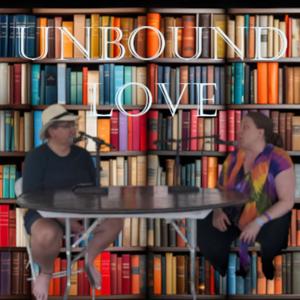


The gospel is political. But it isn’t partisan.
So where’s the line for pastors? Should clergy ever endorse a candidate—or does our responsibility look different?
In this episode of Unbound.Love, Natalie and I wrestle with the blurry line between pastor and private citizen, the power that comes with a pulpit, and why preaching love your neighbor, welcome the stranger, feed the hungry, care for creation will inevitably bump into politics.
I know where I land: I won’t tell you who to vote for. But I will tell you to vote—and to carry the same measuring stick into the voting booth that Jesus gave us everywhere else:
Does this help me love God and love my neighbor?
Pull up a chair. This one gets a little meandering—and a little complicated.
In this episode of Unbound Love, Natalie and Gayle take a meandering, and deeply honest, conversation into Indigenous history, colonization, Christianity, and the uncomfortable question of culpability.
What happens when the church has been part of the harm? What does it mean to acknowledge the land we live on, the cultures that were erased, and the ways history continues to shape our lives today? And what might genuine reparations and reconciliation look like?
Along the way, they unpack assimilation, the colonization of Jesus, the complicated relationship between church and state, and the difference between a “melting pot” and a place where people are allowed to remain fully themselves.
This conversation asks us to look backward - not to stay there, but to understand what happened, what we’ve inherited, and what we might do differently moving forward.
Listen in—and bring your questions, your discomfort, and your willingness to wander down a few rabbit holes.
What if some of the things you’ve been told “the Bible says”…aren’t actually what the Bible says?
This week on Unbound.Love, Gayle and Natalie are talking about something that sounds simple but can be surprisingly radical:
Read it for yourself.
Because Scripture isn’t just something to have interpreted for us. We can read it. Question it. Wrestle with it. Study the history. Compare translations. Pay attention to context. And sometimes discover that what we inherited as “biblical” may have a lot more to do with culture than Scripture.
We talk about interpretation and bias, the Wesleyan Quadrilateral, exegesis versus eisegesis, the danger of deciding what we believe and then searching Scripture for ammunition—and why good scholarship doesn’t take the Bible away from us; it can help us encounter it more deeply.
And underneath all of it is a pretty simple invitation:
Don’t just trust what you’ve heard.
Open the book.
Read for yourself.
You might be surprised by what—and who—you find there
At this year’s Wild Goose Festival, that was the question. So Gayle and Natalie grabbed a microphone, wandered around the Goose, and asked people what unbound means to them.
The answers took us places.
Freedom from fear-based religion. Belonging. Becoming your authentic self. Letting go of the doors that simply will not open. Being “loosely tethered” enough to follow where God leads. Freedom from the expectations, guilt, labels, pain, and old stories that keep us from becoming who God created us to be.
And maybe our favorite description: “unshoulding” ourselves. Letting go of all those I should be this and I should do that voices long enough to discover grace.
Because perhaps being unbound isn't about being disconnected at all. Maybe it's about being connected to God and one another without being confined - free enough to move, grow, love, heal, and become.
This week on Unbound.Love, hear the voices of the Wild Goose—and then join us as we meander through what their answers stirred up in us.
And drop us a line, What does UNBOUND mean to you?
Wild Goose
Anna Golliday
We are live from the Wild Goose Festival, and we're sitting down with Sara Cunningham, founder of Free Mom Hugs, for a conversation about faith, family, regret, courage, and the transforming power of love.
Sara shares her journey from struggling to accept her gay son to becoming an accidental activist and a fierce advocate for the LGBTQ+ community. We talk about deconstructing harmful theology, finding chosen family, knowing when to stop arguing—and why courage is contagious, but takes practice.
There are tears, laughter, a little Jeep-related heartbreak, and a whole lot of hope. Pull up a chair and join us for this deeply honest conversation about what can happen when love becomes bigger than certainty.
What if “thoughts and prayers” aren’t the problem—what if the problem is when that’s where we stop?
Gayle and Natalie wrestle with prayer, action, James’ insistence that faith without works is dead, Bonhoeffer’s costly grace, and the difference between caring and simply saying we care. And, along the way, Dolly Parton gives us a pretty good picture of what faith looks like when it gets its hands dirty.
Prayer matters. But maybe prayer isn’t the end of our response.
Maybe prayer is where our response begins.
Can there really be a place where God is absent?
In this episode of Unbound Love, Gayle and Nataliecontinue the conversation that began with Natalie’s pilgrimage through places connected to Etty Hillesum and the Holocaust. This time, they wrestle with a much harder question: Can a place become so filled with suffering, cruelty,and evil that God simply isn’t there?
Natalie begins with a haunting poem preserved from Auschwitz that describes Birkenau as a place “forgotten by God.” That language becomes the launching point: When we call somewhere God-forsaken, do we actually believe God has forsaken it? Or are we describing what happens when human beings become so disconnected from God—and from one another—that their actions become godless?
The conversation turns toward a challenging theologicalpossibility: perhaps there are no places without God unless human beingscreate them. God may remain available, but we can become so separated fromcompassion, empathy, and one another that we no longer recognize—or choose to participate in—the divine presence around us.
Join us on this journey as we explore the idea that humanbeings are remarkably capable of convincing ourselves that our desires are God's desires.
What makes a pilgrimage different from an ordinary trip orvacation?
In this episode of Unbound Love, Gayle and Natalie explorepilgrimage as intentional travel undertaken with an openness to encountering the divine. Natalie reflects on a recent journey through Amsterdam, Deventer, Westerbork, Auschwitz, and Birkenau, following the life and final journey of Jewish writer and spiritual seeker Etty Hillesum. The conversation begins with the idea that pilgrimage is not defined solely by the destination, but by the attention, intention, and spiritual openness we bring to the journey.
Join in on this journey of pilgrimage!
What does it mean to prepare to stand in the places where history happened?
In this episode of Unbound.Love, Natalie is getting ready for a journey to the Netherlands that will take Natalie into the life and world of Etty Hillesum, the young Jewish Dutch writer whose remarkable diaries and letters chronicle her inner and spiritual life as the Holocaust closed in around her.
Before the trip begins, we talk about the anticipation of visiting Etty's home and other places connected to her story. Who was Etty Hillesum? Why have her words continued to resonate more than eighty years later? And what might it mean to encounter the places where she lived, wrote, wrestled with God, and tried to hold onto her humanity in the midst of an increasingly inhumane world?
Our conversation meanders through Etty's life and writing, the Holocaust, faith in the presence of unimaginable suffering, memory, human dignity, and the importance of refusing to look away from history. We also wonder together about what happens when we move beyond reading someone's story and prepare to walk into the physical places where that story unfolded.
This episode is the conversation before the journey—filled with history, questions, anticipation, and the hope that encountering Etty's world might have something to teach us about our own.
Pull up a chair and join the conversation as Natalie prepares to walk in the footsteps of Etty Hillesum.
Join Rev Gayle Tabor and Rev Catherine Lyle as they discuss Love through the lens of Christmas movies
From the publisher's feed