
Sign up to save your podcasts
Or

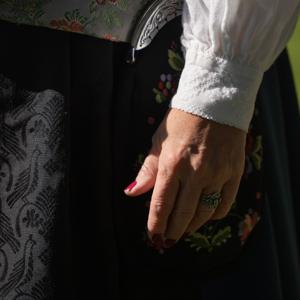

The Østerdalsbunad for women is one of Norway’s most fascinating traditional costumes, blending history, fashion, and regional identity. In this episode, we take a deep dive into its origins, design, and the choices available to those who wear or create it today.
We begin with the bunad’s stylistic roots: how elements like the bodice and pocket reflect Rococo fashion from the late 1700s, while the skirt, shirt, and apron carry influences from 19th-century dress customs. You’ll hear how Hulda Bunader builds on this tradition, offering everything from material packages and fabrics to fully hand-sewn, custom-made bunads crafted with authentic Norwegian materials and traditional techniques.
From there, we explore the regional story of the Sør-Østerdal and Nord-Østerdal bunads. While a shared standard pattern was created in the 1920s and remained consistent for decades, later efforts—particularly through Husfliden—introduced distinctions. We’ll discuss how these changes shaped today’s perceptions and why many assume, incorrectly, that the Nord-Østerdal bunad must use only red bird-patterned fabric or wool damask. History tells a different story: a rich diversity of fabrics and styles existed long before modern standardization, and Hulda Bunader encourages a return to this broader palette of authentic choices.
Finally, we clear up misconceptions about skirts and colors. Since the 1920s, the Østerdalsbunad has used the same skirt cut for both north and south, with fabrics available in identical color options such as green or damask. The idea that skirt color marks regional affiliation simply doesn’t hold up against history—what matters is the craft, the fabric, and the tradition carried forward.
This episode will give you a deeper understanding of the Østerdalsbunad, its evolution, and the choices available to today’s wearers. Whether you’re curious about bunad history, considering making your own, or simply want to learn how regional identity and cultural heritage are woven into every garment, this conversation will inspire you to see bunads in a new light.
 View all episodes
 By Hulda Bunader
The Østerdalsbunad for women is one of Norway’s most fascinating traditional costumes, blending history, fashion, and regional identity. In this episode, we take a deep dive into its origins, design, and the choices available to those who wear or create it today.
We begin with the bunad’s stylistic roots: how elements like the bodice and pocket reflect Rococo fashion from the late 1700s, while the skirt, shirt, and apron carry influences from 19th-century dress customs. You’ll hear how Hulda Bunader builds on this tradition, offering everything from material packages and fabrics to fully hand-sewn, custom-made bunads crafted with authentic Norwegian materials and traditional techniques.
From there, we explore the regional story of the Sør-Østerdal and Nord-Østerdal bunads. While a shared standard pattern was created in the 1920s and remained consistent for decades, later efforts—particularly through Husfliden—introduced distinctions. We’ll discuss how these changes shaped today’s perceptions and why many assume, incorrectly, that the Nord-Østerdal bunad must use only red bird-patterned fabric or wool damask. History tells a different story: a rich diversity of fabrics and styles existed long before modern standardization, and Hulda Bunader encourages a return to this broader palette of authentic choices.
Finally, we clear up misconceptions about skirts and colors. Since the 1920s, the Østerdalsbunad has used the same skirt cut for both north and south, with fabrics available in identical color options such as green or damask. The idea that skirt color marks regional affiliation simply doesn’t hold up against history—what matters is the craft, the fabric, and the tradition carried forward.
This episode will give you a deeper understanding of the Østerdalsbunad, its evolution, and the choices available to today’s wearers. Whether you’re curious about bunad history, considering making your own, or simply want to learn how regional identity and cultural heritage are woven into every garment, this conversation will inspire you to see bunads in a new light.