
Sign up to save your podcasts
Or



We spoke before about how some chapters of history are erased. Today we tell one of those stories. Did you know about the fire that burned in the Happy Valley of Kaloleni for days and days? Did you know about the time that workers from all sectors, from all tribes, came together and brought the city to a grinding halt? Did you know about the General Strike of Nairobi?
While the General Strike was organized by trade union leaders, most of the people who took part in it—who gathered by the bonfire and raised their fists in the air—they weren't cardholding members of official unions at all. They were unemployed youths. People employed in casual labor. Landless ahoi who were pushed out of reserves. Sex workers. Petty thieves. Criminals, even. They were outcasts. We hear a lot about Mau Mau's role in bringing about independence. But what about the workers and unemployed who joined the General Strike?
When we think of the fight for independence, we often think of the part of that struggle that involves weapons. But, at the same time there was a war fought over territory, a parallel war was being fought for minds. In fact, many of the Mau Mau fighters would not have decided to join the freedom fight if it weren't for the work of many small, independent African publications that opened up new, important spaces for public discourse. This was the golden age of the vernacular paper. Kenya would never again have a diverse, grassroots-level journalism ecosystem like this again.
It was the power of the printed word—now in the hands of Africans—which allowed ideas to spread. And spread. And spread. Published it in a way to help Africans in his time—in this fast-changing time—to help them understand their own power. Their cultural power. And their political power.
In this episode, we tell the story of two Kenyan journalists. Their work may not resemble the work of journalists today, but it was nothing short of foundational—and may help us rethink what the role of journalists today ought to be.
In 2015, a monument honouring the Mau Mau was erected at Freedom Corner in Uhuru Park, Nairobi. Many surviving Mau Mau freedom fighters attended, many traveling by matatu from upcountry, some arriving as early as 6am to await the opening ceremony. This honour is well-deserved, but as these elders—many still impoverished—sat beneath the hot sun as NGOs and Kenyan dignitaries enjoyed the shade of a large white tent, the question that looms is this: did the Mau Mau get what they fought for? And what is it that they fought for? Land and Freedom.
Pio Gama Pinto said, "If when we have achieved independence, we only have black Lord Delameres instead of white Lord Delameres, we will have achieved very little." He understood that, since land was at the heart of the colonial project, then taking back land would be the key to decolonization, to liberation.
The Mau Mau War has gone down in history—not only in Kenya as a key part of the anti-colonial independence struggle—but in the world. Mau Mau freedom fighters and the mass movement that backed them decided that constitutional, non-violent methods were useless in defeating a violent colonial regime. The only answer was organized violence. Against impossible odds, they did that.
Although the Mau Mau are heralded today as Kenya's freedom fighters, their history has been sanitized. In this episode, host Stoneface Bombaa narrates and discusses the unsanitized history of Mau Mau and asks the question, if it were us back in the 1950s, where would we stand? Would we play it safe? Or, like Pio Gama Pinto, would we decide to go all in and support this radical, radical movement?
Less than two years after gaining independence, Kenya began killing its own freedom fighters. One of the first political assassinations in the history of independent Kenya was in 1965.
They killed a man who knew too much.
He knew that oppressors will not stop oppressing you if you ask politely, that the only way to defeat British colonizers was through organized violence—so he routed weapons to Mau Mau forest fighters. He knew that stolen land was the root of colonization—so he fought, both before and after independence—to take it back from elites. He knew that colonization was not just economic control, but also mental control—so he supported small, radical newspapers in vernacular languages to spread conversations about freedom. He knew that the struggle of Kenyans was the same as that in India, Angola, South Africa, or in the U.S.—so he created bridges of solidarity across all continents.
In other words, this man knew what freedom was. And he knew how to get it.
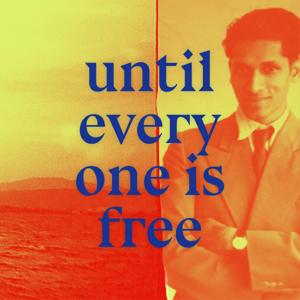
In this show, we'll tell you the story of Pio Gama Pinto, Kenyan freedom fighter and socialist. But we tell this story in order to answer a very important question: how did the country of Kenya get freedom.... without the people of Kenya getting free?
In this show “Until Everyone Is Free,” tutawachapia riba ya Pio Gama Pinto, freedom fighter wa Kenya. Lakini hii riba ni juu ya kujibu swali moja important sana: Kenya ilikuaje free... bila Wakenya kuwai freedom?
In 1965, only two years after Kenya gained its independence, Pio Gama Pinto was shot and killed on his driveway in Nairobi. This was Kenya’s first political assassination.
In this series, me and our producer April Zhu will tell the story of Pio Gama Pinto, a Kenyan freedom fighter. But we tell the story of Pinto to answer a very important question: How did the country of Kenya become free…. Without the people of Kenya becoming free?
From the publisher's feed