
Sign up to save your podcasts
Or

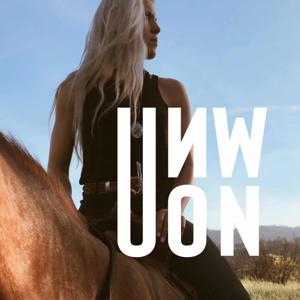


Nicolette Hahn Niman has one of the more unusual biographies in American public life: environmental lawyer, former vegetarian, cattle rancher, Nobel Week speaker, author of Defending Beef, Point Reyes Seashore resident, and now, a congressional candidate challenging seven-term incumbent Jared Huffman in California’s newly redrawn District 2.
She’s also one of two ranching families still standing at Point Reyes after 11 ranching families were forced out in a secretive Biden-era deal brokered by the Nature Conservancy and wrapped in non-disclosure agreements—a deal Huffman reportedly helped engineer and was bound by NDA himself. The Nimans did not participate in the negotiations. Then they sued to protect ranching on the peninsula.
What made her run wasn’t just Point Reyes. It was a pattern: the oyster farm that came first, the ranchers who came second, now the local fishermen targeted. It was watching Jared Huffman, who came out of the NRDC, operate for 13 years with what she calls an “absolutist environmentalism” that treats every fisherman, rancher, logger, and farmer in the district as a problem to be managed rather than a constituent to be served. And it was Proposition 50: a Newsom-backed gerrymander that added Shasta, Modoc, and Siskiyou Counties to Huffman’s district, making it, as Nicolette puts it, ground zero for America’s rural-urban divide.
Keely has been covering two of the biggest stories in Nicolette’s world: the Point Reyes forced departure and the Potter Valley Project, both of which fall inside Huffman’s district, both of which she weighs in on. They talk about the closed-door NDA process that resulted in the displacement of 200 people and 30 schoolchildren. They talk about what she’s heard on the campaign trail from Shasta to Siskiyou. They talk about the Klamath parallel, Secretary Rollins, and why she’d like to see the Potter Valley Dams stay. And they cover about what it would mean to have someone in Congress who literally wrote the book on defending the beef industry.
Show Notes
Sponsored by Ranch Vision: www.ranchvision.io
Special thanks to Josh Woolwine for creating our intro. Follow Josh at www.instagram.com/hjwoolwine.
Support UNWON by subscribing: www.americaunwon.com
00:00 Introduction02:00 California's politician-made water crisis07:15 What rural California actually looks like10:30 Why Bianco chose California — and why he's fighting to keep it13:35 Small-town Utah roots and what shaped him15:47 Over-regulation destroying rural industries18:30 The decision to run — what happened at Trump's inauguration23:08 Faith and leading through darkness27:48 Newsom and the sheriffs: zero communication, zero relationship29:35 Cartels, illegal cannabis, and what legalization actually did33:50 Water: dams, desalination, government control38:55 Fire: forest management, logging, and prescribed burns48:20 Energy: CPUC corruption, utility rates, nuclear power59:44 Predators: wolves, mountain lions, grizzly reintroduction1:11:00 Second Amendment and CCW access in rural counties1:19:15 Agriculture: bringing the California farmer & rancher back
Gavin Newsom has never once met with California’s 58 sheriffs.
Not a sit-down. Not a representative sent on his behalf. Not a returned phone call. Every governor before him had a standing relationship with the men and women running law enforcement in the state. Newsom ended it the day he took office; rural California has been paying the price ever since.
Riverside County Sheriff Chad Bianco is running for Governor of California. He’s not a politician, he describes his campaign as a citizen’s rebellion. But he has been elected to run the fourth largest sheriff’s office in the country for over seven years. He’s spent the last year driving the length of California talking to talking to the people who grow its food, fight its fires, and manage its land. He’s met with farmers, ranchers, loggers, and water district managers. He knows where the Scott Dam is. He knows what the Potter Valley Project means to 750,000 people. He’s tracked Chinese and Mexican cartels through California’s forests. He’s watched Gavin Newsom refuse to return a single call from California’s sheriffs.
In this conversation, he goes deep on the issues that actually affect working Californians, the ones Sacramento pretends don’t exist:
Water. Why the last major reservoir built in California was 1979 (we’ve doubled in population since then), why the state keeps routing water to the ocean instead of storing it, and what the Scott Dam removal would actually mean for the North State.
Fire. Why the Palisades Fire wiped out 20 years of California’s carbon reduction in a single event, why prescribed burns take two to three years to permit, and why bringing back the logging industry is essential.
Illegal cannabis and cartels. How legalization created a more dangerous black market, what Chinese, Russian, and Mexican criminal organizations are doing in California’s forests, and why Sacramento takes credit for enforcement it didn’t do.
Agriculture. Why California has lost nearly a quarter of its farms since 1982 and up to 900,000 acres of San Joaquin Valley farmland may be taken out of production due to water policy, why small farmers are being regulated into selling to big ag, and what it would take to reverse this dismaying trend.
Law enforcement and Newsom. The standing relationship between governors and sheriffs that Newsom destroyed, and why Jerry Brown warned them on his way out: “You have no idea what’s coming.”
Predator policy. Wolves, mountain lions, grizzly reintroduction proposals, whether he’d delist the gray wolf, and what Fish & Game has gotten completely wrong
CCW and Second Amendment. Why access to concealed carry permits varies wildly by county and what that means for rural Californians who are 45 minutes from the nearest deputy.
Energy. CPUC corruption, why he says utility rates would be cut in half the day he takes office, and the case for nuclear.
Bianco grew up in a small coal mining and farming town in Utah, came to California at 21 because it was the most perfect place he’d ever seen, and has watched it be systematically dismantled in the time he’s been here. He’s not running because he woke up one day and wanted to be governor. He’s running because he looked at the field, looked at the state, and decided someone had to.
This conversation is for the farmers in the Central Valley watching their fields go dry. For the ranchers in Modoc choosing between their cattle and the law. For the loggers in Humboldt who watched their industry get regulated into extinction. For everyone who’s looked at a ballot and wondered if it’s even worth filling out anymore.
Show Notes
Sponsored by Ranch Vision: www.ranchvision.ioSpecial thanks to Josh Woolwine for creating our intro. Follow Josh at www.instagram.com/hjwoolwine.
UNWON — Underdog journalism for rural, working, and Western America. Subscribe for more stories Sacramento ignores. Visit www.americaunwon.com.
Justin Pettit is a third-generation cattle rancher in Bakersfield, California, where the West has never quite been won. Nine years ago, he developed a novel premium beef product. His carrot-finished beef was soon in demand among customers seeking a prime-graded grass-finished option as well as high-end restaurants and culinary programs across the country.
After surviving COVID in Gavin Newsom’s California, Pettit says a massive meat processor based in Southern California cheated him and his customers by cutting his product with foreign beef. Once he caught the alleged fraud, he says he tried to catch up on orders, but it was too late. He lost customers and business, a 10,000-acre ranch lease, and soon his home. Now he’s embroiled in an unresolved lawsuit with a meat industry behemoth in a microcosm of the stakes ranchers and farmers face.
Between fighting wildland fires, founding a non-profit for kids with special needs, driving a horse trailer full of food through the L.A. fires to feed evacuees, smuggling beef to restaurants during COVID, dealing with train robbers and cartel neighbors, and trying to create a new product in an industry as old as the American frontier, Justin is living a modern cowboy adventure in the unwon West. His story offers insight into the stakes facing modern ranchers and reveals the cracks in a food system increasingly unfriendly to on-the-ground producers. Justin believes he’s fighting for the industry itself; if and when he wins, it will be a win for the industry, proving you can still create something new and find success in cowboy country.
Show Notes
Sponsored by Ranch Vision: www.ranchvision.ioSpecial thanks to Josh Woolwine for creating our intro. Follow Josh at www.instagram.com/hjwoolwine.
Links
Website: https://www.santacarotabeef.comGoFundMe: https://www.gofundme.com/f/help-save-our-family-ranch-businessInstagram: https://www.instagram.com/santacarotabeef/Facebook: https://www.facebook.com/SantaCarotaBeefX: https://x.com/santacarotabeef
UNWON is reader-supported. To support independent journalism for the American West, become a subscriber.
Darcy Burke is vice president of the Elsinore Valley Municipal Water District and a longtime California water professional. She was also featured in the tweet heard around Lake, Mendocino, and Sonoma counties on Monday, when USDA Secretary Brooke Rollins announced a potential buyer has emerged for the Potter Valley Project.
Darcy joins me today to talk about why her board is interested in purchasing two dams in Potter Valley, California local politicians and corporations have assured us for years no one wants.
Just what exactly is the Elsinore Valley Municipal Water District? Why are they interested in purchasing this hydropower project? And most importantly: Do they plan on somehow defying the laws of physics and geography to steal Northern California’s water?
No questions were off limits for this important conversation about the future of water in Northern California and how one rural community’s bipartisan, out-of-the-box effort to save their water, their future, and their way of life against tremendous odds sparked a unified California stand against the machine.
Read previous coverage of the Potter Valley dam removals here.
UNWON is reader-supported. To receive new posts and support independent Western journalism, consider becoming a free or paid subscriber.
Show Notes
Sponsored by Ranch Vision: www.ranchvision.ioSpecial thanks to Josh Woolwine for creating our intro. Follow Josh at www.instagram.com/hjwoolwine.
Read More
America’s farmland is being destroyed in the name of green energy. Alexandra Fasulo is doing something about it.
Alex is an influencer, entrepreneur, first generation farmer, and accidental activist. Not long after buying a farm in her home state of New York, a neighbor told her about a foreign-owned company that had approached him six times, offering well above market value to lease his hayfield for a solar complex. Her curiosity piqued, she attended a local hearing on a solar protection ordinance. A lobbyist from California confronted her in the parking lot. What was really going on here? Why were foreign-owned companies approaching farmers in upstate New York? Why were Santa Monica lobbyists flying to her tiny village to protest local laws? Those questions led Alex on a path to who she is today: A leading voice in the fight against unchecked industrial expansion of renewable energy projects on America’s working landscapes.
From freelance writer to first-generation farmer to grassroots advocate, Alex’s story is about what happens when a corporation comes for your farm town and no one in power picks up the phone. Learn about the rural communities being erased by wind, solar, data center, and battery storage; the impact of foreign corporations and captured state agencies on America’s food production, nature, and wildlife; and how to save your own corner of the country. We talk about the importance of local engagement and the fight to save America’s small town soul.
Meet Alexandra Fasulo (0:00) Big Solar Comes to Upstate New York (1:06) One Town Board vs. a Santa Monica Lobbyist (4:28) The Wildlife Management Area They Want to Bury in Panels (10:18) The Redacted Files: When the State Hides the Science (19:24) Foreign Corporations and ORES (39:57)The American Land Rescue Fund: Legal War Chest for Farmers (48:02) From Freelance Fairy to First-Gen Farmer (61:58) What to Do If a Solar Company Calls You (74:24) The Fight Is Not Over (81:55)
Follow Alexandra Fasulo on Instagram, Facebook, YouTube, and Substack. Support her legal fight at American Land Rescue Fund.
Show Notes
Sponsored by Ranch Vision: www.ranchvision.ioSpecial thanks to Josh Woolwine for creating our intro. Follow Josh at www.instagram.com/hjwoolwine.
UNWON is reader-supported. To support independent Western journalism, consider becoming a free or paid subscriber on Substack.
Today, Dr. Rich Brazil and Grace Brazil join Keely for a discussion on the future of the U.S. cattle herd, which currently sits at a 75-year low even as consumer demand for beef skyrockets.
Health & Human Services Secretary Robert F. Kennedy, Jr. recently made waves with his comments asking ranchers to stop selling cattle and to help rebuild the domestic beef herd. Is this easier said than done? The group discusses. We also talk about how the Trump administration is helping create more demand for beef in the market and more opportunity for beef producers.
Dr. Brazil shows how ranchers can use Ranch Vision to examine growth strategies on their unique operations. Consumers will hear a nitty-gritty discussion about the business of ranching, and hear how ranchers manage their beef, the kinds of questions they have to ask when making big decisions for the future, and what creating a ranch business strategy looks like on the ground.
Then we wrap up with a myth about the industry debunked and a ranch vet story from Dr. Brazil’s archives!
Join us on the next Ranch Beat to hear the truth about the beef industry and insights into Western and rural America you won’t hear anywhere else.
Show Notes
Tutorial on using Ranch Vision to plan a herd growth strategy:
Follow Dr. Rich Brazil on Instagram at www.instagram.com/drbrazildvm and Facebook at www.facebook.com/DocBrazilDVM.
Follow Grace Brazil on Instagram at www.instagram.com/grace_brazil.
Special thanks to Josh Woolwine for creating our intro. Follow Josh at www.instagram.com/hjwoolwine.
UNWON is reader-supported. To receive new posts and support independent Western journalism, consider becoming a free or paid subscriber.
In this special Ranch Beat episode, Dr. Rich Brazil joins me to lend his insight on the current outbreak of Equine herpesvirus 1 (EHV-1) canceling major events across the horse world. He answers your questions like: What is EHV-1? Is there a vaccine? How does it spread? What are early symptoms? How should you handle a horse you believe may have been exposed?
Then we answer a few audience questions and talk about his life as a large animal vet, father of eight (including me!), and Ranch Vision founder.
Enjoy this episode and let me know what you’d like to learn about next!
00:00 Introduction to Dr. Rich Brazil04:45 Understanding EHV-1: The Outbreak and Its Impact09:43 Symptoms and Transmission of EHV-113:48 Preparing for a Career in Large Animal Veterinary Medicine19:36 The Future of Large Animal Veterinary Medicine
Show Notes
Sponsored by Ranch Vision: www.ranchvision.ioSpecial thanks to Josh Woolwine for creating our intro. Follow Josh at www.instagram.com/hjwoolwine.
UNWON is reader-supported. To receive new posts and support independent Western journalism, consider becoming a free or paid subscriber.
Ranchers in the American Southwest are dealing with an escalating threat. The Mexican gray wolf has become an increasing liability to ranchers and residents of Arizona and New Mexico.
“Wolves have killed our cattle in Arizona and in New Mexico. Wolves have changed our culture. They have changed how we live in wolf country.”
Tom Paterson, New Mexico Rancher
Tate Bennett, head of Rural Policy at the America First Policy Institute in Washington, D.C., has co-authored a new white paper titled “The Mexican Gray Wolf: A Threat to Rural Prosperity.” In it, she addresses the problem ranchers are facing and encourages government action.
She joins me today to discuss what ranchers are dealing with and how the government can properly implement the Endangered Species Act (ESA) so that the needs of rural Americans are balanced with those of wildlife in the American Southwest.
Show Notes:
"The Mexican Gray Wolf: A Threat to Rural Prosperity" by Tate Bennett https://www.americafirstpolicy.com/issues/the-mexican-gray-wolf-a-threat-to-rural-prosperity
Sponsored by Ranch Vision: www.ranchvision.io
Special thanks to Josh Woolwine for creating our intro. Follow Josh at www.instagram.com/hjwoolwine.
UNWON is reader-supported. To receive new posts and support independent Western journalism, consider becoming a free or paid subscriber at www.americaunwon.com.
Six months after the press conference in D.C. where Agriculture Secretary Brooke Rollins announced criminal charges against the Maudes had been dropped, Heather fills us in on what’s happened to her family since and answers your questions.
We discuss what it has been like working with Secretary Rollins, Chief Schultz, and other members of the Trump administration; whether the Forest Service agents involved in her family’s case have been held accountable; the dire need for more voices from the American West in D.C.; and more.
02:13 Introduction to the Maude Case08:09 The Impact of Bureaucracy on Ranching Families14:01 Challenges in Communication and Resolution20:11 Internal Review and Accountability25:56 Concluding Thoughts and Future Outlook34:00 Cultural Change in Bureaucracy42:00 Legal Challenges and Resolutions48:15 The Impact of Bureaucracy on Agriculture54:19 Faith and Purpose in Adversity59:26 Grassroots Advocacy and the Future of Agriculture
Sponsored by Ranch Vision: www.ranchvision.io
Special thanks to Josh Woolwine for creating our intro. Follow Josh at www.instagram.com/hjwoolwine.
Subscribe and support UNWON: www.americaunwon.com
Today I am speaking with Matt Kendall, sheriff of Mendocino County in California’s infamous Emerald Triangle, the epicenter of black market marijuana production.
Sheriff Kendall blows the lid off some of the most under-covered and shocking stories in the U.S. today. Cartels are running rampant on Native American reservations and transnational criminal drug trafficking organizations are operating on U.S. soil including on our public lands and national forests. Illicit cannabis is stealing millions of gallons of water in the drought and fire-prone West every single day. Kendall also talks about being a California sheriff under Governor Gavin Newsom, his restrictions on working with ICE, and trying to advocate for victims in a state that is increasingly pro-predator. He explains how legalization has impacted the cannabis market, how over-regulation is killing rural America, and much more. This episode is shocking and you won’t hear this info anywhere else.
Thank you for listening, please enjoy the show and be sure to rate, review, and subscribe wherever you tune in including YouTube, Apple Podcasts, and Spotify.
Watch High Country Murder short documentary:
More UNWON coverage:
UNWON is reader-supported. Support independent journalism for rural America by becoming an UNWON subscriber.
From the publisher's feed