
Sign up to save your podcasts
Or

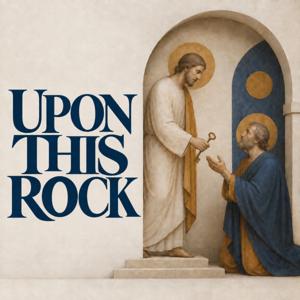


What are the keys of the kingdom? What does it mean to bind and loose? And if all the apostles could bind and loose, why were the keys given to Peter alone?
In this episode we explore:
Scripture references
The keys and binding and loosing
The royal steward
Keys for one, binding and loosing for all
The shore of Galilee
Also cited: Dr. Brant Pitre and Dr. Scott Hahn; St. Jerome, Commentary on Ezekiel; St. Augustine’s sermons on the two catches of fish; Pope St. Gregory the Great, Homily 24 on the Gospels (591)
Chapters
00:00 Who gets the keys?00:46 Welcome: Part 3 of the papacy series01:45 Keys as a symbol of authority02:28 What binding and loosing meant03:01 The seat of Moses03:40 Bound on earth, bound in heaven04:33 Isaiah 22: the king’s steward05:35 Shebna and Eliakim07:03 Office, robe, throne, and key08:00 Isaiah 22 and Matthew 16 side by side08:41 The key of David in Revelation09:15 An office meant to be passed on09:58 A father to the people10:41 Binding and loosing for all, keys for one12:23 Peter’s fall: “I have prayed for you”13:54 Breakfast by a charcoal fire14:47 Seven men in the boat16:05 153 fish and a net that didn’t tear18:01 Two miraculous catches19:24 Why Peter? Gregory the Great20:49 “Do you love me?”21:53 Shepherd my sheep23:16 A shepherd under the chief Shepherd23:40 A shepherd you can find24:26 Christ working through Peter25:31 Recap26:19 Next time: papal infallibility
When you hear the word "kingdom," you probably picture castles, armies, and a king on a throne. When you hear "church," you picture pews, an altar, and stained glass. Two pictures that couldn't be more different. But what if, in the Bible, they're the same thing?
In Part 2 of our series on the Papacy, we take the next phrase of Matthew 16: "I will build my church." The Greek word is ekklesia, and to a first-century Jew it wasn't new at all. It was the word for the assembly of Israel, gathered for the Passover, gathered at Sinai, and reaching its high point in the kingdom of David. Scripture calls that kingdom "the kingdom of the Lord," a kingdom whose heart was worship.
So when the new Son of David says "I will build my church" and in the same breath "I will give you the keys of the kingdom," he isn't changing the subject. He's announcing the restoration of the everlasting kingdom, a worldwide family offering a pure sacrifice in every place, just as Malachi foretold.
Scripture references
The church and the kingdom Matthew 16:18–19 · Mark 1:15
The assembly of Israel Exodus 12:6 · Deuteronomy 4:10 · Deuteronomy 9:10 · Deuteronomy 18:16
The kingdom of the Lord 2 Samuel 7:12–13 · 1 Chronicles 15–16 · 1 Chronicles 28:5 · 1 Chronicles 29:23 · 2 Chronicles 1:1–3 · 2 Chronicles 13:8
A new temple John 2:19–21 · John 4:21
A pure offering for all peoples Malachi 1:11 · Acts 2:42 · Isaiah 56:6–7 · Mark 11:17 · 1 Peter 2:5
Also cited: Catechism of the Catholic Church 763 and 567 (the Church as the reign of Christ "present in mystery" and "the seed and the beginning" of the kingdom), the Didache, Alfred Loisy.
Chapters
00:00 Kingdom or church? 00:44 Welcome and recap 02:02 Did Jesus mean to found a church? 03:11 Ekklesia: what "church" really means 04:16 The first assembly: the Passover 05:20 "The day of the assembly" at Sinai 06:01 The Chronicler: kingdom and liturgy 07:15 Solomon and all the assembly 08:17 "The kingdom of the Lord" 08:48 Why God built a liturgical kingdom 09:50 Where is the everlasting kingdom? 10:45 Church and kingdom in the same breath 11:34 Loisy was right, just not how he meant it 12:08 Why not "my temple"? 13:40 Malachi's pure offering in every place 14:48 The Didache and the early Church 15:47 A house of prayer for all peoples 17:04 Back to Peter: living stones 17:55 Summing up 18:54 Next time: the keys of the kingdom
Did Jesus actually intend to found a church? Not inspire a movement, not leave behind some good teachings, but deliberately build a community with a shape, a structure, and a leader? Many scholars today would say no.
In this first episode of our new series on the Papacy, we take up the passage that gives this podcast its name. We start in the Old Testament with God's promise to David of a son who would build a house and reign forever, a promise Solomon pointed toward but never fulfilled. We clear away four common misconceptions about what the Church teaches about the Pope. Then we travel to Caesarea Philippi, a place crowded with pagan temples built against a massive wall of rock, where Jesus looks at a fisherman and says, "You are Peter, and on this rock I will build my church."
Is the rock Peter, or Peter's faith? Was he a "little pebble"? We look at the Aramaic, the Greek, the moment Jesus first renamed Simon, and why a new name from God is never casual.
Scripture References
The son of David 2 Samuel 7:12–14 · 1 Chronicles 17:11–14 · 1 Kings 12:16–20 · Matthew 1:1, 6, 16
The rock Matthew 16:13–19 · John 1:40–42 · 1 Corinthians 15:5 · Galatians 2:9
New names Genesis 17:5
Christ the foundation 1 Corinthians 3:11 · Ephesians 2:19–20 · Daniel 2:34–35 · Revelation 21:14 · 1 Peter 2:4–5
One church John 17:21
Also cited: Catechism of the Catholic Church 880–892 (especially 882 on the Pope as "the perpetual and visible source and foundation of the unity" of the Church, and 891 on infallibility)
Chapters
00:00 Did Jesus intend to found a church? 01:10 Welcome: the series this podcast is named after 02:06 Fair warning: this is where it gets very Catholic 03:08 Solomon, the son of David 04:32 A promise bigger than Solomon 05:33 A kingdom and a family 06:38 "Pope" means father 07:32 Four things the Church doesn't teach 08:34 The Church's teaching in a nutshell 09:50 "Where is that in the Bible?" 10:52 Matthew 16 12:01 Caesarea Philippi 13:55 "You are Peter": where Christians disagree 14:48 Pebble or rock? The Aramaic 15:29 Why Matthew used two Greek words 16:25 "You are the Christ," "You are Peter" 16:55 "You shall be called Cephas" 18:18 New names in Scripture: Abram to Abraham 19:39 Rock, temple, and foundation stone 20:31 Isn't Christ the foundation? 22:20 One church 23:21 Pulling it together 24:22 Next time: what "church" really means
Entry into life in the spirit was never meant to be the finish line. It's the launching point. In the final part of our Holy Spirit series, we ask the personal question: how does the same Spirit who came down at Pentecost work in the life of an ordinary Catholic today? We walk through the seven gifts of the Holy Spirit (wisdom, understanding, counsel, fortitude, knowledge, piety, and fear of the Lord) and the charisms St. Paul describes. We look at why God gives his gifts when we're ready to use them, and at the most staggering thing the Spirit does: making us "partakers of the divine nature," sons and daughters brought inside the very life of the Trinity.
The Spirit never shows up empty-handed. It's time to unwrap the gifts and raise the sails.
Plus, a preview of our next series, on Peter and the Papacy.
Scripture References
Sent with the Spirit Matthew 9:37–38
The seven gifts Isaiah 11:2–3
The charisms and the body 1 Corinthians 12:4–11 · 1 Corinthians 12:12–27 · Luke 1:38
Partakers of the divine nature 2 Peter 1:4 · John 1:12–13 · 1 John 3:1 · Galatians 4:6 · Romans 8:15
Rivers of living water John 7:37–39 · John 14:12
Upon this rock Matthew 16:18
Also cited: Catechism of the Catholic Church 1830–1831 (the gifts of the Spirit), 1030–1032 (purgatory), 1374 (the Real Presence); Bishop Robert Barron; Pope Francis; St. Padre Pio.
Chapters
00:00 Would you trust a 15-year-old surgeon? 01:07 Welcome and series recap 02:00 How the Spirit strengthens us 02:44 Defending the faith: red and white martyrdom 03:45 Sent into the harvest 04:36 The seven gifts of the Holy Spirit 05:40 Wisdom, knowledge, and understanding 06:51 Tuning in to the Spirit's frequency 08:03 Don't settle for a dumbed-down faith 08:52 Fortitude 09:47 Piety and fear of the Lord 10:41 Counsel 11:11 The charisms 12:22 Gifts given when we're ready 14:03 The wind and the sails 14:52 Life in the Spirit is never boring 15:56 Partakers of the divine nature 17:05 Brought inside the Trinity 17:47 Rivers of living water 18:21 Does the Spirit still work miracles? 19:16 Knowing God's love for yourself 19:43 A thirty-minute invitation 20:26 Receiving the Spirit through the sacraments 21:02 A birth is a beginning 21:16 Bringing the series home 22:14 Next time: the Papacy
On the morning the Holy Spirit came down on the apostles, Jerusalem was already packed with pilgrims from every corner of the known world. They hadn't come because of Jesus. They'd come for a feast Israel had been keeping for more than a thousand years, and that feast was called Pentecost.
So why that day? In Part 3 of our Holy Spirit series, we step into the shoes of a first-century Jew and see Pentecost the way the apostles and the crowd would have seen it. We explore the feast's three layers: the harvest of first fruits, the memory of God descending on Mount Sinai in fire to give the Law, and the hope of the coming Messiah. Then we read Acts 2 with fresh eyes: fire on the disciples instead of the mountain, Babel reversed, Joel's prophecy fulfilled, and three thousand souls saved where three thousand were once lost at Sinai.
The Church's birthday was no accident. It was the fulfillment of a feast God had been preparing all along.
With gratitude to Dr. Brant Pitre, whose teaching on the Jewish roots of the faith this episode draws on.
Scripture references
Israel's feast of weeks Leviticus 23:9–21 · Exodus 23:16 · Exodus 34:22 · Numbers 28:26 · Deuteronomy 16:9–16
The mountain Exodus 19:1–6 · Exodus 19:16–20 · Exodus 20:1–17 · Exodus 31:18
The Messianic harvest Luke 3:16–17 · Matthew 9:36–38
Pentecost Acts 1:14 · Acts 2:1–21 · Joel 2:28–32 · Daniel 2:35 · Genesis 11:1–9 · Numbers 11:24–29
3,000 lost, 3,000 saved Acts 2:37–41 · Deuteronomy 32:5 · Exodus 32:28 · 1 Peter 2:9
Fulfilled Jeremiah 31:33 · 2 Corinthians 3:3 · Acts 2:42 · Luke 1:35 · Luke 4:18
Also cited: Catechism of the Catholic Church 731–732, Pope St. John Paul II (the Jewish people as our "elder brothers"), Dr. Brant Pitre.
Chapters
00:00 Pentecost wasn't invented by the Church 00:54 Welcome and recap 02:05 Israel's calendar of feasts 03:19 Shavuot: the Feast of Weeks 03:47 With thanks to Dr. Brant Pitre 04:11 Three layers of meaning 05:15 The harvest 06:28 The mountain: fire on Sinai 08:38 The Messianic harvest 10:05 Acts 2: the fire comes down 11:19 Every nation in Jerusalem 12:13 Babel reversed 13:02 "Not drunk": the prophecy of Joel 13:49 Moses' wish fulfilled 14:54 Cut to the heart: 3,000 souls 15:44 3,000 lost, 3,000 saved 17:08 Harvest, mountain, and future fulfilled 18:32 The four marks of the early Church 19:11 Luke's two books 19:43 Christ's Passover fulfilled 20:37 Seeds planted across the world 22:03 Our elder brothers in the faith 22:33 Putting it together 23:24 Next time: gifts and charisms
They walked with Jesus for three years. They heard every parable, watched him calm storms and raise the dead, and saw him alive again after the cross. If anyone on earth should have been fearless, it was the apostles. So why do we find them hiding behind locked doors?
In Part 2 of our Holy Spirit series, we pick up the story after the Resurrection. Jesus spends forty days teaching his disciples, tells them to wait for "the promise of the Father," and then ascends into heaven. But the Ascension isn't a space flight to somewhere beyond the stars. We unpack what Scripture really means by "heaven." We look at why Jesus, seated at the Father's right hand, is closer to us now than when he walked the roads of Galilee. And we ask what his Ascension means for the hope of our own bodies.
Then we step into the locked room on that first Easter evening. Jesus comes through the door, says "Peace be with you," and breathes on his disciples, the same way God breathed life into Adam at creation. I also share a personal story about the power of the name of Jesus.
If seeing Jesus wasn't enough to set the apostles free, what was? The answer is the Holy Spirit.
Scripture References
The promise and the new creation John 16:7 · Genesis 1:1–5 · Genesis 2:15 · John 20:1
The Ascension Luke 1:1–4 · Acts 1:1–5 · Acts 1:9–11
Heaven, the body, and the right hand 1 Corinthians 15:20 · Revelation 21:1–2 · Psalm 110:1
The locked room John 20:19–22 · Genesis 2:7 · Genesis 2:17
Also cited: The Nicene Creed ("He ascended into heaven and is seated at the right hand of the Father"; "the Lord, the giver of life"), Bishop Robert Barron on the Ascension.
Chapters
00:00 Hiding in a locked room
00:50 Welcome and recap: the Trinity
01:57 A king needs a kingdom: the new creation
03:03 Acts: what Jesus keeps doing
04:03 The Ascension
04:37 Not a space flight: what "heaven" means
06:57 Closer to us, not farther away
07:29 The square becomes a cube
08:24 The resurrection of the body: heaven and earth meet
09:50 Seated at the right hand of the Father
10:37 The Book of Acts never ends
11:42 "It is to your advantage that I go away"
13:12 Our faith in a locked room
14:22 "Peace be with you"
15:45 A personal story: the power of the name of Jesus
17:39 He breathed on them
18:22 The breath of life in Genesis
19:00 What died in Adam
20:29 Putting it together
21:11 Next time: Pentecost
Picture God the Father. Now picture the Son. Now picture the Holy Spirit. A bird? A flame? A kind of glow? For many Christians, the Spirit is the most mysterious person of the Trinity. Yet Jesus told his disciples it was better for them that he go away, so that the Spirit could come.
In this first episode of our new series on the Holy Spirit, we ask the most basic question: who is he? We look at how Scripture pictures the Spirit through wind, fire and water, and what the Creed we pray every Sunday says about him. Then, with help from St. Augustine, St. Thomas Aquinas and F.J. Sheed, we take on the Trinity itself and discover why it isn’t just abstract theology. It tells us something beautiful about who God is and who we are.
Scripture references
The promise of the Spirit
• John 16:7 (“It is to your advantage that I go away”)
• John 14:16–17, 26 (The Counselor, the Spirit of truth)
• John 16:13 (He will guide you into all the truth)
How Scripture pictures the Spirit
• Matthew 3:16 (The dove at Jesus’ baptism)
• Exodus 13:21–22 (The cloud before Israel)
• Acts 2:1–4 (Tongues of fire at Pentecost)
• John 3:8 (The Spirit like the wind)
• John 7:37–39 (Rivers of living water)
Who the Spirit is
• 1 John 4:8, 16 (“God is love”)
• Deuteronomy 6:4; Mark 12:29 (“Hear, O Israel, the Lord our God is one Lord”)
• Genesis 1:26–27 (Made in God’s image and likeness)
• Galatians 4:6 (The Spirit of the Son cries “Abba! Father!”)
Living with the mystery
• 1 Corinthians 13:12 (“Now we see in a mirror dimly”)
• 2 Corinthians 12:2–4 (Paul caught up into heaven)
• Exodus 19:9; 40:34 (God appearing in the cloud)
Coming next episode
• Acts 1:9–11 (The Ascension)
• John 20:19–22 (Behind locked doors; “Receive the Holy Spirit”)
Also cited: the Nicene-Constantinopolitan Creed (325 and 381); St. Augustine, On the Trinity; St. Thomas Aquinas, Summa Theologiae; St. Anselm, Monologion; the Fourth Lateran Council (1215); F.J. Sheed, Theology and Sanity; Bishop Robert Barron, Word on Fire
Chapters
00:00 Picture the Holy Spirit
00:54 Welcome to a new series
01:46 Who is the Holy Spirit?
02:31 Wind, fire and water
03:27 What the Creed tells us
04:41 The bond of love
05:40 What do we mean by “persons”?
06:02 Two ditches: tri-theism and modalism
07:32 Aquinas and “subsistent relations”
09:14 God is a family
10:23 Why use the word “person”?
11:00 “Three I don’t know whats”
11:53 What “mystery” really means
13:38 “Now we see in a mirror dimly”
15:10 The doctrine in four statements
15:52 Person and nature
18:02 One infinite nature, three persons
19:43 Distinct, not separate
20:18 Gathering it up
20:51 Next time: the Ascension
“If Christ has not been raised, then our preaching is in vain and your faith is in vain.” St. Paul staked everything on one claim: a man publicly executed on a Friday walked out of his tomb on Sunday morning. So did it really happen?
In the final part of our walk through the Passion, we go down with Jesus to the realm of the dead on Holy Saturday, then stand at the empty tomb on Easter morning. We look at the many people who saw him risen, and we test the oldest alternative theory, that the disciples stole the body. Then we turn to the sign Jesus himself chose, the sign of Jonah, and discover why the early Christians saw the evidence for the resurrection all around them.
Scripture references
Everything hangs on this
• 1 Corinthians 15:14 (“If Christ has not been raised...”)
Holy Saturday
• 1 Peter 3:18–19 (He preached to the spirits in prison)
• Catechism of the Catholic Church 632–635 (Christ descended to the dead)
Easter morning
• Matthew 28:1–7 (The earthquake, the angel, “He has risen, as he said”)
• Luke 24:44–47 (Everything written in the Law, the Prophets and the Psalms)
• Luke 9:30–31 (His exodus to be accomplished in Jerusalem)
The appearances
• John 20:11–18 (Mary Magdalene)
• Matthew 28:9–10 (The women)
• Luke 24:34; 1 Corinthians 15:5 (Simon Peter)
• Luke 24:13–35 (The road to Emmaus)
• John 20:19–29 (The apostles, without and with Thomas)
• John 21:1–14 (By the Sea of Galilee)
• 1 Corinthians 15:6 (More than five hundred at once)
• Acts 9:1–9; 1 Corinthians 15:8 (Saul on the road to Damascus)
• Matthew 28:18–20 (The Great Commission; “I am with you always”)
• Matthew 1:23; Isaiah 7:14 (Emmanuel, “God with us”)
Did the disciples steal the body?
• Matthew 28:11–15 (The stolen body story)
• Mark 14:50 (They all fled)
• Matthew 26:69–75 (Peter’s three denials)
• John 19:26–27 (John at the foot of the cross)
• John 20:19 (Behind locked doors)
• 2 Corinthians 11:23–27 (Paul’s sufferings)
• Acts 12:2 (James put to the sword)
• John 21:18–19 (Jesus foretells Peter’s death)
The sign of Jonah
• Matthew 12:38–41 (No sign but the sign of Jonah)
• Jonah 1–3 (Jonah’s flight, the fish, and Nineveh’s repentance)
• Jonah 2:2 (From the belly of Sheol)
• 2 Kings 17:5–6 (Assyria conquers the northern kingdom)
• Nahum 1–3 (Nineveh’s later destruction)
The nations come to the God of Israel
• Isaiah 2:2–3; Micah 4:1–2 (All nations stream to the mountain of the Lord)
• Zechariah 8:23 (Ten men take hold of the robe of a Jew)
• Isaiah 66:18 (Gathering all nations and tongues)
• Daniel 2:34–35, 44 (The stone that became a mountain)
Who do you say that I am?
• Matthew 16:13–17 (Peter’s confession at Caesarea Philippi)
• Matthew 16:24 (Take up your cross)
• John 14:16–18 (“I will not leave you desolate”)
Coming next episode
• Acts 2:1–4 (Pentecost)
Also cited: the ancient homily for Holy Saturday (Liturgy of the Hours); St. Justin Martyr; St. Athanasius, On the Incarnation; Brant Pitre, The Case for Jesus
Chapters
00:00 “If Christ has not been raised...”
00:45 Welcome and where we’ve been
01:39 Holy Saturday: “He descended into hell”
03:16 Easter morning: the stone moves
04:04 “Everything written about me”
05:07 Why Jerusalem?
05:55 The appearances of the risen Jesus
06:42 Five hundred witnesses
07:05 “I am with you always”
07:46 Did the disciples steal the body?
09:28 The worst scheme in history
10:24 Who dies for a lie?
11:16 What the New Testament leans on most
11:56 The sign of Jonah
12:52 The story of Jonah and Nineveh
14:46 Jonah and Jesus side by side
15:27 Something greater than Jonah
16:20 What astonished the early Christians
17:29 The prophets and the nations
18:31 Just a coincidence?
19:59 “Who do you say that I am?”
21:03 Faith is a gift
21:43 Next time: Pentecost
“My God, my God, why have you forsaken me?” For 2,000 years, these words have troubled Christians. If Jesus is God, how can God abandon God? And what kind of Father turns away from his Son?
In Part 4 of our series on the Paschal Mystery, we go to the cross and discover that this cry may be one of the most hope-filled things Jesus ever said. We hear Psalm 22 the way the crowd at Calvary would have heard it. We also pick up the thread from last episode: the four cups of the Passover, the cup Jesus left undrunk in the upper room, and what he really meant when he said, “It is finished.”
Scripture references
The cry from the cross
“I thirst” and the fourth cup
The moments around his death
Coming next episode
Also cited: Scott Hahn, The Fourth Cup; the Mishnah (Pesachim 10) on the Passover order
00:00 “Why have you forsaken me?”
00:44 Welcome and where we’ve been
01:42 What it cost Jesus to speak from the cross
03:25 “Eli, Eli”: the cry and the problems it raises
04:50 Jesus is quoting Psalm 22
06:12 Hearing the whole psalm
08:50 The turn: “He has not hid his face”
10:22 A meal and the nations
12:27 Gentiles worshiping the God of Israel
13:06 “I thirst” and “It is finished”
14:27 The four cups of the Passover
16:42 Following the cup: Gethsemane to Golgotha
18:08 The hyssop branch
18:53 They had to eat the lamb
19:18 The torn curtain and the centurion
20:58 Blood and water from his side
22:30 The burial and the long Sabbath
22:50 Recap
23:56 Next time: did it really happen?
There are two words Jesus spoke only once in the Gospels, on one night, in one room, over one cup. Israel had been waiting centuries to hear them. Many of us hear them at every Mass without noticing.
In Part 3 of our series on the Paschal Mystery, we go to the upper room and hear the Last Supper the way a first-century Jew would have: a Passover meal, the fulfillment of Jeremiah’s promised new covenant, and the moment Jesus freely offers himself as the Lamb of God. Then we follow him to Gethsemane, before the high priest and Pilate, and toward Golgotha, crowned as a king and clothed as a priest. In this episode we discover how Jesus' sacrifice started on Holy Thursday, the night he laid his life down freely, when he instituted the New Passover and New Exodus at the Last Supper. But when does the New Passover end? And what are the implications for your faith?
Scripture references
The upper room and the new covenant
The Last Discourse
The arrest and trials
Jesus the High Priest
Coming next episode
00:00 Two words that stop you in your tracks
00:42 Welcome and where we’ve been
02:16 The upper room: a Passover meal
04:28 Israel’s long wait: Jeremiah and Ezekiel
06:48 Said only once
08:56 When does Jesus’ sacrifice begin?
10:14 The blood of the covenant: Sinai and the upper room
11:14 When does the new Passover end?
12:26 The Spirit, peace, and the High Priestly Prayer
15:21 Gethsemane and the arrest
16:19 Before the high priest and Pilate
18:12 Crowned with thorns: Moriah and the royal robe
19:21 Yom Kippur and Jesus the High Priest
21:44 The seamless tunic
22:50 Recap and this week’s invitation
24:08 Next time: “My God, my God…”