
Sign up to save your podcasts
Or



24 May 2021 | Lenias Hwenda: Let's Talk about Health in Africa - Lenias Hwenda's Take on natural resources and the sustainable development of African economies.
Lenias gives her take that if African economies want to protect African economies, they need to protect heath. She discusses the chronic underfunding of African health systems and what that means for sustainable development of African countries and whether natural resources could be a viable source of funding to build resilient health systems capable of withstanding shocks like pandemics and other public health emergencies.
24 May 2021 | Diabetes is severely under diagnosed in Africa and it is a condition that increases the vulnerability of patients with Covid-19 disease. In this podcast, Dr Ankia Coetzee an endocrinologists discusses some of the observations in her clinic and offers some tips to patients and professionals how to manage diabetes in the context of Covid-19.
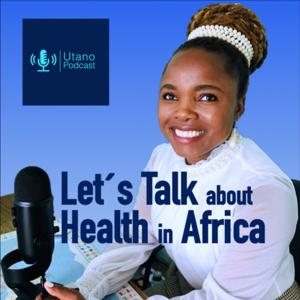
Lenias Hwenda talks about her new Podcast, Let's Talk about Health in Africa on Utano Podcast and the conversations she is having with leaders in Africa how to improve healthcare in Africa, leaders such as President Ameenah Gurib Fakim of Mauritius, Dr Faisal Shuaib of Nigeria and Professor Abdool Karim of South Africa. These conversations we put the challenges into perspective by talking about how they impact lives and hold back sustainable development of nations snd explores the solutions that are being put into action to change the state of healthcare in Africa and ask whether what’s being done is what’s needed and what other actions must be taken to close the gap between what is being done and what needs to be done. In conversation with leaders, Lenias takes another look at the things that we have come to take for granted and ask whether they have been driving or limiting progress in and effort to prompt actionable solutions that will change the status quo, improve the well-being of African people and secure African economies.
16 April 2021 | Lenias Hwenda: Let's Talk about Health in Africa - We have made progress, an African Medicines Agency could be operating within six months.
In this Podcast, Lenias Hwenda in conversation with Mrs Margareth Ndomondo-Sigonda the Head of Programmes Africa Union New Partnership for Development (AU-NEPAD) explains why Africa needs an African Medicines Agency and what such an agency would mean for African people.
Guest: Mrs Margareth Ndomondo-Sigonda Head of Programmes Africa Union New Partnership for Development (AU-NEPAD
A lot of work has been put into harmonising medicines regulations across the 55 countries of the African Union. It has been a painstaking effort driven by AU-Nepad and accelerated by the Covid-19 pandemic. Aligning laws and regulations used to ensure that medicines are safe and work as expected is the first step towards creating an African Medicines Agency with oversight over the continent's 55 countries. Realising the ambition to make medicines and vaccines requires an agency of this nature, and it is six months away from coming into effect.
10 May 20201 | Lenias Hwenda: Let's Talk about Health in Africa - Realising Africa´s digital health opportunity requires plug & play ICT infrastructure
10 May 2021 | Everyone talks about how Africa´s time has come to leapfrog by taking advantage of digitisations. But this requires that Africa has adequate infrastructure to provide digital health services and that people have access to affordable data and reliable telecoms services. How well equipped are countries in Africa to benefit?
May 02, 2021 | Lenias Hwenda | Let's Talk about Health in Africa - Africa's war on women is driving the HIV pandemic: ending it begins with each of us. Watch the video podcast on our YouTube channel.
Guest: Prof. Quarraisha Abdool Karim, UNAIDS Special Ambassador for Adolescents and the Associate Scientific Director for the HIV
Centre for the AIDS Program of Research in South Africa (CAPRISA).
Description
The HIV/AIDS pandemic continues to be a major global public health problem, and Africa remains the most affected region in the world. It accounts for 70% of the world’s people living with HIV, that´s 25.7 million people living with HIV/AIDS in 2018. Africa is also responsible for the highest number of new in infections - 66% of all new infections amounting to more than 1 million people who contact HIV in Africa. According to WHO, to date, it has claimed 35 million lives. There is still no cure for HIV infection, but medicines antiretroviral (ARV) treatments that can control the virus and stop people from passing it on to others are available. ART has reduced new HIV infections by 37% (2000-2018), and HIV-related deaths by 45% saving 13.6 million lives. So can the world finally put the HIV/AIDS pandemic behind as a public health threat? Not when so many African women in the prime of their lives continue to be infected at the current high rates. Women aged 1549 make up more than half (57%) of all Africans who are HIV+ and 75% of those are girls and young women between 1524 years. These statistics show that the global AIDS pandemic has an African face, and that face, is the face of an African woman. It is the face of a young African girl between 15-19 and a young African woman between 20-25.
April 20, 2021 | Lenias Hwenda | Let's Talk about Health in Africa - We can improve cancer survival of African women. Here is how. Watch video podcast on YouTube
Guest: Dr Nomsa Tsikai: Chief Clinical Oncologist at the Harare Oncology Centre specializes in cancers that affecting women, like cervical and breast cancer.
Description
Lenias Hwenda in conversation with Dr Nomsa Tsikai discusses the issues contributing to high cancer mortality amongst African women. Cancer is one of the leading causes of death worldwide accounting for more than 8 million deaths each year - 70% of them in poor countries including African countries. The statistics are shocking. 1 in 10 women in Africa die within 6 months of diagnosis with breast cancer and after 3 years, 50% of them die. Every year, 90% of cervical cancer deaths globally occur in low and middle-income countries (LMICs) and the African continent accounts for a staggering one third of all global cervical cancer deaths. Yet cervical cancer rarely causes death in North America or Europe. The podcast explores some of the things that governments, practitioners, communities and the patients themselves can do to improve cancer survival.
Guest: Dr Nomsa Tsikai: Chief Clinical Oncologist at the Harare Cancer Clinic specializes in cancers that affecting women, like cervical and breast cancer. http://www.harareoncologycentre.co.zw/about-us.html?lang=en
April 16, 2021 | Lenias Hwenda | Let's Talk about Health in Africa - We must improve cancer survival of African women for sustainable development. Watch podcast video on YouTube
Guest: Dr Nomsa Tsikai: Chief Clinical Oncologist at the Harare Oncology Centre specializes in cancers that affecting women, like cervical and breast cancer.
Description
Lenias Hwenda in conversation with Dr Nomsa Tsikai discuss some of the factors contributing to high cancer mortality amongst African women and what needs to be done to improve them. Cancer is one of the leading causes of death worldwide accounting for more than 8 million deaths each year - 70% of them in poor countries including African countries. The statistics are shocking. 1 in 10 women in Africa die within 6 months of diagnosis with breast cancer and after 3 years, 50% of them die. Every year, 90% of cervical cancer deaths globally occur in low and middle-income countries (LMICs) and the African continent accounts for a staggering one third of all global cervical cancer deaths. Yet cervical cancer rarely causes death in North America or Europe. The podcast explores some of the things that governments, practitioners, communities and the patients themselves can do to improve cancer survival.
April 11, 2021 | Lenias Hwenda | Let's Talk about Health in Africa - Polio eradication in Nigeria: An African success story. Watch podcast video on YouTube
Guest: Dr Faisal Shuaib, the Executive Director and CEO of the National Primary Healthcare Development Agency of Nigeria (NHPCDA)
Lenias Hwenda is in conversation with Dr Faisal Shuaib, the Executive Director and CEO of the National Primary Healthcare Development Agency of Nigeria (NPHCDA). Dr Shuaib shares his insights and analysis on how Nigeria managed to reach the finishing line in its final push to eradicate polio to achieve one of the greatest public health achievements in history. The African continent was certified Wild Polio Virus (WPV) free by the World Health Organization (WHO) on August 25 2020 saving ten of thousands of African children from paralysis. Nigeria´s experience offers many lessons that can inform disease control efforts around the world.
From the publisher's feed