
Sign up to save your podcasts
Or

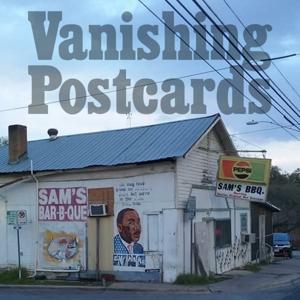


Diners are fundamental to the Route 66 experience- not just for burgers and milkshakes, but because of the connections they help facilitate. In this episode we'll step inside three in Oklahoma, Texas and Arizona to hear stories from their remarkable owners who not only labor hard to serve mouth watering pies, but compassion to those who enter.
The Rock Cafe
The MidPoint Cafe
Westdie Lilo's
On the southernmost tip of Texas, where the US and Mexican borders meet the sea, sits the tiny town of Boca Chica. Surrounded by nothing but wild open scrub land, eight miles of virgin beach and a rich array of wildlife, the twenty-something residents of Boca Chica live in peace and disconnection. Away from the noise of the modern World.
It was that peace and disconnection that Maria Pointer, AKA Boca Chica Maria, and her husband Ray sought when they made their plans to settle down and retire in Boca Chica. But dreams of a quiet retirement are to be thrown out the window when new neighbours SpaceX move into town, right outside their bedroom window.
In this episode, some of the team behind the new app Cerca take a very special look at one of the most important journeys we may ever take via a quiet town in the South of Texas. A town which has become the launch pad to new possibilities and discovery for the human race.
The launch pad to Mars.
Cerca is a brand new app devoted to helping you take the best trips of your life. It starts with Cerca Guides - immersive, podcasts all about some of the most amazing places in the world written by locals who really know their cities. Right now, you can listen to guides to London, Barcelona, Iceland, Paris, Los Angeles and more.
In 1903, President Teddy Roosevelt addressed a crowd at The Grand Canyon. When speaking of this natural wonder, he said- “Man cannot improve on it; not a bit. The ages have been at work on it and man can only mar it. What you can do is keep it for your children and your children’s children and for all who come after you, as one of the great sights which every American, if he can travel at all, should see.” More than a century later, hundreds of millions have heeded those words, and the Canyon is an essential detour for travelers who find themselves motoring along Route 66. But Route 66 is as much about the journey as it is any destination. And that journey is what we’ll focus on in this episode, as we invite you to join us and some other sojourners as we ride The Grand Canyon Railway from the town of Williams, Arizona to the edge of the South Rim.
The Grand Canyon Railway
Jim Hinckley
A cigar chomping nun. A suicidal gambler. A naked property manager. And a wounded bank robber. These are just a few of the spirits whose stories are shared in today's episode which features a sampling of tales collected in old hotels out west, about people who checked in for a night of rest, but never left...
The Original Santa Fe Ghost Tour
La Fonda
Hotel Saint Francis
Inn and Spa at Loretto
El Rancho Hotel
La Posada
Hotel Monte Vista
Will Dailey is an acclaimed independent recording and performing artist. His sound has been described as having a rich vintage vibe while having a firm appreciation of AM rock, pop and big hooks leading famed Rock journalist Dan Aquilante to call him “the real deal." Most recently, he has added podcasting to his list of accomplishments through his new, acclaimed show Sound of Our Town which is a travel program about the music in the next town you visit: Where to go to hear and experience the best music and why; what sounds shaped that city or town’s culture and what new sounds continue to define it. As one whose mission is in philosophical alignment with Vanishing Postcards, we are honored to introduce you to him and provide a taste of his work through this special, bonus interview.
Will Dailey
Sound of Our Town
Songs shared in this episode include "300 Dollar Man" and "Higher Education."
Santa Fe has consistently lured free thinkers and intellectuals of different stripes. People like Georgia O’Keefe. DH Lawrence. And Robert Henri who in 1917 said, “Here painters are treated with that welcome and appreciation that is supposed to exist only in certain places in Europe.” It was around then, on a hill about a mile past the main plaza, a colony of artists began to spring up on Canyon Road. Their imprint remains in the fact that six of its blocks today house over 100 galleries. These spaces are supported by visitors from Aspen and Scottsdale who gladly drop thousands on landscapes before sampling the tasting menus at Geronimo. But on the district’s eastern fringe sits a low slung building of stucco and cedar beams whose walls house an establishment that bridges this district’s well heeled present to its Bohemian past. Its name, as announced by its wooden sign is El Farol. Officially recognized as New Mexico's oldest continuously operating restaurant, we'll learn of its history, but most crucially, through stories, music and an evening of flamenco, get a taste of the place's bewitching atmosphere, or as singer Vicente Griego calls it, "embrujo."
El Farol
Primo Cigar Shop
Subtitle
Michael Wallis has famously said that Route 66 is for travelers, not tourists. As he tells it, "tourists like the familiar, tend to gawk at culture from afar, and generally like to cram as much into their agendas as possible provided it’s cheap, safe and by all means comfortable. Travelers, on the other hand, hanker for the hidden places and in making new discoveries often discover a thing or two about themselves." At the same time, it merits acknowledgement that this ethos is perhaps easy to embrace today because, "the friendly skies" notwithstanding, travel is generally as comfortable and easy as it's ever been. There are many forces and people responsible for bringing us to this point, but in America, and most specifically the American West, perhaps the first to lay the groundwork was restaurant and hotel magnate, Fred Harvey. His is a name that Hollywood and Judy Garland immortalized in a 1946 musical, and one that still today has a way of popping up along Route 66’s western stretch. In this episode, through visits to two of Fred Harvey's surviving properties, and conversations with author Stephen Fried and surviving Harvey Girl Beverly Ireland, we'll learn a little about the man behind the name, and how the brand and empire he created not only elevated outlaw country, but helped give us Americans an appreciation for our own culture in the process.
Stephen Fried - "Appetite for America"
Hotel Castaneda
La Posada
Route 66 Podcast
Appodlachia
Subtitle
When speaking of Tucumcari, New Mexico author Jim Hinckley describes it as "a great example of what Route 66 was. What its bypass did to communities. And the future it holds." All of this is perhaps best discovered through the town's motel culture, which in recent years has enjoyed something of a renaissance thanks to pioneering owners who are working hard to reinvigorate these properties while honoring their pasts. Yet beyond the neon glare, people are drawn to these places for their offers of connection. This episode shares a few stories from owners, past and present, about just that.
Motel Safari
Roadrunner Lodge
The Blue Swallow Motel
Fender's River Resort
Jim Hinckley's America
Trail Weight
As a special treat, we're honored to introduce and share our space with Sound of Our Town. Brought to you from the guys behind Disgraceland, Sound of our Town is hosted by award winning indie musician Will Dailey, and is born out of his mission to reaffirm how important live music is to our culture. In each episode, Will takes us from the boardwalks of Asbury Park, to the biggest and smallest stages of LA, while introducing us to historic venues and secret spots through tales that speak to the nomadic traveler in all of us. This episode takes place in that most famous of Route 66 towns, Chicago. From jazz, gangsters, and bootlegging to the birth of house music, Chicago is that most American of cities—maintaining an uneasy but thrilling equilibrium between the visible and the underground. Host Will Dailey gives you an insider’s look at the stories behind the places that define Chicago’s musical legacy.
From the publisher's feed