
Sign up to save your podcasts
Or

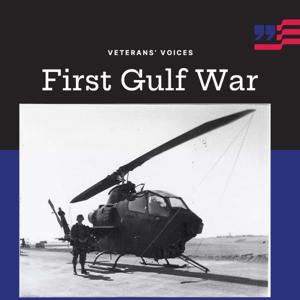


Victoria Shadley's job began after the First Gulf War ended. She and her crew ran a wash rack in Turkey, where they cleaned military vehicles returning from the war and then sent them on ships bound for home.
Shelby Setnikar, Biwabik, set out on a caravan through the Saudi desert en route to Baghdad with the Army’s Third Infantry Division. They slept in their vehicles, ate MRE’s and were given two bottles of Evian water a day.
Paul Lesch was just a newbie nuclear machinist mate when he was helicoptered to the USS Theodore Roosevelt at the start of the First Gulf War. Even for someone in training, there was no downtime aboard the aircraft carrier that flew bombing missions to Iraq around the clock.
John W. Marshall, Duluth, signed up for infantry because that’s what he wanted. On February 26, 1991, he and his unit encountered Saddam Hussein’s Republican Guard in the Battle of 73 Easting, the largest tank battle since World War II.
Jeff Hall's ambulance group deployed to Saudi Arabia and, within a week, the war found them when scud missiles started heading their way.
Eric Kerska, a captain with a tank battalion, was told to convoy his troops across 300 miles of desert. But all he had was a compass and a hand-drawn map.
As a public affairs officer, Casey Mahon was responsible for attending the daily CNN briefing. Because Mahon held the microphone for reporters asking questions, he unwittingly found himself part of the daily broadcast.
On February 23, Darrin Janisch and the 82nd Airborne participated in the beginning of the ground war. They were 100 hours in, over the border in Iraq, when the war suddenly ended.
Victoria Shadley was told the sergeant major didn’t like the grease under her fingernails from a recent brake job. And not long after, this Army light wheel mechanic found herself deployed to Turkey for the cleanup of the First Gulf War.
Paul Lesch’s day aboard the USS Theodore Roosevelt started, officially, at 7 a.m. But there was constant maintenance to be done in the nuclear reactor space. Then there were late-night drills. He was lucky to get three hours of sleep, let alone see the sun.
From the publisher's feed