
Sign up to save your podcasts
Or

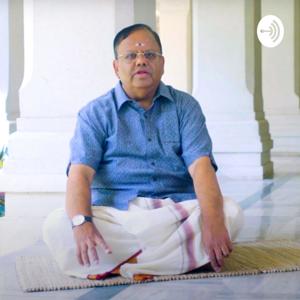


The Upanishads are Hindu scriptures that focus on the following questions: 1. Who is God? 2. Who am I? 3. What is my relationship with God? 4. What are the characteristics of God? 5. How is Soul and God related? This chapter on Hinduism also summarizes the three states of existence of living beings– Jagruti, Swapna and Shushupti which are linked to the concept of body, mind and soul and how the soul is the ultimate God. Further, the chapter also covers the different schools of thought on Brahman (God)
Based on the concepts relating to Gnana Maarga in Vedas ,various Rishis have expounded and analysed the concept of Brahman and these are called Upanishads. •There are more than 100 Upanishads out of which 10 to 15 Upanishads are quite famous. •The key questions analysed in the Upanishads are under: Who am I? – is it my body or my mind or something beyond this. Who is god? - is it within me or outside of me, is it separate or is it all-pervasive. What is my relationship to god ? What is the characteristics of the god? Whether it has form, fragrance etc etc. •These questions are analysed through deduction and elimination process in different Upanishads in different ways •One of the ways in which it is established that there is something which activates the body and mind is as under: There are three states of Human existence as under: 1. when a person is awake (called Jagruthi) 2. When a person is sleeping and in dream ( called Swapna) 3. When a person is in deep sleep (Sushupthi) When somebody is awake, his inner organs (gnanendriyas) relating to various feelings such as pleasure, fear etc are activated by the actions of his various organs (eyes, ears, mouth, hand etc) called karmendriyas When he is in dream (Swapna) even though his karmendriyas are idle and not working, he still perceives pleasure, fear etc through his mind directly controlling gnanendriyas. This shows that the mind is independently working even when body is at sleep. In deep sleep (sushupthi) even the mind is at rest but when he gets up the next day he is able to realize himself and understand upto the previous sleep what all had happened. This shows that there is something beyond body and mind which keeps a tab of all these and which makes the body and mind to act. •The Hindu Philosophy calls this as the Soul of the person. Thus the existence of the soul beyond body and mind is proved by one of the Upanishads. •There are discussions in various Upanishads about what happens to the soul after death of a person ; as per Upanishads when a person dies only his body dies and the soul is eternal. •There are various discussions as to whether the soul of each person is individual or is it part of cosmic soul. These discussions lead to evolving of various philosophies like Advaitha, Dvaitha and Vishitadvaitha as we will see later. •In Taitreya Uapnishad the god (Brahman) is defined as the one : •from which every living being in the world has come •Because of which every living being in the world lives. •To which every living being in the world goes back once it ceases to exist •Against this definition various items such as Anna (food) , Prana (breath), Mano (Mind) and Ananda(bliss) are compared to find that everything is God.
This chapter on Hinduism focuses on how various Gods evolved starting with the five natural elements during the early Vedic period. It also goes into the key activities of universe such as creation, preservation and destruction associated with Lord Brahma, Lord Vishnu and Lord Shiva respectively. This chapter explains how various Gods like Ganapati and Subramanya, Vasus, Rudras and Adityas, the Dasavataras, Acharyas, and more evolved over time. The chapter goes on to explain that formless God is accepted in Hinduism if one is able to focus his mind on such a Brahman (God)
This chapter on Hinduism explains the deep connection of Hindu religion with Astronomy and Astrology and the impact of planetary and star positions on human life. All festivals in Hinduism are associated with the astronomical concepts of solar and lunar system of months. Further the chapter goes in to the Hindu discovery of Kepler’s law of planetary motion thousands of years ago. Essentially, Astronomy and Astrology have had a major impact in the Hindu way of living over thousands of years. •Astronomy and Astrology are deeply connected with Hindu religion. •The Hindus had detailed knowledge of the motion of sun, moon, planets of the solar system in the galaxy and the stars contained in the galaxy (knowledge of Astronomy).They further had the knowledge of the effects of these motions on the lives of human beings (knowledge of Astrology). •They defined the planets as well as houses in which they were positioned as responsible (Karakas) for various aspects of life and depending on the strengths/ weakness of the planets or the positions, advocated various Pujas/ Homas to be done or various stones to be worn to attain prosperity and overcome obstacles. •Hindus believed that the position of the ascending sign at the time of birth, sun, moon, and the planets at the time of birth and at different points of time due to their motion have effects on various aspects of life of the human beings. •The Hindu calendar follows the movement of sun (Sauramaana) or moon (Chandramaana). In the solar based calendar every year starts from the time the sun enters the first point of Aries and ends when the sun leaves the last point of Pisces. Every month starts from the time sun enters each zodiacal sign (Raashi) and ends at the time when it leaves that sign. Thus the entire calendar is based on exact times and not based on any approximations. •In the Lunar based calendar, every month is from one new moon to the next new moon and the shortfall between the lunar month and the solar movements is adjusted by one extra month in every 2.7 years. •Further the Hindus were aware that the earth revolved around the sun in an elliptical path. In English astronomy there is a theory called Kepler’s laws of planetary motion which states that in its path around the sun each planet traverses equal area in equal interval of time. This means when the earth is nearest to the sun (perigee) it will travel 30 degrees (one Raashi) in less time compared to the time taken to travel the same 30 degrees when it is farthest to the sun (apogee). If we see the Indian solar calendar the months near January (perigee) are around 28/29 days and months near July(apogee) are 31/32 days. Thus it is very clear that the Hindus were aware of the laws relating to planetary motion even thousands of years back. •All Hindu festivals are related to astronomical movement of sun and moon; new moon, full moon, sun entering a particular zodiacal sign, sun starting its northwardly or southwardly motion etc etc. •In Hindu Astrology, there are 12 zodiacal signs (Raashis), 27 major stars (Nakshatras) and 9 planets (7 actual planets and 2 shadow planets (Chaya grahas) representing the points of intersection of the paths of the Sun and the Moon as they travel in the celestial sphere).
This chapter on Hinduism talks about the concept of Universe (Brahmanda) as per Hinduism and how the Universe goes through the eternal cycle of creation, preservation and destruction continuously. The Universe (Brahmanda) goes through the creation (Shrishti), Preservation (Sthithi) and destruction (Pralaya) cycles eternally. These cycles repeat at different levels at the end of each Yuga, Mahayuga and Kalpa. The Universe (Brahmanda) comes from Brahman, rests in him and merges with him. It is under the mighty rule of Brahman everything in nature is kept in its proper place, every function is regulated , order and harmony everywhere are maintained. Brahman cannot be directly understood by the senses, mind and intellect but he resides in every living being (Antharyami) and controls them. He is the Aathman or Soul. Brahman is eternal, inifinite, ever-free and is beyond time, space and causation. He cannot be limited by any form or attribute and he is transcendental. Nobody knows creation (Shrishti). The why and how of Shristi can be never be traced by human intellect. As per the Hindu philosophy god by his own will and mysterious powers become all objects in the world. First he appears as Akasha, then as Vayu, then as Agni, then as Varuna, then as earth. The process goes on and he forms himself as the first living being in the world called Hiranya Garbha. Then he proceeds to manifest into numerous worlds, gross and fine, as well as their contents. – Jeevas. Jeevas may be either Chara (Moving) or Achara(non-moving). However every jeeva is conscious and able to recognise. Every jeeva is subject to the sensations of pain and pleasure. It is a Kartha and Bhoktha.(doing and experiencing) – Based on their action in one life Jeeva goes from birth to birth. Between the man and Brahman there are various living beings outside the earth which human beings cannot perceive. Inhabitants of each of these worlds form a class by themselves. Some of these classes are: Yaksha; Sadhya; Kinnaras, Gandarvas and Devas. Each occupy worlds of their own. Further as per Hindu Philosophy, the Brahmanda (Universe) comprise of higher world (Swarga), our world and lower world (Paathala) There is also a theory of seven worlds above the earth (Bhu, Bhuva, Suva, Jana, maha, Thapa, Satya) and seven worlds below the earth (Athala, Vithala, Suthala, Rasathala, Thalathala, mahathala, Paathala) There is also another way of classification of the higher worlds as Pithru loka, Deva loka and Brahma Loka. All these suggest numerous sub divisions of Brahmanda(universe) Another thought was each of these worlds are under a presiding deity Agni, Vaayu, Varuna etc. The gross body (cosmic body) to which all the souls belong is called Brahman. The gross mind and intellect (cosmic mind and intellect) which controls all the mind and intellects of jeevas and who creates all Jeevas is called Hiranyagarbha. Hiranyagabha is the first being which came out of Brahman in this Universe. The gross physical mechanism (cosmic physical body) which pervades all the physical bodies of the universe is called Virat. Each jeeva is a portion of Brahman, HIranyagarbha and Virat.
This chapter on Hinduism summarizes the previous 14 chapters in this video series. It reiterates the ultimate purpose of life in Hinduism is to attain eternal peace (Mukti) and that there are multiple routes to reach Mukti (Enlightenment). Attaining full eternal peace (Mukti) is nearly impossible as it is extremely difficult to control natural emotions however, the pursuit towards this goal will result individual peace and societal harmony. As may be seen from the previous videos various ways have been prescribed by the Hindu religion to reach Mukthi. As the people are of different levels of intellectual maturity and are of different characters, the same way or process may not appeal to everyone, hence the different ways (Maargas). However the fundamental for everyone is to reach Mukti (which is ultimate peace of mind). Reaching Mukti is a very difficult task. No singular path may give us peace of mind. Hence we may have to follow a combination of paths which appeal to us and syncs in our mind so that we get more and more peace of mind. The key is to overcome Bhaya (fear) and get rid of Kama (lust), Krodha (anger), Moha (desire), Lobha (greed), Mada (pride), Ahankara (ego), Irshya (jealousy), Ghrina (hatred). These are very difficult to overcome. Hence even to whatever extent we get peace of mind and overcome these negative qualities , by practicing these Maargas, it is good for us and the for the society.
This chapter on Hinduism summarizes the previous 14 chapters in this video series. It reiterates the ultimate purpose of life in Hinduism is to attain eternal peace (Mukti) and that there are multiple routes to reach Mukti (Enlightenment). Attaining full eternal peace (Mukti) is nearly impossible as it is extremely difficult to control natural emotions however, the pursuit towards this goal will result individual peace and societal harmony.
This chapter on Hinduism talks about the concept of Universe (Brahmanda) as per Hinduism and how the Universe goes through the eternal cycle of creation, preservation and destruction continuously.
This chapter on Hinduism explains the deep connection of Hindu religion with Astronomy and Astrology and the impact of planetary and star positions on human life. All festivals in Hinduism are associated with the astronomical concepts of solar and lunar system of months. Further the chapter goes in to the Hindu discovery of Kepler’s law of planetary motion thousands of years ago. Essentially, Astronomy and Astrology have had a major impact in the Hindu way of living over thousands of years.
This chapter on Hinduism focuses on how various Gods evolved starting with the five natural elements during the early Vedic period. It also goes into the key activities of universe such as creation, preservation and destruction associated with Lord Brahma, Lord Vishnu and Lord Shiva respectively. This chapter explains how various Gods like Ganapati and Subramanya, Vasus, Rudras and Adityas, the Dasavataras, Acharyas, and more evolved over time. The chapter goes on to explain that formless God is accepted in Hinduism if one is able to focus his mind on such a Brahman (God)
The Upanishads are Hindu scriptures that focus on the following questions: 1. Who is God? 2. Who am I? 3. What is my relationship with God? 4. What are the characteristics of God? 5. How is Soul and God related? This chapter on Hinduism also summarizes the three states of existence of living beings– Jagruti, Swapna and Shushupti which are linked to the concept of body, mind and soul and how the soul is the ultimate God. Further, the chapter also covers the different schools of thought on Brahman (God)
From the publisher's feed