
Sign up to save your podcasts
Or

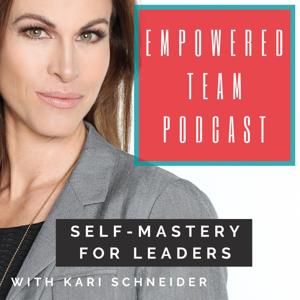

In this solo episode, Kari Schneider breaks down a powerful mindset shift that can transform your follow-through, leadership, and self-mastery: the critical difference between wanting something and liking the process of getting there.
Drawing on neuroscience research from Kent Berridge and Terry Robinson, Kari explains how the brain’s dopamine (desire) and opioid (pleasure) systems operate separately—and how confusing them keeps high performers stuck.
Key themes in this episode:
Standout insight:
Memorable moment:
Key takeaway:
That single question can realign your actions with your values and help you take consistent, meaningful action—even when it’s uncomfortable.
If this resonates, share it with someone who’s stuck between what they want and what they feel like doing—and start building a life aligned with your values, not your preferences.
Supporting Researches:
BJ Fogg — Stanford Behavior Design Lab. Tiny Habits published 2019. His core argument that motivation is unreliable is accurately represented.
Daniel Kahneman — Thinking, Fast and Slow (2011). The experiencing self vs. remembering self distinction is accurately applied. Note: Kahneman’s framing is about experienced vs. remembered utility — the application to want/like is an extrapolation, not a direct Kahneman quote. Present it as ‘Kahneman’s framework offers a useful parallel’ rather than a direct citation.
James Clear — Atomic Habits (2018). ‘Every action you take is a vote for the type of person you wish to become’ is a real and verified quote from the book.
Viktor Frankl — Man’s Search for Meaning (1946). Application is accurate. No direct quotes attributed to him in the script, so no risk there.
 View all episodes
 By Kari Schneider

4.8
99 ratings
In this solo episode, Kari Schneider breaks down a powerful mindset shift that can transform your follow-through, leadership, and self-mastery: the critical difference between wanting something and liking the process of getting there.
Drawing on neuroscience research from Kent Berridge and Terry Robinson, Kari explains how the brain’s dopamine (desire) and opioid (pleasure) systems operate separately—and how confusing them keeps high performers stuck.
Key themes in this episode:
Standout insight:
Memorable moment:
Key takeaway:
That single question can realign your actions with your values and help you take consistent, meaningful action—even when it’s uncomfortable.
If this resonates, share it with someone who’s stuck between what they want and what they feel like doing—and start building a life aligned with your values, not your preferences.
Supporting Researches:
BJ Fogg — Stanford Behavior Design Lab. Tiny Habits published 2019. His core argument that motivation is unreliable is accurately represented.
Daniel Kahneman — Thinking, Fast and Slow (2011). The experiencing self vs. remembering self distinction is accurately applied. Note: Kahneman’s framing is about experienced vs. remembered utility — the application to want/like is an extrapolation, not a direct Kahneman quote. Present it as ‘Kahneman’s framework offers a useful parallel’ rather than a direct citation.
James Clear — Atomic Habits (2018). ‘Every action you take is a vote for the type of person you wish to become’ is a real and verified quote from the book.
Viktor Frankl — Man’s Search for Meaning (1946). Application is accurate. No direct quotes attributed to him in the script, so no risk there.
8,748 Listeners