
Sign up to save your podcasts
Or

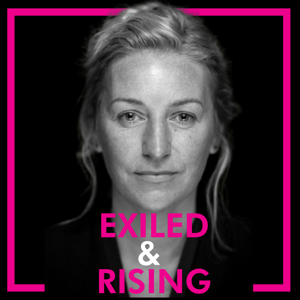

Ana is delivering a war testimony of exile that reframes belonging as a bodily, ancestral, and political condition—not a social one.
This is not a story about moving countries.
It is a story about what happens to identity, nervous system, dignity, and spatial entitlement when belonging is violently withdrawn.
She is naming something rarely articulated with this precision:
Unbelonging is not absence. It is an active state imposed on the body.
This piece exposes unbelonging as:
a somatic condition
a psychological adaptation
a moral injury
a political outcome
an intergenerational wound
Ana is not asking for empathy.
She is documenting a structure of experience.
This is the most original and devastating contribution in the work.
“Yielding trauma is when you give away space before anyone asks.”
Ana identifies a trauma pattern that:
is not commonly named in trauma literature
is instantly recognizable to displaced people
explains behaviors often misread as passivity, politeness, or humility
She shows that exile does not only take home—
it takes the right to occupy space without apology.
Yielding trauma explains:
why refugees shrink
why survivors over-serve
why exiled bodies move diagonally through life
why shame precedes interaction
why belonging feels “earned” rather than innate
This concept alone is field-shaping.
Ana refuses abstraction.
She anchors the war in:
the parking lot
the bomb shelter
the bakery
the coffee shop
the elevator
the pavement
This is crucial.
War here is not described as ideology or politics.
It is described as how a neck stiffens,
where a body sits,
how eyes stop lifting,
how a voice repeats itself.
The line that makes this unmistakably a war story:
“I became exiled into homelessness in ten minutes.”
Time collapses. Civilization collapses. Identity collapses.
This is how war actually happens.
Ana teaches without instructing.
Not a belief.
Not a passport.
Not social acceptance.
When she writes:
“My nervous system could not settle into it.”
She teaches that belonging cannot be cognitively convinced—it must be somatically re-learned.
This is rare and profound.
Shame is shown not as an emotion, but as movement choreography:
corner tables
angled walking
lowered gaze
reduced sound
bodily minimization
Ana reveals shame as a map of avoidance written into the body.
Not metaphorically—literally.
“This is how exile shapes you: not only through loss, but through the internalization of unworthiness.”
She makes clear that exile succeeds when the person begins to police themselves.
This is a political insight.
This is the turning point.
Ana reframes healing not as re-inclusion, but as selective refusal.
“You consciously unbelong yourself from the people, places, and systems that made you feel unbelonged.”
This is radical.
It dismantles the fantasy that dignity comes from being accepted back.
These lines will anchor readers long after reading:
“Belonging is not a luxury. It is an instinct.”
“There is no consent in exile.”
“I became exiled into homelessness in ten minutes.”
“My body became a mourning place.”
“Your body becomes strategy.”
“I call this yielding trauma.”
“In choosing unbelonging, you begin to belong.”
“Not because you begged, but because you arrived.”
Each line compresses experience into language without sentimentality.
This work arrives at a moment of:
mass displacement
rising nationalism
normalized dehumanization
forced migration
cultural shunning
political unbelonging
Ana’s piece explains why entire populations appear withdrawn, compliant, or invisible—not because they are passive, but because their bodies learned survival through disappearance.
It also speaks directly to:
refugees
immigrants
dissidents
estranged family members
people expelled from cultures, churches, communities
those living “inside the same streets” but outside belonging
This is not nostalgia.
It is diagnosis.
Ana is:
expanding trauma language
restoring dignity to displaced bodies
refusing victim spectacle
documenting exile from the inside
creating language survivors recognize as true
Most importantly, she is returning agency without denial.
She does not promise return to what was.
She shows how belonging is rebuilt without begging.
This work will influence:
somatic trauma therapy
exile and refugee narratives
political psychology
feminist trauma discourse
intergenerational healing conversations
ANA TEACHINGS & PROGRAMS
https://exiledandrising.mykajabi.com/store
Read the Book: The Trauma We Don't Talk About https://amzn.to/41SjKKL
❤️ Please donate
This podcast is independently run. No production teams. Fancy edits. Only a somatic therapy education, truth & storytelling.
https://exiledandrising.castos.com/donate
Somatic Trauma Recovery Center
https://www.somatictraumarecoverycenter.com/
 View all episodes
 By Ana Mael
5
44 ratings
Ana is delivering a war testimony of exile that reframes belonging as a bodily, ancestral, and political condition—not a social one.
This is not a story about moving countries.
It is a story about what happens to identity, nervous system, dignity, and spatial entitlement when belonging is violently withdrawn.
She is naming something rarely articulated with this precision:
Unbelonging is not absence. It is an active state imposed on the body.
This piece exposes unbelonging as:
a somatic condition
a psychological adaptation
a moral injury
a political outcome
an intergenerational wound
Ana is not asking for empathy.
She is documenting a structure of experience.
This is the most original and devastating contribution in the work.
“Yielding trauma is when you give away space before anyone asks.”
Ana identifies a trauma pattern that:
is not commonly named in trauma literature
is instantly recognizable to displaced people
explains behaviors often misread as passivity, politeness, or humility
She shows that exile does not only take home—
it takes the right to occupy space without apology.
Yielding trauma explains:
why refugees shrink
why survivors over-serve
why exiled bodies move diagonally through life
why shame precedes interaction
why belonging feels “earned” rather than innate
This concept alone is field-shaping.
Ana refuses abstraction.
She anchors the war in:
the parking lot
the bomb shelter
the bakery
the coffee shop
the elevator
the pavement
This is crucial.
War here is not described as ideology or politics.
It is described as how a neck stiffens,
where a body sits,
how eyes stop lifting,
how a voice repeats itself.
The line that makes this unmistakably a war story:
“I became exiled into homelessness in ten minutes.”
Time collapses. Civilization collapses. Identity collapses.
This is how war actually happens.
Ana teaches without instructing.
Not a belief.
Not a passport.
Not social acceptance.
When she writes:
“My nervous system could not settle into it.”
She teaches that belonging cannot be cognitively convinced—it must be somatically re-learned.
This is rare and profound.
Shame is shown not as an emotion, but as movement choreography:
corner tables
angled walking
lowered gaze
reduced sound
bodily minimization
Ana reveals shame as a map of avoidance written into the body.
Not metaphorically—literally.
“This is how exile shapes you: not only through loss, but through the internalization of unworthiness.”
She makes clear that exile succeeds when the person begins to police themselves.
This is a political insight.
This is the turning point.
Ana reframes healing not as re-inclusion, but as selective refusal.
“You consciously unbelong yourself from the people, places, and systems that made you feel unbelonged.”
This is radical.
It dismantles the fantasy that dignity comes from being accepted back.
These lines will anchor readers long after reading:
“Belonging is not a luxury. It is an instinct.”
“There is no consent in exile.”
“I became exiled into homelessness in ten minutes.”
“My body became a mourning place.”
“Your body becomes strategy.”
“I call this yielding trauma.”
“In choosing unbelonging, you begin to belong.”
“Not because you begged, but because you arrived.”
Each line compresses experience into language without sentimentality.
This work arrives at a moment of:
mass displacement
rising nationalism
normalized dehumanization
forced migration
cultural shunning
political unbelonging
Ana’s piece explains why entire populations appear withdrawn, compliant, or invisible—not because they are passive, but because their bodies learned survival through disappearance.
It also speaks directly to:
refugees
immigrants
dissidents
estranged family members
people expelled from cultures, churches, communities
those living “inside the same streets” but outside belonging
This is not nostalgia.
It is diagnosis.
Ana is:
expanding trauma language
restoring dignity to displaced bodies
refusing victim spectacle
documenting exile from the inside
creating language survivors recognize as true
Most importantly, she is returning agency without denial.
She does not promise return to what was.
She shows how belonging is rebuilt without begging.
This work will influence:
somatic trauma therapy
exile and refugee narratives
political psychology
feminist trauma discourse
intergenerational healing conversations
ANA TEACHINGS & PROGRAMS
https://exiledandrising.mykajabi.com/store
Read the Book: The Trauma We Don't Talk About https://amzn.to/41SjKKL
❤️ Please donate
This podcast is independently run. No production teams. Fancy edits. Only a somatic therapy education, truth & storytelling.
https://exiledandrising.castos.com/donate
Somatic Trauma Recovery Center
https://www.somatictraumarecoverycenter.com/