
Sign up to save your podcasts
Or

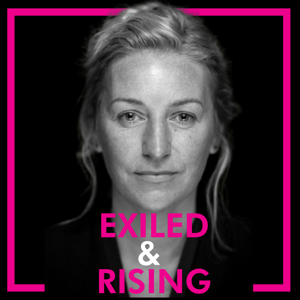


In the wake of the school shooting in Canada that took the lives of fifteen children, Ana offers a moral reflection on grief, anger, leadership, and collective responsibility.
This is not news commentary. It is a call to conscience.
Ana speaks directly to the societal questions emerging after the Canada school shooting: What happens when children are no longer safe in schools? What does moral leadership look like when institutions fail? Why do some people say, “It didn’t happen here,” and how does that trauma response reduce proximity of threat and normalize what should never be normalized?
In this episode, Ana addresses:
• collective grief after a school shooting
• trauma responses and societal numbness
• leadership failure and civic responsibility
• the normalization of violence
• why children’s safety is a human rights issue
• how adults can respond without collapsing into despair
Ana also offers a closing prayer for the children, families, and communities affected — a grounding moment for those carrying grief, anger, and moral shock.
If you are feeling devastated, angry, morally unsettled, or disoriented after the school shooting in Canada, this episode offers clarity, conscience, and a space to grieve without becoming numb.
This is about grief without collapse.
Anger without chaos.
And refusing to normalize violence.
Ana also offers a closing prayer for the children, families, and communities affected — a grounding, somatic moment for those carrying grief, anger, and moral shock. This prayer is an invitation to hold sorrow without collapsing, to stay human in the face of violence, and to refuse normalization.
-------------------
❤️ Please donate
This podcast is independently run. No production teams. Fancy edits. Only a somatic therapy education, truth & storytelling.
https://exiledandrising.castos.com/donate
Somatic Trauma Recovery Center
https://www.somatictraumarecoverycenter.com/
About Ana Mael:
Ana Mael is a genocide survivor, somatic therapist, and author of The Trauma We Don’t Talk About. She is the founder of the Somatic Trauma Recovery Center and has dedicated her career to helping survivors reclaim their identity, dignity, and self-trust.
With decades of lived experience, Ana offers a unique, unapologetic approach to healing that combines trauma justice, somatic therapy, and spiritual integrity. She advocates for vulnerability, accountability, and collective healing to dismantle the systems that perpetuate oppression and harm.
Ana’s work provides a critical lens into the trauma of marginalized communities and offers a roadmap for healing that is both deeply personal and collectively transformative.
Ana is sounding the alarm: fascism doesn’t begin with violence—it begins with apathy. It creeps in through:
disinterest,
detachment masked as spirituality,
normalized silence,
the overemphasis on self-care as a form of avoidance.
She is not dismissing self-care, but calling out how it’s been commodified into an escape hatch—a way for people to say, “not my circus, not my problem,” while the world burns around them.
She draws a bold line between early fascism and the bystander effect. It doesn’t require weapons to begin—just a populace too tuned out, too passive, or too spiritually “above it all” to act.
“Fascism doesn’t begin with guns. It begins with disinterest.”
Ana criticizes how some spiritual communities tell people to “stay in their frequency” or ignore the suffering of others under the guise of “vibrational alignment.” This, she argues, is spiritual bypassing and a dereliction of collective moral duty.
“Spiritual influencers telling you to stay in your own frequency…”
She’s not against self-care. She is against using it to replace collective action. When we idolize self-care and ignore community responsibility, we are sacrificing our shared humanity.
“Self-care has become the new religion, and the price of that religion is our humanity.”
Ana speaks with:
Radical clarity – There’s no soft-pedaling.
Moral urgency – It’s a wake-up call to a community lulled by comfort and detachment.
Feminist and anti-fascist resistance – This is aligned with activist traditions rooted in trauma-informed, politically aware healing.
Healing without action = complicity.
We cannot heal in isolation while harm is enacted around us. Ana insists that true healing includes moral responsibility to others.
Collective care must return.
The absence of collective care has left us vulnerable to oppressive systems—and we can’t afford to keep paying that price.
Reclaim community and moral bravery.
This is a call to remember our shared obligations as citizens, neighbors, and humans—especially when laws are being signed in silence.
Ana is pushing against a rising tide of:
performative healing,
detached spirituality,
passive liberalism.
Her voice re-centers the urgent moral work of being alive during political collapse. She’s inviting her audience—particularly trauma survivors and empathic people—to stop retreating inward as their only response. She’s saying:
“Your healing is real. But so is the world. Don’t trade one for the other.”
Ana Mael’s Unique Approach to Trauma Healing:
Ana Mael offers a trauma-informed, justice-centered approach to healing. As a somatic therapist and genocide survivor, Ana’s unique insights stem from lived experience. She doesn’t just teach healing in the traditional sense; she advocates for truth, accountability, and dignity as core components of trauma recovery.
Her work speaks to marginalized communities—those who have been forced to suppress their emotions and voices in the face of violence and oppression. She helps them reconnect with their authenticity and emotional sovereignty. Ana challenges harmful practices that disregard the systemic nature of trauma and promotes trauma justice as the important path to healing.
By weaving in somatic techniques, Ana empowers individuals to release the weight of their past and move toward personal empowerment.
Ana has unique ability to blend compassionate understanding of trauma with empowerment and advocacy for those who are often marginalized.
About Ana Mael:
Ana Mael is a genocide survivor, somatic therapist, and author of The Trauma We Don’t Talk About. She is the founder of the Somatic Trauma Recovery Center and has dedicated her career to helping survivors reclaim their identity, dignity, and self-trust.
With decades of lived experience, Ana offers a unique, unapologetic approach to healing that combines trauma justice, somatic therapy, and spiritual integrity. She advocates for vulnerability, accountability, and collective healing to dismantle the systems that perpetuate oppression and harm.
Ana’s work provides a critical lens into the trauma of marginalized communities and offers a roadmap for healing that is both deeply personal and collectively transformative.
Somatic Trauma Recovery Center
https://www.somatictraumarecoverycenter.com/
Read the book: https://amzn.to/41SjKKL
❤️ Support the podcast: https://exiledandrising.castos.com/donate
You don’t owe forgiveness to anyone who hurt you. In this unapologetic and deeply validating episode, Ana Mael dismantles the harmful myth that forgiveness is a requirement for healing. With clarity and compassion, Ana speaks directly to marginalized, BIPOC, and harmed individuals who’ve been told—explicitly or subtly—that their healing must include forgiving those who caused their pain.
Instead, Ana offers a radical truth: you do not owe anyone forgiveness—especially if doing so betrays your dignity, survival, or truth.
This radical truth reclaims your healing from shame, spiritual pressure, and performative peace.
This episode exposes how the expectation to forgive is often a covert mechanism of control, especially when applied to BIPOC, marginalized, and oppressed individuals. Ana Mael challenges the dominant narrative with this unapologetic truth:
“You do not owe anyone forgiveness if it doesn't feel right for you.”
This is not just a personal declaration—it is a political one.
Across cultures, marginalized bodies have been forced to carry the burden of peacekeeping. They’re expected to “rise above,” to be spiritual, graceful, non-reactive—even in the face of dehumanization. But as Ana says:
“This is another white privilege thing we are facing. Forgive… so I feel better. Forgive… so you don’t become a potential threat.”
Forgiveness, in this context, is not healing. It’s containment.
Psychological Impact: Survivors internalize the message that their pain is inconvenient, their anger dangerous, and their boundaries selfish.
Behavioral Adaptations: This can result in chronic people-pleasing, freeze responses, emotional repression, and dissociation. Over time, these adaptive responses erode self-trust and the ability to recognize harm.
“Forgiveness has become more and more of a tool for privileged ones, for entitled ones... to overlook injustices done to minorities.”
This insight cuts to the heart of power dynamics. Ana exposes how forgiveness becomes another “respectability test,” used to protect perpetrators and institutions while bypassing the survivor’s reality.
In churches, wellness spaces, and families, survivors are told to forgive not for their healing, but to ease the discomfort of others.
Ana names this clearly:
“Many times people tell you to forgive so they can feel better. It is for their convenience, not yours.”
“Many spiritual communities betray our healing journey.”
Ana dismantles spiritual bypassing as a form of emotional gaslighting wrapped in sacred language.
Westernized, appropriated spiritual teachings often turn forgiveness into a status symbol of moral superiority, where “if you forgive, you are evolved.”
But this creates moral hierarchy and re-traumatizes those still in the process of metabolizing their truth.
As Ana warns:
“If you're not ready or if you choose not to forgive, that relational field is not safe, and healing is not happening.”
This episode is a call to reclaim embodied justice as a trauma-healing strategy.
Forgiveness Without Safety Is a Nervous System Betrayal: Ana reminds us that healing occurs “when your body, your mind, your heart, and your nervous system attune in relational resonance to someone who is safe.”
Unforgiveness as Boundary: Choosing not to forgive is not a failure. It’s an act of nervous system integrity and trauma-informed self-protection.
“If you feel forced and shamed into forgiving your perpetrator... if it feels like you are betraying your inner child... I’m truly sorry.”
This grief is sacred, not pathological. Somatic healing must make space for it.
Ana frames non-forgiveness not as rage or bitterness, but as a generative force for personal and collective transformation:
“Your unforgiveness can be the best catalyst to heal... By honoring self and protecting self and standing up for what was done to you.”
Here, she offers a vision where healing is not dependent on letting go of rage—but on giving it a sacred place in advocacy, storytelling, and boundary-making.
When forgiveness is coerced: Trauma symptoms intensify. Survivors may feel re-violated by systems claiming to support them.
When forgiveness is chosen freely or rejected with clarity: Survivors often report greater emotional clarity, nervous system regulation, and post-traumatic growth.
This mirrors research showing that voluntary forgiveness can support healing, while pressured forgiveness leads to higher distress, depression, and PTSD symptoms (Wade et al., 2005; Toussaint & Webb, 2005).
“Forgive them. But you don’t need to forgive what was done to you.”
Ana’s words echo what so many trauma survivors have long needed to hear: Forgiveness is not owed. Peace is not performative. Contained rage is not wrong. Unfrogivness is just when injustice is done.
This episode is a portal into what it means to decolonize forgiveness, reclaim our narratives, and heal on our own terms.
Somatic Trauma Recovery Center
https://www.somatictraumarecoverycenter.com/
Read the book: https://amzn.to/41SjKKL
❤️ Support the podcast: https://exiledandrising.castos.com/donate
Meet Your Host: Ana Mael
Ana Mael is a genocide and war survivor, somatic therapist, and founder of the Somatic Trauma Recovery Center. She has dedicated her work to helping survivors reclaim their identity, dignity, and self-trust.
She is the bestselling author of The Trauma We Don’t Talk About—a #1 book in over 10 categories, including Mental Health, Personal Testimonies, and Memoirs.
Ana lives in Toronto, Canada, where she works directly with clients and educates mental health professionals and counsellors on displacement, exile, and war trauma recovery. She leads training programs, provides trauma-informed therapy, and conducts research to bridge the gap between somatic therapy and global crisis trauma care.
You don’t want to die, but you don’t want to be here either.
This is the space no one talks about, not even seasoned therapists,—the silent, hidden trauma state where your body shuts down after too much pain, too much loss, too much survival. This is not depression, it is not you being suicidal. It’s Resignation Syndrom.
In today’s episode, Ana Mael—a trauma survivor, war refugee, and somatic therapist—breaks the silence on a deep, hidden trauma state that no one talks about: resignation syndrome.
It’s that place where you don’t want to die, but you also don’t want to live.
If you’ve been feeling numb, disconnected, exhausted beyond words—welcome.
This is not another mental health podcast. This is a space for the unseen, the cast out, the forgotten—for those who have been forced to start over, rebuild, and carry on without ever getting the chance to grieve what they lost.
This episode is for YOU if:
"Trauma is not just what happens to you; it’s how it shapes your body, your breath, your relationships, your ability to take up space in the world." – Ana Mael
A name for what you’ve been feeling—resignation syndrome—and why it happens
Why your trauma is valid, no matter what your mind tells you about "having it easier than others"
Resignation Syndrome: Understanding this trauma-induced survival state and why it's often ignored
Trauma Beyond War: Why you don’t need to have lived through war to feel exiled within your own body
The Nervous System & Shutdown: How prolonged trauma, loss, and uncertainty lead the body into a deep survival rest
The Role of Silence & Shame: Why comparing trauma invalidates healing and how naming your pain is the first step
Somatic Healing & Recovery: How to gently move from resignation into restoration and reclaim your existence. Somatic healing tools to begin moving out of this place—slowly, safely, without force
The hidden survival instinct behind your exhaustion (you're not lazy, you have Resignation Syndrom)
How prolonged uncertainty, grief, and silence create the deepest wounds
[00:01] Welcome & Introduction – Who this space is for
[00:06] The Silent Space Between Life & Death – What is resignation syndrome?
[00:12] Trauma & The Nervous System – Why the body shuts down under prolonged stress
[00:18] The Role of Silence – Why unspoken trauma deepens suffering
[00:22] The Difference Between Resignation & Surrender – Finding a path to healing
[00:29] Somatic Healing & Next Steps – Practical tools for moving forward
✨ Subscribe & Leave a Review: Help bring these essential conversations to the people who need them most
✨ Share This Episode: If this resonated with you, share it with someone who may need to hear it
✨ Support the Podcast: Donate to keep these stories and healing tools accessible and ad FREE:
Meet Your Host: Ana Mael
Ana Mael is a genocide and war survivor, somatic therapist, and founder of the Somatic Trauma Recovery Center. She has dedicated her work to helping survivors reclaim their identity, dignity, and self-trust.
She is the bestselling author of The Trauma We Don’t Talk About—a #1 book in over 10 categories, including Mental Health, Personal Testimonies, and Memoirs.
Somatic Trauma Recovery Center
https://www.somatictraumarecoverycenter.com/
Read the book: https://amzn.to/41SjKKL
❤️ Support the podcast: https://exiledandrising.castos.com/donate
What happens when being looked at no longer feels safe? Trauma can fuse unsafe attention with all attention.
In this episode of Exiled and Rising, Ana Mael explores how trauma can change the nervous system’s relationship to human attention itself. After a threatening, rage-filled, humiliating, or sexual stare, the body can begin to fuse stare with gaze—so even ordinary eye contact, visibility, and connection may start to feel dangerous.
Ana makes a crucial distinction: gaze is not stare.
Gaze carries curiosity, movement, choice, consent, boundaries, and the possibility of connection. Stare carries intensity, fixation, force, exposure, and the feeling of being trapped.
For women and girls in particular, Ana addresses the experience of the sexual stare directly. In the episode, she names predatory sexual staring as nonconsensual and violating, and describes how it can feel assaultive even without physical contact. The body can register the stare as an invasion of privacy, boundaries, dignity, and bodily autonomy.
The episode also explores rage-filled staring in childhood—the look before punishment, humiliation, emotional explosion, or violence—and how repeated exposure can condition the body into freeze, speechlessness, hypervigilance, hiding, and fear of eye contact.
Over time, this can become something larger than discomfort with being looked at. Trauma can fuse unsafe attention with all attention. A person may begin to withdraw, avoid gaze, keep relationships shallow, or stay emotionally distant not because they do not want connection, but because visibility itself has become associated with danger.
Ana examines why this withdrawal can be mistaken for introversion, social awkwardness, coldness, or avoidance, when it may actually be a protective strategy: if connection once exposed you to threat, distance can become a form of harm reduction.
The deeper cost is relational. One harmful stare can take away countless future moments of safe gaze, tenderness, intimacy, friendship, openness, and belonging.
This episode also introduces a somatic way of understanding freeze and the possibility of relearning that safe connection can be entered and left by choice.
The central question is not simply, “Why is eye contact hard?”
It is:
What happens when the nervous system learns that being seen may mean being captured, violated, or overpowered?
And how do we begin to distinguish again between consensual noticing and invasive fixation?
By a War Trauma Therapist & Founder of Somatic Trauma Recovery Center
Ana Mael delivers a profound and urgent call to reclaim critical thinking as a somatic, embodied skill, especially in a time of rising authoritarianism, digital manipulation, and inherited cultural obedience. Her central message is this:
“Critical thinking is not just logic. It’s a nervous system practice.”
When people have been trained to survive — in families, cultures, religious systems, or countries under threat — they are conditioned to obey, not to question. Ana reframes critical thinking as an act of moral clarity, embodied courage, and spiritual responsibility — not betrayal.
Critical Thinking Can Feel Like Betrayal:
Questioning the beliefs of your community, family, or religion can trigger a survival response — as if you’re betraying your tribe. But Ana reframes this:
“What if living by your moral values, by your dignity, is actually what’s happening?”
Tyranny Begins with Obedience, Not Violence:
Ana warns us that:
“Tyranny doesn’t start with weapons. It starts with unchallenged obedience.”
This is echoed by her personal history:
“My home was detonated two years before I was exiled… everyone was quiet.”
Embodiment is the Missing Link:
Ana makes a clear case that having facts is not enough. Trauma survivors may know the truth but still follow their abuser if their nervous system isn’t regulated:
“You can have facts and still follow your abuser.”
Silence Is Not Spiritual:
Ana challenges the wellness industry and spiritual bypassing:
“Silence is not spiritual. Silence is not neutral. If injustice is happening, silence puts you on the side of the abuser.”
Somatic Thinking is Resistance:
True critical thinking — the kind that helps us resist manipulation, authoritarianism, and gaslighting — must be lived in the body. That includes:
Feeling discomfort
Pausing
Observing internal reactions before responding
“When you’ve been trained to survive, not to think, critical thinking feels like betrayal.”
“Tyranny begins with unchallenged obedient people.”
“You can have facts and still follow your abuser if your body hasn’t integrated the truth.”
“Spiritual is witnessing, expanding capacity for discomfort, and acting on it.”
“The best investment is your ability to pause before reacting.”
Ana’s message is deeply relevant as we witness the global rise of:
Authoritarian regimes
Surveillance capitalism
AI-driven propaganda
Digital burnout
Spiritual commodification
She brings lived experience from war-torn countries and years of therapeutic practice to connect political, psychological, and somatic truths.
Her work bridges a critical gap in mental health, activism, and social resistance: how to build embodied moral clarity, even when your whole system is telling you to stay silent.
Somatic Trauma Recovery Center
https://www.somatictraumarecoverycenter.com/
Read the book: https://amzn.to/41SjKKL
❤️ Support the podcast: https://exiledandrising.castos.com/donate
Stop Obeying. Start Thinking. At a time when professors are being silenced, protests are criminalized, and AI-generated propaganda floods our feeds, Ana gives us the ultimate counterculture message: “If you don’t practice critical thinking, someone else will do your thinking for you. And if you don’t anchor your moral compass, the algorithm will replace it.”
In a world rapidly muting moral dissent through burnout, spiritual bypassing, and algorithmic control, Ana Mael dares to remind us that critical thinking is not just intellectual—it’s somatic, moral, and revolutionary.
Her 60-minute teaching, titled “Critical Thinking”, is not a course. It is not an episode. It is a rescue mission—one that blends lived war survival, trauma healing, somatic therapy, and cultural analysis with the precision of someone who’s lived through systems most North Americans are only beginning to glimpse.
Core Thesis “Critical thinking is resistance. It’s how you stay human.”
--------------------------
Somatic Trauma Recovery Center
https://www.somatictraumarecoverycenter.com/
Read the book: https://amzn.to/41SjKKL
❤️ Support the podcast: https://exiledandrising.castos.com/donate
-----------------------
For Mael, critical thinking is not a luxury, but a nervous system imperative—a survival skill for those living in environments of danger, displacement, or disinformation. She grounds this not in abstraction but in her own history: being held at gunpoint, surviving fascist regimes, witnessing genocide, and rebuilding a life through trauma recovery and body-based therapy.
Her core argument? We are not in a crisis of logic—we are in a crisis of obedience and numbness. Fascism doesn’t start with guns. It starts when people are too tired, too numbed, too self-absorbed, or too polite to question anything.
Key Lessons From Ana’s Teaching
The Cost of Numbness: From spiritual retreats to social media spirals, we’re outsourcing our agency and mistaking silence for peace.
The Role of the Trauma Body: Trauma wires us for obedience, fast reactions, and emotional withdrawal. Critical thinking must be rebuilt through safety, body awareness, and contradiction tolerance.
The Disappearance of Moral Clarity: Ana argues that what’s truly dying is not “freedom,” but the felt sense of right and wrong—the inner compass that once led communities to protect each other.
Self-Help as Compliance: She names the billion-dollar wellness industry as a soft agent of autocracy—creating obedient citizens who breathe deeply while their neighbors are erased.
Apathy is a Fertile Ground for Fascism: Her critique of silence is not metaphorical—she draws direct lines from Nazi obedience culture to current American and global politics.
Ana Mael’s piece “Critical Thinking” is a blisteringly clear, morally urgent, and somatically grounded call for the revival of civic responsibility, nervous system integrity, and moral bravery in the face of global regression. What she offers is far more than commentary — it’s a multi-layered cultural intervention, delivered through the rare lens of someone who has survived dictatorship, genocide, and spiritual betrayal, and who has also spent decades professionally guiding others through the trauma they don’t know how to name.
Ana positions herself uniquely as:
A trauma-informed political voice: speaking with authority as a war survivor and somatic therapist
A truth-telling disruptor: calling out the self-help and wellness industry for creating numb, obedient citizens
A social justice teacher: advocating for moral clarity, resistance, and collective care
A systems-aware educator: tracing how fascism, obedience, apathy, and economic hardship intersect
This places her among today’s top trauma thought leaders, blending embodiment with ethics, justice, and clarity.
Cultural Impact & Influential Reach Ana’s words cut across audiences: Immigrants and displaced people hear validation and strategy for staying safe
Spiritual seekers are challenged to integrate activism
Parents and educators are warned to stop raising obedient, numb children
Survivors are reminded that trauma often trains us to obey — and breaking that pattern is resistance Her podcast is more than education — it’s a public intervention.
She speaks directly to citizens of the United States and Canada with geopolitical urgency, warning of tyranny disguised as wellness, silence, or neutrality.
Having a caring heart does not mean you owe it to people who do not return it.
If you have a caring heart, you were likely taught to give more, try harder, and wait longer—especially in relationships shaped by power, oppression, or trauma. But generosity without reciprocity is not love. It is extraction.
In this episode, Ana Mael introduces a radical but necessary practice: assessing reciprocity. She explores how people who carry kindness, ethics, and care are often targeted by systems and individuals who benefit from their self-underestimation. Ana explains why noticing that care is not returned can feel terrifying—especially for those shaped by exile, racism, patriarchy, disability, or power-over dynamics—where comparison itself was never safe.
Through a somatic and trauma-informed lens, Ana unpacks:
Why caring people are taught not to assess others
How oppression conditions fear of comparison and retaliation
The difference between generosity and self-erasure
Why recognizing absence of care is not cruelty, but sovereignty
How to reclaim your values, protect them, and give consciously
This episode is for anyone who has been told they are “too sensitive,” “too kind,” or “asking for too much”—when in reality, they were giving what was never returned.
ANA TEACHINGS & PROGRAMS
https://exiledandrising.mykajabi.com/store
RESIGNATION SYNDROME RECOVERY
https://exiledandrising.mykajabi.com/offers/SSApP35o/checkout
Read the Book: The Trauma We Don't Talk About https://amzn.to/41SjKKL
❤️ Please donate
This podcast is independently run. No production teams. Fancy edits. Only a somatic therapy education, truth & storytelling.
https://exiledandrising.castos.com/donate
Somatic Trauma Recovery Center
https://www.somatictraumarecoverycenter.com/
Withdrawal is a deep somatic adaptation to chronic unsafety, invisibility, and social erasure. Ana identifies withdrawal not as a symptom to be “fixed,” but as a brilliant survival strategy when someone has never felt safe, welcomed, or truly allowed to exist as they are. Welcome to Exiled and Rising. Please follow and rate and always share to others who need to hear this.
Ana’s work becomes a mirror for our time. In 2025, with rising political authoritarianism, cultural censorship, and the silencing of minority and independent voices, this episode is a somatic protest.
She provides language for the body in a time when language is being censored, surveilled, and politicized. This is particularly potent for:
Withdrawal is not avoidance or passivity—it’s a nervous system shutdown in response to:
Chronic unsafety (home, society, or internal landscape)
Unwelcome identity (race, body, accent, orientation)
Invisible pain (displacement, exile, suppression)
This episode implicitly and explicitly names multiple intersecting traumas:
Ana Mael connects each of these to somatic responses—specifically the state of withdrawal—which becomes the body’s last defense in the face of repeated invisibility or harm.
Ana’s reference to “pleasurable contact” is deeply significant.
“There is no contact, there is no pleasure. There is only threat.”
This suggests a complete loss of social engagement and safe sensory input—essential components for neurobiological repair.
Without pleasure, safe touch, or welcome, the nervous system cannot down-regulate. Over time, this can lead to:
“We withdraw when nothing around us is safe.”
Ana reframes withdrawal as a biological response to terror, not a flaw. This is aligned with polyvagal theory (Dr. Stephen Porges), which describes how the dorsal vagal shutdown leads to freeze, collapse, and dissociation when safety is chronically unavailable.
“No one withdraws by default. We are social beings.”
This is a profound truth grounded in developmental neurobiology: humans are born wired for co-regulation and connection. When this is not available—due to war, displacement, abuse, or systemic marginalization—withdrawal is not only expected, it is necessary to survive.
In the U.S., Canada and around the world, increasing censorship, anti-immigrant sentiment, and retraumatization of marginalized bodies and individual thinkers make Ana Mael’s insights not only healing—but urgent.
This episode doesn’t just offer hope. It offers a body-centered, justice-rooted framework for transformation.
“You do heal. In this moment, right here, right now.”
Ana identifies 5 essential somatic experiences that trauma disrupts—and healing must restore.
Somatic Trauma Recovery Center
https://www.somatictraumarecoverycenter.com/
Read the book: https://amzn.to/41SjKKL
❤️ Support the podcast: https://exiledandrising.castos.com/donate
Meet Your Host – Ana Mael
Ana Mael is a genocide and war survivor, somatic trauma therapist, and founder of the Somatic Trauma Recovery Center. She has dedicated her life’s work to helping survivors reclaim their identity, dignity, and self-trust after war, displacement, systemic oppression, and complex trauma.
Her podcast, Exiled and Rising, is not about surface-level healing. There are no platitudes, no quick fixes—only deep, uncompromising truth about what it takes to move from wound to resistance, from trauma to resilience, from exile to rising. Ana’s voice is a powerful force in the trauma field, bridging somatic therapy with real-world survival.
She is also the bestselling author of The Trauma We Don’t Talk About, a book that has reached #1 in over 10 mental health and personal development categories. Through her research, clinical work, and lived experience, Ana is redefining what it means to heal from trauma—not just intellectually, but in the nervous system, in the body, and in the very essence of self.
Join Premium Membership – What You Get in the Private Community
What happens in your body when you know you are about to be seen, speak, present, or be evaluated?
Your heart may race. Your breath may shorten. Your hands may become unsteady. Your thoughts may move faster.
We often interpret these sensations as evidence that we are too anxious to perform well. In this episode, Ana Mael offers another way of understanding them: your nervous system recognizes that attention is coming, and it is mobilizing.
You do not have to eliminate performance anxiety before you can speak clearly, think well, or trust what you know. A racing heart does not cancel your clarity. Sweaty hands do not cancel your knowledge. A tightened belly does not cancel your wisdom.
Alertness and competence can exist together.
Instead of waiting to become perfectly calm, what changes when you allow your body’s energy to come with you?
Somatic Trauma Recovery Center
https://www.somatictraumarecoverycenter.com/
Read the book: https://amzn.to/41SjKKL
❤️ Support the podcast: https://exiledandrising.castos.com/donate
Explore all programs: https://exiledandrising.mykajabi.com/store
About Ana Mael
Ana Mael is a somatic trauma practitioner whose work is shaped by lived experience of war and unrecognized historical trauma. She specializes in supporting survivors of violence, displacement, and systemic harm through nervous system stabilization and dignity-centered healing.
She is the author of The Trauma We Don’t Talk About and the founder of the Somatic Trauma Recovery Center. Her work integrates somatic practice, trauma recovery, and justice-centered awareness to help survivors reclaim identity, self-trust, and sovereignty.
Learn more about her work at the Somatic Trauma Recovery Center:
https://www.somatictraumarecoverycenter.com/
From the publisher's feed