
Sign up to save your podcasts
Or

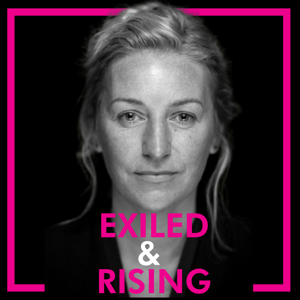

Ana Mael explores why trauma teaches us to stay silent, and how reclaiming your voice becomes the first act of healing.
What happens when your body believes that asking for help will hurt someone else?
In this episode of Exiled & Rising, somatic experiencing therapist Ana Mael unpacks one of the most devastating trauma responses — the fear of being a burden. She explores how childhood conditioning, shame, and nervous-system survival patterns teach us to stay quiet even when we’re drowning.
Ana explains the psychology behind silence: how trauma imprints the belief that expressing need equals danger, rejection, or punishment. This episode reveals why many survivors apologize for existing, why help-seeking feels unsafe, and how the nervous system learns to equate visibility with threat.
_______________________
ANA TEACHINGS & PROGRAMS
https://exiledandrising.mykajabi.com/store
FROM SILENCE TO VOICE: SOMATIC TEACHINGS:
https://exiledandrising.mykajabi.com/offers/KDmX3bhu/checkout
Get the Book: The Trauma We Don't Talk About https://amzn.to/41SjKKL
❤️ Please donate
This podcast is independently run. No production teams. Fancy edits. Only a somatic therapy education, truth & storytelling.
https://donate.stripe.com/3cI9AS5Xfb9W6O832VfEk00
Through Ana’s signature blend of somatic insight, poetic reflection, and trauma education, you’ll learn:
Why trauma makes it hard to ask for help
How the “fawn” and “freeze” responses silence the body’s voice
The cost of chronic self-sufficiency and hyper-responsibility
Somatic practices to rebuild safety in asking, breathing, and being seen
How to shift from self-blame to self-compassion and co-regulation
If you’ve ever felt guilty for needing, or feared that your pain would inconvenience others, this episode is your invitation to reclaim your right to speak, to ask, and to exist without apology.
Topics Covered:
Silence as a survival response
The fear of disturbing others
Internalized shame and self-attack
Somatic understanding of “freeze” and “fawn”
Reclaiming voice and relational safety
Mentioned Concepts:
Somatic therapy, nervous system regulation, trauma recovery, PTSD healing, emotional repression, help-seeking, shame, people-pleasing, fear of being a burden, co-regulation.
About Ana Mael
why Ana Mael’s voice feels so singular.
Her approach to storytelling, teaching, and education in trauma work stands apart because she fuses clinical precision, poetic embodiment, and moral awareness in a way that is rare — even within the field of somatic therapy.
What makes Ana’s approach different from other trauma educators and writers:
Most trauma educators describe somatic principles — she enacts them.
Her language is sensory, rhythmic, and bodily:
“As thick as molasses, the guilt and shame drips over the victim’s body.”
This isn’t metaphor for effect — it’s a somatic transcription of experience.
The prose itself regulates: her pacing, repetition, and pauses mirror titration and pendulation, the nervous system’s way of approaching and retreating safely.
→ She doesn’t teach somatics — she performs somatic regulation through language.
Ana refuses to keep trauma within the private, clinical realm.
Every piece links the personal body to the moral body of society — war, oppression, silence, privilege, apathy.
Where many trauma writers stop at self-soothing, Ana goes to collective accountability.
“Healing that forgets justice is not healing — it’s comfort layered over ignorance.”
Her teaching makes trauma recovery inseparable from integrity, justice, and truth-telling.
→ Healing becomes both a nervous system act and a moral act.
Instead of a traditional story arc (conflict → climax → resolution), Ana’s pieces move in cycles, mirroring trauma’s looping memory pattern.
Each repetition (e.g., “on that dreadful path toward home…”) mimics how the body revisits and integrates pain.
Reading or listening becomes participatory — the audience processes with her, not just learns from her.
→ Her stories are not entertainment or instruction; they are somatic ceremonies.
Traditional education separates teacher and student.
Ana’s voice collapses that hierarchy. She speaks with, not to:
“We drown in the shame of inadequacy…”
→ The “we” places her inside the shared wound.
This approach creates safety and resonance, bypassing intellectual defenses.
Her authority comes from co-regulation, not expertise display.
→ The listener feels accompanied, not analyzed.
Many trauma educators isolate these levels (personal vs. cultural vs. historical).
Ana weaves them: her nervous system narratives carry echoes of genocide, exile, displacement — yet they remain personal, intimate, human-sized.
She doesn’t say “my trauma connects to my people’s trauma” — she embodies that lineage in her metaphors and cadence.
→ She speaks as a “body of history,” not just a person with history.
In every episode, she translates complex neurobiology into poetry that educates and liberates.
Example: “Pleasure seeks social safety.” — a full somatic principle distilled into one rhythmic, memorable sentence.
This is the opposite of academic jargon. It’s embodied literacy — knowledge that can be felt, repeated, and remembered by the nervous system.
→ She teaches through resonance, not abstraction.
Ana assumes survivors already know — their bodies have wisdom. Her role is not to explain trauma to them but to give language that matches their felt truth.
Her tone says: “You were never wrong about what you sensed.”
This restores epistemic dignity — the right to trust one’s perception — which is a key wound in trauma.
→ She returns authority to the listener’s own body.
Many educators offer healing as a goal, a fixed “after.”
Ana exposes the illusion of fantasy healing — the idea of being “done.”
She redefines healing as rhythm, relationship, and response: ongoing, embodied, imperfect.
This truth-telling dismantles spiritual bypass and commodified wellness culture.
→ Her education de-commercializes healing; it makes it human again.
Most trauma communicators inhabit one role: clinician, researcher, or storyteller.
Ana inhabits all three simultaneously:
Clinician: grounded in somatic and polyvagal theory.
Survivor: speaking from embodied memory.
Witness: naming social violence and systemic harm.
The result is multidimensional teaching that feels both scientifically precise and soulfully honest.
Many trauma texts are informative; Ana’s work is regulatory.
Her tone, pace, and repetition soothe the reader’s autonomic nervous system — especially the vagus nerve — while educating them.
This dual action (learn + regulate) is why listeners describe her episodes as “therapy through words.”
→ She doesn’t just describe healing — she induces it.
Ana Mael’s approach differs because she turns trauma education into embodied activism.
She fuses science, poetry, and moral clarity — teaching the nervous system, the mind, and the conscience all at once.
Where others explain, she transmits.
Where others inform, she regulates.
Where others teach, she transforms.
https://www.somatictraumarecoverycenter.com/
 View all episodes
 By Ana Mael
5
33 ratings
Ana Mael explores why trauma teaches us to stay silent, and how reclaiming your voice becomes the first act of healing.
What happens when your body believes that asking for help will hurt someone else?
In this episode of Exiled & Rising, somatic experiencing therapist Ana Mael unpacks one of the most devastating trauma responses — the fear of being a burden. She explores how childhood conditioning, shame, and nervous-system survival patterns teach us to stay quiet even when we’re drowning.
Ana explains the psychology behind silence: how trauma imprints the belief that expressing need equals danger, rejection, or punishment. This episode reveals why many survivors apologize for existing, why help-seeking feels unsafe, and how the nervous system learns to equate visibility with threat.
_______________________
ANA TEACHINGS & PROGRAMS
https://exiledandrising.mykajabi.com/store
FROM SILENCE TO VOICE: SOMATIC TEACHINGS:
https://exiledandrising.mykajabi.com/offers/KDmX3bhu/checkout
Get the Book: The Trauma We Don't Talk About https://amzn.to/41SjKKL
❤️ Please donate
This podcast is independently run. No production teams. Fancy edits. Only a somatic therapy education, truth & storytelling.
https://donate.stripe.com/3cI9AS5Xfb9W6O832VfEk00
Through Ana’s signature blend of somatic insight, poetic reflection, and trauma education, you’ll learn:
Why trauma makes it hard to ask for help
How the “fawn” and “freeze” responses silence the body’s voice
The cost of chronic self-sufficiency and hyper-responsibility
Somatic practices to rebuild safety in asking, breathing, and being seen
How to shift from self-blame to self-compassion and co-regulation
If you’ve ever felt guilty for needing, or feared that your pain would inconvenience others, this episode is your invitation to reclaim your right to speak, to ask, and to exist without apology.
Topics Covered:
Silence as a survival response
The fear of disturbing others
Internalized shame and self-attack
Somatic understanding of “freeze” and “fawn”
Reclaiming voice and relational safety
Mentioned Concepts:
Somatic therapy, nervous system regulation, trauma recovery, PTSD healing, emotional repression, help-seeking, shame, people-pleasing, fear of being a burden, co-regulation.
About Ana Mael
why Ana Mael’s voice feels so singular.
Her approach to storytelling, teaching, and education in trauma work stands apart because she fuses clinical precision, poetic embodiment, and moral awareness in a way that is rare — even within the field of somatic therapy.
What makes Ana’s approach different from other trauma educators and writers:
Most trauma educators describe somatic principles — she enacts them.
Her language is sensory, rhythmic, and bodily:
“As thick as molasses, the guilt and shame drips over the victim’s body.”
This isn’t metaphor for effect — it’s a somatic transcription of experience.
The prose itself regulates: her pacing, repetition, and pauses mirror titration and pendulation, the nervous system’s way of approaching and retreating safely.
→ She doesn’t teach somatics — she performs somatic regulation through language.
Ana refuses to keep trauma within the private, clinical realm.
Every piece links the personal body to the moral body of society — war, oppression, silence, privilege, apathy.
Where many trauma writers stop at self-soothing, Ana goes to collective accountability.
“Healing that forgets justice is not healing — it’s comfort layered over ignorance.”
Her teaching makes trauma recovery inseparable from integrity, justice, and truth-telling.
→ Healing becomes both a nervous system act and a moral act.
Instead of a traditional story arc (conflict → climax → resolution), Ana’s pieces move in cycles, mirroring trauma’s looping memory pattern.
Each repetition (e.g., “on that dreadful path toward home…”) mimics how the body revisits and integrates pain.
Reading or listening becomes participatory — the audience processes with her, not just learns from her.
→ Her stories are not entertainment or instruction; they are somatic ceremonies.
Traditional education separates teacher and student.
Ana’s voice collapses that hierarchy. She speaks with, not to:
“We drown in the shame of inadequacy…”
→ The “we” places her inside the shared wound.
This approach creates safety and resonance, bypassing intellectual defenses.
Her authority comes from co-regulation, not expertise display.
→ The listener feels accompanied, not analyzed.
Many trauma educators isolate these levels (personal vs. cultural vs. historical).
Ana weaves them: her nervous system narratives carry echoes of genocide, exile, displacement — yet they remain personal, intimate, human-sized.
She doesn’t say “my trauma connects to my people’s trauma” — she embodies that lineage in her metaphors and cadence.
→ She speaks as a “body of history,” not just a person with history.
In every episode, she translates complex neurobiology into poetry that educates and liberates.
Example: “Pleasure seeks social safety.” — a full somatic principle distilled into one rhythmic, memorable sentence.
This is the opposite of academic jargon. It’s embodied literacy — knowledge that can be felt, repeated, and remembered by the nervous system.
→ She teaches through resonance, not abstraction.
Ana assumes survivors already know — their bodies have wisdom. Her role is not to explain trauma to them but to give language that matches their felt truth.
Her tone says: “You were never wrong about what you sensed.”
This restores epistemic dignity — the right to trust one’s perception — which is a key wound in trauma.
→ She returns authority to the listener’s own body.
Many educators offer healing as a goal, a fixed “after.”
Ana exposes the illusion of fantasy healing — the idea of being “done.”
She redefines healing as rhythm, relationship, and response: ongoing, embodied, imperfect.
This truth-telling dismantles spiritual bypass and commodified wellness culture.
→ Her education de-commercializes healing; it makes it human again.
Most trauma communicators inhabit one role: clinician, researcher, or storyteller.
Ana inhabits all three simultaneously:
Clinician: grounded in somatic and polyvagal theory.
Survivor: speaking from embodied memory.
Witness: naming social violence and systemic harm.
The result is multidimensional teaching that feels both scientifically precise and soulfully honest.
Many trauma texts are informative; Ana’s work is regulatory.
Her tone, pace, and repetition soothe the reader’s autonomic nervous system — especially the vagus nerve — while educating them.
This dual action (learn + regulate) is why listeners describe her episodes as “therapy through words.”
→ She doesn’t just describe healing — she induces it.
Ana Mael’s approach differs because she turns trauma education into embodied activism.
She fuses science, poetry, and moral clarity — teaching the nervous system, the mind, and the conscience all at once.
Where others explain, she transmits.
Where others inform, she regulates.
Where others teach, she transforms.
https://www.somatictraumarecoverycenter.com/

2,561 Listeners

112,742 Listeners
277 Listeners

19,837 Listeners
190 Listeners