
Sign up to save your podcasts
Or


A two-hour prayer opened the First Continental Congress, and the selected Scripture reading seemed to mirror the headlines from Boston. That image—leaders kneeling before leading—sets the stage for a tour through letters, proclamations, and battlefield reports that reveal how faith, providence, and civic courage intertwined at America’s founding. We follow John Adams as he urges Abigail to read Psalm 35 aloud, track the Continental Congress’s cycles of fasting and thanksgiving, and revisit the improbable moments when militias and makeshift gunboats bested the world’s top military power.
We dig into the historical record to test common claims. Were the founders distant deists? Washington’s correspondence says something different, pointing to providence so “conspicuous” that only ingratitude could miss it. We explore why the Treaty of Paris invokes “the most holy and undivided Trinity,” and how that language reflected solemn duty, not mere habit. Along the way, we connect the cultural practice of public prayer to the practical needs of a nation at war, showing how shared rituals forged unity, resilience, and gratitude in the face of long odds.
The conversation lands on a challenge that feels as urgent now as it did then: freedom depends on character. Washington called religion and morality indispensable to political prosperity, and Adams warned the Constitution fits a moral and religious people—or it fails. Whether you approach these sources as a believer, a skeptic, or a curious citizen, the takeaways are clear: ideas shape institutions, and institutions shape destinies. Listen to the full story, share it with a friend who loves history, and if it resonates, subscribe, leave a review, and tell us: can freedom endure without a moral core?
Support the show
 View all episodes
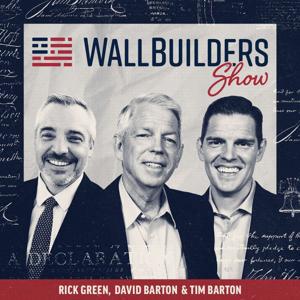
 By Tim Barton, David Barton & Rick Green

4.8
21322,132 ratings
A two-hour prayer opened the First Continental Congress, and the selected Scripture reading seemed to mirror the headlines from Boston. That image—leaders kneeling before leading—sets the stage for a tour through letters, proclamations, and battlefield reports that reveal how faith, providence, and civic courage intertwined at America’s founding. We follow John Adams as he urges Abigail to read Psalm 35 aloud, track the Continental Congress’s cycles of fasting and thanksgiving, and revisit the improbable moments when militias and makeshift gunboats bested the world’s top military power.
We dig into the historical record to test common claims. Were the founders distant deists? Washington’s correspondence says something different, pointing to providence so “conspicuous” that only ingratitude could miss it. We explore why the Treaty of Paris invokes “the most holy and undivided Trinity,” and how that language reflected solemn duty, not mere habit. Along the way, we connect the cultural practice of public prayer to the practical needs of a nation at war, showing how shared rituals forged unity, resilience, and gratitude in the face of long odds.
The conversation lands on a challenge that feels as urgent now as it did then: freedom depends on character. Washington called religion and morality indispensable to political prosperity, and Adams warned the Constitution fits a moral and religious people—or it fails. Whether you approach these sources as a believer, a skeptic, or a curious citizen, the takeaways are clear: ideas shape institutions, and institutions shape destinies. Listen to the full story, share it with a friend who loves history, and if it resonates, subscribe, leave a review, and tell us: can freedom endure without a moral core?
Support the show
1,431 Listeners

2,600 Listeners
26,478 Listeners

174 Listeners
1,040 Listeners
5,461 Listeners

2,227 Listeners
66,072 Listeners

1,607 Listeners
1,547 Listeners
2,498 Listeners

704 Listeners
386 Listeners
13,245 Listeners
925 Listeners