
Sign up to save your podcasts
Or

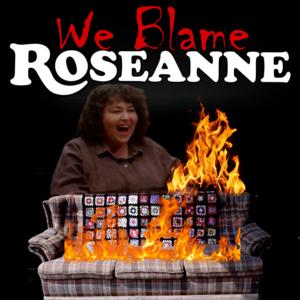


After a brief hiatus, Diana returns with Douglas LaRose to discuss the ways in which Roseanne the show depicted work ethic, and how that reflected reality. This is the first part of a two-part episode, and we thoroughly appreciate your patience with our publication schedule.
Produced by Your Highness Media.
Hosted on Acast. See acast.com/privacy for more information.
Diana is joined by Te'Auna Sanders to discuss the complexities surrounding humorizing financial illiteracy.
Produced by Your Highness Media.
Hosted on Acast. See acast.com/privacy for more information.
Diana is joined by Tamera Gamble of Arranged Space to talk about how they blame Roseanne for using tokenism as a tool for humor.
A few reference links:
https://www.wbez.org/worldview/2018/05/30/roseanne-canceled-over-racist-tweet-but-what-about-her-islamophobia
https://medium.com/whither-news/making-roseanne-and-racism-ready-for-prime-time-eb5a631e87e4
https://www.refinery29.com/en-us/2017/08/166959/judd-apatow-vulture-interview-feminis
Produced by Your Highness Media.
Hosted on Acast. See acast.com/privacy for more information.
Comedian Nathan Scahill joins Diana to talk about the difference between punching down and crafting clever comedy. They also talk about the depth of Norm MacDonald’s comedy, with Nathan adding a fresh, younger viewpoint to the discussion.
Produced by Your Highness Media.
Hosted on Acast. See acast.com/privacy for more information.
Apologies for the delay! This episode is a bit different than the usual, because the universe had other plans this month. It's just Diana this month, and it's a bit shorter than usual. In this episode, Diana blames Roseanne for damaging the local economy and environment of Eldon, Iowa.
Links:
Roseanne Barr's unfinished Iowa mansion lies in ruin - YouTube
What Ever Happened To Roseanne Barr's Eldon Diner?
In 1993, Tom and Roseanne Arnold opened a restaurant in Iowa
TOM, ROSEANNE BREAKUP MAY MEAN DEATH FOR DINER – Sun Sentinel
Produced by Your Highness Media.
Hosted on Acast. See acast.com/privacy for more information.
Diana and JR discuss the ways in which the show and the person amplified the "fun in dysfunctional" trope in comedy.
Subscribe to our Patreon for extras
A few resources:
Quiet One, Funny One, or Favorite? How Childhood Roles in Dysfunctional Families Shape Adult Trauma — Tim Fletcher Co.
Dysfunctional Family: Traits, Examples, Impact, Healing
Every Chuck Lorre Sitcom Has The Exact Same Problem
Produced by Your Highness Media.
Hosted on Acast. See acast.com/privacy for more information.
In this episode, we talk about how we blame Roseanne for the magnification of mediocre white men, through the show onscreen and offscreen.
Important links:
Mediocre: The Dangerous Legacy of White Male America
Why does the world reward mediocre white men?
Why are sitcom dads still so incompetent?
Today's ParentJudd Apatow, Sarah Silverman, and Roseanne Barr Talk Judaism, F-bombs, and Radical Feminism
Sarah Michelle Gellar Speaks on Joss Whedon Trying to Ruin Her
YouTubeThe Influence of American Television on Global Cultural Norms
Produced by Your Highness Media.
Hosted on Acast. See acast.com/privacy for more information.
Despite being blatantly homophobic, xenophobic, and aggressively unfunny, Bill Maher continues to be booked and blessed, making millions a year. Flying his private plane, although he claims to be an environmentalist. Being misogynistic AF while claiming to be pro-women. Spouting half-baked talking points without any research to back up dangerous rhetoric, without any consideration for the folks who are harmed by the language...the contradictions have no end.
Bill Maher is an enigma wrapped in a rage-inducing riddle, and he unintentionally provokes thought-provoking discourse from super talented folks like Francesca Fiorentini, Matt Berenstein, Will Weldon*, Sam Seder, and Kyle Kulinski. But they aren't laughing with him (no one who is not on his staff or on a Real Time panel), they're reading him for filth. We wouldn't have all of this rage bait content if it were for Roseanne, and we make that point in this episode.
*I accidentally called Will Weldon Will Wheaton in the episode. Major brain blank!
References:
https://www.youtube.com/watch?v=SQQ9hU1rR0I&list=WL&index=2&t=1109s
https://www.watchmojo.com/articles/top-10-reasons-why-bill-maher-is-hated/his-sense-of-entitlement-is-shocking
Clip of Club Random where Sandra Bernhardt talks about Roseanne
https://www.youtube.com/watch?v=4LPgTpcB8sE&t=295s
Trump slams Bill Maher after their White House dinner
Bill Maher hits Trump for pulling a Roseanne
I Hate Bill Maher
Produced by Your Highness Media.
Hosted on Acast. See acast.com/privacy for more information.
In this episode, Diana and JR unpack why they blame Roseanne (both the show and the person) for perpetuating White Feminism. While Roseanne continues to be regarded as a "feminist icon", the bulk of her work only allowed for a feminism that primarily focused on the experience of cisgender, neurotypical white people. The show Roseanne has received a lot of critical acclaim for a couple of episodes labeled controversial or groundbreaking because they address homophobia and racism, but sitcom barely scratched the surface.
The episode neatly wraps the issue of racism up in a bow, with a brief performative rant and not further discussion. In season 10, DJ marries the Black girl he initially refused to kiss, but the previous prejudice is never explored. When the focus is LGBTQIA+ characters, the jokes are mean-spirited, lazy, and unclever, yet Roseanne (pre-cancelation) was constantly referred to as a "gay rights icon".
No other show has launched as many influential careers as Roseanne. In a new segment loosely titled "demon spawn", Diana and JR also discuss how the show launched the careers of two creators who have been worshipped for their feminist characters. Those creators, Joss Whedon and Amy Sherman-Palladino, have permeated pop culture with the idea that post racist and post-feminist "utopias" exist.
References:
"The Caucasian Persuasion Here in the 'Dale": Othering, White Normality, and Post-Racialism in Buffy the Vampire Slayer
Rewatching Gilmore Girls Woke Me Up To Its Problematic Truths
Rory from ‘Gilmore Girls’ Is Actually the Worst
LGBTQ+ History: When NOW Purged Lesbians From Its Feminist Movement
White Feminism: From the Suffragettes to Influencers and Who They Leave Behind
Against White Feminism book by Rafia Zakaria
https://mashable.com/article/white-feminism-explained
https://www.jstor.org/stable/23415265
Produced by Your Highness Media.
Hosted on Acast. See acast.com/privacy for more information.
Before the debut of Roseanne, television shows depicted children without parents as a tragedy. But the Conners made light of the parentification of their children, even when the situation was objectively grim. The general theme of the show was "putting the fun in dysfunctional", which meant normalizing a lack of boundaries. Each one of the Conner kids display the long-term impact of parentification, but because it's viewed in a comedic light, viewers aren't invited to examine the damage.
And the normalization of making parentification a punchline can be seen in many subsequent television shows. For example, Gilmore Girls - created by Roseanne writer Amy Sherman-Palladino - was a case study of parentification if there ever was one, but audiences viewed the toxic dynamic as endearing and amusing. Parents projecting their issues onto their children and treating them as contemporaries was such a regular occurrence at that point that no one thought to criticize it (until much later).
In this episode, Diana and JR talk about some of the ways the show Roseanne made childhood trauma fodder for laugh-track comedy and how the person Roseanne did the same in her standup and with her other projects. At the end, they examine just how complicit Roseanne is, and how much they blame her.
References:
Does parentification place Mexican-heritage youth at risk for substance use? Identifying the intervening nature of parent–child communication about alcohol - ScienceDirect
The positive and negative aspects of parentification: An integrated review - ScienceDirect
Opinion | How Did the Latchkey Kids of Gen X Become the Helicopter Parents of Gen Z? - The New York Times
Latchkey Kids Legal Age Limits Listed By State
5 Ways Being a Narcissist's "Surrogate Parent" Affects You | Psychology Today
When Can Kids Stay Home Alone? 50 State Guide
How parentification can shape your adult life (and 9 tips to heal) — Calm Blog
Produced by Your Highness Media.
Hosted on Acast. See acast.com/privacy for more information.
From the publisher's feed
This isn’t a recap show. It’s a cultural exploration, a dissection of learned behaviors and toxic patterns, and an examination of the intersection of historical events and entertainment. Because…
It may be easier for some people to separate the art from the artist, but it’s impossible to ignore the larger impact when the artist decides to make their politics known. Art is inherently political, and while fictional liberties are taken, comedians who launch sitcoms based on their work are including some version of themselves in the writing.
There are a lot of fans who label this as their comfort show and can relate to the Conner family because it reflects a lot of what they saw at home. Those same fans will also say that Roseanne’s current public persona “happened all of a sudden” and are convinced that she was red pilled after watching too much YouTube. But if you go back and re-assess the show, along with the connected media surrounding it, you see that she’s always been this way to some extent.
We’ll be illustrating this through the lens of a specific phenomenon or problem each episode.
Hosted on Acast. See acast.com/privacy for more information.