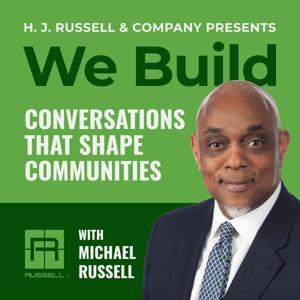
Affordable housing development in Atlanta requires collaboration across developers, public agencies, funders, designers, contractors, and community organizations, and this conversation between Michael Russell, CEO of H.J. Russell & Company, and Leonard Adams, founder and CEO of Quest Community Development Corporation, explores exactly how that collaboration comes together. The Atlanta Regional Commission estimates that Metro Atlanta will need roughly 367,000 additional homes in the years ahead to keep pace with growth. Leonard traces his path into community development back to his family’s entrepreneurial roots in Detroit and his mother’s employment agency in Atlanta, an experience that first exposed him to housing instability among workers and ultimately led him to found Quest Community Development Corporation in 2001.
Affordable housing funding in Atlanta increasingly depends on blending government dollars, corporate impact investment, and philanthropy, a strategy Leonard credits with helping nonprofit developers like Quest keep rents affordable while still meeting rising development costs. He also discusses how supportive housing, pairing affordable units with services like ID assistance and benefits navigation, helps residents stay housed long term, and why assembling the right team for the right scale of project matters more than chasing the biggest name available. Leonard reflects on Quest’s partnership with H.J. Russell & Company on developments including Residences at Grove Park, Heritage Village, Simpson West, and Avon City, part of the Westside Housing Trifecta, a 115 million dollar closing of three projects within weeks of each other.
Atlanta’s affordable housing progress also depends on early, honest engagement with neighborhoods and city planning offices, and Leonard explains why understanding the city’s community planning process is essential for any developer hoping to build there successfully. The conversation closes with Leonard’s outlook on the city’s progress toward Mayor Andre Dickens’ goal of 20,000 to 25,000 affordable housing units, Quest’s upcoming 25th anniversary, and the advice he would give any developer assembling a team for their first affordable housing project in Atlanta.
Key Takeaways
- Affordable housing works best as a collaborative effort involving developers, funders, government agencies, contractors, and community organizations from the earliest planning stages.
- Blending public funding, corporate impact investment, and philanthropy helps nonprofit developers keep rents affordable despite rising development costs.
- Choosing the right size and type of general contractor for each project keeps budgets and timelines aligned.
- Early and transparent engagement with city planning offices and neighborhood planning units builds trust and helps developments move through Atlanta’s approval process smoothly.
- Atlanta’s affordable housing goals call for 20,000 to 25,000 new units and continued collaboration among funders and developers will be needed to meet ongoing demand.
Connect with Leonard Adams, Founder and CEO, Quest Community Development Corporation
https://www.questcdc.org/leonard-adams
Leonard Adams is the founder and CEO of Quest Community Development Corporation, an Atlanta-based nonprofit focused on affordable housing, supportive services and community development.
Since founding Quest in 2001, Adams has helped expand the organization’s work across affordable and supportive housing and community development, with a significant focus on Atlanta’s Westside.
He brings more than two decades of experience working with public, private, and nonprofit partners to advance housing and community development opportunities in Atlanta.
Connect with Michael Russell, CEO, H. J. Russell & Company:
https://www.linkedin.com/in/michaelrussellsr/
https://www.hjrussell.com/
Rate, Review, & Follow on Apple Podcasts:
We hope you’re finding value in our podcast, We Build. Your feedback is important to us, and we’d love to hear from you.
Here’s how you can help. Scroll to the bottom, rate our podcast with five stars, and select “Write a Review.” Let us know what you found most helpful from this episode!
And if you haven’t done so already, give the podcast a follow, and you'll be notified when new episodes come out.