Wealth Actually

Wealth Actually

Download on the App Store

All Wealth Actually episodes

  • Mathlessness – America’s Fundamental Problem (ca. 2011)
    (This appeared in Rick Lazio's Ignite Blog back in July of 2011 . . . I reread it and liked it, so I thought I would repost it.)
    MATHLESSNESS - AMERICA’S FUNDAMENTAL PROBLEM
    by Frazer Rice.
    Modern Americans are largely innumerate. They are, to borrow Richard Posner’s felicitous phrase, “mathless”- most can’t use or judge the effects of numbers.

    Such ignorance would be of little concern, except that math permeates everything and ignorance of it imperils both America and Americans. For example, mathless Americans can’t understand or interpret statistics popularly discussed in the media, thereby disabling their ability critically to assess what’s reported. Nor can they comprehend the scale of the numerical problems addressed in government budgets, leaving them to the not-so-tender mercies of craven politicians funding government programs through deficit spending.

    Most importantly, mathless Americans lack the quantitative tools to prosper financially and avoid bad investments, critical skills of self-reliance in a non-welfare state. If you want to see this in action, watch a lawyer try to equitably divide the bill and calculate a tip at a nice restaurant. It takes twenty minutes and they usually have to consult an accountant … by phone.

    Consider the millions of people who bought houses they couldn’t afford. Cautionary tales abound about people making $50k/year who were living in $400K houses that are now in foreclosure. The analysis exposing such folly isn’t rigorous: Assume (optimistically) after-tax income of $37,000, or $3,125 per month, that the buyer paid 10% of the purchase price ($400,000) at closing, which leaves $360,000 remaining. With an interest-only mortgage of 5% (historically low, but a reasonable figure), the buyer pays at least $1,500 in monthly interest, which is nearly half his or her take-home pay (you do get to deduct the interest, but you don’t see that until the following year).

    The above scenario is unmercifully tight, especially if income taxes or the cost of living increases and/or income declines. Financial common sense bristles at such a position. Unfortunately, most Americans lack such common sense. And that is the core of the problem: math can help lead logical decision-making by spelling out future realities that predatory lenders’ hawking teaser rates don’t want you to consider. Lotteries, casinos and the investment banks thrive in part because Americans can’t or don’t want to think about math. As Homer Simpson put it when told that having mayonnaise and whiskey at the same time was a bad idea, “That’s a problem for Future Homer.”

    Obviously, one can’t prepare for every eventuality, but more mathematical common sense could have prevented people from committing what amounted to financial suicide. The ability to see the immediate snapshot of a mathematical situation isn’t the glaring problem for America. Intuition and the advice of others tend to get most past square one. The real issue is getting people to conceptualize the numbers governing their lives in such a way that they can anticipate future consequences of financial decisions. For that task they are ill equipped.

    Mathless Americans are also increasingly outstripped by foreign competitors. There are 98.8 color televisions for every 100 U.S. households. Television is the most important thing in America! There used to be over 70 US TV manufacturers. However, in 1995, Zenith sold to LG. That brought the number of U.S. TV manufacturers to zero. Only tiny startup Olevia assembles Asian TV parts in this country.

    In the business world, being deficient in math is going to be like running a race with no legs. According to Time Warner Cable’s Connect a Million Minds program, eighty percent of jobs created in the next decade wi...
    5 min
  • Mathlessness – America’s Fundamental Problem (ca. 2011)
    (This appeared in Rick Lazio's Ignite Blog back in July of 2011 . . . I reread it and liked it, so I thought I would repost it.)
    MATHLESSNESS - AMERICA'S FUNDAMENTAL PROBLEM
    by Frazer Rice.
    Modern Americans are largely innumerate. They are, to borrow Richard Posner's felicitous phrase, mathless- most can't use or judge the effects of numbers.
    Such ignorance would be of little concern, except that math permeates everything and ignorance of it imperils both America and Americans. For example, mathless Americans can't understand or interpret statistics popularly discussed in the media, thereby disabling their ability critically to assess what's reported. Nor can they comprehend the scale of the numerical problems addressed in government budgets, leaving them to the not-so-tender mercies of craven politicians funding government programs through deficit spending.
    Most importantly, mathless Americans lack the quantitative tools to prosper financially and avoid bad investments, critical skills of self-reliance in a non-welfare state. If you want to see this in action, watch a lawyer try to equitably divide the bill and calculate a tip at a nice restaurant. It takes twenty minutes and they usually have to consult an accountant … by phone.
    Consider the millions of people who bought houses they couldn't afford. Cautionary tales abound about people making $50k/year who were living in $400K houses that are now in foreclosure. The analysis exposing such folly isn't rigorous: Assume (optimistically) after-tax income of $37,000, or $3,125 per month, that the buyer paid 10% of the purchase price ($400,000) at closing, which leaves $360,000 remaining. With an interest-only mortgage of 5% (historically low, but a reasonable figure), the buyer pays at least $1,500 in monthly interest, which is nearly half his or her take-home pay (you do get to deduct the interest, but you don't see that until the following year).
    The above scenario is unmercifully tight, especially if income taxes or the cost of living increases and/or income declines. Financial common sense bristles at such a position. Unfortunately, most Americans lack such common sense. And that is the core of the problem: math can help lead logical decision-making by spelling out future realities that predatory lenders hawking teaser rates don't want you to consider. Lotteries, casinos and the investment banks thrive in part because Americans can't or don't want to think about math. As Homer Simpson put it when told that having mayonnaise and whiskey at the same time was a bad idea, That's a problem for Future Homer.
    Obviously, one can't prepare for every eventuality, but more mathematical common sense could have prevented people from committing what amounted to financial suicide. The ability to see the immediate snapshot of a mathematical situation isn't the glaring problem for America. Intuition and the advice of others tend to get most past square one. The real issue is getting people to conceptualize the numbers governing their lives in such a way that they can anticipate future consequences of financial decisions. For that task they are ill equipped.
    Mathless Americans are also increasingly outstripped by foreign competitors. There are 98.8 color televisions for every 100 U.S. households. Television is the most important thing in America! There used to be over 70 US TV manufacturers. However, in 1995, Zenith sold to LG. That brought the number of U.S. TV manufacturers to zero. Only tiny startup Olevia assembles Asian TV parts in this country.
    In the business world, being deficient in math is going to be like running a race with no legs. According to Time Warner Cable's Connect a Million Minds program, eighty percent of jobs created in the next decade will require math and science skills.
    Furthermore, the American education system isn't up to the task. According to the Programme for International Student Assessment, the United States ranks thirty-fifth in terms of the mean score for mathematics. Ours is not the path back to economic competitiveness, let alone dominance. Mathematical considerations increasingly dictate the world economy. Meanwhile, the United States government spent billions to bailout an auto industry that didn't understand two simple mathematical realities: their costs were too high and they didn't sell enough cars. The uptick in unemployment is the latest symptom of the American difficulty in competing in business without the required numerical skills.
    Domestically, mathlessness perpetuates caustic social and income inequalities. The small fraction of people who understand math and can use it as a tool do exceedingly well. The ones who can't cope with numbers are left behind - far behind. Such disequilibrium fosters creation of an elite "over class" the mathless will never be able to join (except, perhaps, by winning the lottery).
    Adult American mathlessness is a problem politicians won't address, given anyone doing so obliquely implies that potential voters are stupid. More cynically, politicians prefer an ignorant, pliable electorate less likely to call them to account. Until American mathematical literacy improves, most Americans will be at the not-so-tender mercies of unfriendly foreign nations, self-aggrandizing government and, worst of all, their own ignorance.
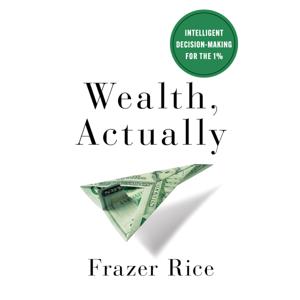
    https://www.amazon.com/Wealth-Actually-Intelligent-Decision-Making-1-ebook/dp/B07FPQJJQT/
    5 min
  • Politics with Robert George, NY Daily News Editorial Writer
    It was a treat to talk to my friend, Robert A. George, about the political landscape washing over New York, Washington, and the rest of the country.  We cover Donald Trump and his initial stumbles, the departure of Preet Bharara, the future of Governor Andrew Cuomo, and the re-election prospects of Mayor Bill DiBlasio among other topics.  Lots of fun in the world of politics!

    Robert is an editorial writer for the New York Daily News (and formerly for the New York Post) and a conservative/libertarian blogger and pundit. He was born in Trinidad and lived in the United Kingdom before moving to the United States. A graduate of St. John's College in Annapolis, Maryland, George worked for the Republican National Committee and, following the 1994 midterm elections, Speaker of the House of Representatives Newt Gingrich.

    In addition to his newspaper work, George also has appeared on MSNBC, CNN, Fox and regularly appears on other political affairs programs. George has written for the conservative National Review, the libertarian Reason and the Huffington Post. He also sponsors his own group political/cultural blog, Ragged Thots. In addition, George occasionally moonlights as a stand-up comic and improviser.


    The Donald, Leader of the Free World

    Former US Attorney Preet Bharara looking skyward

    Governor Andrew Cuomo feeling good about the future

    Mayor Bill DiBlasio ponders the future
    25 min
  • Politics with Robert George, NY Daily News Editorial Writer
    It was a treat to talk to my friend, Robert A. George, about the political landscape washing over New York, Washington, and the rest of the country. We cover Donald Trump and his initial stumbles, the departure of Preet Bharara, the future of Governor Andrew Cuomo, and the re-election prospects of Mayor Bill DiBlasio among other topics. Lots of fun in the world of politics!
    Robert is an editorial writer for the New York Daily News (and formerly for the New York Post) and a conservative/libertarian blogger and pundit. He was born in Trinidad and lived in the United Kingdom before moving to the United States. A graduate of St. John's College in Annapolis, Maryland, George worked for the Republican National Committee and, following the 1994 midterm elections, Speaker of the House of Representatives Newt Gingrich.
    In addition to his newspaper work, George also has appeared on MSNBC, CNN, Fox and regularly appears on other political affairs programs. George has written for the conservative National Review, the libertarian Reason and the Huffington Post. He also sponsors his own group political/cultural blog, Ragged Thots. In addition, George occasionally moonlights as a stand-up comic and improviser.
    The Donald, Leader of the Free World
    Former US Attorney Preet Bharara looking skyward
    Governor Andrew Cuomo feeling good about the future
    Mayor Bill DiBlasio ponders the future
    https://www.amazon.com/Wealth-Actually-Intelligent-Decision-Making-1-ebook/dp/B07FPQJJQT/
    25 min
  • NYC Psychotherapist and Founder of “A Quiet Room”, Will Meyerhofer
    I spoke on my podcast with noted psychotherapist, Will Meyerhofer.  He deals with heavy hitters on Wall Street, the NYC legal world and entertainment professionals.  He pulls no punches.

    While I have written before on the psychological perils of legal practice and Wall Street (The Death of a Profession: Law's Long, Bitter Descent and Its Tragic Human Toll), there is nothing like speaking with someone who is in the trenches helping people deal with the modern (and misunderstood) strains of the professions.  Will has been there and walks the walk.

    Will holds a BA, magna cum laude, from Harvard University, a JD from the New York University School of law and a Master of Social Work from the Hunter College School of Social Work.  Since 2005, he has been operating his private practice, A Quiet Room, offering individual, couples and group psychotherapy from his home, a loft in TriBeCa, in Lower Manhattan.

    In late 2010 Will released his first book, Life is a Brief Opportunity for Joy, an introduction to the concepts and philosophy underlying psychotherapy.  During 2011, Will released a second book, Way Worse Than Being a Dentist – the Lawyer's Quest for Meaning, based on material from his columns on law and psychotherapy from AboveTheLaw.com.  A former associate in the General Practice group at Sullivan & Cromwell LLC, Will is an acknowledged expert on psychotherapy and lawyers,

    Will writes a regular column for the popular legal website, AboveTheLaw.com, as well as a blog of his own, The People's Therapist, reflecting a psychotherapist's take on the world.
    INTERVIEW QUESTIONS:
    Tell us a bit about your background . . . How did you go from working at a white shoe law firm in NYC to becoming a psychotherapist?
    A sizable part of your practice comes from the worlds of NYC lawyers, Wall Street and business.  These are intense people, many of them unique in their own ways.  Are there any universal traits that surround them?
    Why do they come to you?
    What are your clients struggling with?
    How do you discuss vulnerability for these types of clients.
    Do you have a process to help them open up?
    Are there times when they never open up?
    Long hours + “talent” should equal success, which should lead to money, prestige, fame.  What happens when their progress doesn't measure up to their expectation?  How do you help clients who feel inadequate when their numbers don’t measure up to their neighbors?
    What happens when they feel behind, passed over or a sense of failure?
    What happens when the numbers and the trappings aren’t enough?
    Are they trapped by success?  Have they taken on more responsibility at work and at home and built golden cages?
    Do they feel Impostor syndrome?  I.e. How do they reconcile that luck can be involved with success? Do they belittle their own achievement?
    Do they have trouble appreciating the forces that are beyond their control?
    For the client that “feels unhappy” or “lost" and has trouble verbalizing their problems- how do you structure the conversation to get them to tell you their truth (even if they don’t quite know what that is)?
    The practice of law is far different than what is portrayed in the media (and even in law school).  Do you notice clients that feel cheated or misled by that phenomenon?
    We know by conjecture the punishing hours involved and the litter of paradoxe...
    44 min
  • NYC Psychotherapist and Founder of “A Quiet Room”, Will Meyerhofer
    I spoke on my podcast with noted psychotherapist, Will Meyerhofer. He deals with heavy hitters on Wall Street, the NYC legal world and entertainment professionals. He pulls no punches.
    While I have written before on the psychological perils of legal practice and Wall Street (The Death of a Profession: Law's Long, Bitter Descent and Its Tragic Human Toll), there is nothing like speaking with someone who is in the trenches helping people deal with the modern (and misunderstood) strains of the professions. Will has been there and walks the walk.
    Will holds a BA, magna cum laude, from Harvard University, a JD from the New York University School of law and a Master of Social Work from the Hunter College School of Social Work. Since 2005, he has been operating his private practice, A Quiet Room, offering individual, couples and group psychotherapy from his home, a loft in TriBeCa, in Lower Manhattan.
    In late 2010 Will released his first book, Life is a Brief Opportunity for Joy, an introduction to the concepts and philosophy underlying psychotherapy.  During 2011, Will released a second book, Way Worse Than Being a Dentist: the Lawyer's Quest for Meaning, based on material from his columns on law and psychotherapy from AboveTheLaw.com.  A former associate in the General Practice group at Sullivan & Cromwell LLC, Will is an acknowledged expert on psychotherapy and lawyers,
    Will writes a regular column for the popular legal website, AboveTheLaw.com, as well as a blog of his own, The People's Therapist, reflecting a psychotherapist's take on the world.
    INTERVIEW QUESTIONS:
    Tell us a bit about your background . . . How did you go from working at a white shoe law firm in NYC to becoming a psychotherapist?
    A sizable part of your practice comes from the worlds of NYC lawyers, Wall Street and business. These are intense people, many of them unique in their own ways. Are there any universal traits that surround them?
    Why do they come to you?
    What are your clients struggling with?
    How do you discuss vulnerability for these types of clients.
    Do you have a process to help them open up?
    Are there times when they never open up?
    Long hours + "talent" should equal success, which should lead to money, prestige, fame. What happens when their progress doesn't measure up to their expectation? How do you help clients who feel inadequate when their numbers don't measure up to their neighbors?
    What happens when they feel behind, passed over or a sense of failure?
    What happens when the numbers and the trappings aren't enough?
    Are they trapped by success?  Have they taken on more responsibility at work and at home and built golden cages?
    Do they feel Impostor syndrome?  I.e. How do they reconcile that luck can be involved with success? Do they belittle their own achievement?
    Do they have trouble appreciating the forces that are beyond their control?
    For the client that "feels unhappy" or "lost" and has trouble verbalizing their problems- how do you structure the conversation to get them to tell you their truth (even if they don't quite know what that is)?
    The practice of law is far different than what is portrayed in the media (and even in law school). Do you notice clients that feel cheated or misled by that phenomenon?
    We know by conjecture the punishing hours involved and the litter of paradoxes and inequities. What else is it about the practice of law and finance that creates such hurt?
    What traits in your clients seem to be universal?
    How do you unwind depression and cognitive distortion issues from chemical issues?  For the uninitiated, does one drive the other?
    You deal with artists, writers and other creative types, is there anything about their endeavors that makes their problems different? Is the currency of their self-esteem different from the other professionals? Is financial hardship measured differently? And does it have more impact?
    For those that need help, what is the best thing for them to do?
    What is the best way to keep in touch with you?
    https://www.amazon.com/Wealth-Actually-Intelligent-Decision-Making-1-ebook/dp/B07FPQJJQT/

    44 min
  • Eddy Lui, Founder and CEO of 18Birdies
    With the excitement of Tiger Woods' return in the Bahamas, it was time to do a podcast around golf.
    Welcome to Podcast #12, where I spoke with Eddy Lui.  Eddy is a fellow golf fanatic who has founded a new golf platform called 18Birdies.  We were able to get a round in this summer at Winged Foot and then record this interview about the company shortly afterward.  18Birdies can be downloaded on most mobile platforms and their website is www.18Birdies.com.  
    The "Live Engine for Golf", 18Birdies is a mobile golf platform that enhances the experience between golfers & the courses they love to play. The platform incorporates cutting edge technology, social elements, and gaming to take golf into the next generation. A deeper discussion of the company can be found is his article in Golf Inc.
    Eddy began his career at the global consulting firm Bain & Company and then at Fairlook Capital. He spent 20 years successfully building and growing technology startups, Now Eddy is combining his business experience with his passion for golf with 18Birdies.
    I had a terrific time learning about his combination of golf, technology and entrepreneurism- three things that I enjoy.  We go into detail about the the challenges of driving the business and have some fun discussing the state of the game and the frontiers of the sport for 'millennials" in an internet age.
    The format is below . . .
    Questions
    Golf- tell us how you fell in love with the game
    How did you become involved with technology and startups?
    Let’s talk about 18Birdies-  How does the platform help the golfer increase enjoyment?
    Where does the technology come into play?
    How does the social component work?
    How does the gaming component work?
    Discussion of bringing high end tournament experience to the everyday player
    Multi-course tournaments/leagues, having the leaderboard in your pocket, expanding network of other golfers
    Based in San Francisco, one of the great golfing cities in this country- how does that help?
    How do you bring on brand ambassadors and get the word out?
    Lots written on the decline of golf- How does 18 Birdies address these issues?
    Steep learning curve in the sport: Too much time, Too expensive, Too hard to access (public/private; men/women, minorities )- how can 18Birdies address these issues?
    Talk about your association with Matty18UndaPar and growing the game.

    Bring social (and video) to a closed community- what are the challenges in breaking the "private course" code?
    What are some of the other trends that you are seeing?
    How do you intersect with the governing bodies?  USGA, PGA, LPGA, MGA, AJGA
    Talk about some of the golf professionals like Darrell Kestner and Kris Tschetter that surround the brand
    Is 18Birdies something that can be incorporated into scholastic golf?
    What do the next few years look like for growth?
    How do you begin to bring in revenue?
    Favorite Golfer?  Tiger Woods
    Who is your favorite of the Young Guns?  Patrick Reed
    Best Round of golf ever?
    Best shot?
    Strengths and weaknesses of your game?
    Favorite Courses?
    Is Tiger coming back?
    Who is going to have a big year next year?
    How do we keep track of 18Birdies?  18Birdies.com and downloadable app on most platforms.
    For more on TIGER WOODS' re-emergence . . . see his blistering 65 in the Bahamas below!
    43 min
  • Eddy Lui, Founder and CEO of 18Birdies
    With the excitement of Tiger Woods' return in the Bahamas, it was time to do a podcast around golf.
    Welcome to Podcast #12, where I spoke with Eddy Lui. Eddy is a fellow golf fanatic who has founded a new golf platform called 18Birdies. We were able to get a round in this summer at Winged Foot and then record this interview about the company shortly afterward. 18Birdies can be downloaded on most mobile platforms and their website is www.18Birdies.com.  
    The "Live Engine for Golf", 18Birdies is a mobile golf platform that enhances the experience between golfers & the courses they love to play. The platform incorporates cutting edge technology, social elements, and gaming to take golf into the next generation. A deeper discussion of the company can be found is his article in Golf Inc.
    Eddy began his career at the global consulting firm Bain & Company and then at Fairlook Capital. He spent 20 years successfully building and growing technology startups, Now Eddy is combining his business experience with his passion for golf with 18Birdies.
    I had a terrific time learning about his combination of golf, technology and entrepreneurism- three things that I enjoy.  We go into detail about the the challenges of driving the business and have some fun discussing the state of the game and the frontiers of the sport for 'millennials" in an internet age.
    The format is below . . .
    Questions
    Golf- tell us how you fell in love with the game
    How did you become involved with technology and startups?
    Let's talk about 18Birdies- How does the platform help the golfer increase enjoyment?
    Where does the technology come into play?
    How does the social component work?
    How does the gaming component work?
    Discussion of bringing high end tournament experience to the everyday player
    Multi-course tournaments/leagues, having the leaderboard in your pocket, expanding network of other golfers
    Based in San Francisco, one of the great golfing cities in this country- how does that help?
    How do you bring on brand ambassadors and get the word out?
    Lots written on the decline of golf-How does 18 Birdies address these issues?
    Steep learning curve in the sport: Too much time, Too expensive, Too hard to access (public/private; men/women, minorities )- how can 18Birdies address these issues?
    Talk about your association with Matty18UndaPar and growing the game.
    Bring social (and video) to a closed community- what are the challenges in breaking the "private course" code?
    What are some of the other trends that you are seeing?
    How do you intersect with the governing bodies? USGA, PGA, LPGA, MGA, AJGA
    Talk about some of the golf professionals like Darrell Kestner and Kris Tschetter that surround the brand
    Is 18Birdies something that can be incorporated into scholastic golf?
    What do the next few years look like for growth?
    How do you begin to bring in revenue?
    Favorite Golfer? Tiger Woods
    Who is your favorite of the Young Guns? Patrick Reed
    Best Round of golf ever?
    Best shot?
    Strengths and weaknesses of your game?
    Favorite Courses?
    Is Tiger coming back?
    Who is going to have a big year next year?
    How do we keep track of 18Birdies? 18Birdies.com and downloadable app on most platforms.
    For more on TIGER WOODS' re-emergence . . . see his blistering 65 in the Bahamas below!
    https://www.amazon.com/Wealth-Actually-Intelligent-Decision-Making-1-ebook/dp/B07FPQJJQT/
    43 min
  • Bryan Sells, Election Lawyer and Civil Rights Expert
    I was thrilled to speak with election lawyer, Bryan Sells a week or so ahead of the big confrontation between Trump and Clinton.  We talked about the process and importance of voting and the issues with the current election and future trends in our country's voting.
    Based in Atlanta, Bryan is a civil rights lawyer specializing in voting rights, election law, and redistricting.  He represents individual voters, civil rights organizations, political parties, candidates, and campaigns.  Before founding his own firm, Bryan was been a senior litigator at the Department of Justice and the ACLU.  Bryan posts frequently on twitter at @SellsBryan and his firm's website is www.BryanSellsLaw.com.
    INTERVIEW
    -How did the practice of voting law get your attention?
    -How did your background point you in the direction of election law?  What were your other influences?
    -Explain why it’s important to have a full and fair representation in the political process
    Many people assume that voting is as easy as registering to vote and then showing up at a polling location and casting a ballot.  However, many times it’s not that easy.
    -What is the actual process of voting?
    -How is it run at the federal, state, and local level?
    -How and why can that get distorted?
    -Where are the greatest injustices/blockades to access right now?
    -What about the notion of dead people voting and “pre-voted” voting machines
    -Redistricting and gerrymandering?
    -One of the great unintended consequences of our system-
    -How does it disenfranchise voters?
    -How do we rewrite the rule book on this?
    -Two party system continues to dominate- how do other parties and ideas begin to penetrate the system?
    -Term Limits- what are the arguments for and against?  Is it time to have them at the federal
    -Finally, technology and voting?  Are they the cause of or solution to voter fraud?  Or a little of both?  What should we be looking for when thinking about technology and the expense of voting?
    QUICK NOTES:
    With Trump's shocking win, let's see what I was thinking back BEFORE he took the nomination: Trump: The Yard Sale.  This was published 9/7/2015- well over a year ago and with no expectation that Donald Trump had a chance (at the nomination!) . . . boy, I was wrong.  but there was some interesting thinking in there.
    This podcast was the first done by telephone.  I liked the results and it opens the podcast to a bunch of interesting participants.  Look for more shortly.
    34 min
  • Bryan Sells, Election Lawyer and Civil Rights Expert
    I was thrilled to speak with election lawyer, Bryan Sells a week or so ahead of the big confrontation between Trump and Clinton. We talked about the process and importance of voting and the issues with the current election and future trends in our country's voting.
    Based in Atlanta, Bryan is a civil rights lawyer specializing in voting rights, election law, and redistricting. He represents individual voters, civil rights organizations, political parties, candidates, and campaigns.  Before founding his own firm, Bryan was been a senior litigator at the Department of Justice and the ACLU. Bryan posts frequently on twitter at @SellsBryan and his firm's website is www.BryanSellsLaw.com.
    INTERVIEW
    -How did the practice of voting law get your attention?
    -How did your background point you in the direction of election law? What were your other influences?
    -Explain why it's important to have a full and fair representation in the political process
    Many people assume that voting is as easy as registering to vote and then showing up at a polling location and casting a ballot. However, many times it's not that easy.
    -What is the actual process of voting?
    -How is it run at the federal, state, and local level?
    -How and why can that get distorted?
    -Where are the greatest injustices/blockades to access right now?
    -What about the notion of dead people voting and "pre-voted" voting machines
    -Redistricting and gerrymandering?
    -One of the great unintended consequences of our system-
    -How does it disenfranchise voters?
    -How do we rewrite the rule book on this?
    -Two party system continues to dominate- how do other parties and ideas begin to penetrate the system?
    -Term Limits- what are the arguments for and against? Is it time to have them at the federal
    -Finally, technology and voting? Are they the cause of or solution to voter fraud?  Or a little of both?  What should we be looking for when thinking about technology and the expense of voting?
    QUICK NOTES:
    With Trump's shocking win, let's see what I was thinking back BEFORE he took the nomination: Trump: The Yard Sale.  This was published 9/7/2015- well over a year ago and with no expectation that Donald Trump had a chance (at the nomination!) . . . boy, I was wrong.  but there was some interesting thinking in there.
    This podcast was the first done by telephone.  I liked the results and it opens the podcast to a bunch of interesting participants.  Look for more shortly.
    https://www.amazon.com/Wealth-Actually-Intelligent-Decision-Making-1-ebook/dp/B07FPQJJQT/
    34 min