
Sign up to save your podcasts
Or

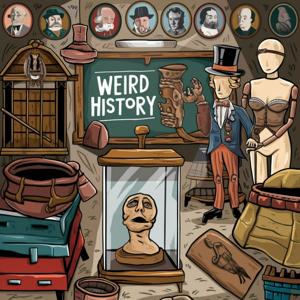


In 1932, Australia faced an invasion. Twenty thousand emus descended on wheat farms in Western Australia, destroying crops and livelihoods. The government's solution? Send in the military with machine guns. What followed was one of the most humiliating defeats in military history - humans vs. birds, and the birds won.
The Australian army arrived with two soldiers, two machine guns, and 10,000 rounds of ammunition, confident they'd wipe out the emu population in days. But the emus had other plans. They scattered into small groups, used guerrilla tactics, and could outrun the soldiers' trucks. After weeks of combat, the military had fired thousands of rounds and killed fewer than 1,000 emus while the birds continued destroying farms.
The press had a field day. One ornithologist joked that if the emus had a military division, they'd face court-martial for desertion - but since they didn't, they were just "a brilliant guerrilla force." The commander called the emus "nearly bullet-proof" after watching them absorb multiple shots and keep running. Eventually, the embarrassed military withdrew in defeat, and the emus claimed victory.
This episode explores how modern military equipment failed against flightless birds, why the government declared war on wildlife in the first place, and how this absurd conflict became a legendary symbol of nature's resilience against human hubris.
Keywords: weird history, Great Emu War, Australian history, bizarre wars, emu war, military failures, animal conflicts, 1930s Australia, strange military campaigns, wildlife history
Perfect for listeners who love: bizarre historical events, military blunders, Australian history, animal stories, and proof that nature always wins.
Khutulun: The Warrior Princess Who Refused to Lose
Khutulun was the great-great-granddaughter of Genghis Khan and possibly the most feared warrior in the Mongol Empire. While other princesses were married off for political alliances, Khutulun had a different plan - she would only marry a man who could beat her in wrestling. The stakes? Suitors had to bet horses. If they lost, she kept the horses. She never lost.
By the time she was done, Khutulun had won 10,000 horses and remained unmarried, despite her father's pressure to settle down. Marco Polo himself wrote about her, describing how she would ride into enemy ranks, snatch a captive like a hawk grabbing a chicken, and bring them back to her father. Mongol commanders feared facing her in battle because she was simply unstoppable.
Her father, Kaidu Khan, wanted her to succeed him as ruler, but the male nobility refused to accept a woman as Khan. When she finally did marry (on her own terms), it was to a man who understood she was the superior warrior. Even in marriage, she continued leading armies and wrestling challengers who thought they could finally beat her. They couldn't.
This episode explores how one woman defied Mongol conventions, became a legendary warrior, and inspired centuries of stories - including possibly influencing Disney's Mulan. Khutulun proved that in the Mongol Empire, strength mattered more than gender.
Keywords: weird history, Khutulun, Mongolian history, women warriors, Genghis Khan, Mongol Empire, female fighters, wrestling history, warrior princess, Asian history
Perfect for listeners who love: warrior women, Mongolian history, underrepresented historical figures, sports history, and stories of women who refused to play by the rules.
Another inspiring episode from Weird History - where history's most badass women get their spotlight.
Find "Weird Americana" here: https://creators.spotify.com/pod/profile/weirdamericana/
Emperor Caligula: When Rome's Emperor Lost His Mind
Caligula started as Rome's most beloved ruler and ended as its most feared madman. In just four years, he went from promising young emperor to a tyrant who declared himself a living god, had conversations with statues, and committed acts so bizarre that Romans wondered if he was possessed by demons.
He allegedly made his favorite horse Incitatus a senator and planned to make him consul, built the horse a marble stable with an ivory manger, and invited it to dinner parties where it drank wine from golden goblets. He declared war on Neptune and ordered his soldiers to stab the ocean and collect seashells as "spoils of war" from his victory over the sea god. He built a two-mile floating bridge across the Bay of Naples just so he could ride across it wearing Alexander the Great's breastplate, purely to prove a fortune teller wrong.
But Caligula's madness turned deadly. He had senators executed on a whim, forced fathers to watch their sons die, committed incest with all three of his sisters, and demanded to be worshipped as a god in temples across the empire. He emptied Rome's treasury on extravagant parties and projects, once spending an entire province's tax revenue on a single banquet. After four years of terror, his own Praetorian Guard assassinated him in a palace tunnel.
This episode explores what turned Rome's golden boy into a monster - brain fever, absolute power, or genuine insanity?
Keywords: weird history, Caligula, Roman emperors, ancient Rome, Roman history, mad emperors, Imperial Rome, Roman scandals, insane rulers, ancient history
Perfect for listeners who love: Roman history, tales of madness and power, imperial scandals, and rulers who went completely off the rails.
Another unbelievable episode from Weird History - where power and insanity collide.
Emperor Elagabalus: When Rome's Wildest Teenager Became Emperor
Elagabalus became Roman Emperor at age 14 and spent the next four years shocking Rome with behavior so outrageous that historians still debate whether the accounts are real or exaggerated propaganda. He married and divorced five times in four years, allegedly worked as a prostitute in the palace, and may have been one of history's first transgender rulers.
The teenage emperor brought his Syrian sun god to Rome - literally a black stone he worshipped - and forced the Senate to watch him perform exotic religious rituals. He threw lavish parties where guests could suffocate under tons of rose petals dropped from the ceiling. He allegedly offered huge rewards to any physician who could give him female genitalia, married a male athlete in a public ceremony, and insisted on being called "empress" rather than emperor.
His grandmother and the Praetorian Guard grew increasingly alarmed as Elagabalus elevated former slaves and charioteers to high positions based purely on their physical attributes. When he tried to make his lover co-emperor, it was the final straw. At 18, he was assassinated along with his mother, their bodies dragged through Rome and thrown into the Tiber River.
This episode explores whether Elagabalus was truly Rome's most scandalous ruler or the victim of hostile historians who wanted to destroy his reputation. Either way, his four-year reign remains one of the most bizarre periods in Roman history.
Keywords: weird history, Elagabalus, Roman emperors, ancient Rome, Roman history, transgender history, LGBTQ history, Roman scandals, teenage emperors, ancient history
Perfect for listeners who love: Roman history, royal scandals, LGBTQ history, ancient mysteries, and rulers who defied all expectations.
Gilles de Rais: From Noble War Hero to Monster
Gilles de Rais was one of France's greatest military heroes, fighting alongside Joan of Arc and becoming one of the wealthiest noblemen in Europe. Then he became one of history's first documented serial killers, allegedly murdering hundreds of children in occult rituals at his castle.
After Joan of Arc's execution, Gilles retreated to his estates and his behavior grew increasingly bizarre. He squandered his massive fortune on lavish theatrical productions and began dabbling in alchemy and black magic, desperately trying to restore his wealth through demonic pacts. But his quest for occult power led to something far darker - the systematic abduction, torture, and murder of peasant children from surrounding villages.
When authorities finally investigated in 1440, the testimonies were horrifying. Servants described rooms filled with dismembered bodies, rituals involving children's blood, and Gilles's confession detailed acts so depraved that parts of his trial transcript were destroyed. He confessed to murdering between 80 and 200 children, though some estimates go much higher. He was executed by hanging and burning, but debates still rage about whether he was truly guilty or the victim of a political conspiracy to seize his lands.
This episode explores one of history's most disturbing transformations and asks whether Gilles de Rais was a genuine monster or a wealthy nobleman destroyed by enemies who wanted his fortune.
Keywords: weird history, Gilles de Rais, Joan of Arc, serial killers in history, medieval France, French history, occult history, medieval crimes, historical murders, dark history
Perfect for listeners who love: true crime history, medieval mysteries, dark history, Joan of Arc stories, and the psychology of evil.
Warning: This episode contains discussion of violence against children. Listener discretion is advised.
The Affair of the Poisons: When the French Elite Turned to Witchcraft and Murder
In 1670s Paris, the glittering court of Louis XIV hid a dark secret - aristocrats were secretly attending black masses, buying poisons from fortune tellers, and murdering anyone who stood in their way. What started as a simple murder investigation exploded into France's most shocking scandal, implicating some of the most powerful people in the kingdom.
At the center was La Voisin, a fortune teller who sold love potions, abortion services, and deadly poisons to desperate noblewomen. But her business went far darker - she allegedly performed satanic rituals using the blood of murdered infants, with aristocratic women lying naked on altars while priests said mass over their bodies. When police finally raided her mansion, they found a furnace filled with infant bones.
The scandal reached the highest levels of Louis XIV's court. The King's own mistress, Madame de Montespan, was accused of using black magic and poison to maintain the King's affections and eliminate rivals. Over 400 people were investigated, 36 executed, and many more imprisoned or exiled. Louis XIV himself was forced to burn evidence and shut down the trials when they threatened to expose too many powerful figures.
This episode explores the bizarre intersection of aristocratic ambition, occult practices, and serial murder that gripped France for over a decade and forever changed how Louis XIV viewed his own court.
Keywords: weird history, Affair of the Poisons, French history, Louis XIV, French court scandals, black mass, historical murders, occult history, French aristocracy, fortune tellers, 17th century France
Perfect for listeners who love: royal scandals, true crime history, occult mysteries, French history, and the dark side of aristocratic life.
Caravaggio: When Art History's Greatest Painter Was Also Its Most Dangerous Criminal
Michelangelo Merisi da Caravaggio revolutionized Western art while simultaneously terrorizing Rome with his violent temper. By day, he painted religious masterpieces for the Pope. By night, he brawled in taverns, attacked rival artists with swords, and racked up an arrest record that would make modern criminals blush.
In 1606, Caravaggio killed a man named Ranuccio Tomassoni during what started as a tennis match and ended in a street brawl with swords. Forced to flee Rome with a death sentence on his head, he spent his final years painting breathtaking works while running from assassins and the law. He painted his own face as the severed head of Goliath in one masterpiece - literally offering his head to the Pope as an apology.
His rap sheet included assault with a weapon, throwing a plate of artichokes at a waiter, vandalizing a rival's house, and carrying an illegal sword everywhere he went. Yet churches and cardinals kept commissioning him because his paintings were simply too brilliant to ignore. He died at 38 under mysterious circumstances - possibly murdered, possibly from lead poisoning, possibly from infection after yet another brawl.
This episode explores how one man could be both a divine artistic genius and a violent criminal, and why his scandalous life made his dark, dramatic paintings even more powerful.
Keywords: weird history, Caravaggio, Renaissance art, Italian history, art history, criminal artists, baroque painting, Renaissance Rome, violent artists, art scandals
Perfect for listeners who love: art history, Italian Renaissance, scandalous artists, true crime, and geniuses who lived on the edge.
Ned Kelly: The Armored Bushranger Who Became Australia's Greatest Folk Hero
Ned Kelly wasn't just an outlaw - he was a working-class hero who took on the entire police force wearing homemade metal armor that made him look like a medieval knight. When Australian police came to arrest him in 1880, they found themselves in a legendary shootout against a man bullets couldn't stop.
Kelly and his gang crafted full suits of armor from stolen plow blades, complete with helmets and chest plates that weighed 96 pounds. During the final siege at Glenrowan, Ned walked through a hail of police bullets like a tank, taking over 20 hits before finally being brought down by shots to his unprotected legs. His last words before hanging? "Such is life."
But Ned wasn't just a criminal - he was a symbol of rebellion against corrupt police and the British class system oppressing Irish settlers. His famous Jerilderie Letter laid out his grievances in eloquent detail, turning him into a political revolutionary as much as a bushranger. He robbed banks, killed three policemen, and held entire towns hostage, yet became so beloved that 30,000 people signed a petition to save him from the gallows.
This episode explores how a poor Irish-Australian farm boy became the country's most famous outlaw, why he's still a cultural icon today, and the incredible final standoff that cemented his legend.
Keywords: weird history, Ned Kelly, Australian history, bushrangers, outlaws, Australian outlaws, armored outlaws, Wild West history, folk heroes, Irish Australian history, 1880s Australia
Perfect for listeners who love: outlaw stories, Australian history, epic last stands, folk heroes, and rebels who fought the system.
Another legendary episode from Weird History - where outlaws become icons.
Julie d'Aubigny: The Most Scandalous Woman in French History
Meet Julie d'Aubigny, the 17th-century opera star who lived like an action movie hero. By day, she dazzled audiences at the Paris Opera. By night, she dueled men in the streets, seduced both men and women, and caused scandals that shocked even the French court.
When Julie fell in love with a nun, she didn't just write love letters - she joined the convent as a fake nun, seduced her target, then burned the whole place down to cover their escape. She killed three men in a single evening during separate duels, crashed royal balls dressed as a man, and once kissed a woman at a party just to scandalize the guests (then killed her boyfriend in a duel when he complained).
King Louis XIV himself had to repeatedly pardon her crimes because she was just too entertaining to execute. From her affair with a famous count to her legendary sword skills, Julie lived a life so outrageous that people thought she was fictional.
This episode explores how one woman broke every rule of 17th-century society and somehow became a beloved celebrity instead of losing her head.
Keywords: weird history, Julie d'Aubigny, French history, opera history, 17th century France, historical scandals, French opera, unusual women in history, Louis XIV
This episode of Weird History explores the most dramatic space weather event ever recorded and why scientists are terrified it could happen again. In 1859, we had telegraphs. Today, we have satellites, GPS, power grids, and the internet. A Carrington-level event now would be catastrophic, potentially causing trillions in damage and sending modern civilization back to the pre-electric age.
We'll uncover the science behind solar storms, examine the eyewitness accounts from around the world, and reveal why government agencies are secretly preparing for the next "big one." From gold miners in the Rockies reading newspapers by aurora light to the telegraph operator who famously sent "I am working with heavenly battery," discover how one solar tantrum changed our understanding of space and Earth's vulnerability.
Keywords: weird history, Carrington Event, solar storms, space weather, 1859 solar storm, telegraph history, northern lights, solar flares, electromagnetic storms, historical disasters, space science, Victorian technology
Perfect for listeners interested in: space science, historical disasters, Victorian technology, electromagnetic phenomena, and anyone curious about how vulnerable our modern world really is.
Another shocking episode from Weird History - where past disasters warn us about future catastrophes.
From the publisher's feed

10,385 Listeners