
Sign up to save your podcasts
Or

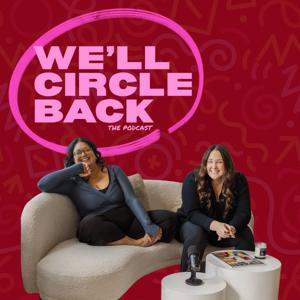


Short answer: we're pausing, not stopping. Season two comes back when our businesses are quieter.
This is the season one finale of We'll Circle Back. Britt Holmes of Merit Media and Puja Malhotra of Roop Creative Agency talk about why they're stepping away, what they learned launching a podcast alongside two agencies and two families, and why "seasons" turned out to mean something different than they expected.
What we cover
Why we're pausing. Both businesses run quiet in late spring and summer, which is exactly when we launched. Q4 is coming and client work is picking up. Something had to give, and we'd rather choose it than let it collapse.
What a "season" actually means for a small business podcast. We labelled every episode season one from the start, assuming we'd follow a normal schedule. What we found is that our seasons are dictated by business cycles, not by a content calendar.
We stopped having time to be friends. The thing that surprised us most: a podcast made by two friends can quietly turn friendship into a production schedule. That was the clearest sign to step back.
Rose, thorn and rose?? — what worked and what didn't. We learned to launch and run a podcast for five months, which neither of us had done. Britt discovered a deep hatred of video editing. And hearing someone say they'd listened turned out to be the best part of the whole thing.
Guesting versus hosting. We were each aiming for twelve guest appearances last year and landed closer to twenty-five. Hosting is an entirely separate business, and it's worth being honest about which one you actually have capacity for.
Don't bite off more than you can chew. The founder lesson underneath all of it: know your own business trends, and build around them rather than against them.
Timestamps
00:00 Intro
00:52 We're closing out season one
01:39 Prioritizing clients, business and family
02:36 When friendship becomes a production schedule
03:33 Guesting on other people's podcasts
04:06 Why we planned for seasons from the start
06:41 Rose, thorn and rose??!
09:26 When season two might return
10:07 Knowing your quarterly business cycles
Send us topics if you want to lure us back sooner, and find us both on social. We'll circle back.
Short answer: if it isn't in the contract, don't do it.
Every service provider hits the same wall. A client asks for one small thing outside the scope of work, you do it because you're capable and you want to be helpful, and three weeks later they're treating it as something you owed them all along.
In this episode, Britt Holmes of Merit Media and Puja Malhotra of Roop Creative talk about where they draw the line on free work, why "I'll just help this one time" is a red flag rather than good service, and how to push back without damaging the relationship.
What we cover
What would you never do for free? Puja's rule is absolute: if it's not in the contract, it becomes an add-on. Britt's answer is weekends.
Why service providers get taken advantage of. Clients often see a service provider as someone who's going to save them, and compassionate people over-deliver into false expectations. The contract is what protects both sides from that.
Do you need a lawyer to write your client contract? Both of us started with a borrowed 20-page template and later paid a lawyer to do it properly. We talk about when to make that jump, and the friend-of-a-friend route if you're not there yet.
How to get a contract when you have no money. The chicken-and-egg problem every new founder faces, and what to spend on instead. (Puja's take: skip the business cards.)
The exact wording to use when a client asks for something out of scope. Puja's script: confirm you have the experience, answer briefly if you want to, state clearly that it's out of scope, then refer them to someone who actually specializes in it.
Doing a favour versus being asked for one. There's a real difference between choosing to go above and beyond, and a client pushing. One is generosity. The other is a pattern that won't stop.
Timestamps
00:00 What would you never do for free?
01:10 Why clients expect service providers to save them
02:28 Scope creep starts in corporate and follows you home
03:40 What a properly drafted contract should cover
04:40 How to get a contract when you're broke
06:06 Business cards vs hiring a lawyer
06:51 What to do instead at networking events
08:00 The difference between a favour and being taken advantage of
09:05 When being helpful backfires
10:18 The exact line to use in the email
Who this is for: freelancers, agency owners, consultants and anyone selling their time who's ever done unpaid work to keep a client happy.
Rejection is part of building anything — but for founders, a client walking away can feel personal fast. In this episode of We'll Circle Back, Britt Holmes (Merit Media) and Puja Malhotra (Roop Creative Agency) get honest about how they cope with rejection as business owners: the difference between a discovery-call "no" and a client who terminates early, why tying your self-worth to your work will wreck you, and how the right contracts, boundaries, and mindset let you move through it professionally.
Puja shares the hard-won lesson from a decade-plus in branding — that feedback builds a better result — while Britt, four years in and a self-described "recovering people-pleaser," opens up about the sting of losing a client and learning that something better is almost always right behind it. If you've ever taken a "no" too personally, this one's your permission slip.
Keywords: coping with rejection, rejection as a founder, entrepreneur rejection, losing a client, client feedback, self-worth and business, small business mindset, women founders, branding, marketing agency.
In this Episode:
Do you actually need a business exit strategy — or did a business influencer just make you feel like you do?
In this episode, Puja (Roop Creative Agency) and Britt (Merit Media) push back on the "build it to sell it" narrative taking over business culture, and make the case for the lifestyle business: keep the money you make, serve the people you love serving, and build something your kids might actually want.
Then they get into the part nobody says out loud: influencer math. What business influencers' revenue claims conveniently leave out, why their "6 years in business" might really be your 14, and how the entrepreneur comparison trap quietly convinces successful founders they're failing.
In this episode:
• Exit strategy vs. legacy — why "sell for millions" became the default goal, and who it actually makes sense for (hint: product, rarely service)
• The Instagram influencer who shamed someone's 5pm log-off and cold plunge — and what her "exit" flex really tells you
• Influencer math: the real estate, stocks, and hidden revenue streams behind "my business made me millions"
• Bootstrapping a business, defined honestly — choosing between business cards and the kids' trampoline trip
• Why funded founders (the "Chads of the world") play a different game than bootstrapped women — and why comparing the two breaks your brain
• "How many of those years were successful?" — the one question to ask before taking anyone's business advice
• Pivoting as the exit nobody talks about: leaving old versions of your business (and yourself) without selling anything
• Redefining success: running a sustainable business through a pandemic, IVF, loss, and everything the highlight reel hides
If you've ever felt behind because of someone's Instagram — this episode is the recalibration.
Take it to the socials: are you planning an exit, dreaming of one, or building a legacy? And if there's an influencer claim bugging you, DM us — we won't share it, we just want to debunk it.
TAGS: business exit strategy, lifestyle business, business influencer red flags, business influencer income claims, bootstrapping a business, entrepreneur comparison trap, building a business legacy, solopreneur success, women entrepreneurs, service business owner
Working from home boundaries are the difference between running your business from home and letting your business run your home. In this episode, Puja (Roop Creative Agency) and Britt (Merit Media) get honest about the work from home guilt trip — why founders feel it, why moms building businesses feel it double, and the exact boundaries that make it stop.
Whether you're a kitchen-table CEO or you've commandeered the whole basement (guilty), this one is full of practical work from home tips for founders who want harmony without burnout.
In this episode:
• Why a separate workspace changes everything — even if it's just a room divider, a bookshelf, or a corner you claim as yours
• The "wardrobe switch" and other start-of-day rituals that flip your brain into work mode (and out of it at 5pm)
• Setting work hours as a small business owner — including the friend who runs her entire practice on a two-day workweek
• Why working from the couch kills your focus, and the one room your desk should never face
• Summer camp guilt, kids at home, and why trying to work and parent at the same time means failing at both
• The pre-kid version of yourself you have to let go of — and the acceptance that finally makes work life balance as an entrepreneur possible
• Founder burnout prevention that actually works: micro-traditions, transition ceremonies, and heavy (heavy!) boundaries
If you've ever googled "why do I feel guilty working from home" — this episode is your permission slip.
Tell us on socials: are you thriving working from home or barely surviving? We want your tips, and if you're feeling guilty, we'll talk you out of it.
TAGS
working from home boundaries, work from home tips for founders, setting work hours small business, work life balance entrepreneur, home office boundaries, founder burnout prevention, work from home guilt, work from home mom, small business owner tips
In this episode of We'll Circle Back, founders Puja Malhotra of Roop Creative Agency and Britt Holmes of Merit Media are back with another Nobody Asked episode — and this one goes everywhere. They kick things off with rapid fire questions that quickly turn into anything but rapid, covering coffee orders as emotional indicators, most used apps, working styles, phone boundaries and the funniest things their kids think they do all day. Britt shares the story of how her kids genuinely believed she was an employee at the coffee shop, and Puja's four year old makes a surprise appearance by calling his mom out for not knowing the five times table. If you're a founder, a mom, or just someone who needs a laugh on a Tuesday, this episode is for you. Send us your questions — business, founder life, or anything keeping you up at night — and we'll answer them on a future episode.
Keywords: founder podcast, women in business podcast, female founders, founder mom life, work life balance for founders, funny founder stories, business podcast for women, We'll Circle Back podcast, nobody asked series, founder lifestyle
In this episode of We'll Circle Back, founders Puja Malhotra of Roop Creative Agency and Britt Holmes of Merit Media break down the content snowball strategy — a simple approach to content creation that lets you create once and repurpose everywhere. They cover how to turn one blog post into a full week of content across Instagram, LinkedIn, newsletters and more, why your social media is now your business card, the scheduling tools they actually use (Later and Buffer), how AI fits into content creation without losing your brand voice, and why you don't need to hop on every trend to show up consistently. If you're a founder who's been avoiding content creation, this is the episode that's going to change that.
Keywords: content strategy for founders, content snowball, repurpose content, social media for small business, content marketing, founder marketing tips, how to create content faster
The conversation covers a wide range of topics, including parenting challenges, self-reflection, personal growth, aging, material possessions, and the joy of plants and gardening. It also delves into the importance of humor, childhood memories, and favorite songs as mood boosters. The conversation covers the power of music, the evolution of music, mindset in business and life, comfort foods and happy places, discipline and self-perception, and engaging with the audience through questions and answers.
Takeaways
Chapters
The conversation delves into the multifaceted role of AI in business operations, exploring its integration, limitations, and security concerns. Puja and Britt share their perspectives on AI's impact on client communication, administrative tasks, and financial management, highlighting the need for boundaries and reassurance in its use. The conversation delves into the excitement of AI, its impact on content creation and time management, the use of AI for automated admin tasks, the relationship between AI and human skills, interpreting AI results, the value of human expertise, fear and evolution with AI, humanizing AI-generated content, AI in design and art, AI and human connection, understanding the unspoken, human skills vs. AI, privacy and exposure, and AI utilization and concerns.
Takeaways
Chapters
In this episode of 'We'll Circle Back', Puja and Britt engage in a lighthearted and reflective conversation, exploring childhood memories, personal mantras, personality traits, authenticity, and understanding others. The conversation is filled with humour, vulnerability, and a deep sense of connection. The conversation delves into themes of understanding and grace, coping with loss, personal habits for well-being, planning and flexibility, taking risks and perceptions, misconceptions and vulnerability, and concludes with closing remarks.
Takeaways
Chapters
From the publisher's feed
We’ll Circle Back is the meeting you actually want to attend. Hosted by two corporate dropouts turned business besties, this podcast serves unfiltered takes on work, life, motherhood, and the chaos…