
Sign up to save your podcasts
Or



Biohacking for women is having a moment — but here's the catch: most of what you read was never designed for your body. Until 1993, clinical research largely studied men, and women have been following men's rules ever since. So what actually works when you're a woman in your 40s or 50s, and where on earth do you start?
That's exactly what this episode is for. Azra Alagic is a biohacker, longevity coach and founder of Biohackher, and she's spent years working out what genuinely moves the needle for women — and what's just expensive noise. We walk through her four pillars, brain, body, beauty and balance, and for each one Azra answers the same practical question: what's the free thing that helps most, and what's actually worth your money?
Along the way she explains why the ice-bath trend can backfire for women in midlife, why muscle is the longevity organ you can't afford to lose, and why the most underrated tool for your nervous system costs nothing at all.
And then, the way every episode ends, she brings it back to one thing. Not a forty-step protocol. One foundational habit that quietly supports all four pillars at once. If you've been overwhelmed by the biohacking world and just want to know where to begin, start here.
You're doing everything right. The early alarm, the gym, the gratitude journal, the meal prep, the ten thousand steps. On paper, your health looks sorted. So why are you still so tired?
That's exactly where Amy Green found herself eight years ago — quietly falling apart while looking, to everyone around her, like she had it all together. Amy is a workplace wellbeing strategist, speaker, and the author of The Wellness Paradox, and in this episode she names something a lot of us feel but can't quite explain: we've never had more tools to be well, and never been more burnt out.
We get into why burnout creeps up slowly rather than arriving in a day, why a holiday doesn't fix it, and why the wellness programs at work — the yoga class, the coffee van, the resilience workshop — so often miss the point. As Amy puts it, you can't downward-dog your way out of a workload problem.
But this isn't a heavy episode. It's a hopeful one. Because underneath all of it sits a surprisingly simple question — one you can sit with in five minutes this week — that helps you tell the difference between the things you do for you and the things you only do to keep up. And then let one of them go.
If you've been 'doing all the right things' and still feel flat, this one's for you.
Cognitive decline doesn't wait until your 60s. The changes that affect your processing speed, memory, and mental clarity can begin as early as your 30s and 40s — quietly, subtly, and mostly without warning. The good news? There's a lot you can do right now, and most of it is simpler than you think.
In this episode, Kelly sits down with Dr. Michael Elstein — Sydney-based anti-ageing physician and author — for a genuinely practical conversation about brain health. Dr. Elstein has spent decades working with patients who want to stay sharp as they age, and he brings both the clinical depth and the plain-speaking clarity that makes this stuff actually usable.
They cover the key nutrients your brain needs and how to know if you're getting enough, the blood tests most GPs aren't running but should be, why sleep is doing far more for your brain than you realise, and the single morning habit that takes six to ten minutes and costs nothing.
If you've noticed your memory isn't quite what it was, you're losing words more than you used to, or you just want to get ahead of the decline before it starts — this one's for you.
If you're in perimenopause and you're doing everything right — eating well, training consistently — but you still feel exhausted, wired, and stuck, this episode is for you.
For high-achieving women in their 40s and 50s, some of the most popular health habits aren't just ineffective. They're actively working against you. Not because you're doing them wrong, but because your hormonal landscape has changed in ways that most health advice completely ignores.
In this solo episode, I walk through five habits that worked brilliantly in your 20s and 30s but are now quietly stacking stress on a system that's already under pressure. We cover caloric restriction and why eating less is driving fat storage rather than preventing it, the specific type and volume of exercise that's elevating cortisol rather than burning it off, why skipping breakfast and drinking coffee on an empty stomach is dysregulating your hormones from the moment you wake up, how cold exposure done at the wrong time or from the wrong baseline is adding to your stress load rather than building resilience, and the behavioural pattern that underlies all of them — the always-on, never-truly-resting way of moving through your days that oestrogen used to buffer and now doesn't.
The through-line is this: in perimenopause your cortisol budget shrinks, your recovery window lengthens, and the habits that used to signal discipline now signal danger. This isn't a willpower problem. It's a biology problem. And once you understand it, one small change this week can start to shift everything.
If you want help working out which of these five is costing you the most right now, I run a short private coaching Discovery Call — a conversation to clarify what matters most for you at this stage. You can book one here: calendly.com/kellynicholls/vitopia-discovery-call
Full show notes, timestamps and everything we mention: vitopia.ai/podcast/healthy-habits-perimenopause
WHAT YOU'LL LEARN
Bloating, brain fog, and that heavy, foggy feeling after a meal you've quietly accepted as normal. If any of that sounds familiar — it's not just you, and it's not just how you're built.
In this episode, I sit down with Natasha Sidoti — naturopath, nutritionist, and herbal medicine practitioner on Sydney's Northern Beaches — to talk about what's actually going on in your gut and why so many of us are unknowingly working against it every single day.
We cover the full digestive picture: from what healthy digestion actually looks and feels like, to the surprising reason your nervous system might be doing more damage than your diet. Tash explains how gut dysfunction shows up — not just as bloating, but in your mood, your hormones, your skin, and your energy — what drives it in the first place, and why stress lands higher on that list than most people expect.
We also get into gut health through perimenopause, including what the research says about the estrobolome and why women from their mid-40s need to think about this differently. Plus a practical breakdown of what a gut-friendly life actually looks like day-to-day: food, lifestyle, supplements, and a simple gut first-aid kit worth having at home.
One habit at the end. Simple and specific — just start there.
What you'll learn:
You eat reasonably well, you stay active, and heart disease feels like something that happens to other people. But if you're in your 40s or 50s, the risk factors may already be building, and most people don't find out until it's too late. This episode is for anyone who wants to get ahead of it.
Integrative cardiologist Dr. Jason Kaplan breaks down the most important heart health tests to ask for now, the dietary shifts that move the needle, how much your genetics really matter, and the lifestyle factors most people overlook until they're sitting in a cardiologist's office.
If cardiovascular disease prevention has always felt overwhelming or like something to deal with later, this episode makes it simple and gives you one clear place to start this week.
#heart disease prevention #cardiovascular risk assessment #coronary artery disease symptoms and causes #atherosclerosis detection #integrative cardiologist #heart health tests #plant-based diet for heart health #how to reduce risk of heart disease, exercise #heart health
You're doing your best to live clean with reading labels, buying organic where you can, and making the swaps. And yet your body is still carrying a toxic load you can't quite shake. This episode is for anyone who's health-conscious but suspects their food, water, home, or personal care products are quietly working against them.
In our continued conversation, naturopath and medical herbalist Anthia Koullouros breaks down exactly where hidden toxins are sneaking in, the Dirty Dozen pesticides, microplastics in tap water, endocrine disruptors building up through your personal care routine, mould and VOCs at home, and EMF sensitivity. More importantly, she tells you what to do about it, starting with one simple swap.
If reducing your toxic load has ever felt overwhelming, this episode makes it practical, manageable, and real.
#reducing toxic load #hidden toxins in food #toxins in food #low tox life #endocrine disruptors in personal care products #microplastics in water #natural cleaning products #dirty dozen pesticides #mould in the home #EMF sensitivity
You've done the cleanses, tried the programs, and still don't feel quite right. This episode is for anyone who suspects they've been working against their body rather than with it, and wants to finally understand how natural detoxification works.
Naturopath and medical herbalist Anthia Koullouros walks through the liver's two-phase detox pathways, what sluggish-liver symptoms look like, how to improve lymphatic flow, why your gut microbiome plays a bigger role than most detox programs acknowledge, and why the emotional load you carry is part of your toxic burden, too.
If detox has always felt confusing or overcomplicated, this episode brings it back to the organs of elimination your body is already using, and shows you how to support them properly, starting with one simple thing this week.
#natural detoxification #liver detox pathways #sluggish liver symptoms #lymphatic system detox #gut microbiome #organs of elimination #emotional health #nervous system #over detoxing symptoms #gut health #improve lymphatic system
You've watched someone you love change before your eyes, or maybe you carry the gene, and you're quietly terrified. If Alzheimer's feels like something you're powerless against, this episode will change that. It's for anyone who wants to protect their brain now, before symptoms ever start.
Nutritional medicine practitioner Jo Grabyn, trained by Dr. Dale Bredesen and certified in functional and hyperbaric medicine, breaks down the real drivers of cognitive decline, what your DNA means (and doesn't mean), the diet and lifestyle shifts that move the needle most, and the therapies showing genuine results in her clinic.
If Alzheimer's prevention has always felt like something to worry about later, this episode makes it simple and gives you a clear place to start this week.
#how to prevent Alzheimer disease naturally #Alzheimer prevention diet #test for cognitive decline #how to reverse cognitive decline #brain health supplements vitamins #hyperbaric oxygen therapy #early signs of cognitive impairment #glymphatic drainage and sleep #Brain exercises for memory
You're exhausted, but your brain won't stop. You're doing everything right, yet you're wired at midnight and dragging by 3 pm, and no one has explained why. This episode is for busy, high-achieving women who are running on empty and want real answers.
Biohacker, nutritionist, and behaviour change expert Camilla Thompson breaks down exactly what's happening in your body, your cortisol, adrenaline, and nervous system, and gives you practical, simple tools to finally feel calm, sleep better, and stop running on stress. From vagus nerve activation to morning habits that take five minutes, this is biohacking made accessible for real life.
If lowering cortisol, fixing your sleep, and regulating your nervous system have always felt complicated or out of reach, this episode makes it simple and gives you one habit you can try tomorrow morning.
#stress and nervous system #how to lower cortisol naturally #vagus nerve activation techniques #biohacking #adrenal fatigue recovery #how to improve sleep quality #circadian rhythm and chronotype #morning routine for high performers #how to regulate the nervous system #women's hormones and stress
From the publisher's feed
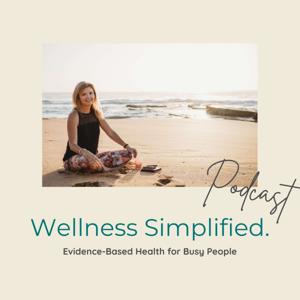
Wellness Simplified is the health podcast for busy professionals who are already doing the right things but still not feeling the way they want to feel and who need someone to cut through the…
Hosted by Kelly Nicholls, wellness coach and co-founder of Vitopia AI, this show exists to take the guesswork out of your health by delivering one clear habit or experiment in every episode. Something you can implement this week, track in real life, and feel the difference. No overwhelm, protocol overhauls, or advice that only works if you have unlimited time and a personal health team. Just the 20% of habits that deliver 80% of the results, explained clearly by someone who has done the research and lived the journey.
Wellness Simplified covers the full spectrum of evidence-based health for people who want to feel better without making health a second job. From the foundational habits that move the needle on energy, sleep, and stress, to personal experiments with real data and honest results, to practical guidance on hormonal health, perimenopause, prevention and longevity. Every episode ends with one thing you can try this week. That's the promise and the design, every single time.
We'll answer questions like:
This show is for the busy professional who wants simple health habits that fit into a real life, the woman navigating perimenopause who deserves better answers than she's been given, and the health-conscious high achiever who wants practical wellness tips grounded in evidence rather than hype. If you're in Australia or anywhere else in the world where the wellness noise has gotten too loud, you've found your show.
If you're ready to stop second-guessing and start feeling better, one habit at a time, you're in the right place.