
Sign up to save your podcasts
Or

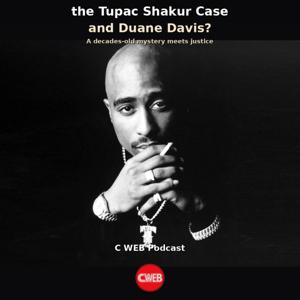


Welcome back to the C WEB podcast. Today we turn to a story that has haunted American music, culture, and memory for more than a quarter of a century: the murder of Tupac Shakur and the long, winding road that has finally led to a courtroom reckoning in Las Vegas.
On Tuesday, October 13, 2026, Duane “Keffe D” Davis, the only person ever charged in connection with Shakur’s 1996 killing, was sentenced to 40 years to life in prison. Judge Carli Kierny handed down the sentence in a Las Vegas courtroom, bringing a measure of legal closure to a case that had remained unsolved for nearly three decades. The sentence includes 20 years to life for first-degree murder, with a consecutive 20-year enhancement for the use of a deadly weapon.
The conviction itself came in August 2026, when a jury found Davis guilty after less than three hours of deliberation. Davis, now 63, had pleaded not guilty and has consistently maintained his innocence. His attorney, Michael Sanft, has indicated that they will appeal.
The prosecution’s case rested heavily on Davis’s own words. Over the years, Davis had spoken extensively about his role in the killing—in police interviews, in on-camera documentaries, and in his own self-published memoir. Prosecutors described him as the “shot caller” who orchestrated the attack, and they used his own admissions against him. At the sentencing, prosecutor Marc DiGiacomo told the court that Davis had earned the maximum sentence through his actions and his attempt to profit from the killing.
The courtroom on Tuesday was filled with the weight of three decades. Members of Shakur’s family gave emotional impact statements. His sister, Sekyiwa, spoke of the trauma that had followed her for years. “The loss of Tupac for a long time crippled my entire family emotionally, mentally,” she said. “I’ve been hospitalized multiple times for depression, suicidal ideation, and trauma.” She spoke of missing her brother in small, human ways—his laugh, his recipes, the strawberry mark on his chest. His brother, Maurice, spoke more briefly but no less forcefully: “The impact from my brother’s murder has been devastating, heartbreaking, and sad for me, my family, and a nation of Tupac fans and loved ones.”
Judge Kierny, in delivering the sentence, addressed Davis directly. “You don’t get to take a man from his family, you don’t get to take his very life, his whole future from him, and just walk away,” she said. “Especially when that man is Tupac Shakur.”
The case itself has been a long and tangled one. Shakur was shot on September 7, 1996, near the Las Vegas Strip, after attending the Mike Tyson–Bruce Seldon boxing match. He died six days later. The shooting was tied to a feud between rival gangs—a conflict that prosecutors said escalated after Davis’s nephew, Orlando Anderson, was beaten at the MGM Grand hotel that same night. Davis, a former shot-caller for the South Side Compton Crips, was accused of handing a .40-caliber Glock to the backseat of a white Cadillac, from which the fatal shots were fired.
For years, Davis avoided prosecution. He was arrested in September 2023 and had been in custody ever since. His trial, which lasted several weeks, hinged on whether his own admissions could be trusted—or whether, as his defense argued, he had lied to protect himself and his family and to sell books.
There is something almost mythic about the Tupac Shakur case. It is not merely a murder story; it is a story about a generation, about the cost of fame, about the ways in which violence can echo through families and communities for decades.
Before you go, check out a deal from Paris Jewelry. Visit ParisJewelry.com and take 20 per cent off any jewellery with the code SAVE20 at checkout. That is ParisJewelry.com, code SAVE20.
You have been listening to C WEB. Subscribe on Spotify, Apple Podcasts, Amazon Music, YouTube, iHeartRadio, SiriusXM, or Pandora for more. You can also watch some of our C WEB reels on X, TikTok, and Facebook.
From the publisher's feed