
Sign up to save your podcasts
Or

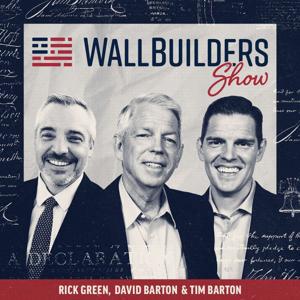

Gas prices spike and the first instinct is to blame “greedy oil companies,” but that explanation falls apart once you follow the math of a global commodities market. We sit down with former Congressman Bob McEwen to untangle a listener’s question: if America has so much oil, why do Americans still feel the pain at the pump? The answer runs straight through supply and demand, worldwide buyers, disruptions in major producers, and the reality that prices are signals, not slogans.
From there, we take on the loaded term “price gouging” with a simple example that hits home: what happens to a business when replacement costs jump overnight? That retail logic applies to oil too, and it exposes why a snapshot of “profit” can be misleading when tomorrow’s inventory costs more than yesterday’s. We also talk about government price caps, why socialist-style price controls create shortages and empty shelves, and how political promises to “set the price” usually end by breaking the incentives needed to produce, refine, and deliver energy.
We wrap by digging into futures markets, the risk entrepreneurs take to stabilize pricing, and the constitutional idea of limited government as a servant of the people, not a manager of every decision. Finally, we connect economic freedom to a deeper foundation: liberty works best when a society has shared moral restraints, because without them the pressure for more government control only grows. If you found this helpful, subscribe, share the episode, and leave a review, then tell us what you think: where should the line be between smart regulation and harmful micromanagement?
Support the show
 View all episodes
 By Tim Barton, David Barton & Rick Green

4.8
21322,132 ratings
Gas prices spike and the first instinct is to blame “greedy oil companies,” but that explanation falls apart once you follow the math of a global commodities market. We sit down with former Congressman Bob McEwen to untangle a listener’s question: if America has so much oil, why do Americans still feel the pain at the pump? The answer runs straight through supply and demand, worldwide buyers, disruptions in major producers, and the reality that prices are signals, not slogans.
From there, we take on the loaded term “price gouging” with a simple example that hits home: what happens to a business when replacement costs jump overnight? That retail logic applies to oil too, and it exposes why a snapshot of “profit” can be misleading when tomorrow’s inventory costs more than yesterday’s. We also talk about government price caps, why socialist-style price controls create shortages and empty shelves, and how political promises to “set the price” usually end by breaking the incentives needed to produce, refine, and deliver energy.
We wrap by digging into futures markets, the risk entrepreneurs take to stabilize pricing, and the constitutional idea of limited government as a servant of the people, not a manager of every decision. Finally, we connect economic freedom to a deeper foundation: liberty works best when a society has shared moral restraints, because without them the pressure for more government control only grows. If you found this helpful, subscribe, share the episode, and leave a review, then tell us what you think: where should the line be between smart regulation and harmful micromanagement?
Support the show
1,426 Listeners

2,598 Listeners
26,464 Listeners
175 Listeners

1,038 Listeners

5,464 Listeners
2,229 Listeners
65,964 Listeners

1,603 Listeners
1,547 Listeners

2,488 Listeners

705 Listeners

386 Listeners
13,245 Listeners

921 Listeners