
Sign up to save your podcasts
Or

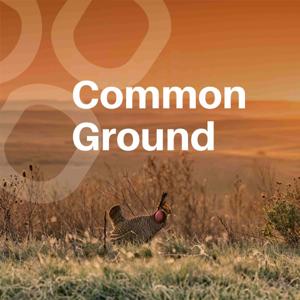

Welcome to, "Finding Common Ground" the official Lesser Prairie Chicken Conservation Podcast!
As the Lesser Prairie-Chicken was officially delisted from the ESA again in early 2026, the Colorado Power Pathway’s massive transmission buildout is accelerating across the southern Great Plains, yet habitat loss and fragmentation continue to threaten the bird, rural landowners, and energy projects.
In this opening conversation, CEO of LPCC Adam Riggsbee, and Wayne Walker of Common Ground Capital recap decades of regulatory swings, the real tensions between ranchers and developers, and why past government and industry programs failed to deliver durable results.
They lay out how Lesser Prairie Chicken Conservation operates the only programmatic conservation bank and range-wide Habitat Conservation Plan (HCP) for the species across its full range!
Through permanent, market-negotiated conservation easements on working grasslands, ranchers receive fair-market payments backed by endowments and active management, prescribed fire, grazing plans, invasives control, and all to strict U.S. Fish & Wildlife Service standards. Wind, solar, transmission, and oil & gas developers buy mitigation credits for compliance certainty.
Key Takeaways
• Regulatory uncertainty destroys value for everyone. “Uncertainty is bad for all, whether you’re a farmer or rancher…or an energy developer.”
• You can’t make the money fit the mitigation. Market-based payments to landowners in the right places are the missing piece.
• Location, location, location. Strategic easements create habitat strongholds of 50,000+ acres while keeping productive working lands intact.
• Private market environmental solutions deliver. Ranchers earn meaningful revenue to stay on the land; developers get bankable credits and permitting certainty.
Utilities, developers, and capital allocators gain scalable, regulatory-compliant tools for projects like the Colorado Power Pathway. Multi-generational ranchers gain real economic incentives for stewardship of their private property without giving up operations.
LPCC's conservation banking model shows how private-market solutions bridge rancher economics, developer needs, and habitat restoration.
LPCC Podcast Episode 1 with Adam Riggsbee and Wayne Walker.
Subscribe for future episodes on pragmatic conservation finance and working-land solutions.
Visit: lpcconservation.com to learn more.
 View all episodes
 By Adam Riggsbee
Welcome to, "Finding Common Ground" the official Lesser Prairie Chicken Conservation Podcast!
As the Lesser Prairie-Chicken was officially delisted from the ESA again in early 2026, the Colorado Power Pathway’s massive transmission buildout is accelerating across the southern Great Plains, yet habitat loss and fragmentation continue to threaten the bird, rural landowners, and energy projects.
In this opening conversation, CEO of LPCC Adam Riggsbee, and Wayne Walker of Common Ground Capital recap decades of regulatory swings, the real tensions between ranchers and developers, and why past government and industry programs failed to deliver durable results.
They lay out how Lesser Prairie Chicken Conservation operates the only programmatic conservation bank and range-wide Habitat Conservation Plan (HCP) for the species across its full range!
Through permanent, market-negotiated conservation easements on working grasslands, ranchers receive fair-market payments backed by endowments and active management, prescribed fire, grazing plans, invasives control, and all to strict U.S. Fish & Wildlife Service standards. Wind, solar, transmission, and oil & gas developers buy mitigation credits for compliance certainty.
Key Takeaways
• Regulatory uncertainty destroys value for everyone. “Uncertainty is bad for all, whether you’re a farmer or rancher…or an energy developer.”
• You can’t make the money fit the mitigation. Market-based payments to landowners in the right places are the missing piece.
• Location, location, location. Strategic easements create habitat strongholds of 50,000+ acres while keeping productive working lands intact.
• Private market environmental solutions deliver. Ranchers earn meaningful revenue to stay on the land; developers get bankable credits and permitting certainty.
Utilities, developers, and capital allocators gain scalable, regulatory-compliant tools for projects like the Colorado Power Pathway. Multi-generational ranchers gain real economic incentives for stewardship of their private property without giving up operations.
LPCC's conservation banking model shows how private-market solutions bridge rancher economics, developer needs, and habitat restoration.
LPCC Podcast Episode 1 with Adam Riggsbee and Wayne Walker.
Subscribe for future episodes on pragmatic conservation finance and working-land solutions.
Visit: lpcconservation.com to learn more.