
Sign up to save your podcasts
Or

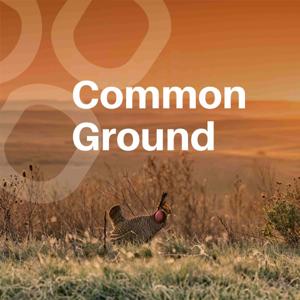


This Summer, the federal government didn't just change the definition of "harm" under the Endangered Species Act. They removed it entirely.
For fifty years, destroying a species' habitat counted as harming it. As of this rule change, it doesn't. No dead body, no take. And for the lesser prairie chicken, that quietly pulls the floor out from under one entire pathway of conservation.
In this episode, Adam Riggsbee, conservation scientist and CEO of LPC Conservation, walks through exactly what happened and what it means: the history of the harm definition, the Loper Bright decision that made it possible, why Section 10 incidental take permits may be finished, and why Section 7 and the states are where this fight moves next. He doesn't sugarcoat it, the rule change may be wrong, and if it is, a lot of species are in a bad way. But he also lays out why this isn't the end of the story.
It's the beginning of America's Grand Bargain: pay ranchers the real value of intact prairie, protect the habitat permanently to federal standards, and let energy get built without a decade of conflict. A win for working lands, a win for energy, and a win for wildlife.
If you want to help move the needle, reach out to your representatives, especially members of the House and Senate Agriculture Committees.
━━━━━━━━━━━━━━
Common Ground is a podcast about working lands, energy, and wildlife on the Southern Great Plains.
🎧 Also on Spotify and Apple Podcasts
🌾 America's Grand Bargain — Common Ground for Working Lands, Energy & Wildlife
#LesserPrairieChicken #EndangeredSpeciesAct #Conservation #ConservationBanking #WorkingLands #Prairie #EnergyPolicy
━━━━━━━━━━━━━━
Chapters:
00:00 The definition of harm just disappeared
02:00 50 years of habitat protection, explained
05:00 Loper Bright and the end of Chevron deference
09:00 What changes on the ground: two scenarios
12:00 Why Section 10 may be finished
16:00 What this doesn't change: Section 7 and the states
22:00 The part nobody's saying: this rule may be wrong
26:00 What it costs the prairie
30:00 The value of native ground
33:00 The Grand Bargain: a win-win-win
37:00 Why every stakeholder should care
39:00 How you can help
Some of the best-preserved native prairie left in America isn't in a park. It's a working cattle ranch.
Stacy Hoeme's land in western Kansas looks like the southern Great Plains did generations ago: native, never-plowed grass rolling to the horizon, and it's teeming with wildlife, from one of the densest lesser prairie chicken populations anywhere to mule deer, whitetail, and pheasant. The way the Hoeme family ranches it is exactly why. In 2018 that stewardship earned them the Kansas Leopold Conservation Award.
On this episode, Adam Riggsbee of LPC Conservation sits down with Stacy on the land his family has worked for 50 years. They get into how a working cattle operation became one of the healthiest stretches of prairie in the country, why a well-run ranch and wild grassland depend on each other rather than compete, and how conservation banking let Stacy protect 9,000 acres permanently, pay off notes, and keep ranching the land instead of selling it.
That same healthy grass makes the ranch one of the best lesser prairie chicken strongholds in the country, with more birds per acre than almost anywhere in the bird's five-state range. Colorado, by contrast, has fewer than 200 left, which is why Colorado energy projects buy mitigation credits sourced from Kansas ranches like Stacy's. They get into what that means for the Colorado Power Pathway and why the healthiest habitat, not the neediest, is where conservation dollars land.
This is the win-win on the ground: the rancher gets paid market value, the land stays prairie for the next generation, and the bird gets habitat that's actually managed and funded for the long haul. No subsidy. A market.
They also cover the three parts of a conservation banking deal (a paid easement, a grazing-friendly management plan, and a funded endowment), the first-ever ESA species credit stacked with a carbon credit, and why 50 years of working with the government left Stacy more open to the model, not less.
Strong ranchers. Strong prairies.
CHAPTERS
Common Ground is the podcast from LPC Conservation about saving the lesser prairie chicken, the ranchers who steward the land, and the market-based model that makes conservation pay.
Listen on Spotify and Apple. Learn more at lpcconservation.com.
This is the episode where 250 for 250 was named.
Adam Riggsbee, Wayne Walker, and John Preyer sat down in Kansas — at the Hoeme family's working ranch — and laid out the case for a federal procurement model that could permanently protect 250,000 acres of native prairie habitat by America's 250th birthday. Over an hour, they explain the Grand Bargain: a single conservation deal that gives ranchers market-value compensation for their stewardship, gives U.S. Fish & Wildlife the foundation for a not-warranted listing decision, and gives energy developers the permitting certainty they need to build the next decade of American infrastructure.
And midway through the conversation, JP coins the name that became the campaign: "That would be 250. For 250." Adam answered, "It would exactly be 250 for 250." This is that moment.
CHAPTERS
KEY MOMENTS
"It would exactly be 250 for 250." — Adam Riggsbee, the moment the campaign was named.
"Permitting certainty is what every permittee wants more than anything." — John Preyer
"The flip side of certainty in this context, though, is this idea of the Grand Bargain where you don't have permitting certainty — you have deregulation certainty if you do it right." — Adam Riggsbee
"There used to be three television news channels when we were growing up. That's long gone, disrupted with a gazillion different formats. We've got a great opportunity right now, regardless of anybody's political affiliation, to embrace disruptive change in how we solve problems like this." — John Preyer
"The federal government is putting up 75% of the money it takes to get to a not warranted listing decision. And that is unprecedented." — Adam Riggsbee
Subscribe for more on conservation banking, federal procurement, American ranching, the Sustains Act, energy infrastructure, and the future of the Great Plains.
LEARN MORE
LPC Conservation: lpcconservation.com
Follow Common Ground on Facebook, Instagram, and LinkedIn
Strong Ranchers. Strong Prairies.
Ted Koch spent 30 years inside the U.S. Fish & Wildlife Service deciding which species got listed and which didn't. Today he runs the North American Grouse Partnership and helped stand up the Lesser Prairie Chicken Landowner Alliance — a group of ranchers who don't want subsidies, don't want cost-shares, and don't want another well-intentioned federal program. They want fair market value for stewarding the most threatened ecosystem on Earth.
Adam Riggsbee and Wayne Walker sit down with Ted to talk about why 40 years of conservation programs have failed the lesser prairie chicken, what's actually different now, and how 250 for 250 — 250,000 acres of permanently protected prairie by America's 250th birthday — gets it done.
CHAPTERS
KEY MOMENTS
"If we don't save ranching, we won't save grasslands."
"Ranchers have subsidized America's interest in conservation for generations, and they can't afford to do it anymore."
"Regulation will not recover species. The only way it's going to happen is to empower the ranchers to do it on their lands."
"60 cents to get what we want, or a dollar." — Ted, on procurement vs. regulation
ABOUT THE GUESTS
Ted Koch — Executive Director, North American Grouse Partnership. 30-year career at the U.S. Fish & Wildlife Service, retired from the Southwest Region overseeing the endangered species program. Helped stand up the Lesser Prairie Chicken Landowner Alliance.
Subscribe for more on conservation banking, federal procurement, American ranching, the Sustains Act, and the future of the Great Plains.
LEARN MORE
LPC Conservation: [https://lpcconservation.com/]
North American Grouse Partnership: grousepartners.org
Follow Common Ground on Facebook, Instagram, and LinkedIn
Strong Ranchers. Strong Prairies.
#250for250 #LesserPrairieChicken #CommonGround #Conservation #Ranching #StrongRanchersStrongPrairies
In this episode, Adam and LPC Conservation Partner John "JP" Preyer break down their groundbreaking "250 for 250" initiative — 250,000 acres of permanent lesser prairie chicken habitat conservation on working ranches by America's 250th birthday.
They explain how to use already-appropriated USDA dollars through the Sustains Act, NRCS programs (CRP, ACEP, etc.), and corporate matching funds to create recovery credits under their programmatic conservation banking agreement with the U.S. Fish and Wildlife Service. The goal: deliver enough high-quality, permanent grassland habitat so the Service can make a defensible "not warranted" decision on listing the bird — clearing the path for massive energy and transmission development across the southern Great Plains.
This is a true win-win: permanent protection for the lesser prairie chicken and native prairie ecosystem, economic vitality for ranchers, and permitting certainty for oil & gas, renewables, utilities, and data centers driving AI energy demand.
Key Topics:
- The ping-pong history of LPC listing/delisting (4 changes in 11 years)
- Why voluntary, large-scale conservation beats last-minute regulation
- How existing Farm Bill and Sustains Act authorities can be leveraged immediately
- Certainty on price and timing that industry actually needs
- Protecting American grassland heritage and working ranches
Timestamps:
This approach turns traditional Endangered Species Act problems upside down by proactively building habitat with existing federal programs instead of burdening industry after the fact.
Visit: https://lpcconservation.com
Follow for more on pragmatic conservation, mitigation banking, and real solutions at the intersection of species recovery and American energy production.
Subscribe for unfiltered conversations on fixing environmental regulation so it actually works for species, landowners, and the economy.
The lesser prairie chicken has fewer than 28,000 individuals left and has been caught in a regulatory loop since 1998 — listed, delisted, listed again, and delisted again. In Episode 2 of Finding Common Ground, Wayne Walker and Adam Riggsbee make the case for why the credit market alone will never get the bird to recovery, and what a different path forward looks like.
Wayne opens with the American burying beetle — a species with a nearly identical history of failed in-lieu fee programs, until Fish and Wildlife shut the old program down in 2012, private conservation banking stepped in, and the market delivered conservation that actually worked. The beetle was downlisted from endangered to threatened. The playbook exists.
From there, the conversation moves to what Wayne and Adam call the 250 for 250: a proposed federal procurement of 250,000 recovery acres timed to America's 250th anniversary. The mechanism is their USFWS-approved programmatic conservation banking agreement — the only instrument of its kind for this species. Every acre includes a permanent conservation easement, a long-term management plan, and a non-wasting endowment. The rancher sets the price. Cattle keep grazing. The ranch stays in the family.
The payoff for the broader economy: permitting certainty for the Colorado Power Pathway, Permian Basin development, and every energy project across the southern Great Plains — without the multi-year ESA permitting cycle that a listing would bring.
Topics covered: the beetle precedent, conservation strongholds and why they require 25,000 to 50,000 contiguous acres, the Trump administration's listing deadline of November 2026, IRA fund repurposing, the Kansas-Colorado connection, and why conservation banking is a procurement model, not a subsidy.
*Note: This episode was recorded before Colorado's LPC conservation legislation was introduced and subsequently did not advance in the state appropriations process. The grand bargain argument in this episode addresses exactly why state-level approaches alone are structurally insufficient and why the federal procurement model matters.*
TIMESTAMPS:
00:00 Introduction — why mitigation alone won't get to recovery
03:54 The American burying beetle precedent
09:37 Why the LPC needs a surge in conservation
11:52 What a stronghold is and where they need to be
15:03 The grand bargain — funding the stronghold strategy
18:48 The Trump administration, the listing deadline, and IRA funds
28:26 Government procurement vs. the farm bill model
38:20 Colorado, Kansas, and the 250 for 250
45:33 Closing — 250,000 acres for America's 250th anniversary
Finding Common Ground is hosted by Wayne Walker and Adam Riggsbee, co-founders of the only USFWS-approved programmatic conservation banking agreement for the lesser prairie chicken.
🎧 Subscribe on Apple Podcasts: https://podcasts.apple.com/us/podcast/finding-common-ground/id1891100748
🎧 Subscribe on Spotify: https://open.spotify.com/show/78OmhzYh89K58FGb5aqMj7
📺 Watch on YouTube: https://www.youtube.com/@lpcconservation
Welcome to, "Finding Common Ground" the official Lesser Prairie Chicken Conservation Podcast!
As the Lesser Prairie-Chicken was officially delisted from the ESA again in early 2026, the Colorado Power Pathway’s massive transmission buildout is accelerating across the southern Great Plains, yet habitat loss and fragmentation continue to threaten the bird, rural landowners, and energy projects.
In this opening conversation, CEO of LPCC Adam Riggsbee, and Wayne Walker of Common Ground Capital recap decades of regulatory swings, the real tensions between ranchers and developers, and why past government and industry programs failed to deliver durable results.
They lay out how Lesser Prairie Chicken Conservation operates the only programmatic conservation bank and range-wide Habitat Conservation Plan (HCP) for the species across its full range!
Through permanent, market-negotiated conservation easements on working grasslands, ranchers receive fair-market payments backed by endowments and active management, prescribed fire, grazing plans, invasives control, and all to strict U.S. Fish & Wildlife Service standards. Wind, solar, transmission, and oil & gas developers buy mitigation credits for compliance certainty.
Key Takeaways
• Regulatory uncertainty destroys value for everyone. “Uncertainty is bad for all, whether you’re a farmer or rancher…or an energy developer.”
• You can’t make the money fit the mitigation. Market-based payments to landowners in the right places are the missing piece.
• Location, location, location. Strategic easements create habitat strongholds of 50,000+ acres while keeping productive working lands intact.
• Private market environmental solutions deliver. Ranchers earn meaningful revenue to stay on the land; developers get bankable credits and permitting certainty.
Utilities, developers, and capital allocators gain scalable, regulatory-compliant tools for projects like the Colorado Power Pathway. Multi-generational ranchers gain real economic incentives for stewardship of their private property without giving up operations.
LPCC's conservation banking model shows how private-market solutions bridge rancher economics, developer needs, and habitat restoration.
LPCC Podcast Episode 1 with Adam Riggsbee and Wayne Walker.
Subscribe for future episodes on pragmatic conservation finance and working-land solutions.
Visit: lpcconservation.com to learn more.
From the publisher's feed