
Sign up to save your podcasts
Or



For high achievers, pushing harder can look like the obvious answer. More discipline. More effort. Better habits. A tighter schedule.
Until the strategy that built your success starts working against you.
In this episode of What the Shift, Gia sits down with performance architect Jason Alan Bohrer to unpack what happens when chronic pressure stops being productive and starts narrowing your capacity, clarity, and ability to recover.
Jason shares why peak performance doesn’t begin with discipline—it begins with regulation—and why you can’t white-knuckle your way past a nervous system that’s already maxed out. They explore the hidden mechanics of overwhelm, the addiction to adrenaline, the difference between rest and true recovery, and what it means to keep your ambition without living in survival mode.
This conversation is for anyone who still looks capable on the outside but knows something underneath is no longer sustainable.
Because sometimes the next level doesn’t require more from you. It requires a different way of operating.
Learn more about Jason at https://jasonalanbohrer.com/
What if the strategy that made you successful is the same one quietly burning you out?
For high-achieving women, the patterns that drive success often look like strengths: pushing through, staying productive, handling everything, overriding discomfort, and keeping the next ball in the air. Until those same patterns start costing you your energy, your clarity, your intuition, and eventually, your sense of self.
In this episode of What the Shift, Gia sits down with intuitive executive coach Michelle Scott to unpack what happens when the way you’ve always operated stops working.
They explore the hidden link between burnout and self-neglect, why constantly living “in your head” disconnects you from your own inner knowing, and how slowing down can actually make you a more powerful leader. Michelle also shares her own double-burnout story, the physical wake-up call that forced her to change, and why rebuilding self-trust starts with learning to hear yourself again.
This conversation isn’t about abandoning ambition. It’s about recognizing when an old success strategy has expired, and developing a new way of leading, working, and living that doesn’t require sacrificing yourself in the process.
Because sometimes the next level isn’t about pushing harder. It’s about finally listening.
Learn more about Michelle: https://michellescottcoaching.com/quiz/
So many high-achieving women are trying to change their habits, fix their routines, push through burnout, and become “better” versions of themselves—without ever addressing the nervous system patterns driving the behavior in the first place.
In this episode of What the Shift, Gia sits down with somatic healing practitioner and author Lori Montry to unpack why willpower, discipline, and even the latest wellness hacks often fall short when your system is still operating from stress, threat, or exhaustion.
They talk about what dysregulation actually looks like, why some nervous system tools don’t work for everyone, how survival patterns can masquerade as self-sabotage, and why lasting behavior change starts beneath the behavior.
Lori also breaks down the role of safety, capacity, and energy in creating real change—and why the strategies that once helped you cope may be the very ones keeping you stuck now.
If you’ve been wondering why you know what to do but still can’t seem to do it consistently, this conversation may change the way you see yourself entirely.
Because maybe you’re not the problem. Maybe you’re still trying to build your next chapter with an operating system designed for survival.
Learn more about Lori at https://www.lorimontry.com/guide/
Midlife can feel like a betrayal.
You are doing everything you have always done—working hard, holding it together, taking care of everyone—and suddenly your body stops cooperating. Your energy drops. Your sleep changes. Your digestion shifts. Your joints ache. Your labs come back “normal,” but you feel anything but.
In this episode of What the Shift, Gia sits down with Ayurvedic practitioner, turmeric researcher, and author Dr. Shivani Gupta to unpack why so many women enter midlife already depleted, inflamed, and disconnected from what their bodies have been trying to tell them.
They explore the difference between aging and “inflammaging,” why chronic stress becomes physical inflammation, how high-achieving women override their intuition, and why the pace that built your success may no longer be sustainable for your body.
Dr. Shivani also breaks down the foundations women cannot afford to ignore—sleep, gut health, circadian rhythm, recovery, and small daily rituals that help the nervous system move out of constant fight-or-flight.
This is not another conversation about doing more.
It is a wake-up call to stop normalizing exhaustion, stop dismissing symptoms, and start treating your body like the asset your entire life depends on.
Because midlife is not the end of your capacity. But it may be the moment your old strategy finally stops working.
Learn more about Dr. Shivani at https://shivanigupta.com/
Fusionary Formulas: https://fusionaryformulas.com/
You already know the story you tell yourself: you're not staying quiet because you're scared. You're staying quiet because it's not the right time, not the right room, not worth the friction. That story is a lie, and it's an expensive one.
This week I'm talking with Sarah Barnes-Humphrey — founder of Let's Talk Supply Chain, Women in Supply Chain, and the podcast Blended — about what actually happens when you go quiet. Not the dramatic version. The slow one. The kind where you stop talking for a year without even deciding to. The kind where you say yes to things your gut already said no to, and call it being easygoing.
Sarah didn't just lose her voice once. She's lost it and rebuilt it more times than she can count — from a year of near-silence after moving as a teenager, to a stage career she still walks into with panic attacks, to fifteen years of doctors dismissing a real autoimmune condition as something she could just diet her way out of. She got her actual diagnosis from watching reality TV.
We get into:
If you've spent years being agreeable, competent, and quietly furious — this episode is for you. This isn't about finding confidence. It's about noticing what you've already paid for staying quiet, and deciding you're done paying it.
About Sarah Barnes-Humphrey: Award-winning entrepreneur, podcast host, and author of I Buried Her in a French Press. Founder of Let's Talk Supply Chain and Women in Supply Chain, and creator of Blended, a podcast and nonprofit built to give underrepresented voices a seat at the table.
Learn more at sarahbarneshumphrey.com
If this hit, send it to the woman who's been quiet for way too long. This is where we make shift happen.
We tell girls to be polite. Respect authority. Make people proud. Don’t be difficult. Don’t overreact. Be nice.
Then we act surprised when they grow into women who second-guess themselves, tolerate what they shouldn’t, silence their instincts, and confuse compliance with character.
In this episode of What the Shift, Gia sits down with healthcare executive, mentor, and Root to Rising podcast host Christine Hummel for a raw conversation about the hidden cost of raising “good girls.”
They unpack the subtle messages girls absorb about beauty, success, authority, ambition, and who they are allowed to become. They explore why well-intended parenting can still produce perfectionism, people-pleasing, overachievement, and self-abandonment—and what it looks like to raise girls who can think critically, trust themselves, question outdated rules, and define success on their own terms.
In this episode:
Why this matters:
About Christine Hummel:
You'll fight for your kids. You'll fight for your employees. You'll fight for a client who's never even met you. But the second it's your own story on the line? You freeze.
This week Gia sits down with Michele Richman — Chief People Officer at Lawline, former government prosecutor, and author of The Stories We Almost Don't Tell — for a conversation that has nothing to do with confidence and everything to do with the gap between it. Michele has spent her career being the person other people call when they need someone fierce in their corner. What she hadn't figured out until much later: she'd built an entire identity around advocating for everyone except herself. They get into what it actually costs to be the fixer, the advocate, the one who always shows up — and what happens the first time you try to turn that same fierceness on your own life.
In this episode:
Why competence became Michele's cover for never being seen
The real reason journaling alone never worked for her — and what she needed instead
What it actually feels like the second you hit "post" on your own story, no matter how successful you are
Why grief doesn't need a silver lining to be worth sharing
What special-needs parenting taught her about strength she didn't know she had
The line she still hasn't stopped hearing from strangers two years later
Why this matters: If you've built a career out of being the reliable one, the strong one, the one who doesn't fall apart — this episode is the mirror. Fierce for everyone else, invisible to yourself, isn't strength. It's a pattern. And it's one you can actually put down.
About Michele: Michele Richman is Chief People Officer and Lead Coach at Lawline, founder of the coaching practice Part Deux, and author of The Stories We Almost Don't Tell: Finding the Courage to Tell Yours. Find her at michelerichman.com
You've been sold a lie: that rest is what you get after you've earned it.
Shalece Daniels ran a seven-figure real estate firm on that lie. Until she scheduled a three-week vacation to Costa Rica and stayed for five months. Her business crossed seven figures while she was gone.
That's not a wellness story. That's a rebuttal.
In this episode, Gia sits down with the Detroit-based Executive Rest Strategist and founder of Live As If Co. to unpack why rest isn't a reward, a retreat, or a self-care indulgence — it's the operating system underneath every clean decision you make. They get into the $20,000 price tag of executive burnout, why your standards aren't the problem (your urgency is), and the 90-second reset that changes how leaders show up in the room.
If you've been treating rest as the thing you'll get to when everything else is handled, this is the conversation that reorders the equation.
Shalece Daniels is a Detroit-based Executive Rest Strategist, founder of Live As If Co., and creator of the Edge to Ease Kit — a nervous-system-aware toolkit built for leaders who refuse to lower their standards but refuse to keep paying for urgency.
Learn more at liveasif.co.
Free version of Edge to ease: https://www.liveasif.co/starter-kit
If this landed, send it to the woman who's still waiting to earn her rest.
Think back. There was a moment — a comment at the dinner table, a look, a "you'd be so pretty if" — where you first learned your body was something to be fixed. Most women can find it if they look. And most of us have been carrying that belief through our 40s, 50s, and 60s like it's just the truth.
It isn't. It was installed.
This week I'm joined by Courtney Townley — host of Grace & Grit, author of The Consistency Code, and someone who spent a decade as a successful fat-loss coach before she realized she was selling a lie she'd also bought herself. She looked the part. Fit trainer, lost the baby weight fast, all the boxes checked. And she was falling apart underneath it.
We get into the stuff the wellness industry won't touch:
Why health was never a look, a number, or the absence of disease —and what it actually is.
Why "eat less, exercise more" quietly wrecked a generation of women.
Why you already know what would move the needle — and what's really stopping you from doing it (hint: it's not information, you're drowning in that).
And the difference between thinking about your body and experiencing it, which might be the whole game.
Here's the question Courtney asks her clients that reframes everything: not "do you have the discipline?" but "do you like your reasons?"
This one's for the woman who's done all the things, checked all the boxes, and still doesn't feel well. You weren't broken. You were conditioned. And conditioning can be undone.
So, what's the moment your body became a problem to be fixed? And what becomes possible the day you stop trying to fix it?
If this lands, share it with the friend who's having the same 2 a.m. thoughts. This is where we make shift happen.
You've heard it a thousand times — put your phone down, be more present. But what if the phone isn't actually the problem?
Dr. Kristin Ruane is a Board Certified Behavior Analyst with over 20 years of experience and a PhD focused on how parental smartphone use impacts language development in children. Her research took her into families' homes for six months, recording what actually happens to communication when a parent picks up their phone. What she found should make every one of us uncomfortable.
In this conversation, Kristin breaks down what's really driving our phone use — and it's not what you think. We get into the science of behavioral addiction, why the "just put it down" advice fails, and what her research revealed about the moments we're losing with the people right in front of us. She introduces the dislocation theory of addiction and makes a compelling case that our scrolling habit is a symptom of something much deeper — disconnection, isolation, and a nervous system that's completely overstimulated.
We also talk about why screen-free zones aren't enough, what phone zones and phone times actually look like in practice, the difference between functional and ritualistic phone use, and why the cognitive load of your phone is fundamentally different from folding laundry.
Whether you're a parent, a partner, or just someone who picks up their phone 80 times a day and wonders why — this one's going to challenge how you think about that device in your hand.
Dr. Kristin Ruane is the author of Finding Victoria and host of the podcast Fuck Your Phone.
Find her at KristinRuane.com
From the publisher's feed
MIDLIFE WITHOUT THE CRISIS.
Your body is changing. Your brain feels different. Your relationships, career, identity, and priorities are shifting. And suddenly, you're asking questions you never expected to ask.
Why am I exhausted when I'm doing everything right? Is this normal? Why did nobody tell me this? And how much of what I've been taught is actually true?
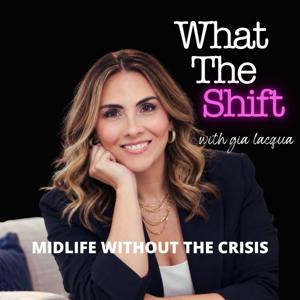
Welcome to What the Shift, the bold, no-BS podcast hosted by Gia Lacqua, where the 2 a.m. questions women are asking become the conversations we should have been having all along.
We're going beyond the tired narratives of midlife crisis, burnout, and reinvention to explore the physical, psychological, emotional, and societal shifts women experience, and what we're finally beginning to understand about them.
From hormones, brain health, and the women's health information gap to relationships, identity, ambition, aging, and the invisible expectations we've spent decades navigating, nothing is off the table.
Through candid conversations with researchers, medical experts, thought leaders, and people with powerful lived experiences, we're challenging conventional wisdom, exposing what we've overlooked, and asking the questions that aren't being asked loudly enough.
What are we getting wrong? What aren't women being told? And what changes when we finally start questioning what we've always accepted?
Because maybe midlife isn't the crisis we've been led to believe. Maybe it's the first time we're asking the right questions.
Let's make shift happen.