
Sign up to save your podcasts
Or

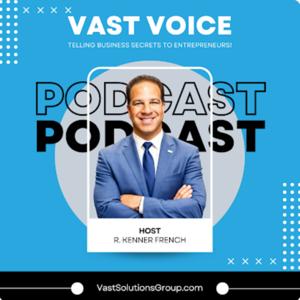


This episode features an interview with Nancy Steidl, an international business consultant and intellectual property law specialist based in the UK. Nancy shares her wealth of experience and expertise on starting and operating a successful business.
She emphasizes the critical importance of having a solid business plan before launching, understanding the legal structures and regulations in your area, and protecting your intellectual property through trademarks, patents, and copyrights. Nancy provides insightful analogies, like comparing a new business to having a child that needs nurturing and a proper foundation to grow.
The conversation covers a wide range of topics including choosing the right business entity, drafting airtight contracts, navigating employment laws, understanding cultural differences when operating globally, and the emerging challenges around AI and IP rights. Nancy stresses being overly cautious rather than underprepared when it comes to legal protections.
Her soon-to-be released book "The Art of Analogies in Business" is also discussed, which aims to provide an easy-to-understand guide on starting a business using relatable examples. Overall, this podcast offers invaluable advice from an accomplished expert for entrepreneurs at any stage of the business journey.
Learn more and connect with Nancy at https://linktr.ee/thebusinessmission.com
E-mail [email protected] and reserve a free copy of her book (while supplies last).
The answer is…it depends!
One nice thing, the government does help you in both types of plans. Uncle Sam, with both the SEP IRA and the solo 401(k) retirement plans, allows your investment in your tax-favored retirement:
2. grows tax-deferred inside the plan, and
3. suffers taxes only when you take the money from the plan.
Example. You invest $1,000 a month in your retirement. You are in the 40 percent tax bracket (combined federal and state), and you earn 10 percent on your investments. At the end of 30 years, you have $1.58 million in after-tax spendable cash, which comes from (in round numbers):
If you had no government help on the taxes and invested $1,000 a month in an investment that earned 10 percent (6 percent after taxes), you would have a little more than $950,000.
Winner. The retirement plan wins by $630,000 — after taxes ($1.58 million vs $950,000).
Okay, that’s the big picture. It tells you that tax-advantaged investing multiplies profits. So, do it.
When it comes to picking a retirement plan, you have many choices. If you have no employees in your business, none of the choices are bad. Let’s start there and say you have no employees.
And let’s say further that you are going to choose between the
SEP IRA and the solo 401(k).
Planning point. As a one-person business, you can operate as a C or S corporation, single member-LLC, or proprietorship and have either the SEP IRA or the solo 401(k).
6 Easy Tips for Getting a Small Business Loan
Getting a small business loan used to be relatively easy, but this is no longer the case. With the current weak state of the economy, loans of all types are now more challenging to acquire.
If you want one of these coveted loans, you need to be well informed and then use that information wisely to improve your odds. If you’re willing to do things in the most advantageous way, your odds of success will go up dramatically.
Use these 6 tips to your best advantage:
Keep your day job. Lenders today want to see a secondary source of income, ideally one that is capable of repaying the loan. If your only source of income is going to be the business for which you are seeking the loan, it’s going to be a tough sell right now. Keep your job, at least until after you’ve gotten the loan.
Have some collateral. Be prepared to have liens placed against any significant assets you may have. It’s more difficult to get a loan if you have few assets.
If you don’t have a lot of assets, it simply means the other parts of the process will have a greater significance. If you have a good idea and the expertise to make it work, you’ll find someone willing to help.
Maintain excellent records. The single-page application is rarely found in today’s economy. You’ll need a lot of qualifying information just to apply. You may as well have hard copies of everything ready to go. This includes income tax information, pay stubs from your current job, verification of assets, and more.
Have a business plan ready. Having a solid business plan helps to put the lender’s mind at ease. Include all the information related to how the business will operate, the people involved in the running of the business, their experience, and reasonable income projections.
Remember, lenders see business plans every day; if you’re projections are unreasonable, they’ll know it, and your credibility will be shot.
Appear respectable. Your prospective lender will certainly crunch a lot of numbers during the decision-making process. However, there is also subjective evaluation going on as well. Your lender will be questioning whether or not they believe you’re the type of person likely to repay your loan.
They will also try to figure out if you’re the type of person capable of turning a loan into a stream of income. Your education, experience, and references will all be considered.
Ensure your credit is solid. Your credit history is a very important part of the loan application process. Be aware of everything in your credit report, both the good and the bad. If there are any mistakes to your detriment, have them corrected before filling out the loan application. In addition, do everything you can to repair negative information, too.
As with many things, the devil is in the details. Following the above tips is not a guarantee that your application will be approved, but it will greatly increase your odds of success. Take the time to put the odds in your favor. Getting a small business loan might not be easy, but it can be done!
R. Kenner French is an executive at VastSolutionsGroup.com and Vast Holdings Group, LLC. He has written two books and has another on the way. He also lives on an island — Bainbridge Island, WA.
Ever dreamt of owning a towering skyscraper or a sprawling shopping mall, but the price tag left you speechless? In this episode of Vast Voice, we bring you a titan of the industry, Mr. Irwin Boris, a renowned New York City commercial property financier.
Get ready to unlock the secrets to securing funding for those colossal commercial real estate deals.
Mr. Boris will pull back the curtain and share his expertise on navigating the world of commercial financing. We'll delve into:
This episode is a goldmine for anyone with ambitious plans in the commercial real estate arena. Whether you're a seasoned investor or a budding entrepreneur, Mr. Boris' insights will equip you with the knowledge and strategies to turn your vision into a reality.
Tune in to Vast Voice and unlock the secrets to financing your next big commercial property deal!
Yes, it is true, you can lower tax liability with artificial intelligence. Few people realize that there are applications and services out there that utilize sophisticated technology to lower tax liability, while also increasing retirement savings for individuals and entrepreneurs alike.
Maximizing Business Deductions: The Key to Financial Efficiency
For any business owner, navigating the labyrinth of tax laws and deductions is not just a matter of compliance but a strategic necessity. By ensuring you take advantage of all available deductions, you can significantly reduce your taxable income, thereby minimizing your tax liability. This approach is not about evasion but about smart financial management.
1. Understanding Deductible Expenses:
2. Cash Flow Optimization:
3. Accurate Record-Keeping:
4. Leveraging Professional Advice:
5. Avoiding Costly Mistakes:
6. Strategic Planning:
7. Enhancing Business Credibility:
In this conversation, Kenner and Lily discuss the pros and cons of working with your spouse in a business. Kenner shares that working with his wife has been awesome and they have a good work-life balance. Lily, on the other hand, advises against it but acknowledges that there are some pros. They suggest starting with small projects to test the waters and setting strict boundaries to separate work and personal life. Kenner also mentions the importance of having free days (as defined by Strategic Coach and Dan Sullivan) to spend time with loved ones. Overall, they conclude that working with a spouse can work if done right.
Is bookkeeping important for the IRS? Ask the auditor when he or she knocks on your door. Yes.
Why should I keep records?
Good records will help you monitor the progress of your business, prepare your financial statements, identify sources of income, keep track of deductible expenses, keep track of your basis in property, prepare your tax returns, and support items reported on your tax returns.
What kinds of records should I keep?
You may choose any recordkeeping system suited to your business that clearly shows your income and expenses. Except in a few cases, the law does not require any special kind of records. However, the business you are in affects the type of records you need to keep for federal tax purposes.
How long should I keep records?
The length of time you should keep a document depends on the action, expense, or event the document records. You must keep your records as long as needed to prove the income or deductions on a tax return.
How should I record my business transactions?
Purchases, sales, payroll, and other transactions you have in your business generate supporting documents. These documents contain information you need to record in your books.
What is the burden of proof?
The responsibility to substantiate entries, deductions, and statements made on your tax returns is known as the burden of proof. You must be able to prove certain elements of expenses to deduct them.
How long should I keep employment tax records?
Keep all records of employment taxes for at least four years.
Are you an entrepreneur and ever had a dream of starting your own podcast but felt overwhelmed by where to begin? Look no further! In this episode of Vast Voice, we welcome Renae Lipsmeyer, a podcasting powerhouse who built a massive following from scratch. If you are a real estate investor with coaching clients, tax professional, or in other industry and even thinking about hosting a podcast you should at least give this episode a shot.
Renae will share her inspiring journey and equip you with the tools you need to turn your podcasting dream into a reality. Whether you're passionate about a specific niche or simply have captivating stories to tell, this episode is your roadmap to success.
We'll delve into the nitty-gritty of launching a podcast, from crafting a compelling concept to recording high-quality audio and navigating the world of podcast hosting. Renae will also offer invaluable insights on building an audience, creating engaging content, and leveraging the power of social media to promote your show.
So, grab your headphones and get ready to be fired up! This episode is packed with actionable advice and insider tips to help you launch your podcast and take the world by storm. Join us and learn how to turn your voice into a thriving podcast with Renae Lipsmeyer!
The worlds of finance and technology are on a collision course, and in this episode of the Vast Voice, we buckle up for the ride! We explore the fascinating intersection of Artificial Intelligence (AI), cryptocurrency, and taxation, and how these forces will revolutionize the way we manage money.
Imagine AI-powered tax software that anticipates your filing needs, automatically optimizes deductions, and even flags potential cryptocurrency tax pitfalls. We'll discuss the possibilities of AI streamlining the tax filing process for individuals and businesses alike.
But what about crypto itself? We'll delve into the complexities of taxing cryptocurrency transactions and how AI can help navigate this ever-evolving landscape. Can AI algorithms identify tax evasion attempts in the decentralized world of crypto? We'll explore the potential benefits and challenges.
This episode isn't just about the future; it's about equipping you for it. We'll provide actionable insights on how to stay informed and prepared as these technologies continue to develop.
Join us as we untangle the complex web of AI, crypto, and taxation. Whether you're a crypto enthusiast, a tax professional, or simply curious about the future of finance, this episode is a must-listen!
From the publisher's feed