
Sign up to save your podcasts
Or

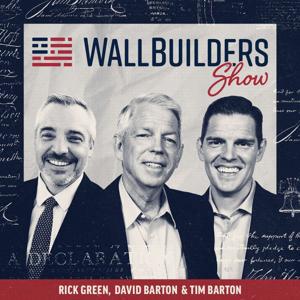

Power without principle corrodes, but principle without power accomplishes little. We set out to bridge that gap by examining how executive orders work, where their legal boundaries lie, and how a biblical framework can help citizens evaluate them with clarity rather than heat. Pastor and author Jim Garlow joins us to unpack his new project auditing more than 200 of President Trump’s recent executive orders against Scripture-based criteria, grouping them into practical themes like border policy, religious liberty, DEI, and government efficiency.
We start by demystifying executive orders: they implement existing law and cannot create new statutes. That matters in court, where well-crafted orders cite authority, anticipate challenges, and often prevail on appeal. It also matters for durability; a new administration can reverse much of what isn’t codified by Congress. With that foundation laid, we move to the heart of the conversation: can faith-informed principles—justice, ordered compassion, equal weights, protection of conscience—offer a reliable lens for modern governance? Jim argues they can, and shows how a topic-by-topic approach makes dense policy readable for leaders, pastors, students, and everyday voters.
Immigration becomes a case study. We explore biblical categories that distinguish lawful residents, temporary guests, and those who enter with harmful intent, mapping them to modern visas, naturalization, and unlawful entry. The goal is not to license cruelty or naivety, but to pair welcome with responsibility and the rule of law. From there we touch religious liberty, where safeguarding conscience and limiting state coercion remain nonnegotiable if we want a healthy civic culture. Throughout, we emphasize method over marching orders: learn the principles, apply them consistently, and judge policies—anyone’s policies—accordingly.
If you care about constitutional boundaries, moral clarity, and practical tools for evaluating policy, this conversation will sharpen your thinking. Grab the book at wellversedworld.org, share this episode with a friend who loves both history and Scripture, and subscribe to get future deep dives. Have a question we should tackle next? Leave a review with your toughest policy puzzle and we’ll take it on.
Support the show
 View all episodes
 By Tim Barton, David Barton & Rick Green

4.8
21322,132 ratings
Power without principle corrodes, but principle without power accomplishes little. We set out to bridge that gap by examining how executive orders work, where their legal boundaries lie, and how a biblical framework can help citizens evaluate them with clarity rather than heat. Pastor and author Jim Garlow joins us to unpack his new project auditing more than 200 of President Trump’s recent executive orders against Scripture-based criteria, grouping them into practical themes like border policy, religious liberty, DEI, and government efficiency.
We start by demystifying executive orders: they implement existing law and cannot create new statutes. That matters in court, where well-crafted orders cite authority, anticipate challenges, and often prevail on appeal. It also matters for durability; a new administration can reverse much of what isn’t codified by Congress. With that foundation laid, we move to the heart of the conversation: can faith-informed principles—justice, ordered compassion, equal weights, protection of conscience—offer a reliable lens for modern governance? Jim argues they can, and shows how a topic-by-topic approach makes dense policy readable for leaders, pastors, students, and everyday voters.
Immigration becomes a case study. We explore biblical categories that distinguish lawful residents, temporary guests, and those who enter with harmful intent, mapping them to modern visas, naturalization, and unlawful entry. The goal is not to license cruelty or naivety, but to pair welcome with responsibility and the rule of law. From there we touch religious liberty, where safeguarding conscience and limiting state coercion remain nonnegotiable if we want a healthy civic culture. Throughout, we emphasize method over marching orders: learn the principles, apply them consistently, and judge policies—anyone’s policies—accordingly.
If you care about constitutional boundaries, moral clarity, and practical tools for evaluating policy, this conversation will sharpen your thinking. Grab the book at wellversedworld.org, share this episode with a friend who loves both history and Scripture, and subscribe to get future deep dives. Have a question we should tackle next? Leave a review with your toughest policy puzzle and we’ll take it on.
Support the show
1,404 Listeners

2,568 Listeners
26,060 Listeners

173 Listeners

1,044 Listeners

5,429 Listeners

2,202 Listeners

65,586 Listeners

1,573 Listeners
1,553 Listeners

2,461 Listeners

691 Listeners
388 Listeners

13,190 Listeners
897 Listeners