
Sign up to save your podcasts
Or

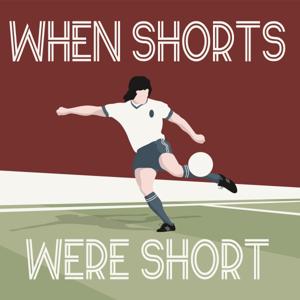


When Shorts Were Short concerns itself solely with what was actually a very narrow window in football history when teams wore, well, short shorts. The podcast takes 1954 as its starting point, when Umbro made their first England kit with shorter shorts, to 1992, when short shorts were all but finished as Umbro's baggy shorts for Tottenham's new kit, ahead of the '91 FA Cup Final, quickly caught on.
If the shorts weren't short, we don't talk about it.
This week’s guest is the Stoke City and Republic of Ireland winger Terry Conroy, a big fan favourite at the Victoria Ground in the late sixties and through the seventies. More than a winger, I think. The Dublin-born Conroy knew how to find the back of the net scoring 74 goals in a 14-year career, 12 of which were spent at the Victoria Ground as Tony Waddington’s side transitioned from a retirement home for older players who had graced the game, into a young and hungry side that in 1972 upset a Chelsea side looking for a third consecutive year of cup success, Stoke downing the west London side in the League Cup Final, and in the 1974-75 season, would come close to landing the club’s first League Championship.
You can find Terry's book 'You don't remember me, do you?' here or any good bookshop and, of course, online.
Twitter @shortswereshort
Instagram @shortswereshort
Facebook shortswereshort2023
Support Ko-fi
Threads @shortswereshort
YouTube
Discord
Support this show http://supporter.acast.com/when-shorts-were-short.
Hosted on Acast. See acast.com/privacy for more information.
When Shorts Were Short concerns itself solely with what was actually a very narrow window in football history when teams wore, well, short shorts. The podcast takes 1954 as its starting point, when Umbro made their first England kit with shorter shorts, to 1992, when short shorts were all but finished as Umbro's baggy shorts for Tottenham's new kit, ahead of the '91 FA Cup Final, quickly caught on.
If the shorts weren't short, we don't talk about it.
Unfortunate not to go up to the First Division in 1987 when they finished third but instead had to go through the inaugural play offs where they fell to Leeds on away goals, it would be another couple of seasons before the Oldham Athletic side most closely identified with Joe Royle’s 12 and a half years at Boundary Park emerged. And what a team it was.
A twin assault in the halcyon season of 1989-90, a time of significant change in this country, both culturally and politically, arguably cost a brilliant team promotion. Along the way in the cups, champions Arsenal were downed in the Littlewoods Cup, before Southampton were brushed aside in the last eight over two legs. The Valentine’s Day massacre of West Ham in the first leg of the semi final at Boundary Park saw Royle’s man switch off for the second leg, as we’ll hear, but they progressed to meet Brian Clough’s resurgent young Forest side at Wembley.
Meantime, in the FA Cup, Everton, who would finish in the top 6 that season, were knocked out after a second replay, Villa, runners up that season were then dismantled 3-0 in the Quarter Finals.
This was no giant killing, as we’ll hear. You’d have thought Oldham were the top flight club that day. That performance set them up for two epic tussles in the last four with Alex Ferguson’s finally emerging Manchester United, two games that I have personally never forgotten, which along with Palace’s perhaps better known 4-3 triumph over Liverpool were the first ever FA Cup semis to be televised live and which I think perhaps helped English football take the first small steps, post Hillsborough, to getting itself together. Turin in June 1990 was bigger, of course, but I do feel those televised semi-finals in April made some fall back in love with the game.
Oldham would finish trophyless that season and still in the second division but they had captured the hearts of the country.
Mike Keegan, the Daily Mail’s sports editor has written a brilliant book on the Joe Royle years, This is How it feels, an English Football Miracle, and was kind enough to give me his time to discuss that wonderful ride the club enjoyed. Find Mike's book here or any bookshop or online stockist.
Twitter @shortswereshort
Instagram @shortswereshort
Facebook shortswereshort2023
Support Ko-fi
Threads @shortswereshort
YouTube
Discord
Support this show http://supporter.acast.com/when-shorts-were-short.
Hosted on Acast. See acast.com/privacy for more information.
When Shorts Were Short concerns itself solely with what was actually a very narrow window in football history when teams wore, well, short shorts. The podcast takes 1954 as its starting point, when Umbro made their first England kit with shorter shorts, to 1992, when short shorts were all but finished as Umbro's baggy shorts for Tottenham's new kit, ahead of the '91 FA Cup Final, quickly caught on.
If the shorts weren't short, we don't talk about it.
For a generation of football fans, most likely for those of you listening to this show, despite a strong playing career, this week’s guest is best known for managing one of the historically big names in English football to a surprise cup success at the start of the 80s when the club was trying to drop anchor in calmer waters after bouncing back into the First Division after relegation in 1976.
John Barnwell had succeeded Noel Cantwell as Peterborough manager and in his one and only season at London Road, the club narrowly missed out on promotion to the second division before a dispute with the board led Barnwell to Moulineux, where he replaced Sammy Chung as manager after Wolves made a poor start to the 1978-79 campaign.
In what was an eventful reign that lasted just over three and a half years, Barnwell led a club that was still in Stan Cullis’s long shadow to two FA Cup semi-finals, a top six finish, League Cup success over European Champions Nottingham Forest who were looking to lift the trophy for a third success finish and Europe, but his greatest victory was arguably surviving a near fatal car accident that had, as we’ll hear, an even darker element to it.
Twitter @shortswereshort
Instagram @shortswereshort
Facebook shortswereshort2023
Support Ko-fi
Threads @shortswereshort
YouTube
Discord
Support this show http://supporter.acast.com/when-shorts-were-short.
Hosted on Acast. See acast.com/privacy for more information.
When Shorts Were Short concerns itself solely with what was actually a very narrow window in football history when teams wore, well, short shorts. The podcast takes 1954 as its starting point, when Umbro made their first England kit with shorter shorts, to 1992, when short shorts were all but finished as Umbro's baggy shorts for Tottenham's new kit, ahead of the '91 FA Cup Final, quickly caught on.
If the shorts weren't short, we don't talk about it.
If you were to name the great managers of British football during the 1954-92 era covered by this podcast, most of us would probably namecheck the likes of Busby, Shankly, Stein, Clough. Bob Paisley, six league titles in just 9 years, 20 trophies overall during his managerial reign, would be my own choice. Bill Nicholson might be in there. If he isn’t, he should be. But one name that should be around the top of that list is sometimes missing and that is Don Revie, a visionary as a player and as a manager. Much of what we see in modern football, as we’ll cover in this interview, the dossiers on the opposition, the mass market that is replica kits, Revie was behind that.
My guest this week is Labour and Co-op MP for Islwyn, Chris Evans, whose book Don Revie – The definitive Biography was described by the Time as '[an] engrossing account of one of football's most divisive yet brilliant characters... this book rehabilitates a much maligned manager who changed English football.'
Twitter @shortswereshort
Instagram @shortswereshort
Facebook shortswereshort2023
Support Ko-fi
YouTube
Discord
Don Revie - The Definitive Biography
Support this show http://supporter.acast.com/when-shorts-were-short.
Hosted on Acast. See acast.com/privacy for more information.
When Shorts Were Short concerns itself solely with what was actually a very narrow window in football history when teams wore, well, short shorts. The podcast takes 1954 as its starting point, when Umbro made their first England kit with shorter shorts, to 1992, when short shorts were all but finished as Umbro's baggy shorts for Tottenham's new kit, ahead of the '91 FA Cup Final, quickly caught on.
If the shorts weren't short, we don't talk about it.
My guest this week is Jeff Foulser who in 1976, at just the age of 24, became The Big Match’s youngest ever producer. For many kids who grew up in the 70s and 80s, it was The Big Match or its regional variation, that was THE big football show in their life. It was our entry point into the world’s greatest game, in black and white initially for me but I seem to recall that didn’t diminish my early love for the game at all as I marvelled at this world of muddy pitches, combovers, glorious striped kits where the back of the shirt also had stripes – who would believe that now, eh – uncapped teeth, barely a tattoo in sight, and of course, there was the show’s frontman Brian Moore.
Brian Moore was our God.
Jeff oversaw the show for 13 years, a time of change, through the Michael Grade-led Snatch of the Day, and the end of the regional variations of the show in 1983 which saw The Big Match become the only football highlights show on ITV, and there was the introduction of live football in 1983-84, ITV showing the first game that autumn, and in 1988, there was the switch to only showing live football and having to fight the powers that be at ITV over the choice of new presenter to replace Brian Moore who would now be focusing solely on commentating.
Twitter @shortswereshort
Instagram @shortswereshort
Facebook shortswereshort2023
Support Ko-fi
YouTube
Discord
Support this show http://supporter.acast.com/when-shorts-were-short.
Hosted on Acast. See acast.com/privacy for more information.
When Shorts Were Short concerns itself solely with what was actually a very narrow window in football history when teams wore, well, short shorts. The podcast takes 1954 as its starting point, when Umbro made their first England kit with shorter shorts, to 1992, when short shorts were all but finished as Umbro's baggy shorts for Tottenham's new kit, ahead of the '91 FA Cup Final, quickly caught on.
If the shorts weren't short, we don't talk about it.
Alan Hinton broke into the Wolves side during the final years of the Stan Cullis era. Emerging during the 1961-62 season, the strikingly blonde haired left winger scored 5 times in 16 appearances, and was a rare bright spark in an otherwise dreadful season for the club which saw them finish 18th that year, after a top 3 finish the season before.
Staggeringly, one of the most gifted English players of the era was capped only three times by Alf Ramsey – Hinton is in good company there – and by the time he left his second club Nottingham Forest in 1967 to make his career-defining move to Derby, the white-booted playmaker was already a ‘former’ England international.
After two league titles at the Baseball Ground, the first in 1972, under Clough and Taylor, the second three years later under Dave Mackay, the deepest of personal tragedies pushed Hinton into moving his family to the States. After closing out his playing career with spells at Dallas Tornado and Vancouver Whitecaps, Hinton managed in the old NASL, most notably with the Seattle Sounders, whom he would also manage in the mid-90s early days of the MLS.
Twitter @shortswereshort
Instagram @shortswereshort
Facebook shortswereshort2023
Support Ko-fi
YouTube
Discord
The Triumph and Tragedy: The Alan Hinton Story
Support this show http://supporter.acast.com/when-shorts-were-short.
Hosted on Acast. See acast.com/privacy for more information.
When Shorts Were Short concerns itself solely with what was actually a very narrow window in football history when teams wore, well, short shorts. The podcast takes 1954 as its starting point, when Umbro made their first England kit with shorter shorts, to 1992, when short shorts were all but finished as Umbro's baggy shorts for Tottenham's new kit, ahead of the '91 FA Cup Final, quickly caught on.
If the shorts weren't short, we don't talk about it.
A dashing and restless figure, an innovator and QPR fan, with a packed life away from the game he gave life to, Subbuteo founder Peter Adolph had a colourful love life, even getting caught up in a duel as we’ll hear. He had a Mr Toad-like love of fast cars, pursued expensive and exotic life-long hobbies such as ornithology, and much later, botany and photography. Pre-subbuteo, he’d even been a vocalist in one of the UK’s most popular big bands of the era. A humble and shy man, flawed as so many of us are, this is the story of the man who gave us one of the greatest games ever, and something that for many of us who grew up in the era of short shorts and knew the discomfort of wearing those early, itchy replica kits, remains the greatest football game ever made.
This is the second of two festive When Shorts Were Short specials and it’s the story of Subbuteo founder Peter Adolph, told by his son Mark, whose book Growing up with Subbuteo: My Dad Invented the World's Greatest Football Game is the closest we’ll ever come to knowing the real Peter Adolph.
Twitter @shortswereshort
Instagram @shortswereshort
Facebook shortswereshort2023
Support Ko-fi
YouTube
Discord
Support this show http://supporter.acast.com/when-shorts-were-short.
Hosted on Acast. See acast.com/privacy for more information.
When Shorts Were Short concerns itself solely with what was actually a very narrow window in football history when teams wore, well, short shorts. The podcast takes 1954 as its starting point, when Umbro made their first England kit with shorter shorts, to 1992, when short shorts were all but finished as Umbro's baggy shorts for Tottenham's new kit, ahead of the '91 FA Cup Final, quickly caught on.
If the shorts weren't short, we don't talk about it.
In the first of two festive specials, this week’s guest is legendary comics editor Barrie Tomlinson, last on in Christmas 2020. Barrie enjoyed a long and illustrious career at Fleetway, initially as a writer. He worked as a sub-editor on Lion before becoming editor of Tiger in 1969 and then famously launching Roy of the Rovers in his own standalone and hugely successful title in 1976. Of course Barrie has worked many more titles than that, including the Daily Mirror football strip Scorer on which he spent 22 long years.
I asked Barrie if he fancied choosing his All-Time Comic Book Footballing X1, a traditional 1-11, no squad numbers and names on shirts, and only two subs allowed, something only introduced at the start of the 1987-88 season.
Twitter @shortswereshort
Instagram @shortswereshort
Facebook shortswereshort2023
Support Ko-fi
YouTube
Discord
Support this show http://supporter.acast.com/when-shorts-were-short.
Hosted on Acast. See acast.com/privacy for more information.
When Shorts Were Short concerns itself solely with what was actually a very narrow window in football history when teams wore, well, short shorts. The podcast takes 1954 as its starting point, when Umbro made their first England kit with shorter shorts, to 1992, when short shorts were all but finished as Umbro's baggy shorts for Tottenham's new kit, ahead of the '91 FA Cup Final, quickly caught on.
If the shorts weren't short, we don't talk about it.
Alan Smith was an English forward untypical of his time, in possession of one of the best first touches in the domestic game and while primarily left footed, the Birmingham-born number nine fired in plenty with his right boot too and was formidable in the air. He was a centre forward who would’ve comfortably fitted into the early years of the Wenger era that he narrowly missed out on.
Alan was kind enough to come on the show as we looked back at his career, from his time at non-league Alvechurch, through his formative years at Leicester partnering Gary Lineker up front as the Foxes reined in Fulham to sneak promotion to the old First Division in 1983, to winning two league titles at Arsenal and the little matter of winning two golden boots too. We discuss those golden years at Highbury, a sense of disappointment at his England career being one of unfulfilled potential, the injury that ultimately and very quickly ended his career in the ’94-95 campaign and in and around all that, I also posed the question whether Graham’s brilliant young side ultimately underachieved.
Twitter @shortswereshort
Instagram @shortswereshort
Facebook shortswereshort2023
YouTube
Discord
Support this show http://supporter.acast.com/when-shorts-were-short.
Hosted on Acast. See acast.com/privacy for more information.
When Shorts Were Short concerns itself solely with what was actually a very narrow window in football history when teams wore, well, short shorts. The podcast takes 1954 as its starting point, when Umbro made their first England kit with shorter shorts, to 1992, when short shorts were all but finished as Umbro's baggy shorts for Tottenham's new kit, ahead of the '91 FA Cup Final, quickly caught on.
If the shorts weren't short, we don't talk about it.
Probably every football fan of a certain generation, the ones this show has sporadically tried to connect with, will know of Gerry Gow. The long, prematurely greying locks, the bushy moustache, a hard tackling Scottish midfielder – how many times have we heard that – who for most of the country probably came to prominence during Manchester City’s resurgence under John Bond during the ’80-81 season when they went from being first division strugglers under Malcolm Allison to reaching both the League Cup semi-finals, for which Gow was ineligible and the FA Cup Final where Gow would lock horns with the Tottenham midfield at Wembley, one of the most stylish midfields of that era, in two epic games. But for Bristol City fans, where Gow spent the overwhelming part of his career, Gow was one of, if not, their greatest ever player.
Twitter @shortswereshort
Instagram @shortswereshort
Facebook shortswereshort2023
YouTube
Discord
Support this show http://supporter.acast.com/when-shorts-were-short.
Hosted on Acast. See acast.com/privacy for more information.
From the publisher's feed
When Shorts Were Short concerns itself solely with what was actually a very narrow window in football history when teams wore, well, short shorts. The podcast takes 1954 as its starting…
If the shorts weren't short, we just don't talk about it.
Support the show on Patreon
Twitter @shortswereshort
Instagram @shortswereshort
Facebook shortswereshort2023
Support this show http://supporter.acast.com/when-shorts-were-short.
Hosted on Acast. See acast.com/privacy for more information.