
Sign up to save your podcasts
Or

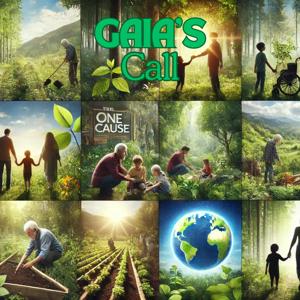

Over the past few years, a curious pattern has begun to emerge in many conversations about meaning and faith. Researchers and commentators—including Jamie Wheal in his discussions with the Home Grown Humans community—have pointed out that in times of instability and uncertainty, many people begin returning to religious traditions they may have previously set aside. In the West, that often means a renewed interest in Christianity.
I understand why.
When the ground beneath society feels shaky—politically, economically, ecologically—people naturally seek coherence. They seek community. They seek a moral compass and a story large enough to hold suffering. Religious traditions have long provided those anchors.
But as I’ve listened to these conversations, I’ve found myself wondering whether we might be looking in the wrong direction—not because Christianity is wrong, but because the search may need to reach further back in our collective memory.
My hunch is that we haven’t gone far enough back. Before Christianity. Before modern secularism. Before the idea that the world is mostly made of objects.
For tens of thousands of years, human beings lived with a very different understanding of the world: that we exist within a living community of beings—animals, plants, rivers, mountains, winds. Our ancestors did not think of nature as scenery. They experienced it as relationship.
Today we often call that worldview animism.
Importantly, animism does not have to replace other forms of faith. It isn’t necessarily an either-or proposition. Many people may find ways to hold both perspectives—honoring spiritual traditions while also rediscovering a deeper relational connection with the living Earth. If anything, animism invites us to focus on what many traditions share: reverence, humility, and participation in something larger than ourselves.
Where animism differs from much modern spirituality is that it is less about belief and more about relationship. It is embodied. Present-moment. Experiential. You don’t simply believe the world is alive. You participate in its aliveness.
Gaia: A Living System
Around the same time these ideas were beginning to stir in me, I also began listening more closely to the work of scientist James Lovelock and others who developed what is now known as the Gaia hypothesis—the idea that Earth functions as a vast self-regulating system, with life and environment interacting to maintain conditions favorable for life.
More recently, Nate Hagens has explored these ideas through his podcast and YouTube channel The Great Simplification, where he helps translate complex ecological and energy realities into language ordinary people can understand.
Taken together, these perspectives offer a powerful reframing.
If Earth behaves like a self-regulating system—a kind of planetary-scale organism—then communication does not occur through sentences.
It occurs through changing conditions.
Feedback. Adjustments. Signals embedded in the environment itself.
In that light, weather begins to look a little different. Not as punishment. Not as divine anger. Not as random chaos. But as information made experiential. Storms, droughts, floods, heat waves—they bypass ideology and go straight to the nervous system. They remind us, sometimes quite dramatically, that we are not separate observers of the planet. We are participants inside its processes.
Living here in the mountains of North Carolina, we’ve felt those reminders firsthand. Tropical Storm Helene. The fire that swept across the hills not long after. And this past winter Gaia spoke again with the winter storm of snow and ice someone decided to name Fern. These events are not “messages from God,” but they are interruptions to the illusion of separateness.
They encourage us to pay attention. Several years ago I heard the story about the Universal UPS truck. It goes like this. From time to time, the Universe tries to deliver a package to us within which is an important lesson we are to learn, but like the conventional UPS truck, it’s no big deal if we aren’t home or ready to receive the package. It will just schedule a time to deliver it again. The only real difference with the Universal UPS truck, is that each time it attempts to deliver the packaged lesson to us, it become a bit more deliberate and intentional until eventually it’ll drive its truck through our living room to get our attention.
I believe we are at that point today. Do you agree? What are your thoughts on the subject? How about sharing them by clicking the comment button below, or joining the chat?
The Deeper Issue Beneath the Storms
If we step back even further, we can see that the storms and climate disruptions we experience today are not isolated events. They are symptoms of a deeper pattern.
For roughly the last two hundred years, humanity has been drawing down an enormous storehouse of energy in the form of fossil fuels—coal, oil, and natural gas. These fuels were created through geological processes that unfolded over millions of years. In a sense, they represent a vast savings account of ancient sunlight, stored underground.
But rather than treating that inheritance as a finite trust fund, we treated it as an endless supply.
The result was an explosion of industrial growth, technological progress, and human population. Much of modern civilization has been built on that energy windfall. Yet this rapid extraction also came with consequences—most notably the rising concentration of carbon dioxide in our atmosphere and the resulting destabilization of climate systems.
Here again we encounter one of the central insights of the One Cause framework. For centuries, many of us operated under what I call a Great Untruth: that Earth’s resources are effectively unlimited. But the web of life operates according to a different principle entirely—reciprocity.
Take without giving back long enough, and the system begins to respond. Not out of malice. Out of physics. Out of biology. Out of the simple mathematics of living systems.
Harm a river long enough and its vitality declines. As vitality declines, scarcity increases. Communities downstream suffer. Care for the river, restore its health, protect its watershed—and abundance often returns. The vitality of the system supports the vitality of the people.
Reciprocity is not a spiritual slogan. It is how living systems work.
From Resource to Relationship
This is where the Four Great Truths of the One Cause project come into clearer focus. The Great Untruths teach us to see Earth as backdrop, raw material, or resource. The Great Truths invite us to see Earth as relation—as kin.
If we begin from that place, stewardship stops feeling like an obligation imposed from the outside. It becomes something more intimate. Stewardship becomes love across time.
The choices we make today ripple outward—to forests we may never see, rivers we may never visit, and grandchildren whose lives will unfold long after we are gone. Seen this way, responding to the climate crisis is not merely a technical challenge.
It is a relationship challenge.
A Small Daily Practice
You don’t need to adopt a new belief system to explore this way of relating.
You can begin with a simple daily reflection inspired by many Indigenous wisdom traditions that focus on maintaining balance and vitality in the web of life.
At the end of each day, pause for a moment and ask yourself three questions:
* What did I do today that increased life—in myself, in another person, or in the land around me?
* What did I do that may have diminished life, even unintentionally?
* What is one small act of repair or care I could offer tomorrow?
This practice does not require perfection. Only our attention.
Returning to the Conversation
My own journey into these ideas followed a path I didn’t fully recognize at the time.
Animals first taught me kinship. The rainforest taught me sacred interconnection. And animism finally gave language to something my life had already been practicing. If we are indeed living through what many now call a polycrisis—a convergence of ecological, economic, political, and spiritual disruptions—then perhaps our task is not simply to solve problems.
Perhaps it is to rejoin the conversation with the living world. I’m not asking anyone to adopt animism as an identity. I’m inviting you to experiment with a different relationship to the world—one that feels strangely sane in a time that often feels anything but.
And if we listen closely enough, we may discover that the Earth has been speaking all along and we’ve simply haven’t been listening. It’s time to listen deeply.
Unleashed - W. Bradford Swift is a reader-supported publication. To receive new posts and support my work, consider becoming a free or paid subscriber.
Thanks for reading Unleashed - W. Bradford Swift! This post is public so feel free to share it.
 View all episodes
 By Listen to the call of the Earth and take action.
Over the past few years, a curious pattern has begun to emerge in many conversations about meaning and faith. Researchers and commentators—including Jamie Wheal in his discussions with the Home Grown Humans community—have pointed out that in times of instability and uncertainty, many people begin returning to religious traditions they may have previously set aside. In the West, that often means a renewed interest in Christianity.
I understand why.
When the ground beneath society feels shaky—politically, economically, ecologically—people naturally seek coherence. They seek community. They seek a moral compass and a story large enough to hold suffering. Religious traditions have long provided those anchors.
But as I’ve listened to these conversations, I’ve found myself wondering whether we might be looking in the wrong direction—not because Christianity is wrong, but because the search may need to reach further back in our collective memory.
My hunch is that we haven’t gone far enough back. Before Christianity. Before modern secularism. Before the idea that the world is mostly made of objects.
For tens of thousands of years, human beings lived with a very different understanding of the world: that we exist within a living community of beings—animals, plants, rivers, mountains, winds. Our ancestors did not think of nature as scenery. They experienced it as relationship.
Today we often call that worldview animism.
Importantly, animism does not have to replace other forms of faith. It isn’t necessarily an either-or proposition. Many people may find ways to hold both perspectives—honoring spiritual traditions while also rediscovering a deeper relational connection with the living Earth. If anything, animism invites us to focus on what many traditions share: reverence, humility, and participation in something larger than ourselves.
Where animism differs from much modern spirituality is that it is less about belief and more about relationship. It is embodied. Present-moment. Experiential. You don’t simply believe the world is alive. You participate in its aliveness.
Gaia: A Living System
Around the same time these ideas were beginning to stir in me, I also began listening more closely to the work of scientist James Lovelock and others who developed what is now known as the Gaia hypothesis—the idea that Earth functions as a vast self-regulating system, with life and environment interacting to maintain conditions favorable for life.
More recently, Nate Hagens has explored these ideas through his podcast and YouTube channel The Great Simplification, where he helps translate complex ecological and energy realities into language ordinary people can understand.
Taken together, these perspectives offer a powerful reframing.
If Earth behaves like a self-regulating system—a kind of planetary-scale organism—then communication does not occur through sentences.
It occurs through changing conditions.
Feedback. Adjustments. Signals embedded in the environment itself.
In that light, weather begins to look a little different. Not as punishment. Not as divine anger. Not as random chaos. But as information made experiential. Storms, droughts, floods, heat waves—they bypass ideology and go straight to the nervous system. They remind us, sometimes quite dramatically, that we are not separate observers of the planet. We are participants inside its processes.
Living here in the mountains of North Carolina, we’ve felt those reminders firsthand. Tropical Storm Helene. The fire that swept across the hills not long after. And this past winter Gaia spoke again with the winter storm of snow and ice someone decided to name Fern. These events are not “messages from God,” but they are interruptions to the illusion of separateness.
They encourage us to pay attention. Several years ago I heard the story about the Universal UPS truck. It goes like this. From time to time, the Universe tries to deliver a package to us within which is an important lesson we are to learn, but like the conventional UPS truck, it’s no big deal if we aren’t home or ready to receive the package. It will just schedule a time to deliver it again. The only real difference with the Universal UPS truck, is that each time it attempts to deliver the packaged lesson to us, it become a bit more deliberate and intentional until eventually it’ll drive its truck through our living room to get our attention.
I believe we are at that point today. Do you agree? What are your thoughts on the subject? How about sharing them by clicking the comment button below, or joining the chat?
The Deeper Issue Beneath the Storms
If we step back even further, we can see that the storms and climate disruptions we experience today are not isolated events. They are symptoms of a deeper pattern.
For roughly the last two hundred years, humanity has been drawing down an enormous storehouse of energy in the form of fossil fuels—coal, oil, and natural gas. These fuels were created through geological processes that unfolded over millions of years. In a sense, they represent a vast savings account of ancient sunlight, stored underground.
But rather than treating that inheritance as a finite trust fund, we treated it as an endless supply.
The result was an explosion of industrial growth, technological progress, and human population. Much of modern civilization has been built on that energy windfall. Yet this rapid extraction also came with consequences—most notably the rising concentration of carbon dioxide in our atmosphere and the resulting destabilization of climate systems.
Here again we encounter one of the central insights of the One Cause framework. For centuries, many of us operated under what I call a Great Untruth: that Earth’s resources are effectively unlimited. But the web of life operates according to a different principle entirely—reciprocity.
Take without giving back long enough, and the system begins to respond. Not out of malice. Out of physics. Out of biology. Out of the simple mathematics of living systems.
Harm a river long enough and its vitality declines. As vitality declines, scarcity increases. Communities downstream suffer. Care for the river, restore its health, protect its watershed—and abundance often returns. The vitality of the system supports the vitality of the people.
Reciprocity is not a spiritual slogan. It is how living systems work.
From Resource to Relationship
This is where the Four Great Truths of the One Cause project come into clearer focus. The Great Untruths teach us to see Earth as backdrop, raw material, or resource. The Great Truths invite us to see Earth as relation—as kin.
If we begin from that place, stewardship stops feeling like an obligation imposed from the outside. It becomes something more intimate. Stewardship becomes love across time.
The choices we make today ripple outward—to forests we may never see, rivers we may never visit, and grandchildren whose lives will unfold long after we are gone. Seen this way, responding to the climate crisis is not merely a technical challenge.
It is a relationship challenge.
A Small Daily Practice
You don’t need to adopt a new belief system to explore this way of relating.
You can begin with a simple daily reflection inspired by many Indigenous wisdom traditions that focus on maintaining balance and vitality in the web of life.
At the end of each day, pause for a moment and ask yourself three questions:
* What did I do today that increased life—in myself, in another person, or in the land around me?
* What did I do that may have diminished life, even unintentionally?
* What is one small act of repair or care I could offer tomorrow?
This practice does not require perfection. Only our attention.
Returning to the Conversation
My own journey into these ideas followed a path I didn’t fully recognize at the time.
Animals first taught me kinship. The rainforest taught me sacred interconnection. And animism finally gave language to something my life had already been practicing. If we are indeed living through what many now call a polycrisis—a convergence of ecological, economic, political, and spiritual disruptions—then perhaps our task is not simply to solve problems.
Perhaps it is to rejoin the conversation with the living world. I’m not asking anyone to adopt animism as an identity. I’m inviting you to experiment with a different relationship to the world—one that feels strangely sane in a time that often feels anything but.
And if we listen closely enough, we may discover that the Earth has been speaking all along and we’ve simply haven’t been listening. It’s time to listen deeply.
Unleashed - W. Bradford Swift is a reader-supported publication. To receive new posts and support my work, consider becoming a free or paid subscriber.
Thanks for reading Unleashed - W. Bradford Swift! This post is public so feel free to share it.